When a medication triggers anaphylaxis, seconds matter. This isn’t a slow, creeping reaction-it’s a sudden, full-body crisis that can kill in minutes. Think of it like a fire alarm going off in a building full of people: you don’t wait to figure out what’s burning. You evacuate. You call 911. You act. The same urgency applies to anaphylaxis from drugs like penicillin, NSAIDs, or contrast dye. Every delay increases the chance of death. And the truth? Most deaths happen because people wait too long to give epinephrine.
What Happens During Medication-Induced Anaphylaxis?
Anaphylaxis from medication happens when your immune system overreacts to a drug, releasing chemicals that crash your body’s systems. It’s not just a rash or a stuffy nose. It’s a full-system failure. Airway swells shut. Blood pressure plummets. Your heart struggles to pump. And here’s the scary part: up to 20% of cases show no skin symptoms at all. No hives. No flushing. Just trouble breathing, dizziness, or collapse. That’s why you can’t rely on visible signs. If someone who just took a new medication suddenly starts struggling to breathe or goes pale, assume it’s anaphylaxis-even if they look fine otherwise.Common triggers include antibiotics (especially penicillin), NSAIDs like ibuprofen, chemotherapy drugs, muscle relaxants used in surgery, and IV contrast dyes. According to the American Academy of Allergy, Asthma & Immunology, medication reactions cause 20-30% of all anaphylaxis cases in hospitals. And in the U.S., antibiotics alone are responsible for nearly half of all fatal cases.
The Five Critical Steps in Emergency Response
There’s no room for guesswork. When anaphylaxis strikes, follow this sequence exactly. Skip any step, and you risk losing someone.- Call 911 immediately. Don’t wait. Don’t ask if it’s serious. Call now. Even if you give epinephrine, the person still needs emergency care. Biphasic reactions-where symptoms return hours later-happen in 10-20% of cases. They can’t be predicted. Only trained medics can monitor and treat them.
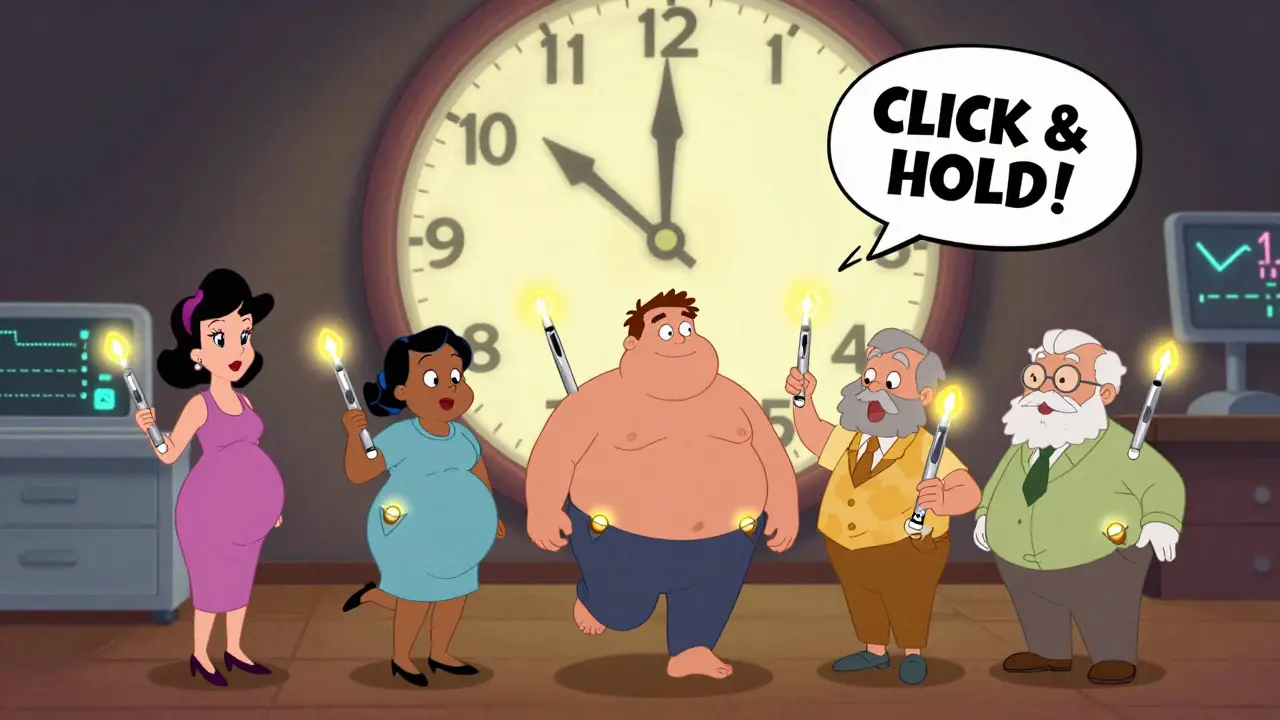
- Administer epinephrine right away. This is the single most important action. Use an auto-injector (EpiPen, Auvi-Q, Adrenaclick) into the outer thigh. No needles. No hesitation. For adults and kids over 30 kg, use 0.3 mg. For kids 15-30 kg, use 0.15 mg. Push hard until you hear a click, hold for 10 seconds, then remove. The drug works in 1-5 minutes but lasts only 10-20. That’s why you need a second dose if symptoms don’t improve.
- Lay the person flat. This isn’t optional. Standing or sitting up can cause sudden blood pressure drop and death. If they’re unconscious or pregnant, turn them on their left side. If they’re having trouble breathing, let them sit with legs stretched out. Children should be held flat, not upright. This rule comes from data showing 15-20% of deaths occur when people are allowed to stand during a reaction.
- Give a second dose if needed. If symptoms haven’t improved after 5 minutes, give another epinephrine injection. Some protocols suggest repeating every 10 minutes if the person keeps worsening. Don’t worry about giving too much. The risk of not giving enough is far greater. Studies show 70% of fatal cases involved delayed or missed epinephrine.
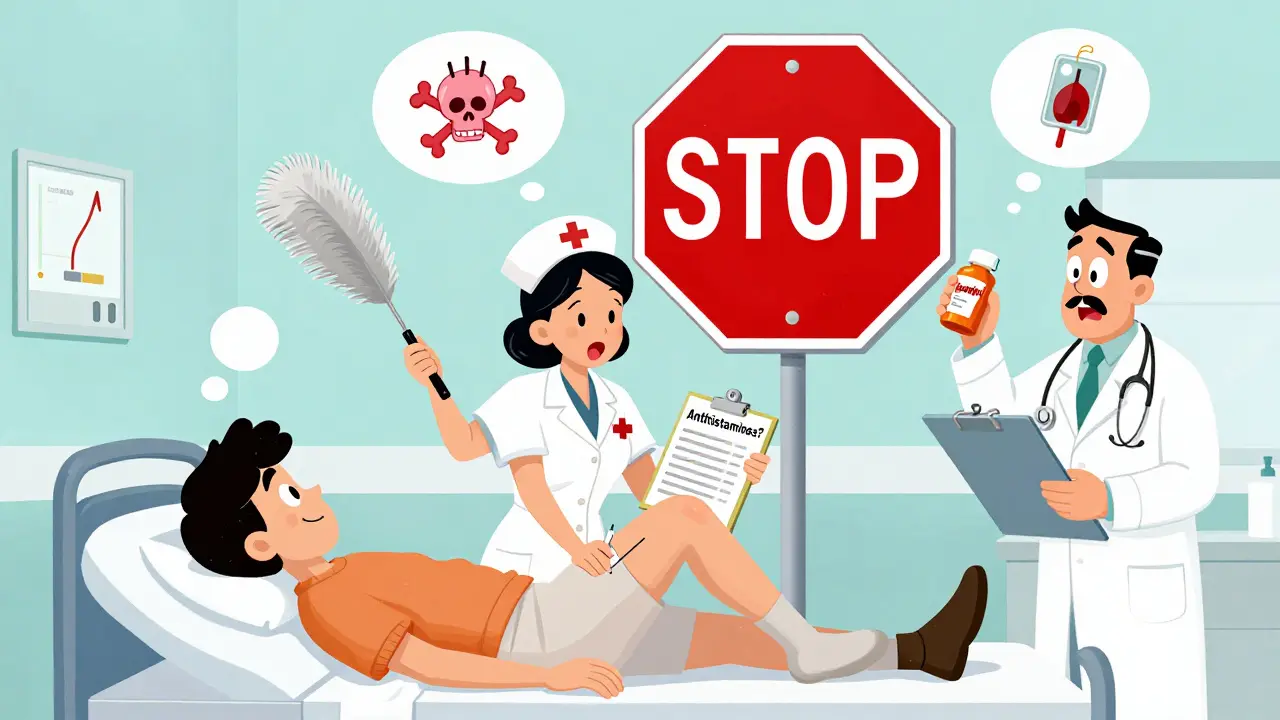
- Do not use antihistamines or steroids as first-line treatment. Benadryl or prednisone won’t stop airway swelling or low blood pressure. They might help with itching later-but only after epinephrine has been given. The Resuscitation Council UK and Cleveland Clinic now agree: these drugs have no role in saving a life during anaphylaxis. They’re distractions.
Why People Delay-And Why That’s Deadly
You’d think in a hospital, epinephrine would be given fast. But a 2022 Cleveland Clinic study found the average time from symptom recognition to epinephrine was 8.2 minutes. In 65% of cases, it was too late. Why? Fear. Nurses and doctors worry about side effects: fast heartbeat, high blood pressure. But here’s the data: out of 35,000 epinephrine doses given for anaphylaxis between 2015 and 2020, only 0.03% caused serious heart problems. The risk of not acting? Death.In outpatient settings, patients often carry epinephrine but don’t know how to use it. A 2023 FAACT survey found 68% of people with drug allergies carried an injector, but only 41% felt confident using it. Common mistakes: not holding the device long enough (37% of cases), injecting into fat instead of muscle (18%), or using the wrong dose. The new Auvi-Q 4.0, approved by the FDA in May 2023, has voice prompts to guide users. In trials, it boosted correct use from 63% to 89%.
Special Cases: Beta-Blockers, Pregnancy, and Obesity
Not everyone responds the same way. If someone takes beta-blockers for high blood pressure or heart issues (used by 25-30% of adults over 40), epinephrine may not work as well. In these cases, higher doses may be needed-sometimes 2-3 times the standard amount. This was shown in a 2021 study of 187 patients. Don’t assume one dose is enough.Pregnant women need special positioning. Lying flat on the back can compress major blood vessels, cutting off blood flow to the baby. Always turn them on their left side. And if they’re unconscious, keep them in the recovery position until help arrives.
Obesity is another factor. A 2023 NIH study found that standard dosing based on weight doesn’t always work for people with a BMI over 30. Early results suggest dosing based on body mass index gives more consistent results. While this isn’t official yet, it’s something providers should consider-especially if the first dose doesn’t help.
What Happens After the Emergency?
Even if symptoms vanish after epinephrine, the person isn’t out of danger. Biphasic reactions can strike 1 to 72 hours later. That’s why hospital observation for at least 4 hours is mandatory. For medication-induced cases, some experts now recommend 6-8 hours because these patients have a 25% higher risk than those reacting to food.After discharge, they need an allergy specialist. They’ll likely get a prescription for two epinephrine auto-injectors, a written action plan, and education on avoiding triggers. Some may need to wear a medical alert bracelet. And if they’ve had a reaction to a drug they need for a chronic condition, an allergist can sometimes test for tolerance or recommend alternatives.
Key Takeaways
- Epinephrine is the only life-saving treatment. Delaying it kills.
- Give it in the thigh. Don’t hesitate. Give a second dose if needed.
- Always lay the person flat. Standing or sitting up can be fatal.
- Call 911 before or right after giving epinephrine.
- Antihistamines and steroids don’t stop anaphylaxis. They’re not substitutes.
- Even if they feel better, they need hospital monitoring for at least 4 hours.
Can you survive anaphylaxis without epinephrine?
Survival without epinephrine is possible but extremely rare and highly dependent on immediate medical intervention. Without epinephrine, the body’s systems continue to shut down-airway swelling blocks breathing, blood pressure drops to zero, and the heart stops. Antihistamines and steroids do not reverse these life-threatening changes. Studies show that in fatal cases, 70% involved no epinephrine or delayed use. Epinephrine is the only drug that reverses airway obstruction, improves blood pressure, and prevents cardiac arrest. If epinephrine isn’t given within 5 minutes of symptom onset, the chance of death increases dramatically.
What if I’m not sure it’s anaphylaxis?
If in doubt, give epinephrine. The ASCIA First Aid Plan, updated in August 2025, explicitly states: "IF IN DOUBT GIVE ADRENALINE DEVICE." Between 2015 and 2020, hesitation due to uncertainty contributed to 35% of preventable deaths. Anaphylaxis can look different every time. Some people have only breathing trouble. Others collapse without skin symptoms. The consequences of under-treating are far worse than the risks of giving epinephrine. Side effects like a racing heart are temporary and manageable. Death is permanent.
Can you use an expired epinephrine auto-injector?
Yes, if it’s the only option. While manufacturers list expiration dates for potency, studies show epinephrine in auto-injectors remains effective for years past the printed date. A 2021 study in the Journal of Allergy and Clinical Immunology found that 90% of expired devices still contained at least 90% of the labeled dose up to 4 years after expiration. In a true emergency, using an expired injector is better than doing nothing. Replace it as soon as possible afterward, but don’t delay treatment because of the expiration date.
Why is epinephrine injected into the thigh and not the arm?
The anterolateral thigh has more muscle and better blood flow than the arm, allowing faster absorption into the bloodstream. Studies show epinephrine reaches peak levels in the blood 1-2 minutes faster when injected into the thigh compared to the deltoid. This speed can mean the difference between life and death. Also, the thigh is easier to access in emergencies-even through clothing. Auto-injectors are designed specifically for this site. Never inject into veins, buttocks, or fingers.
Do children need different doses?
Yes. Children weighing 15-30 kg (about 33-66 lbs) should receive 0.15 mg. Children over 30 kg and adults get 0.3 mg. Using the wrong dose can be dangerous: too little won’t help, too much can cause heart strain. Many pediatric cases are missed because caregivers assume a child’s size matches an adult’s. Always check weight, not age. Some devices have color-coded labels-blue for 0.15 mg, red for 0.3 mg. Keep the correct one accessible at all times.