Medication Absorption Calculator
Medication Absorption Calculator
Estimate how much of your medication is absorbed after bariatric surgery based on your procedure type and medication formulation.
Results
After bariatric surgery, many patients notice something unexpected: their medications don’t seem to work like they used to. A pill that once kept their blood sugar steady now feels useless. Their thyroid medication stops controlling symptoms. Pain relief fades faster. This isn’t in their head-it’s physics, chemistry, and anatomy changing under the hood of their digestive system.
Why Your Pills Don’t Work the Same After Surgery
Bariatric surgery doesn’t just shrink your stomach. It rewires how your body handles everything you swallow. The two most common procedures-Roux-en-Y gastric bypass (RYGB) and sleeve gastrectomy-change the path food takes through your gut. In RYGB, the upper part of the stomach is turned into a small pouch, and the first section of the small intestine (the duodenum) is bypassed. In sleeve surgery, most of the stomach is removed, leaving a narrow tube. Both reduce how much you can eat, but they do very different things to your meds.Before surgery, your stomach is acidic (pH around 1.5-3.5). That acidity helps break down certain pills so they can be absorbed. After surgery, especially with RYGB, the pouch pH rises to 4.0-6.0. That’s like switching from a strong acid bath to lukewarm water. Drugs that need acid to dissolve-like ketoconazole, itraconazole, or levothyroxine-don’t break down properly. They pass through unchanged.
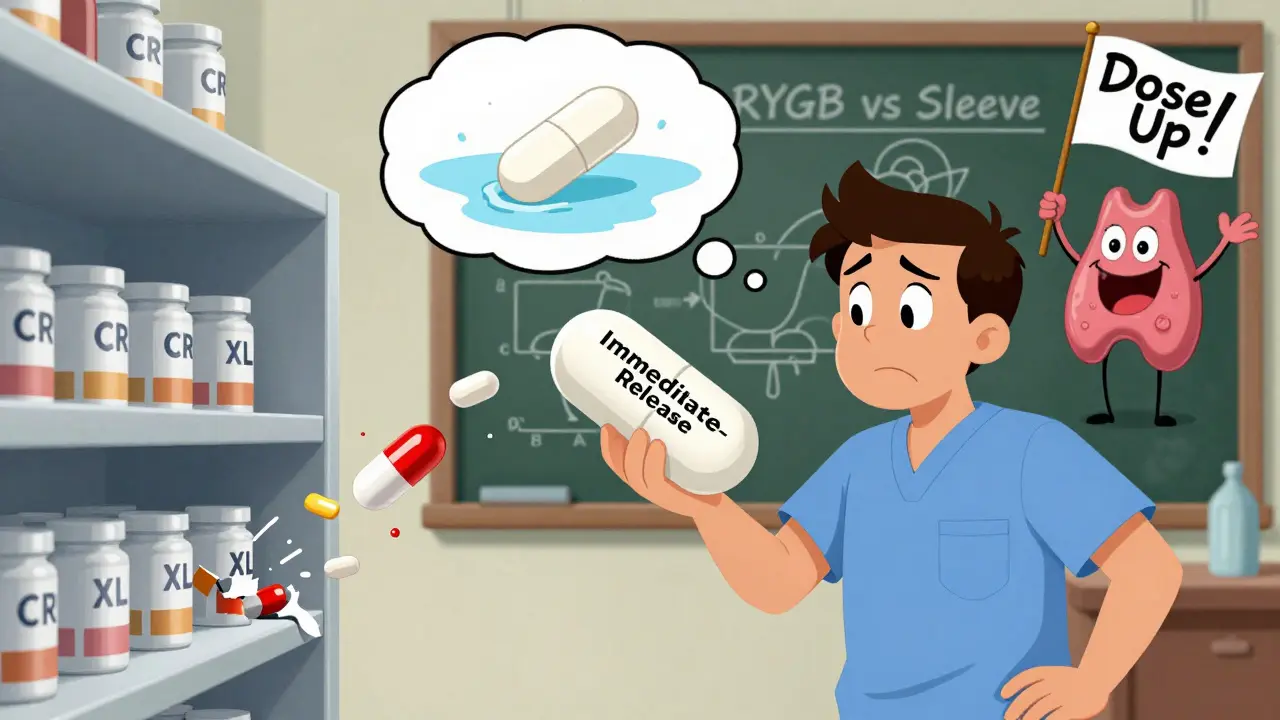
Then there’s the speed. Normally, food takes 2-5 hours to leave your stomach. After RYGB, it’s 30-60 minutes. Pills zip through too fast. Extended-release tablets are designed to slowly release medicine over 8-12 hours. But if they’re rushed past the absorptive parts of the small intestine in under an hour, they never get the chance. The result? Half the drug, or more, just exits your body unused.
Which Medications Are Most Affected?
Not all drugs are created equal. Some are barely touched. Others are completely undermined. Here’s what you need to watch for:- Extended-release (ER) and delayed-release (DR) pills: These are the biggest problem. Glipizide XL, metformin ER, oxycodone CR, and venlafaxine XR all show 30-60% drops in absorption after RYGB. Mayo Clinic data shows nearly half of patients on these needed to switch to immediate-release versions.
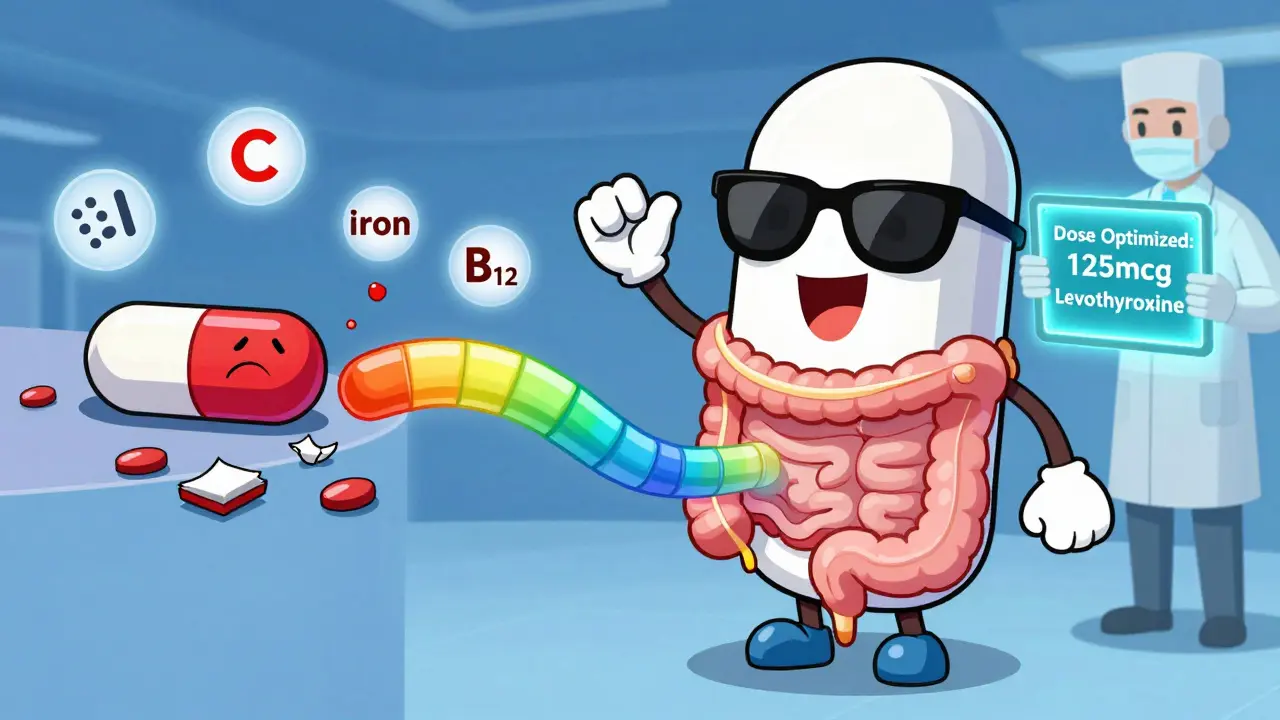
- Acid-dependent drugs: Levothyroxine, iron, calcium, vitamin B12, and some antifungals rely on stomach acid. After surgery, their absorption can drop by 25-40%. Many patients end up doubling their levothyroxine dose.
- Lipophilic drugs: Drugs that dissolve in fat-like cyclosporine, some statins, and certain antidepressants-need bile salts to be absorbed. After RYGB, bile mixes less efficiently, cutting absorption.
- Enteric-coated pills: These are meant to dissolve only in the small intestine. But if the duodenum is bypassed, the pill may not even reach the right spot. They often pass through whole.
One patient on Reddit shared how his levothyroxine dose jumped from 75mcg to 125mcg after RYGB. His TSH levels stayed high for months until his pharmacist caught the issue. That’s not rare. A 2022 survey found 63% of community pharmacists had seen at least one case of medication failure directly tied to bariatric surgery in the past year.
Procedure Matters: RYGB vs. Sleeve vs. Other Types
Not all bariatric surgeries are equal when it comes to meds. The type of surgery you had makes a huge difference.| Surgery Type | Primary Mechanism | Impact on Drug Absorption | Medications Most Affected |
|---|---|---|---|
| Roux-en-Y Gastric Bypass (RYGB) | Malabsorptive + restrictive | Severe reduction (up to 60% for ER drugs) | Metformin ER, levothyroxine, warfarin, calcium, iron, cyclosporine |
| Sleeve Gastrectomy | Restrictive only | Mild to moderate (15-20% reduction) | Levothyroxine, iron, enteric-coated pills |
| Adjustable Gastric Band | Restrictive only | Minimal direct impact | Food-dependent drugs (e.g., mycophenolate) |
| Biliopancreatic Diversion (BPD/DS) | Severe malabsorption | Very severe (50-70% reduction) | Most oral drugs, fat-soluble vitamins, anticoagulants |
RYGB patients are nearly twice as likely to need medication changes compared to sleeve patients. Why? Because RYGB removes the duodenum from the digestive path. That’s where many drugs are absorbed. Sleeve surgery keeps the duodenum intact, so most absorption still happens normally. But even sleeve patients often need higher doses of levothyroxine and iron because the stomach’s acid production drops.
What Should You Do? Practical Steps
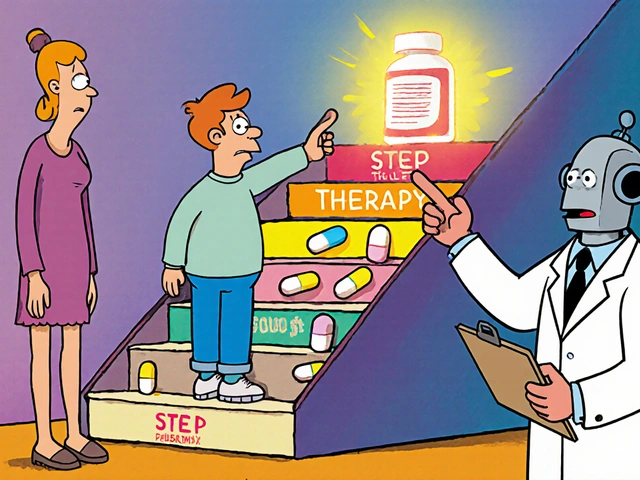
You can’t just keep taking your old pills and hope for the best. Here’s what actually works:- Switch ER/DR pills to immediate-release versions. For example, switch metformin ER to regular metformin, taken 2-3 times daily. The American Society for Metabolic and Bariatric Surgery recommends a 1:1.25 conversion ratio for metformin ER to immediate-release.
- Take thyroid meds on an empty stomach. Levothyroxine should be taken 30-60 minutes before breakfast. After surgery, even food can block absorption. A University of Florida study showed 22% higher absorption when taken before food.
- Use liquids or crushed pills when possible. In the first 3 months after surgery, liquid formulations are preferred. If your pill is not enteric-coated or extended-release, crushing it and mixing with water can help absorption. Always check with your pharmacist first.
- Monitor blood levels. For drugs with narrow therapeutic windows-warfarin, phenytoin, cyclosporine, lithium-regular blood tests are non-negotiable. The ASMBS recommends weekly checks for anticoagulants for the first 3 months.
- Recheck your supplements. Calcium citrate (not carbonate), vitamin D, vitamin B12, and iron need higher doses and often need to be taken separately. Many patients need 1,200-1,500mg of calcium citrate daily after RYGB.
One UK hospital system reduced readmissions by 34% after implementing a simple 5-step checklist for pharmacists: 1) Identify surgical type, 2) Flag high-risk meds, 3) Review formulation, 4) Check timing, 5) Schedule follow-up labs.
What’s New in 2025?
The field is evolving fast. In January 2024, the European Medicines Agency made it mandatory for all new oral drugs to include bariatric surgery absorption data in their approval packages. That means future medications will be designed with this population in mind.New tech is helping too:
- PH-adaptive capsules: Being tested in Copenhagen, these capsules change their shell in higher pH environments to release drugs properly even after bypass surgery. Early results show 85% absorption versus 45% for regular pills.
- Subcutaneous implants: The ITCA 650 implant for diabetes (exenatide) bypasses the gut entirely. In post-RYGB patients, it works just as well as it does in non-surgical patients.
- AI dosing tools: Over 80 U.S. hospitals now use AI calculators that factor in surgery type, weight, labs, and meds to suggest doses. One tool cut dosing errors by 41% in its first year.
And in the future? Mayo Clinic is testing pharmacogenomic testing before surgery. If you’re a slow metabolizer of certain drugs, your pre-op dose might be adjusted based on your genes-not just your stomach size.
When to Call Your Pharmacist or Doctor
Don’t wait for a crisis. Call your pharmacist or doctor if you notice:- Your medication doesn’t seem to be working anymore
- You’re taking more pills than before
- You’re having side effects that weren’t there before
- You’ve had blood tests showing levels are too high or too low
- You’re told your pills didn’t dissolve in your stomach (some patients report seeing whole pills in stool)
These aren’t signs you’re doing something wrong. They’re signs your body changed-and your meds need to change with it.
Do all bariatric surgeries affect medication absorption the same way?
No. Roux-en-Y gastric bypass (RYGB) and biliopancreatic diversion cause the most significant changes because they bypass parts of the small intestine where most drugs are absorbed. Sleeve gastrectomy mainly reduces stomach size and acid, so absorption issues are milder. Gastric banding has almost no direct effect on absorption-only indirect effects from reduced food intake.
Can I still take extended-release pills after bariatric surgery?
Generally, no. Extended-release pills are designed to release medication slowly over 8-12 hours as they travel through the intestines. After RYGB or similar procedures, the transit time is too short-often under an hour. This means the drug doesn’t have time to release properly, and much of it passes through unused. Most guidelines recommend switching to immediate-release versions.
Why does my thyroid medication not work after surgery?
Levothyroxine needs stomach acid to dissolve properly. After surgery, especially RYGB, stomach pH rises from 1.5-3.5 to 4.0-6.0, making it harder for the pill to break down. Also, the bypassed duodenum is a key absorption site. Many patients need to increase their dose by 25-50% and take it on an empty stomach 30-60 minutes before eating. Blood tests (TSH) should be checked 6-8 weeks after surgery and then every 3 months.
Should I crush my pills after bariatric surgery?
Only if they’re not enteric-coated or extended-release. Crushing these types can be dangerous-enteric coatings prevent stomach irritation, and extended-release coatings control timing. For regular tablets, crushing and mixing with water can improve absorption, especially in the first few months. Always check with your pharmacist before crushing any medication.
How often should I get blood tests after bariatric surgery?
For high-risk drugs like warfarin, phenytoin, or cyclosporine, check levels weekly for the first month, then monthly for 3 months, then every 3-6 months. For thyroid meds (levothyroxine), check TSH at 6-8 weeks post-op, then every 3 months until stable. Calcium, vitamin D, and iron should be checked every 3-6 months indefinitely. Many patients need lifelong monitoring.