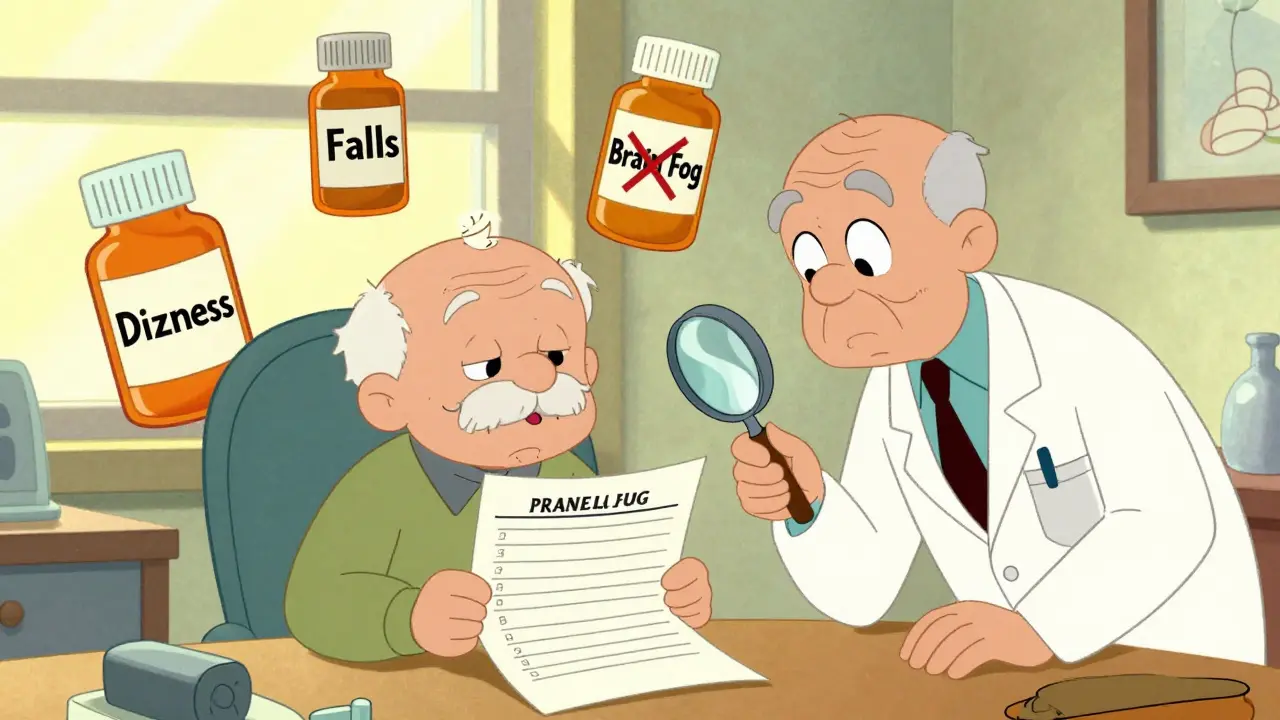
Many older adults take five or more medications every day. Some of these drugs were helpful years ago, but now they might be doing more harm than good. Dizziness. Confusion. Falls. Fatigue. These aren’t just normal parts of aging-they’re often side effects of medications that no longer match your current health goals. The good news? You don’t have to keep taking them all. Deprescribing-the careful, planned reduction or stopping of medications-isn’t about giving up care. It’s about getting back control of your life.
Why Deprescribing Matters More Than You Think
About 15% of seniors taking five or more medications experience serious side effects like falls, memory problems, or kidney damage. These aren’t rare accidents. They’re predictable risks. The more pills you take, the higher the chance one will clash with another-or simply outlive its usefulness. For example, a blood pressure pill that kept your numbers in check at 65 might now be pushing them too low at 80, making you lightheaded when you stand up. Or a statin prescribed for cholesterol years ago might no longer offer real benefit if your life expectancy has changed.
Doctors don’t always bring this up. A study found that 68% of seniors would like to take fewer medications-but only if their doctor starts the conversation. That’s a big gap. You don’t need to wait for your doctor to notice. You can lead this discussion. And when you do, success rates jump by 92%.
What Deprescribing Is (and Isn’t)
Deprescribing isn’t quitting meds cold turkey. It’s not ignoring your health. It’s not省钱. It’s not about being ‘difficult.’ It’s a slow, smart, supervised process of removing drugs that no longer serve you-while keeping the ones that still do.
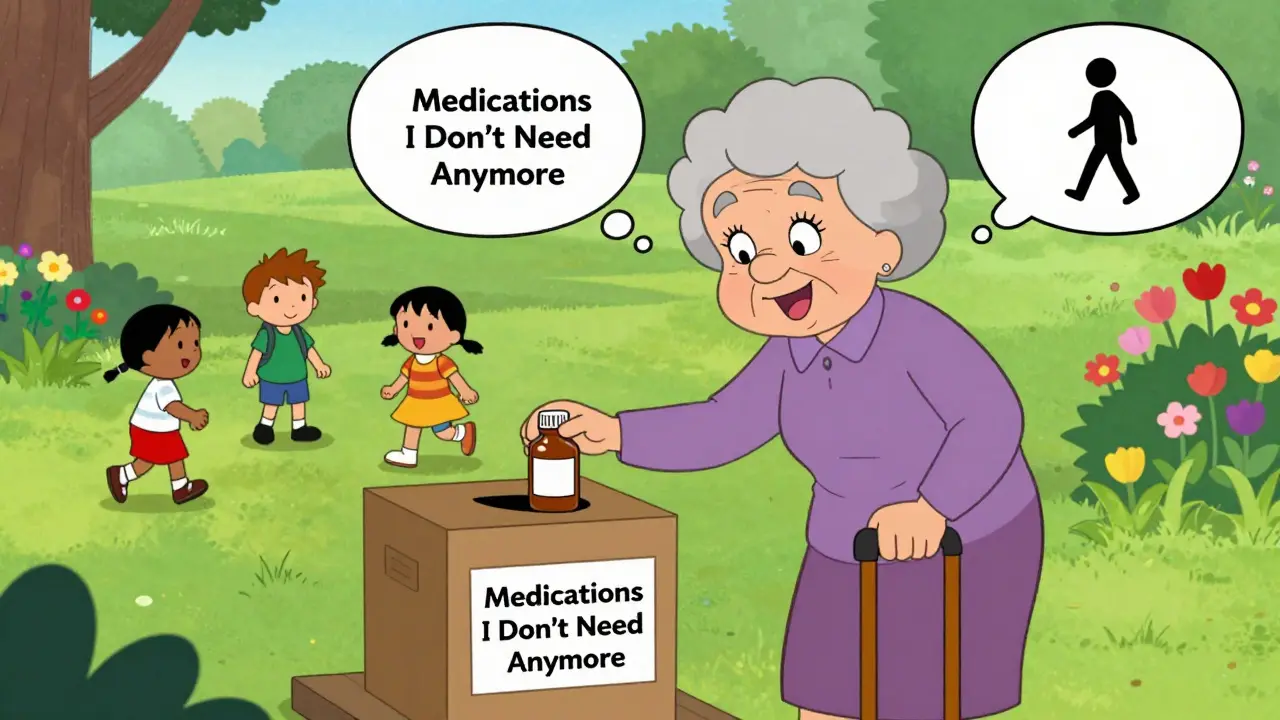
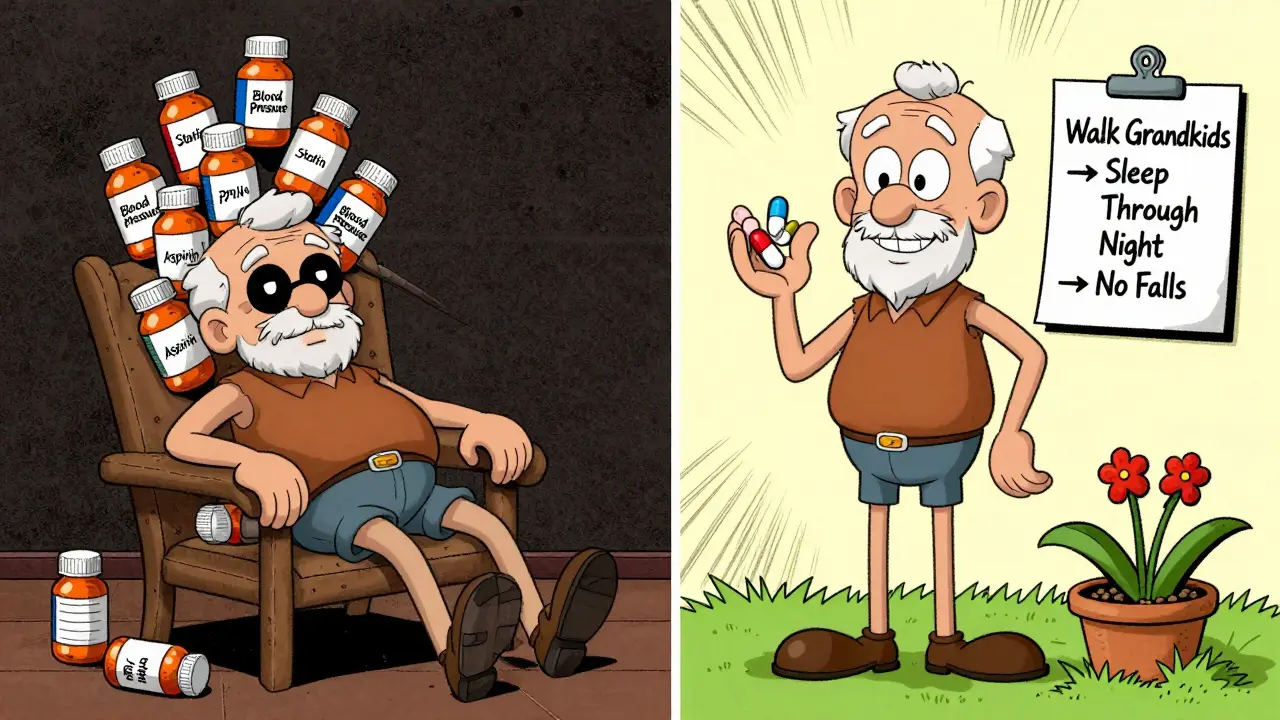
Think of it like cleaning out your closet. You keep the coats you wear, donate the ones that are too small or worn out. Same with meds. If a drug was meant to prevent a heart attack in your 50s but you’ve never had one and now your main goal is to walk your grandkids to school without falling, that medicine might not belong in your routine anymore.
Some medications are especially common targets for deprescribing:
- Anticholinergics (for overactive bladder or allergies)-linked to brain fog and memory loss
- Long-term benzodiazepines (for anxiety or sleep)-increase fall risk and dependency
- Proton pump inhibitors (for heartburn)-can cause nutrient loss and infections if used too long
- Multiple blood pressure or diabetes meds-especially if your numbers are already well-controlled
- Aspirin for prevention-unless you’ve had a heart attack or stroke
These aren’t ‘bad’ drugs. They’re just sometimes kept longer than needed. The key is matching them to your current life-not your past diagnosis.
How to Prepare for the Conversation
Walking into an appointment and saying, ‘I want to take fewer pills,’ often gets dismissed. But saying, ‘I’ve been having dizziness after taking my evening pill, and it’s making it hard to get up to make tea for my grandkids,’? That gets attention.
Here’s how to get ready:
- Write down every medication you take. Include prescriptions, over-the-counter pills, vitamins, and supplements. Don’t assume your doctor knows you take melatonin or calcium. Many patients forget these-and they can interact.
- Track side effects. Note when they happen, how bad they are, and what you can’t do because of them. Example: ‘Drowsiness starts 1 hour after taking the sleep pill. I miss breakfast because I can’t get out of bed.’
- Pick 1 or 2 meds to focus on. Don’t try to tackle all of them at once. Choose the ones causing the most trouble or the ones you’re most worried about.
- Connect meds to your goals. What matters most to you now? Walking without falling? Sleeping through the night? Eating without nausea? Say it out loud: ‘I want to be able to garden again without feeling dizzy.’ That’s powerful.
- Bring printed info. Print a page from the Canadian Deprescribing Guidelines on the specific drug you’re asking about. Doctors trust evidence. Seeing it in writing helps.
Pro tip: When booking your appointment, say, ‘I’d like a 20-minute slot for a medication review.’ Don’t just say ‘annual check-up.’ That way, they’ll set aside real time-not squeeze it in at the end.
How to Start the Talk
Use the ‘ask-tell-ask’ method. It works every time.
- Ask: ‘What’s your view on how my medications are working for me right now?’
- Tell: ‘I’ve noticed I’ve been dizzy after taking my evening pill. I’ve also been falling a few times this month. I’m worried it’s the meds. I’d really like to be able to walk safely with my grandkids.’
- Ask: ‘What’s the safest way to check if we could reduce any of these?’
Don’t say: ‘I think I should stop this pill.’
Do say: ‘I’ve read that this type of medicine can cause balance problems in older adults. I’m wondering if it’s still helping me-or if it might be hurting more than helping.’
Studies show that when patients frame deprescribing around quality of life-not cost, not convenience, not just ‘fewer pills’-doctors are 5.8 times more likely to agree to a plan. And 78% of patients respond best when the doctor explains: ‘Some of your meds may be hurting you by making you dizzy or confused.’ That’s clearer than saying ‘this is inappropriate prescribing.’
What to Expect During the Conversation
Good news: Your doctor doesn’t have to agree to everything you ask. But they should agree to explore it.
Most deprescribing happens slowly. You won’t stop a pill cold. You’ll likely:
- Reduce the dose by 25% every few weeks
- Try a ‘drug holiday’-skip it for a few days to see how you feel
- Switch to a safer alternative
- Monitor symptoms closely with follow-up visits
Ask: ‘How will we know if it’s safe to keep reducing?’
They should give you a plan: ‘We’ll check your blood pressure in two weeks. If you’re not dizzy, we’ll lower the dose again.’
Don’t let them brush you off with, ‘We’ll see next year.’ Push for a timeline. ‘Can we schedule a check-in in 4 weeks?’
Common Fears-and How to Answer Them
Many seniors worry:
- ‘What if I get worse?’ That’s valid. But ask: ‘What’s worse-taking this pill and falling, or trying to reduce it and staying steady?’ Most side effects improve within days or weeks after stopping.
- ‘Will you think I’m difficult?’ Doctors want you to speak up. In fact, 89% say they trust patients more when they come prepared with concerns.
- ‘I’ve been on this for years-how do I know it’s safe to stop?’ You don’t have to guess. Ask: ‘Is there evidence that this still helps someone my age with my health status?’
- ‘My other doctor said I need this.’ That’s okay. Say: ‘I’d like to make sure all my doctors are on the same page. Can we talk about this together?’
Remember: If your doctor says no, ask why. Then ask if you can try a small reduction first. Many times, they’ll agree to a trial.
What Happens After the Appointment
Get the plan in writing. Ask for:
- A list of which meds will be changed
- The new dose or schedule
- What symptoms to watch for
- When to come back
Keep a simple journal for two weeks after any change: note energy levels, dizziness, sleep, appetite. Bring it to your next visit.
If you feel worse after stopping a pill-don’t panic. Call your doctor. It might be a withdrawal effect (common with some antidepressants or sleep aids) or a sign the medication was still needed. Either way, you’ll need guidance.
And if your doctor doesn’t take you seriously? Ask for a referral to a geriatrician. They specialize in older adults’ medication needs. Or ask your pharmacist-they’re often trained in deprescribing too.
You’re Not Asking for Less Care. You’re Asking for Better Care.
Deprescribing isn’t about cutting corners. It’s about cutting clutter. It’s about making sure every pill you take still has a job to do-one that matters to you.
Medicare now requires doctors to review medications during annual wellness visits. Electronic systems flag risky prescriptions. The CDC’s ‘Right Size My Meds’ campaign is reaching millions. This isn’t a fringe idea. It’s becoming standard.
But it only works if you speak up.
You’ve lived through decades of medical changes. You know your body better than any chart. You’ve earned the right to ask: ‘Is this still helping me?’
Start small. Prepare. Speak clearly. And remember: the goal isn’t fewer pills. It’s more life.
What exactly is deprescribing?
Deprescribing is the planned, supervised process of reducing or stopping medications that are no longer beneficial-or that may be causing more harm than good. It’s not about stopping all meds, but about keeping only the ones that improve your daily life and safety, especially as your health goals change with age.
Can I just stop taking a pill on my own?
No. Some medications, like blood pressure pills, antidepressants, or steroids, can cause serious withdrawal effects if stopped suddenly. Always talk to your doctor first. Even if you think a pill is harmless, it might interact with others or mask an underlying issue. Deprescribing should always be guided and gradual.
How do I know which meds to question?
Look for drugs that were prescribed years ago, especially for conditions you no longer have. Common targets include sleeping pills, anticholinergics (for bladder or allergies), long-term proton pump inhibitors (for heartburn), and multiple blood pressure or diabetes meds if your numbers are stable. Use the Beers Criteria or STOPP/START guidelines as a starting point-they’re trusted tools doctors use.
What if my doctor says no?
Ask why. If they say ‘it’s still necessary,’ ask for evidence: ‘Is there data showing this helps someone my age with my health goals?’ If they still refuse, request a referral to a geriatrician or ask to speak with your pharmacist. You can also ask for a trial reduction-like lowering the dose for 4 weeks-to see how you feel. Sometimes, a small step opens the door.
Will reducing meds make me sicker?
Sometimes, yes-but not usually from stopping the right med. Often, the side effects you’re experiencing now-dizziness, confusion, fatigue-are caused by the meds themselves. Studies show that after deprescribing, most people report feeling better, sleeping better, and having fewer falls. The key is doing it slowly and monitoring symptoms closely with your doctor.
Is deprescribing covered by insurance?
Yes. Since 2024, Medicare requires annual medication reviews as part of the Annual Wellness Visit-and it’s fully covered. Many private insurers now cover similar visits. You don’t need special approval. Just ask for a ‘medication optimization appointment’ when scheduling.
How long does it take to see results after stopping a med?
It varies. For drugs that cause dizziness or brain fog, improvement can happen in days. For others, like sleep aids or antidepressants, it may take 2-6 weeks. Your doctor should give you a timeline and signs to watch for. Keep a simple journal: note energy, mood, balance, and sleep each day. That helps both of you decide what’s working.