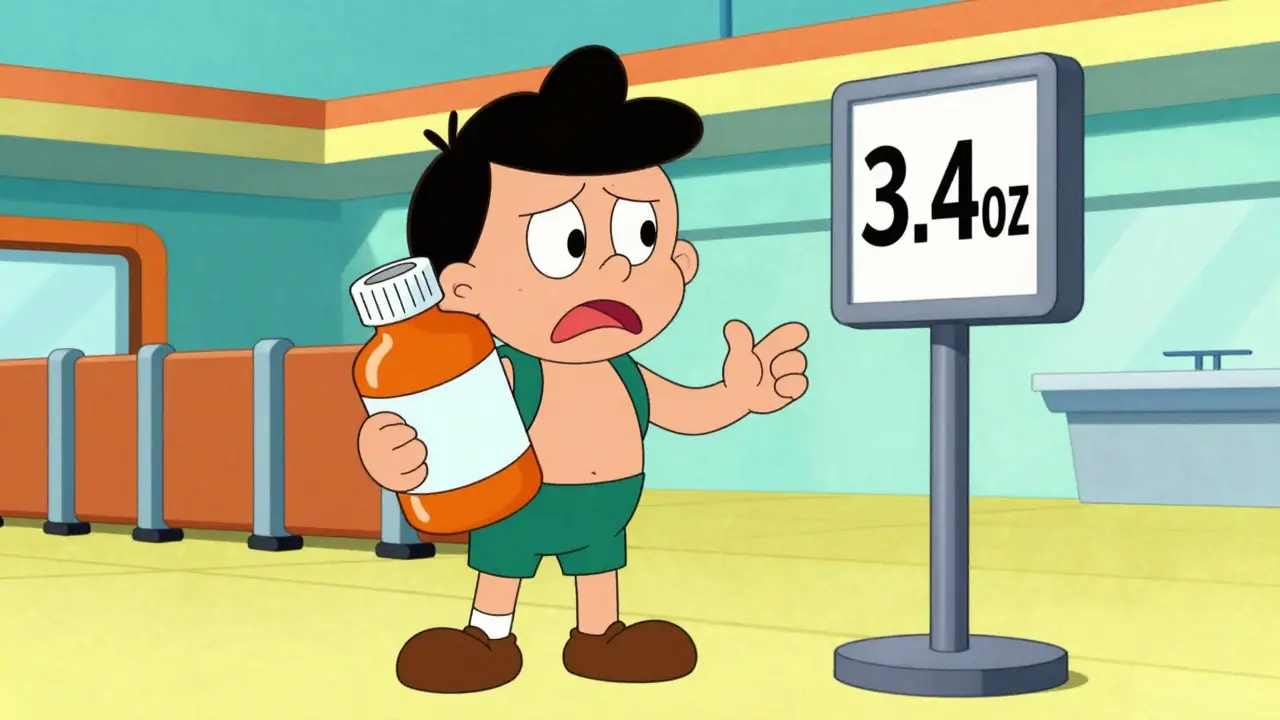
Ever stood in a security line worrying if your liquid medication will get tossed because it's over 3.4 ounces? You aren't alone. Navigating airport security when you have a chronic condition or a daily prescription can feel like a gamble, but the rules are actually much friendlier than the standard 3-1-1 liquid restriction suggests. The goal is simple: keep the planes safe without compromising your health.
The Big Question: What Actually Gets Through Security?
The most important thing to know is that TSA medication guidelines provide a massive exemption for medical necessities. If you have an FDA-approved prescription, you can bring it in almost any form-pills, liquids, or topical creams-without worrying about quantity limits.
If you've heard of the "3-1-1 rule" (which limits liquids to 3.4 ounces in one quart-sized bag), breathe a sigh of relief. Medically necessary liquids are completely exempt from this. This means you don't have to panic if your prescription cough syrup or a large bottle of saline solution exceeds that tiny limit. Common items that fall under this exemption include:
- Insulin in pre-filled pens or Omnipod delivery systems.
- Prescription creams for eczema or psoriasis.
- Medically necessary gels like Neosporin or hydrocortisone.
- Contact lens solution and prescription syrups.
The only real catch? You need to declare these liquids to the officer. Just pull them out of your bag and let the agent know they are medical supplies. While you don't technically have to keep them in the original pharmacy bottle, doing so saves you a lot of headache (more on that in a bit).
Where to Pack Your Meds: Carry-On vs. Checked Bags
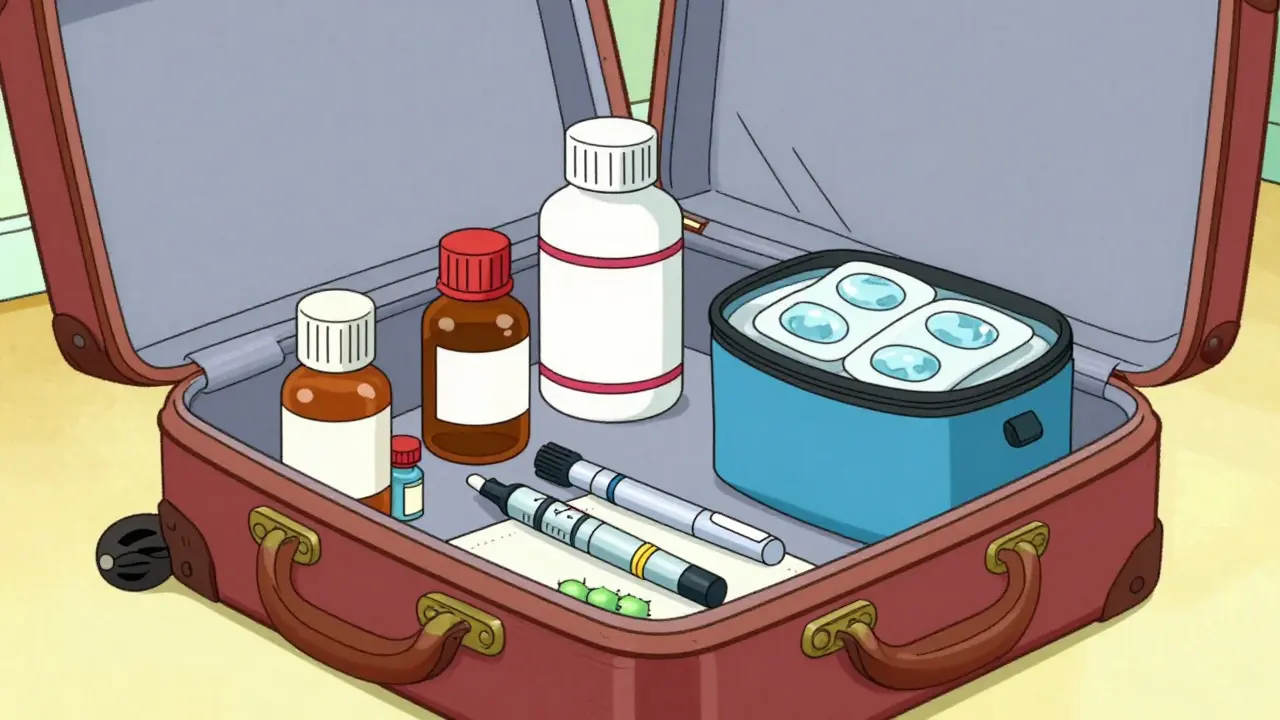
This is a non-negotiable for seasoned travelers: carry-on luggage is the only place your medication should live. Never, ever put your prescriptions in a checked bag. Why? Because bags get lost, belts break, and cargo holds can experience extreme temperature swings that might ruin your meds.
Airlines like United Airlines have a strict "carry-on only" policy for medical supplies. Imagine the nightmare of arriving in a foreign city only to find your life-saving medication is sitting in a warehouse in another state. Keeping them with you ensures you have access to your doses throughout the flight and in case of unexpected delays.
| Item Type | Recommended Storage | TSA Requirement | Pro Tip |
|---|---|---|---|
| Pills/Tablets | Original Bottle | Allowed unlimited | Keep a copy of the script |
| Liquid Meds | Original Bottle | Exempt from 3-1-1 | Declare to officer separately |
| Injectables | Cooler/Insulated Bag | Allowed ( declare) | Frozen gel packs are okay |
| Medical Devices | Carry-on | Visual inspection option | Notify officer before screening |
Dealing with Controlled Substances and CBD
Here is where things get tricky. While the TSA is lenient with insulin, they are incredibly strict about anything that violates federal law. This is especially true for CBD and medical marijuana.
Even if you have a legal prescription in your home state, marijuana is still illegal under U.S. federal law. The only exception for CBD products is if they contain 0.3% THC or less on a dry weight basis. If your CBD oil exceeds that limit, it will be confiscated, regardless of your medical need.
Be warned: enforcement can be inconsistent. Some travelers report that officers confiscate compliant CBD oil anyway. To minimize risk, always carry a lab report (Certificate of Analysis) proving the THC content is below the 0.3% threshold. If you're traveling internationally, the stakes are even higher. A medication that is legal in the U.S., like Adderall or Xanax, could be a controlled substance in countries like Japan or the UAE, potentially leading to arrest or denial of entry.
Tips for a Stress-Free Security Screening
Most delays at security aren't caused by the drugs themselves, but by paperwork issues. A huge number of security delays happen because the name on a prescription doesn't perfectly match the government ID. If your ID says "Jonathan" but your bottle says "Jon," an officer might pause the process to verify your identity.
To glide through the checkpoint, follow these expert strategies:
- Stick to Original Labels: It's tempting to use a generic pill organizer to save space, but the CDC warns that unlabeled containers lead to misidentification, especially at international borders. Keep the original pharmacy label intact.
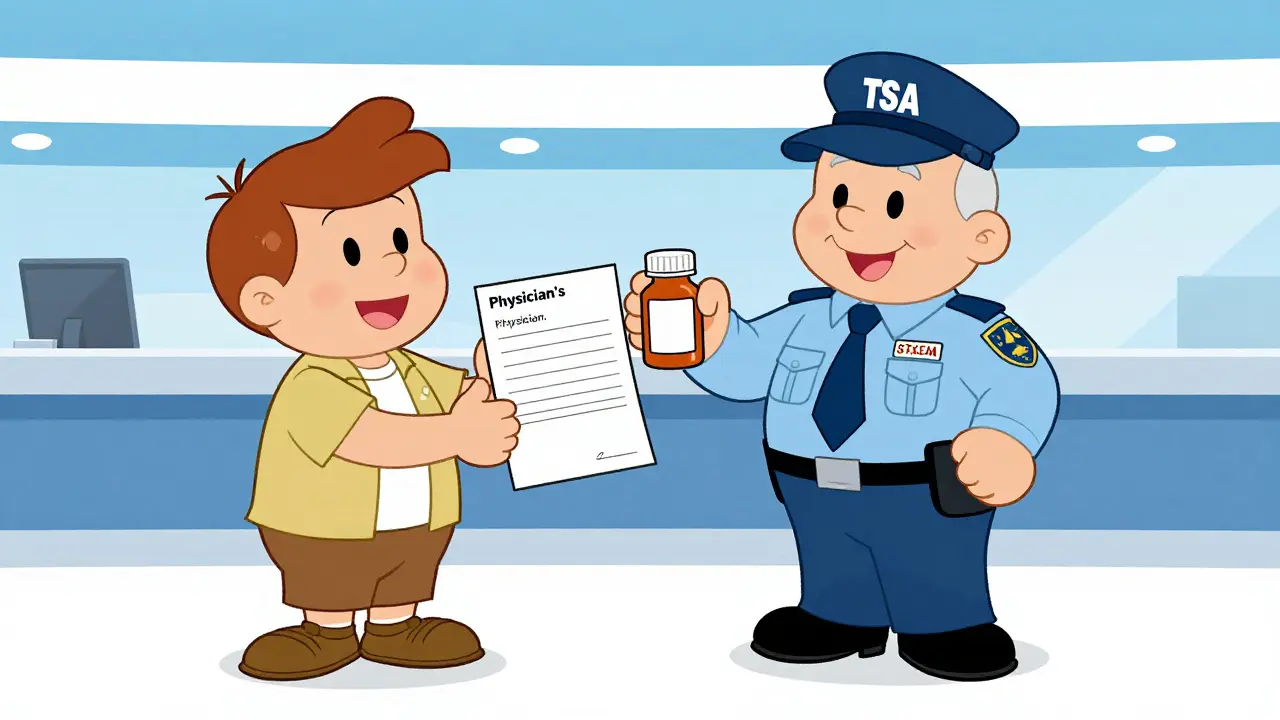
- Get a Physician's Letter: For injectables, pumps, or high-dosage controlled substances, a signed letter from your doctor explaining the medical necessity is a lifesaver. It removes the guesswork for the TSA officer.
- Manage Temperature: If your meds need to stay cold, use frozen gel packs. Under current directives, TSA allows these as long as they are completely frozen when you enter the checkpoint.
- Handle Devices with Care: If you use a Continuous Glucose Monitor (CGM) or an insulin pump, you can request a visual inspection instead of putting the device through an X-ray machine.
If you have complex medical equipment, don't leave it to chance. Contact the TSA Cares program at least 72 hours before your flight to arrange specialized assistance.
International Travel and Customs Considerations
Once you clear the TSA, you still have to deal with Customs and Border Protection (CBP). While TSA cares about security, CBP cares about what's entering the country. Generally, CBP recommends bringing no more than a 90-day supply of medication. If you're staying longer, you'll need detailed documentation to prove you aren't importing drugs for sale.
If you're heading abroad, don't assume the rules are the same. Use the TSA app's integrated tools or consult the IATA guidelines to check if your specific medication is restricted in your destination country. Being caught with a prohibited substance abroad isn't just a delay-it can be a legal crisis.
Do I need to take my pills out of my carry-on bag at security?
Generally, no. Pill bottles can stay in your bag. However, if you have liquid medications over 3.4 ounces, you should remove them and declare them to the officer to speed up the process.
Can I use a pill organizer for my trip?
You can, but it's risky. Both the CDC and travel experts recommend using original pharmacy bottles. If you use an organizer, carry a copy of your prescriptions or a doctor's note to avoid delays or confiscation, especially when crossing international borders.
What happens if my CBD oil is confiscated?
If it's found to be over the 0.3% THC limit, it will be seized. If you believe it was a mistake and the product is compliant, you can try to provide a lab report, though once an item is confiscated by TSA, it is rarely returned.
Are frozen gel packs allowed for insulin?
Yes. TSA allows frozen gel packs for temperature-sensitive medications, provided they are completely frozen at the time of screening.
Do I need a doctor's note for all medications?
Not for every single pill, but it is highly recommended for controlled substances, needles/syringes, or medical devices like pumps. It serves as a backup if your labels are damaged or questioned.
Next Steps for Travelers
If you're traveling soon, start by auditing your meds. Check the expiration dates and ensure the names on your labels match your ID exactly. If you're using a TSA PreCheck membership, you'll have an even easier time, as many pre-approved travelers can keep their medications in their bags during screening.
For those with hidden disabilities or who feel overwhelmed by the security process, look for the Sunflower Lanyard program at major U.S. airports. This discreet signal lets staff know you may need extra time or support when presenting your medical supplies. Finally, if you're heading to a country with strict drug laws, spend thirty minutes on the official embassy website of that country to ensure your medication isn't on their "black list."