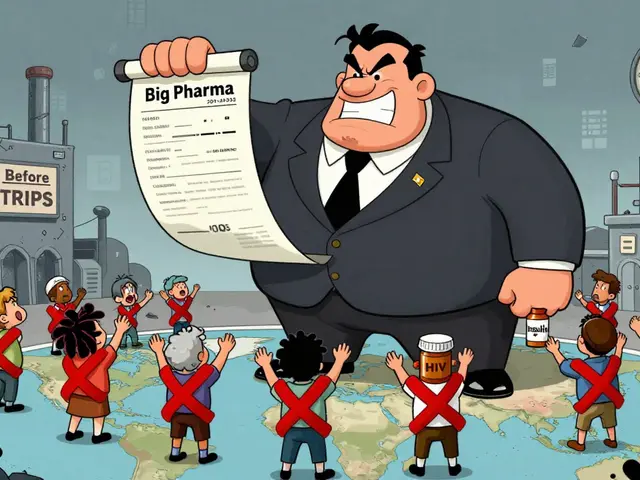
When a life-saving medication has no generic version, the price can be staggering-$10,000, $50,000, even $500,000 a year. For many patients, that’s not just expensive-it’s impossible. But there’s a lifeline: patient assistance programs (PAPs). These are not charity handouts. They’re structured, legal, and often essential tools designed to help people get the brand-name drugs they need when there’s no cheaper alternative.
Why PAPs Matter When There’s No Generic
Generic drugs cut costs by up to 85%. But when a drug is new, complex, or used for rare conditions, generics don’t exist. Think of drugs like Soliris for paroxysmal nocturnal hemoglobinuria, Orkambi for cystic fibrosis, or even newer cancer therapies like CAR-T treatments. These aren’t just expensive-they’re often the only option. Without a generic, your choices are simple: pay full price, skip doses, or find help. That’s where PAPs step in. In 2022 alone, pharmaceutical companies and nonprofit groups gave out $4.7 billion in assistance to over 1.2 million patients. Most of that went to people needing brand-name drugs with no generic alternatives. For many, it’s the difference between living and dying.How PAPs Actually Work
PAPs don’t work the same way as insurance. They’re direct aid from drugmakers or nonprofits. There are three main types:- Full coverage (55% of programs): You pay $0. The drug is shipped to your pharmacy or home.
- Tiered assistance (30%): Your copay drops based on income. Most programs use 400% of the Federal Poverty Level as the cutoff-$60,000 for a single person in 2023.
- Fixed-dollar help (15%): You get a set amount, like $500 per month, toward your drug cost.
- Proof of income (tax returns, pay stubs, or W-2s)
- A valid prescription from your doctor
- Proof you’re uninsured, or that your insurance won’t cover the drug
- A signed form from your doctor confirming the need
Who Can Use Them? The Real Rules
You don’t need to be broke. Most programs accept people earning up to 400% of the Federal Poverty Level. That’s $60,000 for one person, $80,000 for two. If you have insurance, you might still qualify-if your plan doesn’t cover the drug or has a high deductible. But here’s the catch: Medicare Part D beneficiaries can’t use manufacturer copay assistance. Since January 2020, federal rules block drugmakers from helping Medicare patients with their copays. That means seniors on Medicare must rely on nonprofit foundations like the Patient Access Network Foundation or the Chronic Disease Fund. These groups have different income limits and often require more paperwork-but they’re your only option if you’re on Medicare.The Hidden Problem: Accumulator Adjustments
You might think, “If I get free drugs from a PAP, my insurance deductible should count that toward my out-of-pocket max.” That’s logical. But it’s not how it works. Most major pharmacy benefit managers-like Express Scripts, Optum, and CVS Caremark-use something called accumulator adjustment. This means the value of your PAP assistance doesn’t count toward your deductible or out-of-pocket maximum. So if your drug costs $12,000 a month and your PAP covers it, you still have to pay $12,000 out of your own pocket every month until you hit your plan’s cap. Your PAP help is real-but it doesn’t help you reach your insurance’s safety net. This affects 78% of commercially insured patients. It turns what should be a lifesaver into a financial trap. You’re getting free medicine, but you’re still on the hook for thousands in other costs.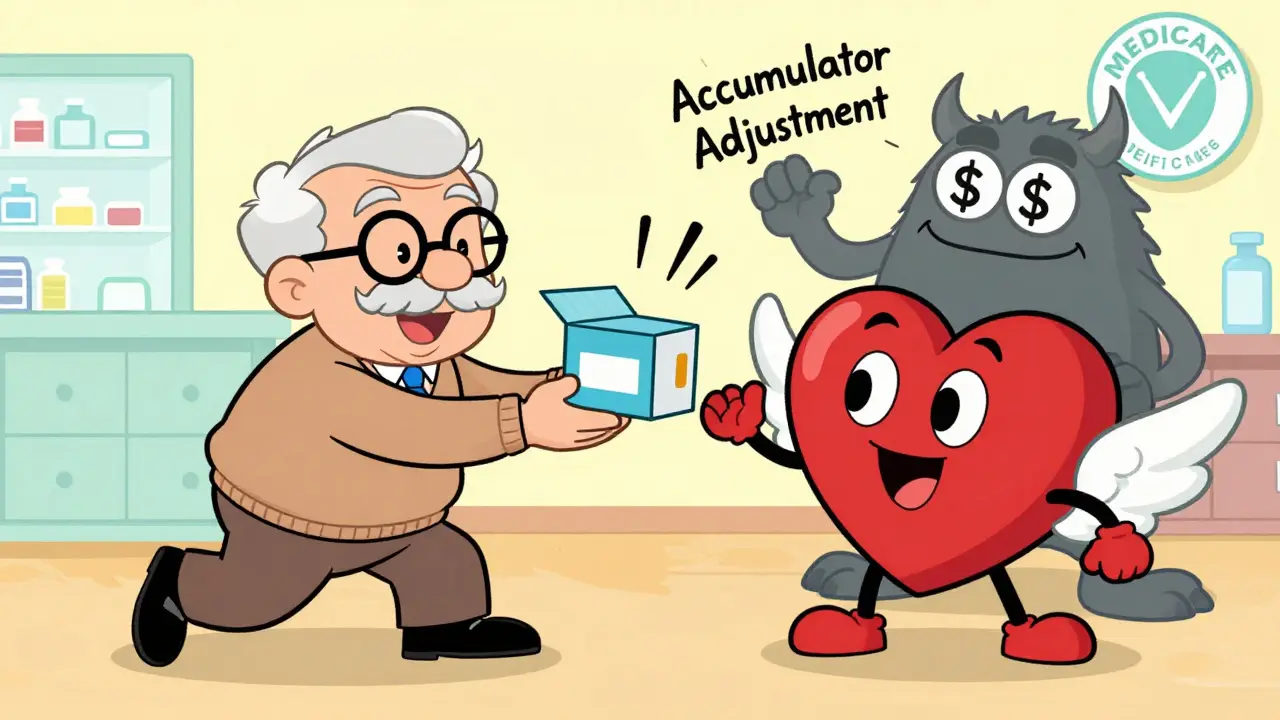
PAPs vs. Other Options
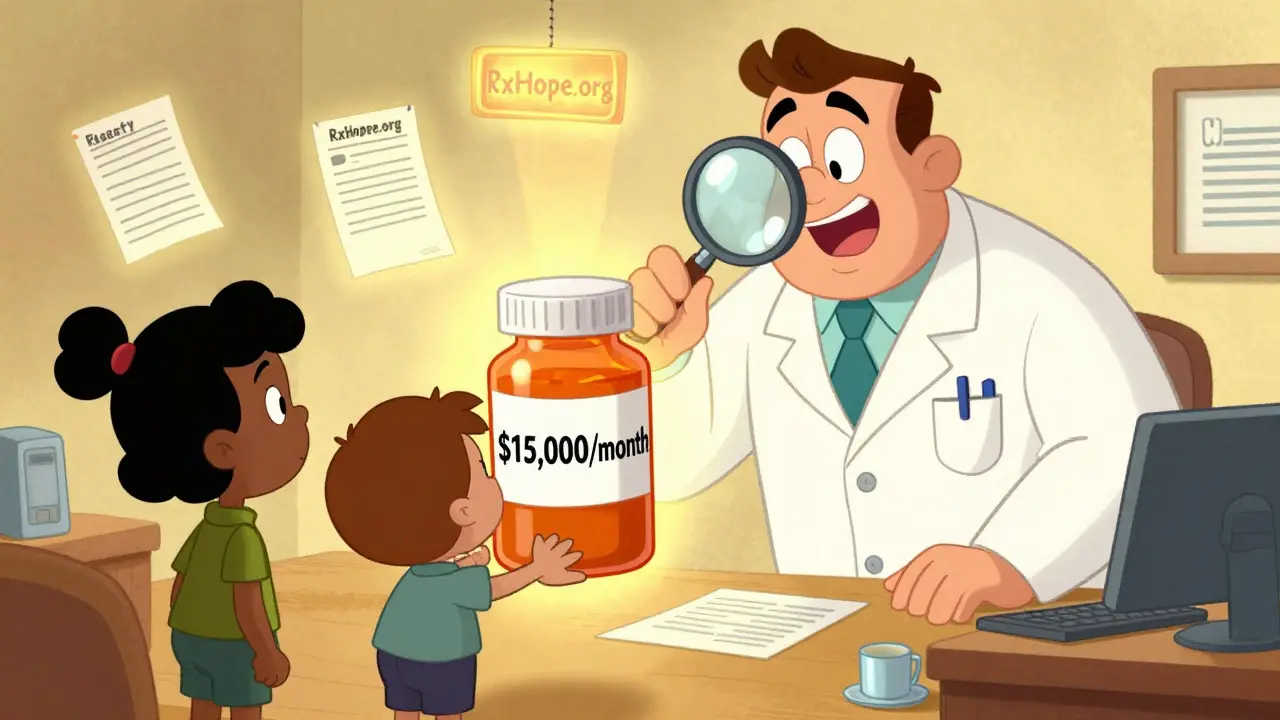
What about discount cards like GoodRx? They’re easy, but they’re not the same. GoodRx gives you discounts at the pharmacy counter. For generics, it saves you 50-80%. For brand-name drugs with no generic? It saves you about 8%. That’s $1,200 off a $15,000 drug-not enough to matter. State pharmaceutical assistance programs (SPAPs) exist too. Pennsylvania’s PACE program, for example, helps seniors with income under $28,500 cap assistance at $400 per drug per month. That’s helpful-but not enough for a $50,000 drug. PAPs are the only option that can bring your monthly cost from $15,000 to $0. That’s why they’re the go-to for uninsured patients and those with rare diseases.How to Apply: A Step-by-Step Guide
Applying for PAPs feels overwhelming. Here’s how to make it manageable:- Find the right program. Use RxHope’s free online screener. It checks 92% of manufacturer programs and tells you which ones you qualify for.
- Gather documents. Get your most recent tax return or pay stubs. Get your prescription on doctor’s letterhead. If you have insurance, get a denial letter.
- Ask your doctor. Most programs need a signed form from your provider. Many offices now have medication access specialists who handle this for you. Ask if your clinic has one.
- Submit. Apply online if possible. Paper applications take longer and have higher rejection rates.
- Follow up. If you don’t hear back in 10 days, call. Applications get lost. Don’t assume silence means denial.
What If You’re Denied?
Denials happen. 38% of applications are rejected, usually because of missing documents or income verification errors. Don’t give up. You can appeal. The Patient Advocate Foundation says 41% of approved PAP cases required an appeal. Review the denial letter. Did they ask for a 2022 tax return? You gave them 2021? Fix it. Did they say your income is too high? Double-check the 400% FPL limit. Sometimes, even a small change-like excluding one source of income-can make you eligible.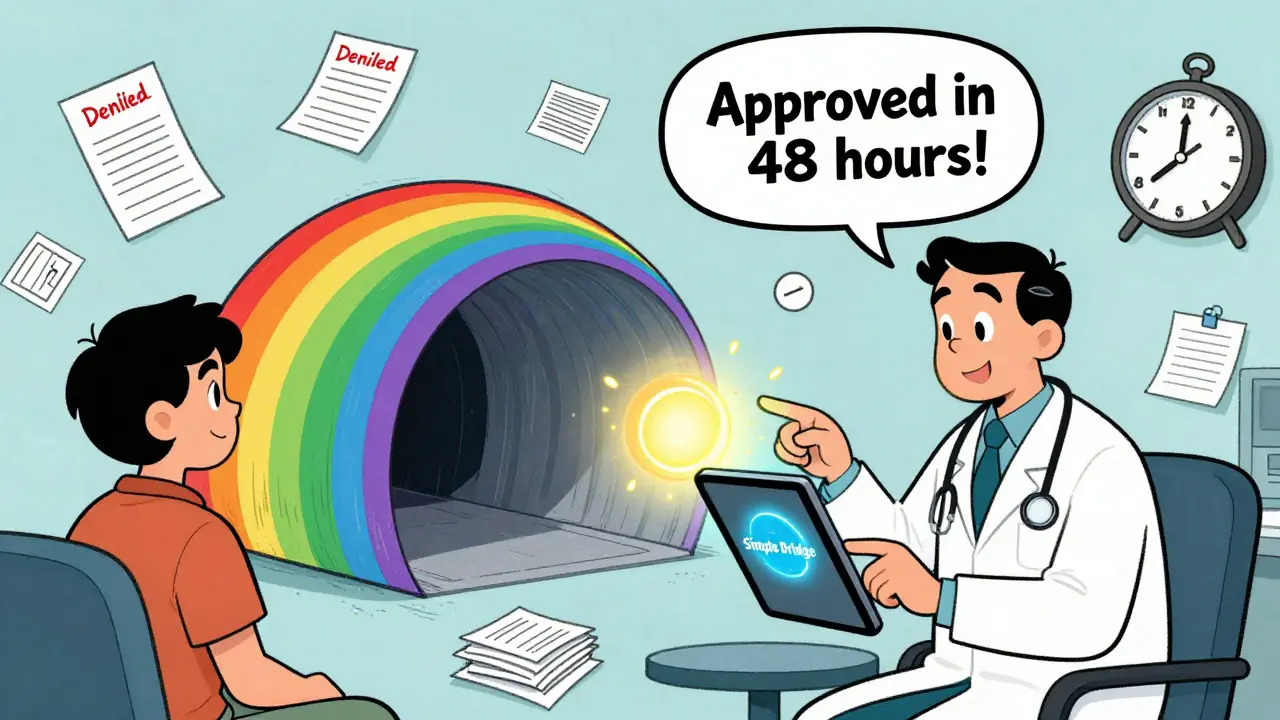
Real Stories, Real Impact
One patient on Reddit shared: “Without Gilead’s PAP for my $15,000/month HIV drug, I’d have chosen homelessness over bankruptcy. My $0 copay kept my apartment.” Another, on a cancer forum, wrote: “I was paying $1,400 a month for my leukemia drug until Novartis’s PAP kicked in. Zero out-of-pocket. But it took 11 hours of paperwork over three weeks. I almost quit. I’m glad I didn’t.” These aren’t rare cases. In 2022, patients using PAPs for brand-name cancer drugs were 37% less likely to skip doses because of cost. That’s not just money-it’s survival.What’s Changing in 2026?
The landscape is shifting. The Inflation Reduction Act banned manufacturer copay assistance for Medicare Part D patients starting January 2025. That pushes more seniors toward nonprofit PAPs, which are already stretched thin. Some drugmakers are making it easier. Eli Lilly’s “Simple Bridge” program cut its insulin PAP application from 17 steps to 5. Approval now takes 48 hours. New tools like the Patient Access Simulator let doctors check how much a patient could save with a PAP before writing the prescription. Epic’s electronic health record system is now integrating PAP tools directly into clinician workflows. But the big question remains: Are PAPs just a bandage on a broken system? Yes. They help people today. But they don’t fix why drugs cost $500,000 a year in the first place.What You Can Do Today
If you or someone you know needs a brand-name drug with no generic:- Don’t assume you can’t afford it.
- Don’t wait until you’re behind on payments.
- Don’t rely on discount cards-they won’t help enough.
- Start with RxHope.org. It’s free, fast, and covers nearly every major program.
- Ask your doctor or clinic if they have a medication access specialist.
- If you’re on Medicare, contact the Patient Access Network Foundation or the Chronic Disease Fund.
Frequently Asked Questions
Can I use a patient assistance program if I have insurance?
Yes, if your insurance doesn’t cover the drug, has a high deductible, or excludes it entirely. Many PAPs require proof that your insurer denied coverage. However, if you have commercial insurance, be aware of accumulator adjustment policies-your PAP help may not count toward your out-of-pocket maximum.
Do I need to be unemployed to qualify for a PAP?
No. Most programs accept people earning up to 400% of the Federal Poverty Level. In 2023, that’s $60,000 for a single person. You can work full-time and still qualify. The key is your total household income compared to the program’s limit.
Why can’t Medicare patients use drugmaker PAPs?
Federal rules since 2020 prohibit pharmaceutical companies from providing copay assistance to Medicare Part D beneficiaries. This is to prevent drugmakers from artificially lowering prices to influence Medicare spending. Medicare patients must use nonprofit foundation PAPs instead, which have different rules and income limits.
How long does it take to get approved for a PAP?
Manufacturer programs typically approve applications in 7-10 business days. Foundation programs take longer-14 to 21 days-because they require additional verification. Some new programs, like Eli Lilly’s Simple Bridge, now approve insulin PAPs in under 48 hours.
What if my PAP application gets denied?
Don’t accept the first denial. Review the reason carefully. Often, it’s a missing document or outdated income proof. Fix the error and reapply. About 41% of approved PAP cases required an appeal. Contact the Patient Advocate Foundation for free help with appeals.
Are there PAPs for rare diseases?
Yes. Nearly 85% of patients with rare diseases rely on PAPs because most treatments are brand-name only and extremely expensive. Organizations like the National Organization for Rare Disorders (NORD) maintain updated lists of programs for rare conditions. Many drugmakers have dedicated PAPs for orphan drugs.
Can I use more than one PAP at the same time?
Yes, if you qualify for multiple programs. For example, you might get full coverage from the drugmaker and supplemental help from a nonprofit for other medical costs. Some patients use PAPs for multiple drugs simultaneously. Just ensure each program allows it-some restrict concurrent assistance.
Do PAPs cover shipping or administration fees?
Most cover the full cost of the drug, including shipping. Some also cover related fees like lab tests required for monitoring. But they rarely cover doctor visits, infusion center fees, or other treatment costs. Check each program’s details. Nonprofit foundations sometimes help with ancillary costs.