Imagine you pop a pill for your headache, but inside isn't aspirin-it's talcum powder. That fear drives the massive push for pharmaceutical supply chain security, a system designed to ensure every medicine reaching you is real. We live in an era where technology meets regulation to stop fake drugs before they hit the shelves. With counterfeit incidents rising globally, the rules protecting your medicine cabinet have become stricter and smarter than ever before.
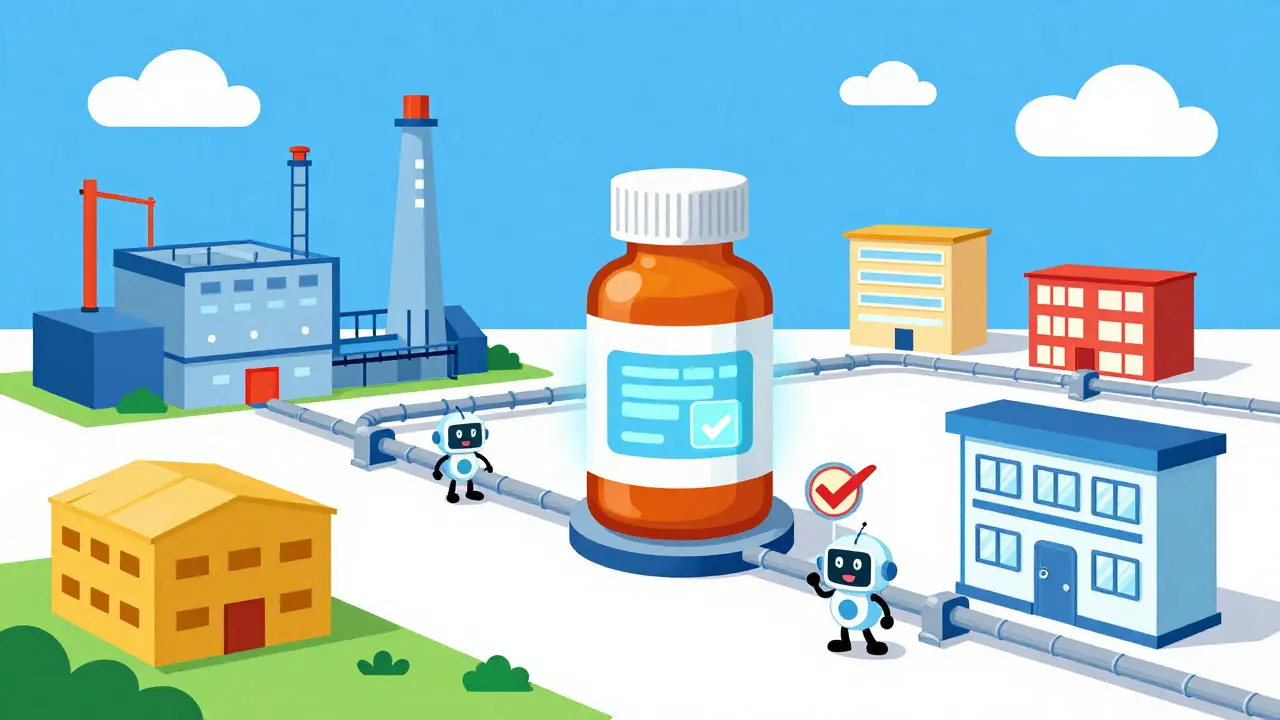
You might wonder why a simple box needs so much attention. It comes down to trust. When a manufacturer fills a bottle, they stamp it with a digital passport. As that bottle moves to a wholesaler and then to your pharmacy, everyone scans it to confirm its identity. If the math doesn't add up, the package stops moving. This process involves complex layers of legislation and technology working together silently behind the scenes.
The Core Regulatory Framework
In the United States, the backbone of this security is the Drug Supply Chain Security Act, known as DSCSA. Signed into law back in 2013, this act created a decade-long roadmap for securing the supply chain. It didn't just ask companies to "try harder"; it mandated specific technical standards. By November 2023, almost all stakeholders had to switch to electronic trading records. Now, as we approach the 2027 deadline, full interoperability is the new requirement. This means the systems different companies use must talk to each other seamlessly without human intervention.
If you are reading this from Europe or the UK, the mechanism looks slightly different but serves the same purpose. The EU operates under the Falsified Medicines Directive (FMD). While the US relies heavily on decentralized data exchange between partners, the EU connects everything to a central repository called the European Medicines Verification System (EMVS). Every time a medicine leaves the factory, it registers there. When a pharmacy dispenses it, they decommission the code. Both systems aim to prevent diversion and counterfeiting, but the architectural choices differ based on regional regulatory history.
How Serialization Works
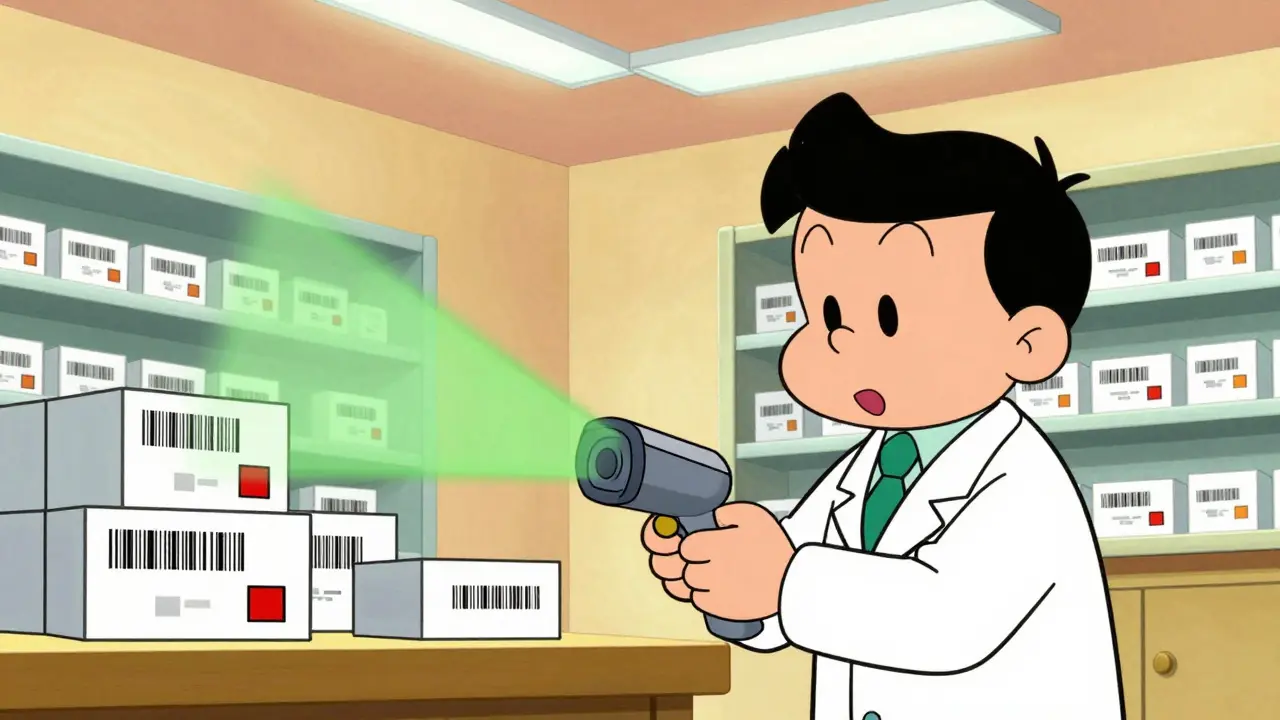
The physical proof of a drug's identity lies in the barcode. You've likely seen those square, pixelated codes on prescription boxes lately. These aren't standard UPC barcodes found on groceries. They are 2D Data Matrix codes holding a unique serial number. Each one contains critical data points: the National Drug Code, the lot number, the expiration date, and a distinct serial number for that specific package.
This concept is called Serialization. Manufacturers assign these codes at the pack level. In the US alone, this generates over 1.2 million unique identifiers per day. Imagine trying to track millions of individual packages through warehouses, trucks, and store shelves without computers doing it instantly. It would be impossible for humans. The scanners read the code, query the database, and confirm three things immediately: is the product real, has it expired, and is it meant for this specific region?
Electronic Data Exchange Standards
Having the numbers isn't enough; you need to move them. For years, companies sent paperwork via fax. That's slow and error-prone. Today, the industry relies on GS1 standards, specifically the Electronic Product Code Information Services (EPCIS). Think of EPCIS as the universal language for logistics. Whether a company uses SAP, TraceLink, or a custom internal system, they can speak to one another using this standard.
The shift to EPCIS 2.0 with JSON format is particularly significant right now. The FDA guidance in late 2023 clarified that by November 2025, transactions must use this modern format. XML, which many legacy systems still rely on, is being phased out for its flexibility. This upgrade allows for faster processing speeds and better integration with modern cybersecurity protocols. Without this standardization, verifying a suspicious shipment would take days instead of seconds.
Risks and Cybersecurity Challenges
No system is invincible. Recent events have highlighted vulnerabilities in the digital infrastructure itself. A high-profile cyberattack on Change Healthcare in early 2023 disrupted the verification process for 35% of US pharmacies for 72 hours. Patients couldn't get their prescriptions because the supply chain 'handshake' failed.
This reveals a crucial vulnerability: Cybersecurity Protocols must protect the data as strictly as the physical goods. Systems managing drug traceability require HITRUST CSF v11.2 certification. They also need regular third-party validation to prevent bad actors from hacking the databases to legitimize fake drugs. If hackers gain control of the verification server, they could theoretically approve a counterfeit batch as authentic.
Economic Impact and Implementation Costs
Security costs money. Independent pharmacies face the steepest climb. A small pharmacy owner in California reported spending $18,500 annually just to stay compliant-software subscriptions, hardware upgrades, and training staff. That eats into margins significantly compared to large hospital chains.
However, the benefits outweigh the costs when you consider recall speed. During the infant formula crisis of 2022, the tracking system allowed regulators to remove specific batches from shelves in 72 hours. Previously, that process took weeks. Protecting public health requires investment, and companies like TraceLink dominate the market because they specialize in making this complex logic manageable for businesses.
| Feature | US (DSCSA) | EU (FMD) |
|---|---|---|
| System Model | Decentralized (Peer-to-peer) | Centralized (Repository-based) |
| Verification Point | Trading Partner Agreement | National Medicine Verification Organization |
| Code Format | Alphanumeric (20 characters) | Numeric (20 digits) |
| Deactivation | Upon Dispensing (Varies) | Mandatory upon Dispensing |
Future Trends and Predictions
We are moving toward predictive analytics. By 2030, experts expect the system won't just report what happened; it will predict potential issues before they occur. Artificial intelligence is already analyzing anomaly patterns in 27% of wholesale operations. If a warehouse suddenly receives too many orders in a short window, flags go up automatically.
Blockchain technology is also entering the conversation. Trials in 2024 show promise for creating immutable records that even government agencies cannot alter. While blockchain isn't mandatory yet, many big players are testing how well it integrates with current GS1 standards. The goal is global harmonization, where a drug manufactured in China can be verified in London or New York using compatible protocols.
Tips for Maintaining Compliance
If you manage a facility involved in this chain, focus on the basics first. Train your staff thoroughly-human error is still a risk factor. Implement staged verification protocols; don't try to scan every single high-volume generic item if your risk model says it's safe. Prioritize high-risk products and suspect alerts. Keep your software updated to handle the November 2025 interoperability requirement.
What is the main goal of the DSCSA?
The primary goal is to create a secure electronic framework to detect and prevent counterfeit, diverted, or contaminated products from entering the supply chain. It ensures traceability from manufacturer to patient.
Is my local pharmacy subject to these rules?
Yes, dispensers including community pharmacies must verify transaction information electronically. However, some exemptions exist for certain compounded medications or veterinary supplies.
How does the system catch fake drugs?
If a scanning device reads a serial number that doesn't match the manufacturer's database, the software flags the product as 'suspect.' Quarantine procedures are triggered, preventing it from being sold.
What happens after the 2027 deadline?
Paper-based transaction documentation will be eliminated. All trading partners must exchange product tracing information electronically in a fully interoperable format without delays.
Are there similar systems in Europe?
Yes, the EU uses the Falsified Medicines Directive (FMD), which utilizes a centralized hub system rather than the decentralized partner model used in the US.