78% of pharmaceutical recalls in 2022 were due to temperature issues. That's not just a statistic-it means patients might have received ineffective or dangerous medications. The stakes are high, and the solution is simple: proper medication storage isn't just about following rules-it's about keeping patients safe. Every pill, liquid, or vaccine has a specific environment it needs to stay effective. Get it wrong, and treatments can fail or even harm people. Let's break down exactly how to do this right.
Why Temperature and Humidity Matter for Medicines
Medications aren't just chemical compounds. Many contain proteins or other sensitive ingredients that break down when exposed to heat, moisture, or cold. Take insulin: if it freezes, it becomes useless. Antibiotics stored too warm lose strength, leaving infections untreated. Birth control pills exposed to humidity can lose effectiveness, risking unintended pregnancies. The FDA calls this "degradation," and it happens faster than most people realize. A single day at 90°F (32°C) can reduce a medicine's potency by 15% or more. The World Health Organization estimates 15-20% of global medication waste comes from improper storage-that's $35 billion lost every year.
The Exact Storage Rules You Need to Follow
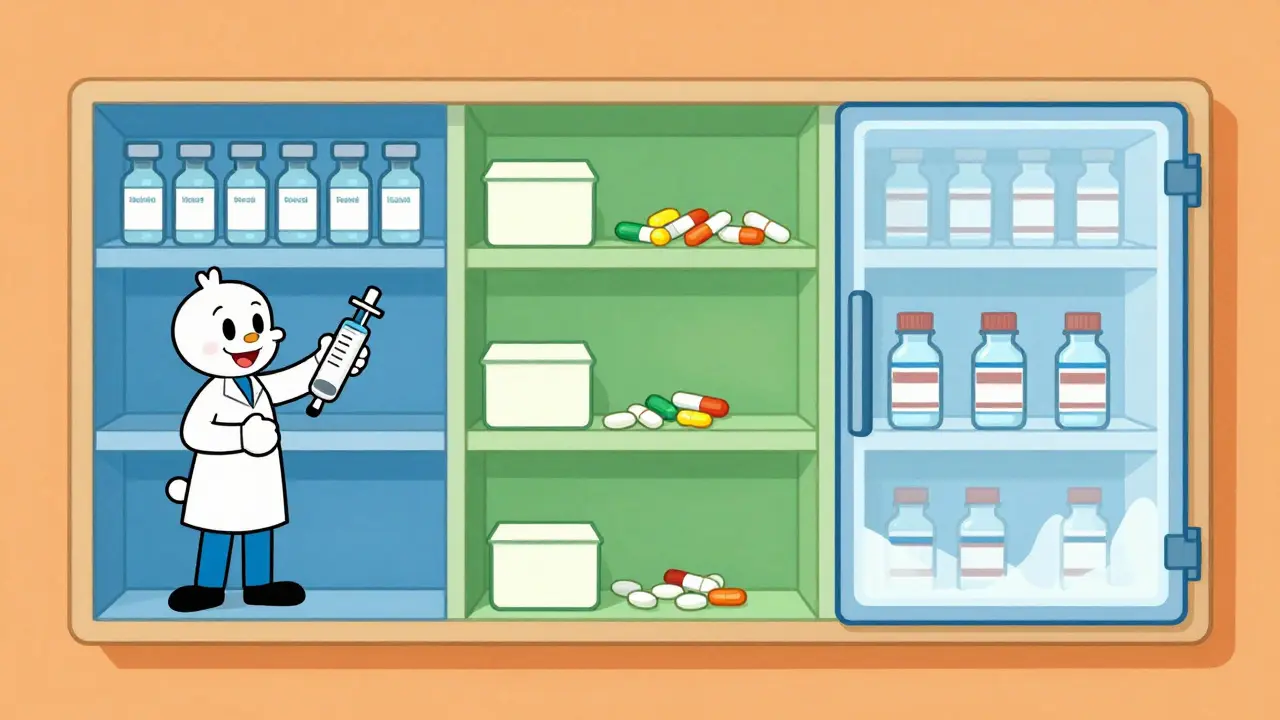
The USP Chapter 1079 sets clear standards for medicine storage. These aren't suggestions-they're legal requirements. Here's how they break down:
| Storage Type | Temperature Range | Humidity Level | Common Medications |
|---|---|---|---|
| Room Temperature | 68°F-77°F (20°C-25°C) | 45%-55% | Most pills, tablets, creams |
| Controlled Cold | 36°F-46°F (2°C-8°C) | 45%-55% | Vaccines, insulin, some biologics |
| Frozen | -13°F-14°F (-25°C--10°C) | Below 40% | Semen samples, certain vaccines |
| Deep Frozen | Above -4°F (-20°C) | Below 40% | Some chemotherapy drugs, rare biologics |
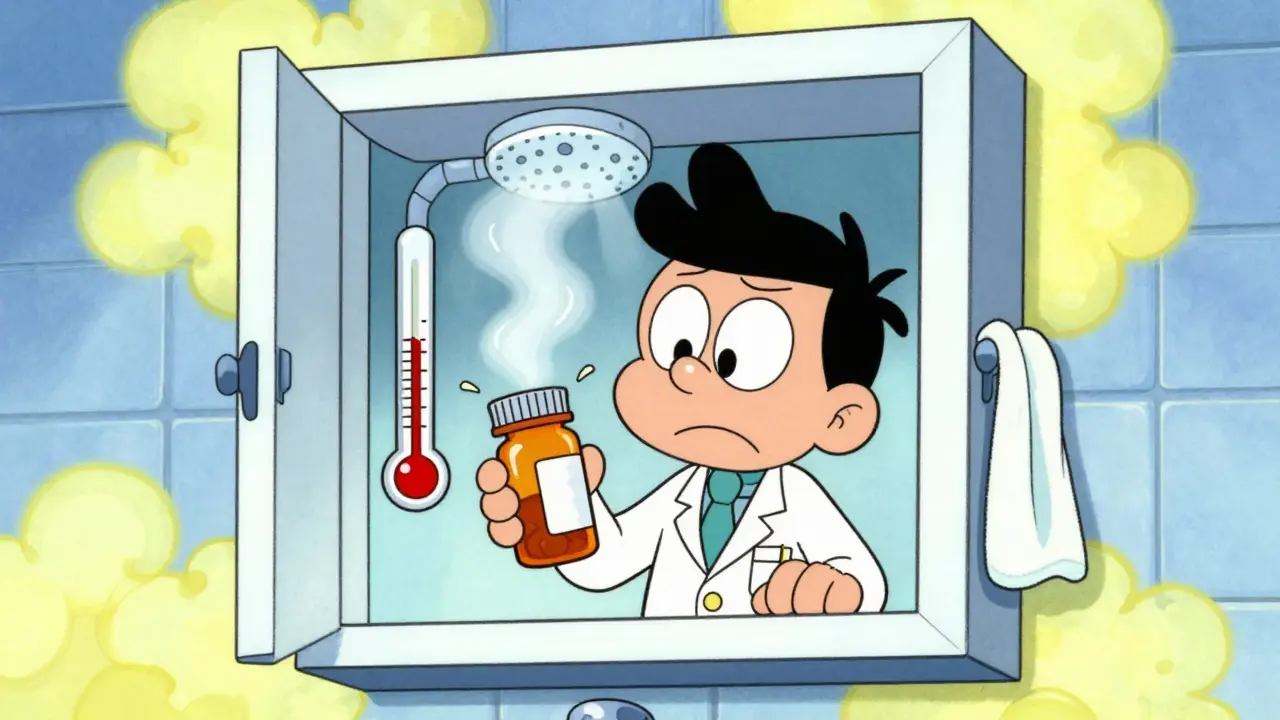
Humidity matters just as much as temperature. If the air is too dry, powders clump. Too wet, and liquids evaporate or mold grows. The WHO states humidity should stay at "approximately 50%"-with no more than 5% variation. This is why bathroom medicine cabinets are a disaster: steam from showers can spike humidity to 80% or higher.
Monitoring Equipment: What Works and What Doesn't
Checking temperatures with a basic thermometer won't cut it. The FDA requires data logging devices (DDLs) with specific features:
- Buffered probe (to avoid false readings when opening doors)
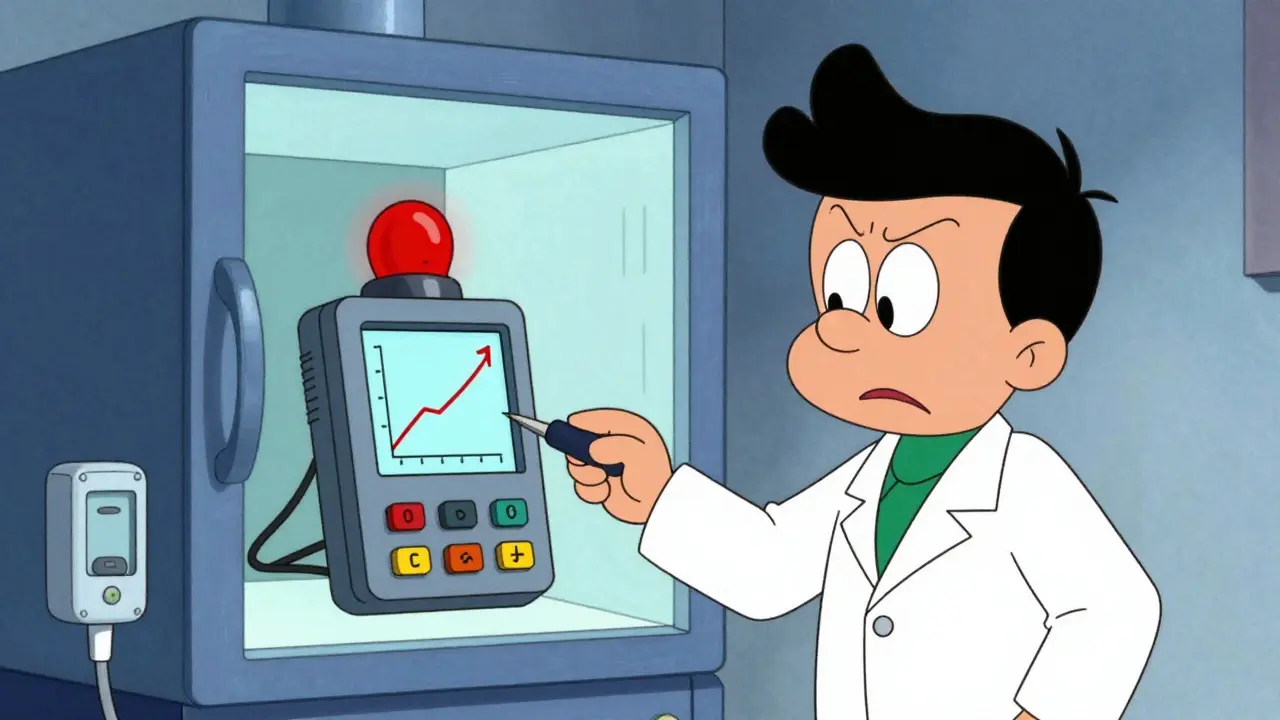
- Alarm for out-of-range temperatures
- Calibration certificate (must be updated yearly)
- Logging intervals of 30 minutes or less
- Minimum accuracy of ±1°F
Most pharmacies skip these details. A 2023 Polygon Group study found 73% of facilities use cheap, non-buffered probes. These give fake stability during door openings-like a thermometer that says "72°F" right after a cold door opens, when the actual temperature is 78°F. The CDC says vaccines stored in fridge doors have 2.8°C (5°F) more variation than those in the center. Always place DDLs in the coldest spot of the unit, away from walls or vents.
Common Mistakes That Ruin Medicines
Here's what actually happens when storage goes wrong:
- Bathroom storage: Steam from showers raises humidity to dangerous levels. Birth control pills stored here lost 20% potency in just three months.
- Windowsills: Direct sunlight heats medicines 15-20°F above room temperature. A 2022 study showed antibiotics left on a sunny windowsill degraded 37% faster.
- Freezing insulin: Even a single freeze-thaw cycle destroys insulin's effectiveness. People storing insulin in home freezers often don't realize it's been ruined until they need it.
- Overcrowded fridges: Stacking medicine containers blocks airflow. Helmer Scientific found 3.5°C (6.3°F) temperature differences between top and bottom shelves in standard pharmacy refrigerators.
The Joint Commission reports 17% of medication errors trace back to storage issues. These aren't hypothetical risks-they're daily problems in hospitals and pharmacies.
Best Practices for Real-World Storage
Fixing these problems is simple with these steps:
- Train staff: Facilities with regular temperature monitoring training reduced excursions by 63% (per ASHP 2023 data).
- Check logs daily: Never skip reviewing temperature records. A 4.2-hour excursion at 85°F (29°C) can ruin a week's worth of antibiotics.
- Use dedicated fridges: Never store medicines in kitchen or office fridges. Dedicated medical refrigerators maintain stable temperatures even when doors open frequently.
- Map your storage space: The WHO now requires temperature mapping of all storage areas. Place sensors in corners, shelves, and door areas to find hot/cold spots.
- Store away from heat sources: Keep medicines at least 3 feet from radiators, ovens, or even computer monitors.
What's Changing in 2024 and Beyond
Regulations are getting stricter. The FDA announced new rules in January 2024 requiring real-time remote monitoring for all temperature-sensitive medications by December 2025. This means pharmacies must have systems that alert staff immediately if temperatures go out of range-no waiting for daily checks.
Technology is catching up too. Blockchain-based monitoring (tested by Pfizer and Moderna) has 99.98% accuracy in tracking shipments. AI systems like Polygon Group's predictive analytics cut temperature excursions by 76% in trials. Even passive solutions like phase-change materials (used in vaccine transport) keep medicines cold for 120 hours without power.
But challenges remain. The WHO reports only 28% of healthcare facilities in developing countries have proper monitoring. This leads to 35% higher rates of medication ineffectiveness compared to high-income countries. For global health, this isn't just a technical issue-it's a life-or-death gap.
Frequently Asked Questions
What happens if medication is stored too warm?
Heat causes chemical breakdown. Antibiotics lose strength, insulin becomes ineffective, and birth control pills may fail. A 2022 study showed hormone-based drugs (like chemotherapy or anti-seizure medications) degrade 23-37% faster at temperatures above 77°F (25°C). Always check expiration dates-if stored improperly, medicines can expire months early.
Can I store medicines in my home fridge?
Only if it's dedicated to medications. Kitchen fridges fluctuate too much when opened. The CDC says fridge doors have 5°F more variation than the center. If you must use a home fridge, place medicines on the middle shelf (not the door), use a separate thermometer, and avoid storing them near the freezer compartment. Never store them in the freezer unless explicitly instructed.
How often should I check temperature logs?
Daily for pharmacies and hospitals. The FDA requires continuous monitoring for temperature-sensitive drugs. For home storage, check once a week if using a DDL. If you don't have a data logger, check the thermometer daily. Never assume temperatures are stable-excursions happen without warning.
What's the difference between USP and WHO guidelines?
USP Chapter 1079 is legally binding in the U.S. and sets specific temperature ranges. WHO guidelines are global recommendations that many countries adopt. For example, USP defines "room temperature" as 68°F-77°F, while WHO says "cool dry place" (typically 59°F-86°F). Always follow manufacturer instructions first-if they conflict with general guidelines, the manufacturer's specs win.
Are there exceptions for certain medications?
Yes. Some vaccines need ultra-cold storage (-76°F/-60°C), while others work at room temperature. Insulin in use can stay at room temperature for 28 days, but unopened vials must stay refrigerated. Always read the label-"store below 25°C" means something different than "store in a cool place." If unsure, contact the pharmacy or manufacturer before storing.