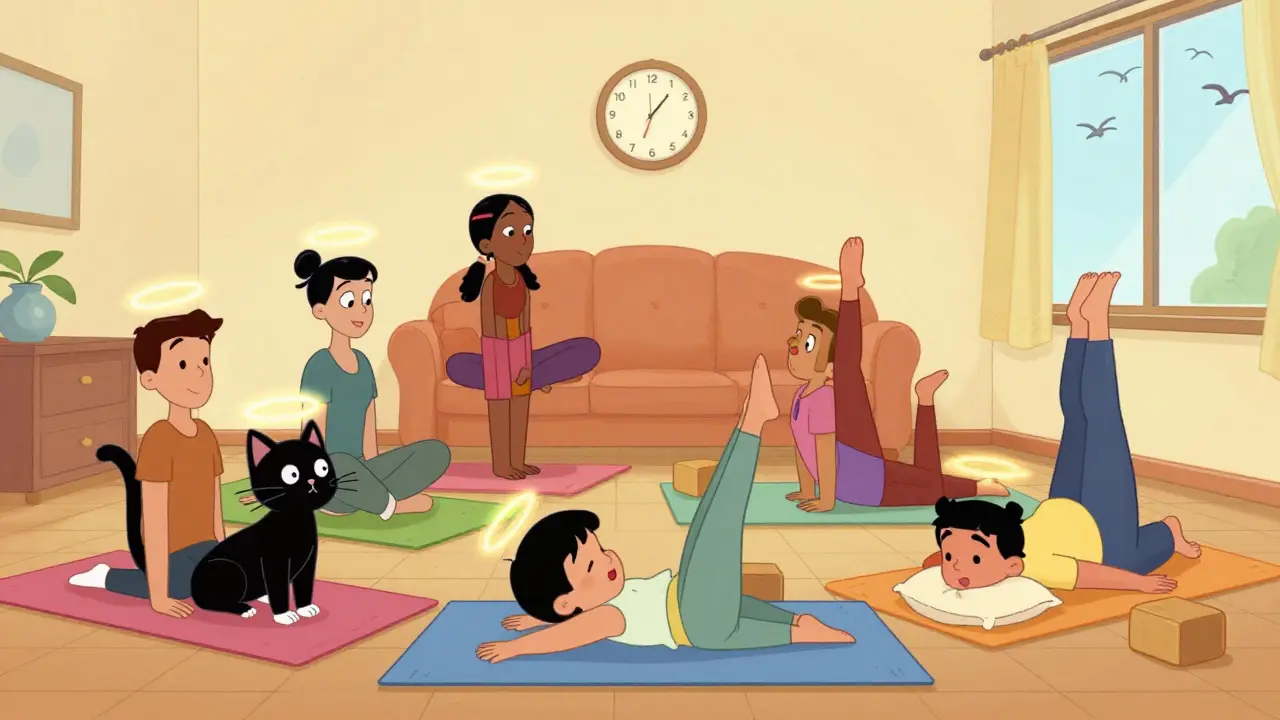
Chronic pain doesn’t have to mean sitting still
What if the best thing you could do for your aching back, stiff knees, or sore neck wasn’t another pill, injection, or surgery-but something as simple as moving slowly, breathing deeply, and paying attention? That’s not a fantasy. It’s what thousands of people with chronic pain are discovering through yoga and tai chi. These aren’t just trendy wellness rituals. They’re backed by real science, used in VA hospitals, and recommended by doctors who’ve seen patients reduce pain, cut back on opioids, and get their lives back.
How yoga and tai chi actually help with pain
Yoga and tai chi work differently than stretching or lifting weights. They don’t force your body to push through pain. Instead, they teach it to move with awareness. In yoga, you hold gentle poses-like cat-cow or child’s pose-while focusing on your breath. In tai chi, you shift your weight slowly from one foot to the other, like a slow-motion dance. Both practices connect movement with mindfulness.
Here’s what happens inside your body: Your nervous system calms down. Stress hormones drop. Muscles that have been tight for years begin to relax. Your brain starts to reinterpret pain signals-not as danger, but as just sensation. A 2018 study in the New England Journal of Medicine found that people with fibromyalgia who did tai chi for 12 weeks had 27% less pain and slept better than those who just stretched. Another 2024 review showed yoga combined with warm sand therapy improved neck mobility by 37% compared to standard care.
It’s not magic. It’s neuroscience. When you move slowly and intentionally, you retrain your brain to stop overreacting to minor discomforts. That’s why people with arthritis, lower back pain, and even nerve pain report feeling more in control.
Yoga vs. tai chi: What’s the difference?
Yoga and tai chi look different, but they share the same goal: gentle movement with awareness.
Yoga is more about holding poses. You might find yourself lying on your back with legs up a wall, or slowly rising into a standing forward bend. Styles like Hatha and Restorative yoga are ideal for pain-slow, supported, and focused on comfort. You use blocks, straps, or pillows to make poses easier. No one expects you to touch your toes.
Tai chi is all about flow. It’s a series of connected movements, like walking through water. There’s no holding still. You glide from one posture to the next, always shifting weight, always breathing. The most common form for beginners is Yang-style tai chi-it’s gentle, rhythmic, and easy to learn. It’s especially good for balance, which matters if you’re older or have joint pain.
One big difference? Tai chi is often done in groups. Many people say the social part helps as much as the movement. Yoga can be done alone at home, which is great for privacy, but you miss out on that group energy.
What the science says-and what it doesn’t
The evidence isn’t perfect, but it’s strong enough for major medical groups to take notice. The American College of Physicians recommends both yoga and tai chi for chronic low back pain. The Veterans Health Administration includes tai chi in its official pain management program. The National Institutes of Health has funded millions in research over the last five years.
Here’s what works well:
- Tai chi for fibromyalgia: 27% more pain relief than stretching, plus better sleep and less depression.
- Yoga for neck pain: 37% improvement in mobility when combined with warm sand therapy.
- Both for knee osteoarthritis: 18-25% better balance than control groups.
- Yoga for lower back pain: More effective than standard care in longer-term studies.
But it’s not a cure-all. Some studies show yoga has little effect on rheumatoid arthritis pain. Tai chi may not help everyone with severe nerve pain. And both require consistency. You won’t feel better after one class. It takes 6 to 8 weeks of regular practice to notice real changes.

Real people, real results
Reddit’s r/ChronicPain community has over 1,200 posts from people who’ve tried tai chi or yoga. Seventy-eight percent said they had moderate to significant pain relief. One woman with rheumatoid arthritis wrote: “I can do seated tai chi on bad days when yoga feels impossible.” That’s the power of adaptability.
Men, especially younger ones, often prefer tai chi. Why? Because it doesn’t feel “woo-woo.” It has roots in martial arts-it feels like something you can be proud of doing. One 28-year-old with lower back pain told a survey: “I used to avoid movement because I feared it would hurt more. Tai chi taught me how to move without fear.”
But it’s not all smooth sailing. Some people get discouraged. Thirty-four percent of negative reviews on Healthline mentioned difficulty with standing poses. Others said their first instructor didn’t know how to modify movements for their condition. One person said their tai chi class made their knee pain worse for two weeks because the teacher didn’t adjust for osteoarthritis.
That’s why finding the right teacher matters. Look for instructors who specialize in pain or have training in therapeutic yoga or tai chi for arthritis. Ask if they’ve worked with people who have your condition. Don’t be afraid to try a few classes before committing.
How to start-without getting overwhelmed
You don’t need fancy gear, a gym membership, or an hour a day. Here’s how to begin:
- Start small. Try 10-15 minutes a day for the first week. Just breathing while sitting or lying down counts.
- Choose the right style. For yoga, pick Hatha or Restorative. For tai chi, look for Yang or Sun style.
- Use props. A chair, pillow, or yoga block can make all the difference. You don’t have to touch the floor to benefit.
- Try online. Apps like “Tai Chi for Arthritis” (by the Arthritis Foundation) or “Yoga for Chronic Pain” (by Yoga Medicine) offer short, safe routines designed for pain.
- Go to a class. Community centers, YMCAs, and senior centers often offer low-cost classes ($10-$15 per session). Some even have sliding scales.
Most people feel better after 6-8 weeks. Don’t quit if the first few sessions feel awkward. That’s normal. The goal isn’t perfection-it’s consistency.
What you’ll need (and what you won’t)
You don’t need to buy anything expensive. Here’s the bare minimum:
- A nonslip mat (for yoga)
- Comfortable, loose clothing
- A chair (if standing is hard)
- A quiet space where you won’t be interrupted
That’s it. No special shoes, no expensive gear. Many people do tai chi in slippers or barefoot. Yoga can be done on a carpet. You don’t even need to sweat.
Subscription apps like Glo or Alo Moves cost $18-$29 a month, but they’re optional. Free YouTube videos from certified instructors (like those from the Arthritis Foundation or Yoga Journal) work just as well.
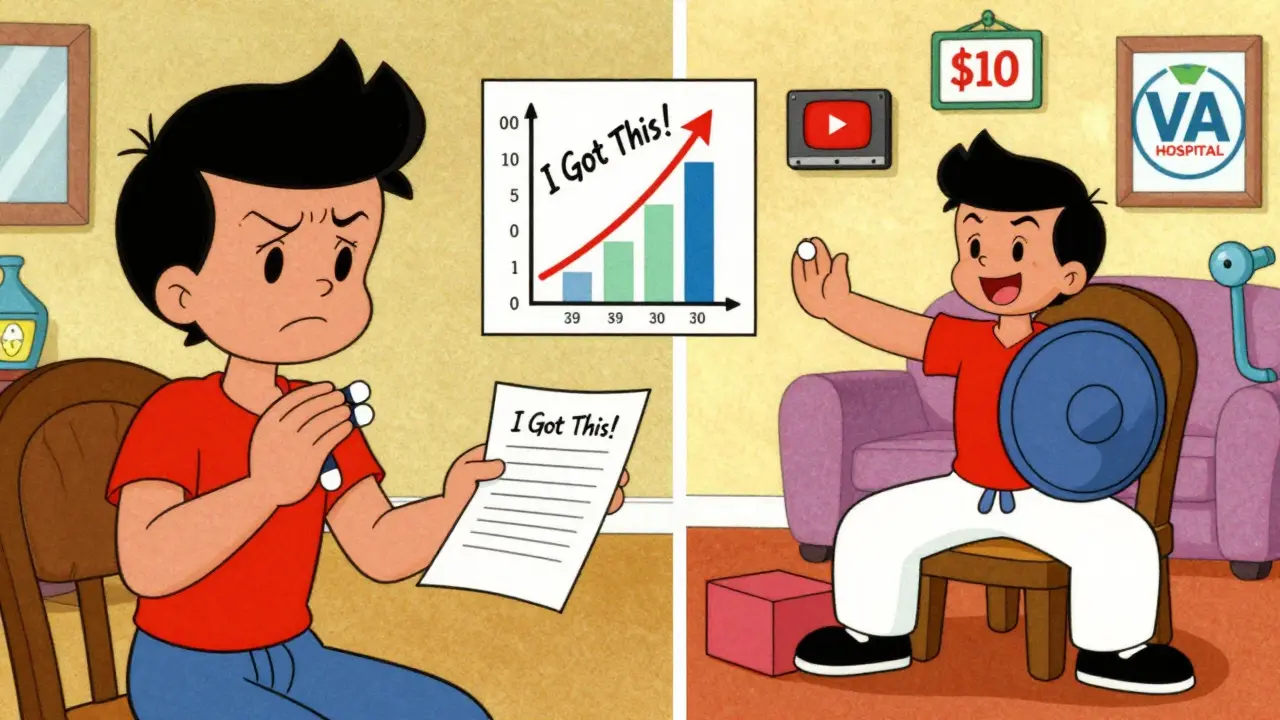
When to be careful
Both yoga and tai chi are safe for most people-but not if done wrong. If you have severe osteoporosis, recent surgery, or unstable joints, you need to modify. A 2023 review by Pacific Pain Physicians warned that improper form can make pain worse. That’s why working with a trained professional matters.
Here’s when to pause:
- If a movement causes sharp pain (not just stretching)
- If you feel dizzy or lightheaded
- If your pain spikes for more than a day after practice
Talk to your doctor before starting if you’re on blood thinners, have uncontrolled high blood pressure, or are pregnant. Most doctors support these practices-but they want to make sure you’re doing them safely.
The bigger picture: Why this matters now
We’re in the middle of a pain crisis. Opioid prescriptions are still too high. Surgeries are expensive. Many people are stuck in a cycle of pain → medication → side effects → more pain.
Yoga and tai chi offer a different path. They don’t mask pain-they help you rebuild your relationship with it. The VA has seen 68% of veterans reduce opioid use after six months of tai chi. Insurance companies are starting to cover these programs. In 2025, doctors in the U.S. will be able to bill insurance for referring patients to yoga and tai chi classes.
This isn’t just about feeling better today. It’s about building long-term resilience. People who practice regularly report not just less pain-but better sleep, less anxiety, and more confidence moving through the world.
Final thought: Movement is medicine
You don’t have to run a marathon or lift heavy weights to heal. Sometimes, the most powerful thing you can do is move slowly, breathe deeply, and listen to your body. Yoga and tai chi aren’t quick fixes. But they’re among the few pain treatments that help you get stronger, calmer, and more in control-all without a pill.
If you’ve been told to “just live with it,” maybe it’s time to try moving with it instead.
Can yoga or tai chi really reduce chronic pain?
Yes. Multiple studies show both practices reduce pain intensity and improve function in conditions like fibromyalgia, osteoarthritis, and chronic low back pain. A 2018 study in the New England Journal of Medicine found tai chi reduced fibromyalgia pain by 27% more than stretching. Yoga combined with heat therapy improved neck mobility by 37% in a 2024 review. The effects are real, measurable, and supported by top medical institutions.
Which is better for pain-yoga or tai chi?
It depends on your needs. Yoga is better if you prefer holding poses and working on flexibility. Tai chi is better if you want continuous movement and improved balance. For fibromyalgia, tai chi has stronger evidence. For lower back pain, yoga shows more consistent results. Many people do both. The key is consistency, not which one you pick.
How long until I see results?
Most people notice small improvements after 4-6 weeks. Measurable pain reduction typically happens after 8-12 weeks of regular practice-about 3 times a week. Don’t expect miracles after one class. This is like building muscle: progress is slow but lasting.
Do I need special equipment or a gym membership?
No. You need a nonslip mat for yoga, comfortable clothes, and a chair if standing is hard. Free YouTube videos and apps like “Tai Chi for Arthritis” offer guided sessions. Community centers often charge $10-$15 per class. You don’t need expensive gear or a gym membership to get results.
Is it safe if I have joint problems or arthritis?
Yes-when done correctly. Both practices are low-impact and can be modified for joint issues. Chair yoga and seated tai chi are excellent options. Look for instructors trained in therapeutic movement for arthritis. Avoid deep twists or high-impact moves. Always tell your instructor about your condition before class.
Can I do this at home, or do I need a class?
You can start at home with apps or videos. But attending a class-even once a week-helps you learn proper form and stay motivated. Many people combine both: home practice daily, class weekly. Group classes also offer social support, which research shows boosts pain relief.
Will insurance cover yoga or tai chi?
Some plans do. Blue Cross Blue Shield covers these programs in 12 states. The VA offers them for free to veterans. Starting in January 2025, doctors in the U.S. can bill insurance for referring patients to certified yoga or tai chi classes. Check with your insurer or ask your doctor if a referral is possible.
Can yoga or tai chi replace my pain medication?
Not on their own. These practices work best as part of a broader plan-alongside physical therapy, medication, or counseling. The American Chronic Pain Association says combining them with conventional care improves outcomes by 30-40%. Never stop medication without talking to your doctor.
What if I’m too stiff or weak to move?
Start seated. Chair yoga and seated tai chi are widely available and just as effective. You can do breathing exercises while sitting in a chair. Movement doesn’t have to be big to be powerful. Even small shifts in weight or gentle arm movements can calm your nervous system and reduce pain.
How do I find a good instructor?
Look for instructors certified in therapeutic yoga or tai chi for chronic pain. Ask if they’ve worked with people who have your condition. Avoid teachers who push you into deep poses or ignore your limits. Check reviews, ask for a trial class, and trust your body. If it hurts, speak up.