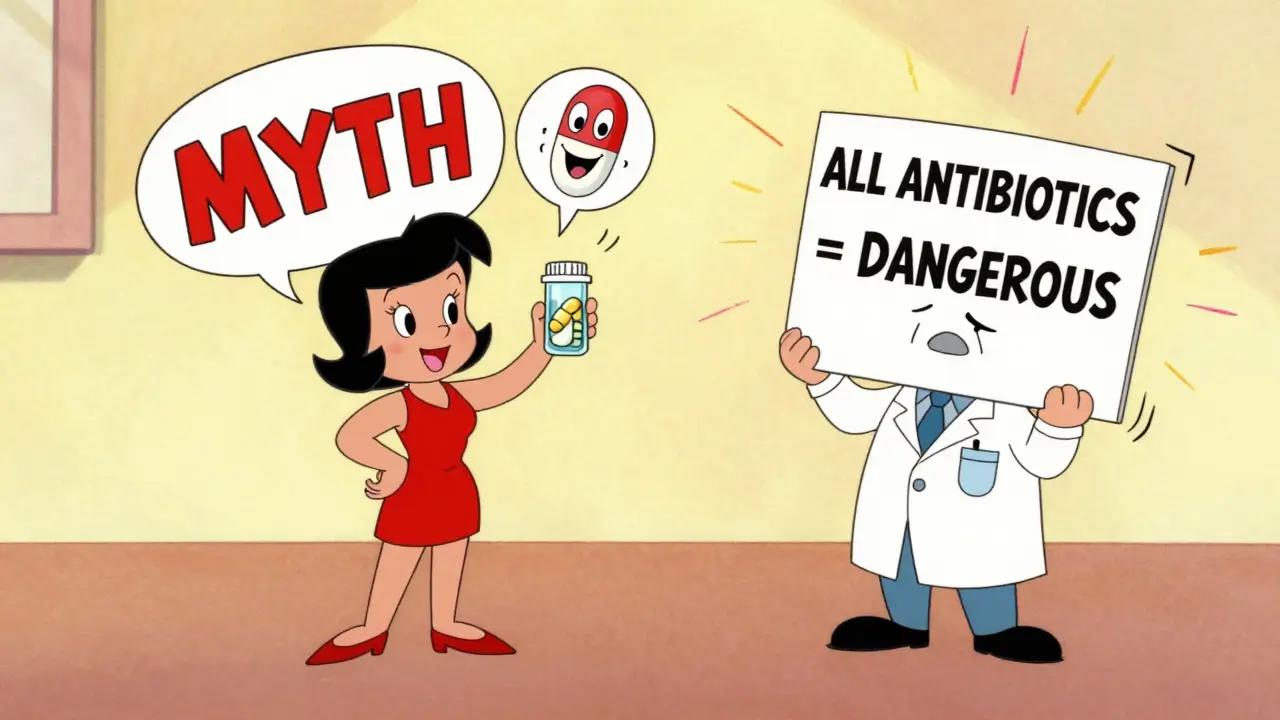
Most Antibiotics Don’t Break Your Birth Control - Here’s the Truth
Ever been told to use condoms while on antibiotics because they’ll ruin your birth control? You’re not alone. Millions of women have been handed that advice by pharmacists, friends, or even doctors. But here’s the real deal: for almost all antibiotics, that’s not true. The idea that amoxicillin, azithromycin, or doxycycline can make your pill fail is a myth that’s been around for decades - and it’s not backed by science.
There’s One Big Exception: Rifampin and Rifabutin
The only antibiotics proven to interfere with hormonal birth control are rifampin and rifabutin. These aren’t your everyday prescriptions. They’re used to treat tuberculosis and some rare bacterial infections. Rifampin, in particular, forces your liver to break down the hormones in your pill - ethinyl estradiol and progestin - up to 50% faster. Studies show this drops hormone levels into the sub-therapeutic range, meaning your body isn’t getting enough to prevent ovulation.
If you’re prescribed rifampin or rifabutin, you need backup contraception. The CDC says use condoms or a diaphragm for 28 days after your last dose. That’s not a suggestion - it’s a medical requirement. The same goes for rifabutin, which works the same way. Don’t rely on your pill alone during this time.
What About Amoxicillin, Azithromycin, or Doxycycline?
Not a problem. These are the antibiotics most commonly prescribed for strep throat, urinary tract infections, sinus infections, and acne. Dozens of clinical studies, including a 2011 review of 14 trials published in Contraception, show no drop in hormone levels when these are taken with birth control pills. Serum estradiol stays in the normal range (200-400 pg/mL). The CDC reviewed 35 trials and found no case where these antibiotics reduced hormone levels below the 50 pg/mL threshold needed for effectiveness.
Even though they’re called "broad-spectrum," they don’t touch the way your body processes hormones. They kill bacteria in your throat or bladder - not in your liver. The myth likely started because early case reports from the 1970s mixed up rifampin with other drugs, or blamed antibiotics for pregnancies caused by missed pills or vomiting.
Griseofulvin Is Also a Risk - But It’s Rare
Griseofulvin isn’t an antibiotic. It’s an antifungal used for stubborn nail or scalp infections. But it acts like rifampin: it speeds up liver metabolism of contraceptive hormones. If you’re taking it for ringworm or athlete’s foot, you still need backup contraception for a full month after finishing the course. Most people never hear about this because it’s rarely prescribed today. Still, if your doctor gives you this, ask about birth control safety - don’t assume it’s fine.

Other Drugs That Actually Interfere (And You Might Not Know It)
Antibiotics aren’t the only culprits. Some seizure meds, HIV drugs, and even herbal supplements can mess with your pill:
- Lamotrigine (at doses over 300 mg/day) - used for epilepsy and bipolar disorder
- Topiramate (over 200 mg/day) - used for migraines and seizures
- Efavirenz and nevirapine - HIV medications that can cut hormone levels by up to 40%
- St. John’s wort - a popular herbal supplement for depression, shown in a 2017 study to drop estrogen levels by 57%
If you’re on any of these, talk to your doctor before starting or stopping your birth control. These interactions are real - and often more dangerous than antibiotics.
Why Does This Myth Still Exist?
It’s not just misinformation - it’s fear. In 2022, Planned Parenthood surveyed 1,500 women. Sixty-two percent believed antibiotics reduced birth control effectiveness. Over 40% used condoms during antibiotic treatment, even when it wasn’t needed. Why? Because many pharmacists still tell patients to use backup contraception, even though the CDC and ACOG say it’s unnecessary for most cases.
A 2022 study in the Journal of the American Pharmacists Association found 35% of pharmacists still advise backup contraception for all antibiotics. That’s outdated. It’s not their fault - they’re repeating what they were taught years ago. But it creates unnecessary stress and confusion. Women worry they’ll get pregnant from a simple course of amoxicillin, when the real risk is zero.
What Should You Do?
Here’s a simple rule:
- If your antibiotic is rifampin or rifabutin - use backup for 28 days after your last dose.
- If it’s griseofulvin - use backup for 28 days after your last dose.
- If it’s anything else - no backup needed. Your pill is still working.
Still unsure? Check the drug name. Rifampin is sometimes called Rifadin. Rifabutin is Mycobutin. Griseofulvin is Grifulvin or Gris-PEG. If you see those names, ask for clarification. If you see amoxicillin, azithromycin, doxycycline, ciprofloxacin, metronidazole, or clarithromycin - you’re good.
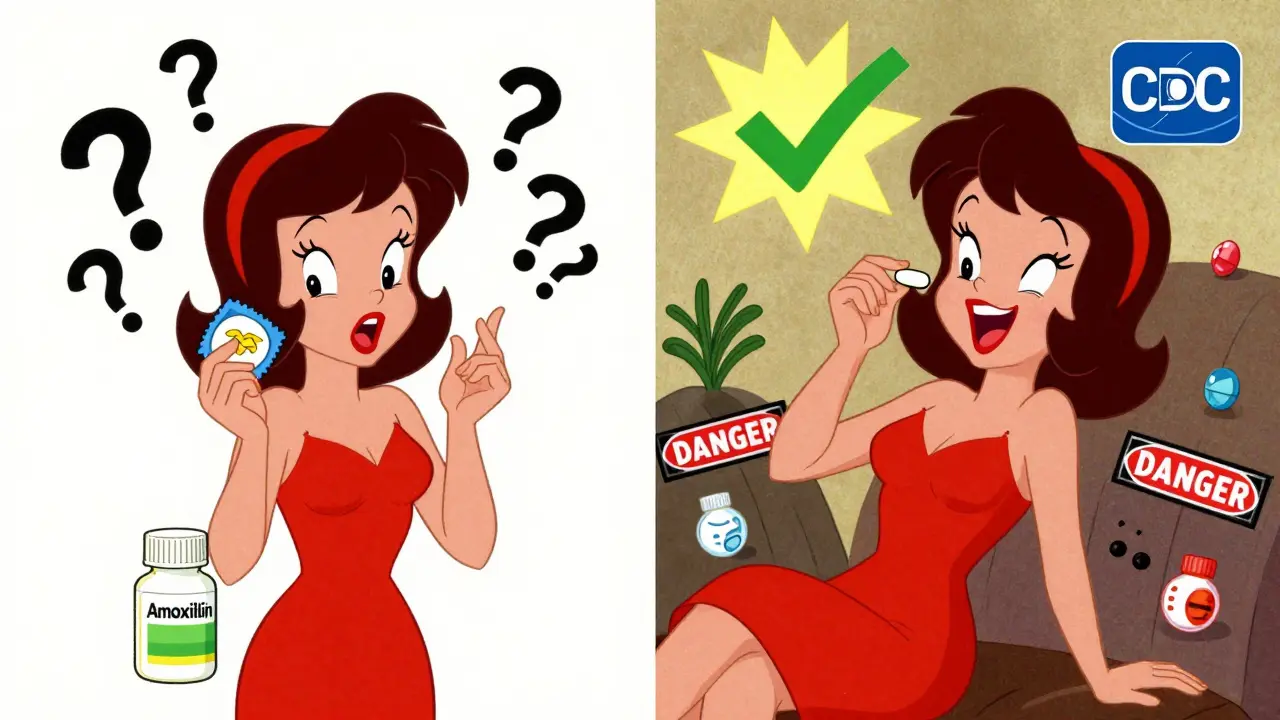
What About the Gut Bacteria Myth?
Some people think antibiotics kill the good bacteria in your gut that help absorb estrogen. That sounds logical - but it’s not how it works. Estrogen is absorbed in the small intestine, not the colon. Even if antibiotics change your gut flora, studies show estrogen levels stay steady. A 2011 study in Contraception tracked women on amoxicillin and found no drop in serum estradiol. The body doesn’t rely on gut bugs to recycle hormones. That’s a myth built on guesswork, not data.
What If You Got Pregnant While on Antibiotics?
It’s possible - but it’s almost never because of the antibiotic. Most cases traced back to one of these:
- Missing pills
- Vomiting or diarrhea within 2 hours of taking your pill
- Taking rifampin or griseofulvin without backup
- Using St. John’s wort or other interacting meds
One verified case on Healthgrades involved a woman who got pregnant while on rifampin for tuberculosis - and didn’t use backup. That’s the real risk. Another woman took amoxicillin 10 times while on birth control and never had an issue. That’s the norm.
What’s Changing in 2026?
Good news: drug labels are finally updating. In January 2023, the FDA required all birth control packaging to clearly state: "Rifampin, rifabutin, and griseofulvin may reduce effectiveness. Other antibiotics do not." This is a huge step. It means pharmacies and doctors have to give accurate info.
Research is also shifting. The NIH now lists obesity as a key area to study - women with BMI over 30 already have a 2.5 times higher risk of contraceptive failure, regardless of antibiotics. That’s where future focus should be, not on amoxicillin.
Bottom Line: Don’t Panic, But Stay Informed
You don’t need to carry condoms everywhere you take an antibiotic. You only need them if your prescription is rifampin, rifabutin, or griseofulvin. For every other antibiotic - including the ones you’ve taken dozens of times - your birth control is still working.
Ask your doctor or pharmacist: "Is this antibiotic one that affects birth control?" If they say "yes" without checking the name, ask them to verify. You’re not being difficult - you’re being smart. And if you’re ever unsure, use a backup method for peace of mind. But know this: the science is clear. Most antibiotics don’t touch your pill. The myth is old. The facts are new.
Do amoxicillin or azithromycin make birth control less effective?
No. Amoxicillin, azithromycin, doxycycline, ciprofloxacin, and other common antibiotics have been studied extensively and do not reduce hormone levels in birth control pills. The CDC and ACOG confirm no backup contraception is needed with these drugs.
What antibiotics actually interfere with birth control?
Only rifampin (Rifadin) and rifabutin (Mycobutin), used for tuberculosis, and griseofulvin, an antifungal for fungal infections, are proven to reduce birth control effectiveness. These drugs speed up liver metabolism of estrogen and progestin. All other antibiotics, including penicillin and macrolides, do not.
How long should I use backup contraception after rifampin?
Use backup contraception (condoms or diaphragm) for 28 days after your last dose of rifampin or rifabutin. This is the CDC’s official recommendation. The same applies to griseofulvin. Hormone levels take about four weeks to return to normal after stopping these drugs.
Can I rely on birth control if I’m on antibiotics for a UTI or sinus infection?
Yes. Antibiotics like amoxicillin, amoxicillin-clavulanate, nitrofurantoin, and ciprofloxacin - commonly used for UTIs and sinus infections - have no effect on birth control pills. Multiple clinical trials confirm hormone levels remain within effective ranges.
Why do pharmacists still tell me to use condoms with antibiotics?
Many pharmacists are following outdated advice passed down from older guidelines. A 2022 study found 35% still recommend backup contraception for all antibiotics, even though major organizations like the CDC and ACOG stopped supporting that in 2016-2021. It’s a persistent myth, not current science. If you’re unsure, ask for the specific drug name and check reliable sources like the CDC’s guidelines.
Does St. John’s wort affect birth control?
Yes. St. John’s wort, a popular herbal supplement for mild depression, can reduce estrogen levels by up to 57%, making birth control much less effective. It’s a stronger interaction than most antibiotics. If you’re taking it, talk to your doctor about switching to a non-hormonal method or a different supplement.
Is the birth control pill still effective if I have diarrhea while on antibiotics?
Diarrhea or vomiting within 2 hours of taking your pill can reduce absorption - regardless of antibiotics. This is a separate issue from drug interactions. If you have severe diarrhea or vomit shortly after taking your pill, treat it as a missed dose: take another pill as soon as possible and use backup contraception for 7 days.