People take turmeric for its golden color, earthy flavor, and supposed health benefits. It’s in curries, smoothies, teas, and supplements marketed as anti-inflammatory, antioxidant, even anti-aging. But if you’re on a blood thinner, this spice could be hiding a serious risk-turmeric can make your blood too thin, leading to dangerous bleeding.
Why Turmeric Acts Like a Blood Thinner
Turmeric’s main active ingredient is curcumin. It’s what gives the spice its bright yellow hue and most of its biological effects. Research shows curcumin doesn’t just gently support circulation-it actively interferes with how your blood clots. In lab studies, curcumin and its cousin compound, bisdemethoxycurcumin, were found to slow down two key steps in the clotting process: activated partial thromboplastin time (aPTT) and prothrombin time (PT). These are standard tests doctors use to measure how long it takes your blood to clot. When these times get longer, your risk of bleeding goes up. Curcumin does this by blocking thrombin and factor Xa-two proteins your body needs to form clots. It also reduces platelet aggregation, meaning your blood cells are less likely to stick together when you get a cut. That’s good if you’re trying to prevent clots, but dangerous if you’re already on a medication designed to do the same thing. Unlike prescription drugs, turmeric doesn’t come with a label that says “take 50 mg daily.” The amount of curcumin in turmeric powder varies wildly-from 2% to 8%. Supplements can be concentrated to 95% curcumin. One teaspoon of powder might have 200 mg of curcumin. A capsule might have 500 mg. You can’t predict how your body will react.Real Cases of Dangerous Bleeding
This isn’t theoretical. There are documented cases where people ended up in the hospital because of turmeric. In 2018, New Zealand’s health agency, Medsafe, reported a case of a patient taking warfarin. Their INR-a measure of how long blood takes to clot-had been stable for months. Then they started taking a turmeric supplement. Within weeks, their INR shot up to over 10. The safe range for warfarin users is 2 to 3.5. An INR above 10 means a very high risk of spontaneous bleeding, including internal bleeding in the brain or gut. This patient was lucky to survive. Another case involved a transplant patient who took 15 or more spoonfuls of turmeric powder daily for ten days. Their kidney function dropped sharply, and their levels of tacrolimus (a critical immune-suppressing drug) spiked to toxic levels. Turmeric interfered with the enzyme (CYP3A4) that normally breaks down this drug. That’s two separate dangers: kidney damage and drug toxicity. These aren’t outliers. The Welsh Medicines Information Centre (WMIC) has reviewed multiple cases where turmeric caused unexpected bleeding or elevated INR levels in people on warfarin. In one study, people taking 2 grams of curcumin daily had 3.2 times higher levels of sulfasalazine, another medication, in their blood. That’s a metabolic interaction-your liver can’t process both drugs properly.Which Blood Thinners Are Affected?
Turmeric doesn’t just mess with one type of blood thinner. It interacts with nearly all of them.- Warfarin (Coumadin): This is the most documented interaction. Warfarin has a narrow therapeutic window-too little, and clots form; too much, and you bleed. Turmeric pushes it into the danger zone.
- DOACs (rivaroxaban, apixaban, dabigatran): Even newer drugs aren’t safe. The British Heart Foundation warns turmeric may interfere with their action, though research is still emerging.
- Aspirin, clopidogrel (Plavix): These are antiplatelet drugs. Turmeric adds another layer of platelet inhibition, increasing bleeding risk.
- Heparin, enoxaparin (Lovenox), dalteparin (Fragmin): Injectable anticoagulants used in hospitals and after surgery. Turmeric can amplify their effect.
- NSAIDs like ibuprofen, naproxen, diclofenac: These already thin the blood slightly. Add turmeric, and the risk multiplies.

Why “Natural” Doesn’t Mean Safe
The biggest problem? People think “natural” equals harmless. Turmeric is a spice, so it must be safe, right? No. Aspirin comes from willow bark. Digoxin comes from foxglove. Both are deadly if misused. Turmeric is no different. Its effects are real, measurable, and sometimes life-threatening. Unlike prescription drugs, turmeric supplements aren’t regulated for purity, potency, or safety. A bottle labeled “1000 mg turmeric” might contain 20 mg of curcumin-or 950 mg. There’s no standard. No clinical trials have mapped safe dosages for people on blood thinners. And while using turmeric as a spice in food is generally fine, supplements are a different story. A pinch in your curry won’t do much. But a daily capsule? That’s a pharmacological dose.What Doctors Say
The medical community is unified on this: avoid turmeric supplements if you’re on a blood thinner. Medsafe, WMIC, Mayo Clinic, and Healthline all say the same thing: concurrent use should be avoided. The WMIC updated its guidance in October 2024, reinforcing that curcumin can reduce how fast warfarin leaves the body, making it more potent. Dr. Oracle’s 2023 analysis put it bluntly: “The evidence clearly indicates that the anticoagulant properties of turmeric/curcumin create a significant risk when combined with warfarin.” They don’t just say “be careful.” They say “avoid.” Why? Because the consequences are severe. Bleeding in the brain, stomach, or eyes can happen without warning. Mortality rates for intracranial hemorrhage from anticoagulant overuse can reach 50%.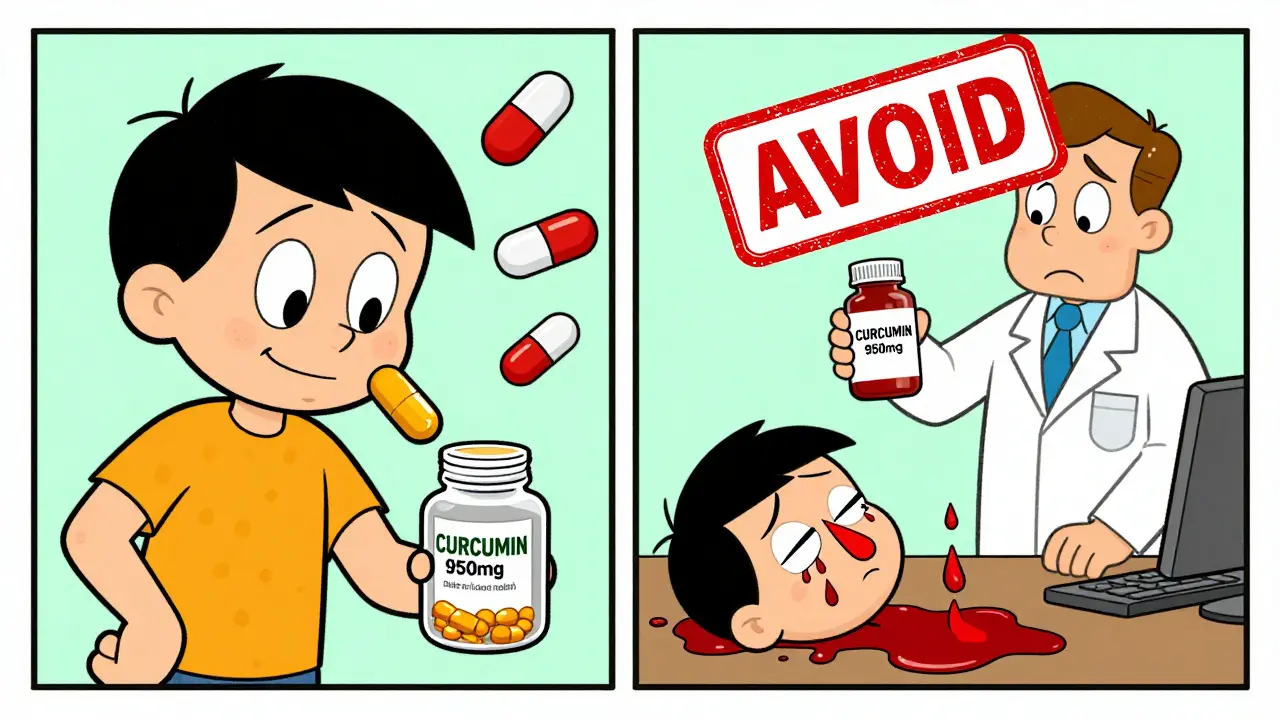
What Should You Do?
If you’re on a blood thinner:- Stop taking turmeric supplements immediately. This includes capsules, extracts, and powders labeled for “health benefits.”
- Don’t assume cooking with turmeric is dangerous. A teaspoon in your soup or curry is unlikely to cause issues. The dose is too low.
- Talk to your doctor before starting any new supplement. Even “harmless” ones like fish oil, garlic, or ginkgo can interact.
- Stop turmeric at least two weeks before any surgery. This includes dental work. Your surgeon needs to know.
- Monitor for signs of bleeding. Unusual bruising, nosebleeds, blood in urine or stool, headaches, dizziness, or weakness could mean your blood is too thin.
What About Other Medications?
Turmeric doesn’t just affect blood thinners. It can interfere with:- Diabetes medications: It may lower blood sugar too much.
- Thyroid drugs: It might alter how your body absorbs them.
- Immunosuppressants like tacrolimus: As seen in transplant patients, it can cause toxic buildup.
- Antibiotics like norfloxacin: Animal studies show increased blood levels.
The Bottom Line
Turmeric isn’t evil. Used as a spice in food, it’s fine. But as a supplement? It’s a potent biological agent with real, documented risks. If you’re on a blood thinner, the safest choice is to avoid turmeric supplements entirely. No exceptions. No “just a little.” The risk isn’t worth it. Your health isn’t a trade-off between “natural remedies” and medication. It’s about safety. And right now, the science is clear: turmeric supplements and blood thinners don’t mix.Can I still use turmeric in cooking if I’m on blood thinners?
Yes. Using turmeric as a spice in food-like in curry, soups, or rice-is generally safe. The amount of curcumin in a typical serving is too low to affect blood clotting. The risk comes from concentrated supplements, not culinary use.
How long does it take for turmeric to affect blood thinners?
It can happen quickly. In documented cases, INR levels rose to dangerous levels within weeks of starting turmeric supplements. Some patients saw changes in just days. There’s no safe waiting period-stop supplements immediately if you’re on blood thinners.
Are there any turmeric supplements that are safe with blood thinners?
No. There is no established safe dose of turmeric or curcumin supplements for people on anticoagulants. Even low-dose products can interact unpredictably due to variations in curcumin content and individual metabolism. Avoid all supplements.
What should I do if I accidentally took turmeric with my blood thinner?
Stop taking the supplement right away. Watch for signs of bleeding-unusual bruising, nosebleeds, blood in stool or urine, dizziness, or severe headaches. Contact your doctor immediately. They may need to check your INR or perform other tests to ensure your blood isn’t dangerously thin.
Why do some people say turmeric is good for circulation?
Turmeric does have mild anticoagulant and antiplatelet effects, which is why it’s sometimes promoted for heart health. But those same effects make it dangerous when combined with prescription blood thinners. What’s beneficial in isolation can be harmful in combination. The goal isn’t to enhance blood flow-it’s to avoid uncontrolled bleeding.