
Atopic dermatitis isn’t just dry skin. It’s a stubborn, cycling problem where itch leads to scratching, which leads to more inflammation, which leads to more itch. And no matter how hard you try to scratch it away, the problem keeps coming back - often worse than before. The real issue isn’t the itch itself. It’s the broken skin barrier that lets irritants in and moisture out. That’s why emollient therapy isn’t just helpful - it’s the foundation of everything else you do to manage this condition.
What Actually Triggers an Atopic Dermatitis Flare?
Flares don’t happen randomly. They’re triggered by things that attack your already fragile skin barrier. Cold, dry air is one of the biggest offenders. When humidity drops below 40%, your skin loses moisture 37% faster, according to Mayo Clinic data. That’s why winter is so brutal for people with eczema. But heat can be just as bad. When temperatures rise above 80°F (27°C), sweat builds up on the skin, and the salt and chemicals in it irritate the damaged barrier. In fact, 68% of patients report flares during hot weather. Then there are the everyday products you use. Sodium lauryl sulfate - a common cleanser ingredient found in soaps, shampoos, and body washes - can break down your skin barrier at concentrations as low as 0.5%. Fragrances? Even natural ones like lavender or tea tree oil can cause reactions in 15% of people with atopic dermatitis. Preservatives like methylisothiazolinone, used to keep products from spoiling, trigger contact dermatitis in nearly 6% of users. Stress doesn’t directly cause flares, but it makes your immune system more reactive. When you’re anxious or tired, your body releases chemicals that worsen inflammation. Sleep deprivation does the same thing. And don’t forget dust mites, pet dander, and pollen - they don’t cause eczema, but they can push a sensitive skin barrier over the edge.Why Emollients Are the First Line of Defense
Emollients aren’t moisturizers in the way you think of them. They’re skin repair tools. Their job is to fix the gaps in your skin’s protective layer - the same layer that’s damaged by filaggrin gene mutations in up to half of moderate-to-severe cases. These mutations mean your skin naturally can’t hold onto water. That’s why people with atopic dermatitis lose 15-30 grams of water per square meter per hour, compared to just 5-10 grams in healthy skin. Emollients work by sealing in moisture and replacing what’s missing. Petrolatum (like Vaseline) is the gold standard - it reduces water loss by up to 98%. Ceramides, which are naturally found in healthy skin, help rebuild the barrier when applied at concentrations of 0.5-3%. Glycerin, a humectant, pulls water into the skin and works best at 40-50% concentration. The American Academy of Dermatology says emollient therapy is the #1 recommended treatment for all stages of atopic dermatitis. Why? Because it’s safe. Only 2.3% of users report side effects, compared to 15-20% for topical steroids. And while emollients alone clear mild eczema in only 30-40% of cases, they make every other treatment work better. Without them, even powerful drugs like dupilumab won’t last.How to Apply Emollients the Right Way
Applying emollient isn’t just slathering on cream. There’s a technique that makes all the difference. First, bathe in lukewarm water for 15-20 minutes. Don’t scrub. Don’t use soap unless it’s fragrance-free and designed for sensitive skin. Then, within 3 minutes of getting out, pat your skin dry - don’t rub. Immediately apply your emollient. This locks in 50% more moisture than waiting even 10 minutes later, according to Dr. Amy Paller’s research. Use enough. Adults need 250-500 grams per week. That’s about a shot glass full twice a day. Kids need even more - up to 1,000 grams weekly. Most people use way less, which is why only 22% achieve consistent twice-daily use. The biggest reasons? Time and texture. Many say the cream feels greasy or sticky. Urea-based products, for example, leave a residue that 42% of users hate. Apply in downward strokes, following hair growth. Use two to three finger units per body part - like the amount that fits on your index and middle finger from tip to base. Skip the face if the product isn’t labeled for facial use. And always choose fragrance-free, preservative-minimized formulas. Look for products without parabens, phenoxyethanol, or methylisothiazolinone.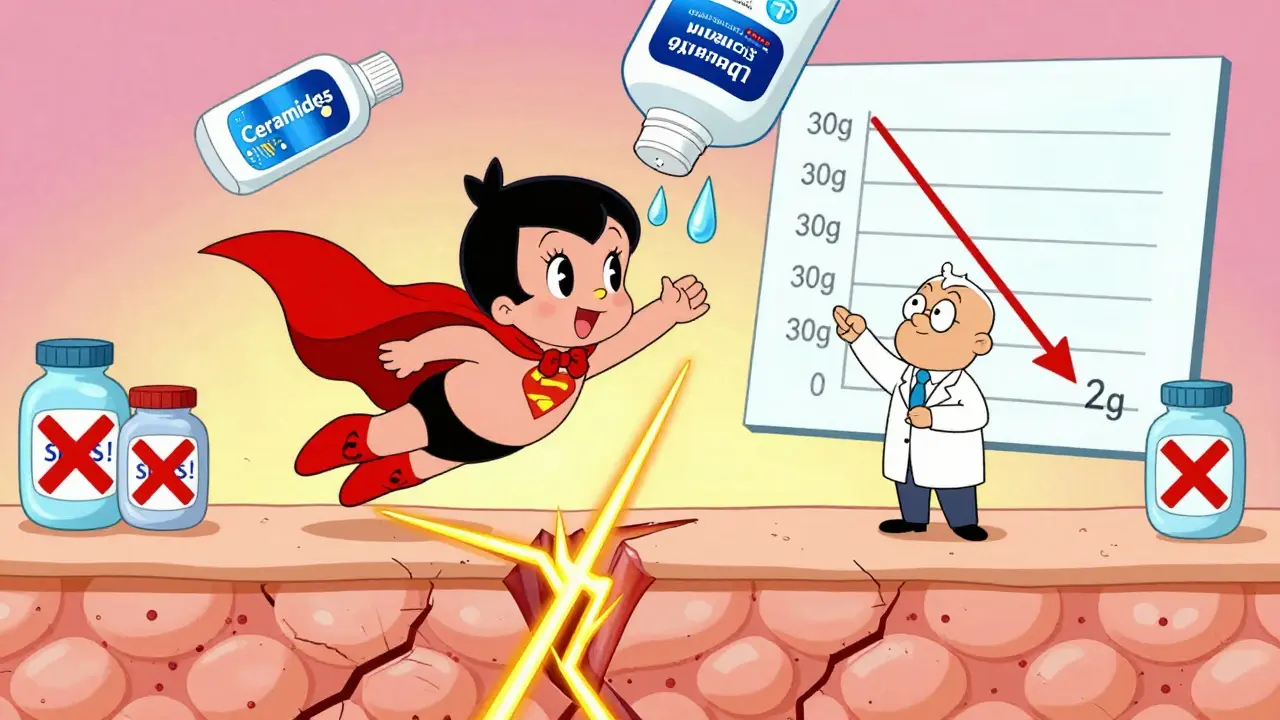
What Works Best - And What Doesn’t
Not all emollients are created equal. In patient surveys, CeraVe scored 68% satisfaction, while Eucerin got 52%. Why? CeraVe contains ceramides, niacinamide, and hyaluronic acid - ingredients that actively repair the barrier. Eucerin often relies on petrolatum and glycerin, which hydrate but don’t rebuild. Petrolatum (Vaseline) is cheap, effective, and works for severe flares. Sixty-three percent of Reddit users with eczema say it’s their go-to for nighttime use. But it’s thick. Some people avoid it because it stains clothes and feels uncomfortable during the day. Ceramide-rich products are the future. Since 2018, their use has grown 300%. The FDA approved the first sustained-release ceramide emollient in May 2023 - Ceramella MD - which keeps working for 12 hours, reducing water loss by 63%. That’s a big jump from standard formulas that last 4-6 hours. But here’s the catch: 30% of patients quit using emollients within six months. Why? They feel like a chore. The texture, the time, the mess. And cost adds up. A tube of prescription-grade ceramide cream can cost $19. A jar of petroleum jelly? $8.50.When Emollients Aren’t Enough
Emollients are the base. But they’re not a cure. If you have moderate-to-severe eczema, you’ll likely need more. Topical steroids are the next step - they reduce inflammation fast. But they can’t be used long-term on the face or folds. That’s where calcineurin inhibitors like tacrolimus come in. They’re steroid-free and safe for sensitive areas. For severe cases, biologics like dupilumab reduce flares by 70-80%. But they’re expensive and require injections. And even with these drugs, you still need emollients. One study showed patients using dupilumab without consistent emollient therapy had higher relapse rates. There’s also a new problem emerging: “emollient resistance.” In 8-12% of severe cases, long-term Staphylococcus aureus colonization on the skin makes emollients less effective. The bacteria feed on the oils and worsen inflammation. These patients need antibiotics or bleach baths in addition to their routine.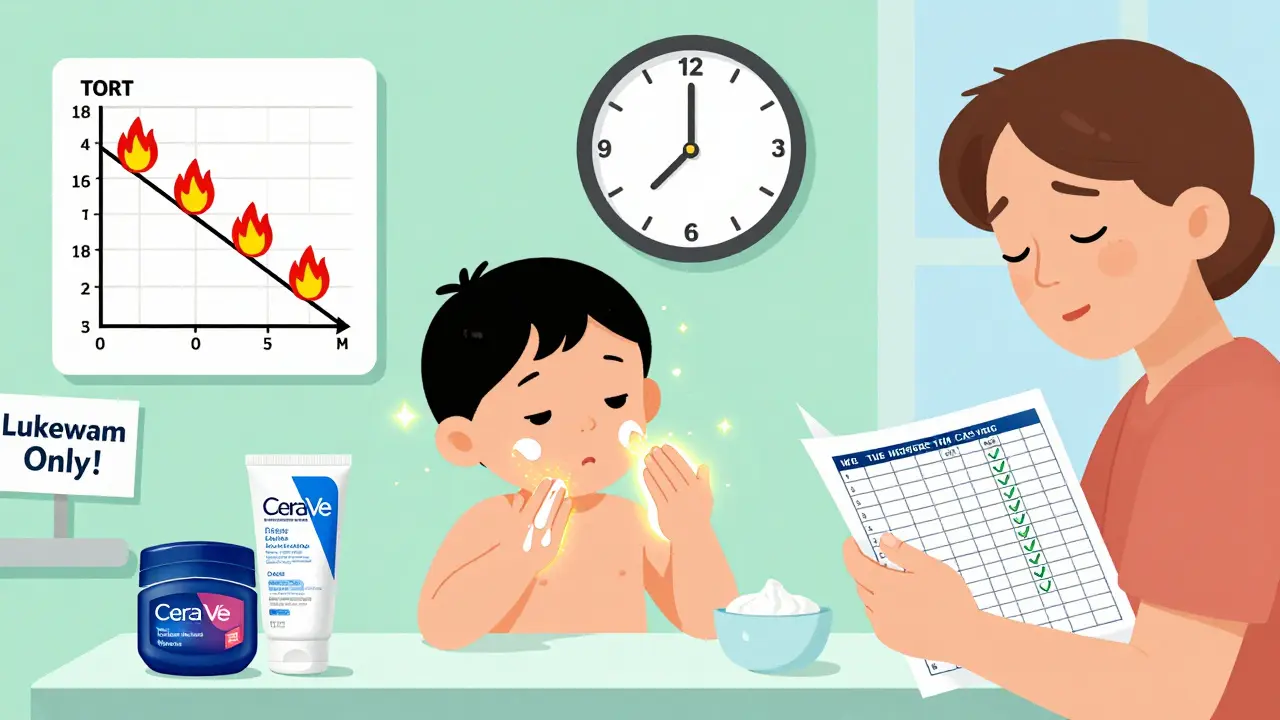
Real-Life Success and Failure Stories
A 7-year-old boy went from 18 flares a year to just 3 after switching to daily CeraVe application and using Vaseline at night. His parents tracked his usage and made sure he got his emollient within 3 minutes of every bath. No steroids needed. Another patient, a 32-year-old woman, tried every expensive cream on the market. She stopped using them after three months because they felt “like glue.” She went back to plain petroleum jelly, applied right after her shower, and her flares dropped by 70%. But then there’s the person who used a “natural” emollient with essential oils and developed a rash. Or the one who used a cheap body wash with sodium lauryl sulfate every day and wondered why nothing worked. The pattern is clear: consistency and simplicity win. You don’t need 10 products. You need one good emollient, applied the right way, every day.What’s Next for Emollient Therapy
The next wave of treatment is personalization. Researchers at NIH are testing emollients designed around a person’s unique skin microbiome. One trial (NCT05214567) is developing formulas that suppress bad bacteria while feeding good ones. Early results look promising. Smart dispensers are also in testing. At Massachusetts General Hospital, patients are using devices that track how much emollient they use and send reminders to their phone. Early data shows adherence jumps from 35% to 72% with tech support. The International Eczema Council just updated its guidelines in 2024, recommending at least 200 grams of emollient per week for adults - up from 100 grams. That’s because new studies show more is better. The more you use, the fewer flares you get.Final Takeaway
Atopic dermatitis is manageable, but not because of magic creams or quick fixes. It’s because you fix the barrier. Every day. No exceptions. Emollient therapy isn’t optional. It’s the baseline. Skip it, and everything else fails. Use it right, and even severe eczema can become quiet. Don’t wait for a flare to start. Don’t wait for your doctor to tell you. Start today. Pick one fragrance-free emollient. Apply it after every bath. Use enough. Keep going. Your skin will thank you.Can emollients cure atopic dermatitis?
No, emollients don’t cure atopic dermatitis. They manage it by repairing the skin barrier and reducing flare frequency. Atopic dermatitis is a chronic condition with genetic and immune components. Emollients are the foundation of treatment, but they work best alongside other therapies like topical steroids or biologics for moderate-to-severe cases.
How often should I apply emollient?
Apply emollient at least twice a day - ideally right after bathing, within 3 minutes of patting your skin dry. If your skin feels dry or itchy during the day, reapply. Adults should use 250-500 grams per week. Children need more - up to 1,000 grams weekly. More frequent application means fewer flares.
What’s the best emollient for atopic dermatitis?
There’s no single "best" product, but the most effective ones contain ceramides, cholesterol, and fatty acids in ratios that mimic healthy skin. CeraVe, Eucerin Advanced Repair, and Vanicream are top choices based on patient surveys and dermatologist recommendations. For severe dryness, plain petrolatum (Vaseline) is the most effective and affordable option. Avoid anything with fragrance, alcohol, or harsh preservatives.
Why do some emollients make my skin feel sticky?
Urea and glycerin are common humectants that draw water into the skin but can leave a tacky residue if used in high concentrations. Some brands add thickening agents that feel heavy. If stickiness bothers you, try petrolatum-based products like Vaseline or ceramide creams with lighter textures. Apply thinner layers and let them absorb fully before dressing.
Can I use emollients on my face?
Yes - but only if the product is labeled for facial use. The skin on your face is thinner and more sensitive. Use a fragrance-free, non-comedogenic emollient designed for the face. Avoid heavy petrolatum-based creams if you’re acne-prone. Look for labels like "non-comedogenic," "for sensitive skin," or "facial moisturizer." Always patch test first.
How do I know if my emollient is working?
You’ll notice less itching, fewer red patches, and skin that feels smoother and less tight. Flares will become less frequent and less severe. If you’re applying 2-3 finger units twice daily and still having weekly flares after 4-6 weeks, you may need to switch products or add another treatment like a topical steroid. Track your usage - if you’re using less than 200 grams per week, you’re likely not using enough.