Every year, millions of people in the U.S. buy prescription medications online. But not every pharmacy you find on Google is real. Some are fake, selling pills made in unregulated labs-sometimes with no active ingredient, or worse, toxic chemicals. The FDA estimates that 1% to 3% of the $575 billion U.S. prescription drug market comes from illegal sources. That’s billions of dollars in fake or dangerous drugs floating around. And it’s not just happening overseas. Some fake pharmacies operate right here in the U.S., with websites that look professional, fake licenses, and even forged NABP seals. So how do you know your pharmacy is legitimate? The answer isn’t complicated-but you have to check.
What Makes a Pharmacy Licensed?
A licensed pharmacy isn’t just a business with a website. It’s a facility that meets strict state and federal standards to handle medications safely. Every legitimate pharmacy must be licensed by the state board of pharmacy where it operates. That means the pharmacists working there have passed the North American Pharmacist Licensure Examination (NAPLEX), scored at least 75 out of 150, and passed a state-specific law exam like California’s CPJE. The pharmacy itself must have a physical location, proper storage for medications, and a licensed pharmacist on-site during business hours.These rules aren’t optional. They’re designed to prevent medication errors, stop the sale of controlled substances without prescriptions, and ensure you get the right drug, in the right dose, at the right time. A pharmacy without a license has none of these safeguards. That’s why you can’t trust a website that says “no prescription needed” or offers pills at 80% off retail. If it sounds too good to be true, it’s probably fake.
How to Check If a Pharmacy Is Legit
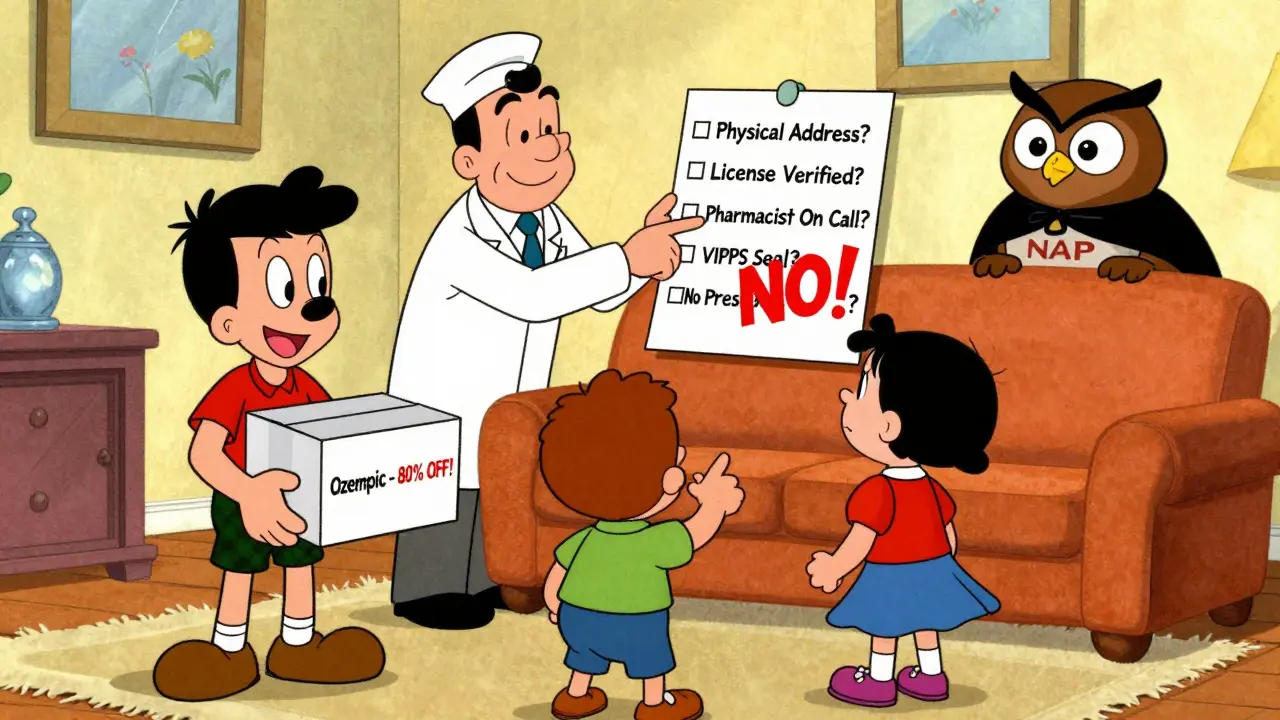
You don’t need a degree in pharmacy to verify a pharmacy. You just need five minutes and the right tools. Here’s how to do it:- Look for a physical address-not just a PO box. Type the address into Google Maps and check Street View. Does it look like a real pharmacy? Is there signage? Is it in a medical building? Fake pharmacies often use virtual offices or residential addresses.
- Verify the license through your state’s board of pharmacy website. For example, in California, go to the California Board of Pharmacy and enter the license number (not the prefix). In Florida, it’s free and instant. In states like New York or Texas, you’ll find similar portals. If the site says “license inactive” or “suspended,” walk away.
- Check for a licensed pharmacist. Legitimate pharmacies must have a pharmacist available to answer questions. Call them. Ask about your medication. If they can’t or won’t talk to you, that’s a red flag.
- Look for VIPPS accreditation. The Verified Internet Pharmacy Practice Sites (VIPPS) program, run by the National Association of Boards of Pharmacy (NABP), certifies online pharmacies that meet strict safety standards. You can search for VIPPS-accredited pharmacies directly on the NABP website.
- Don’t buy from sites that don’t require a prescription. By law, all legitimate pharmacies in the U.S. must have a valid prescription before dispensing controlled or prescription medications. If a site offers to “write you a prescription online” after a 30-second quiz, it’s illegal.
These steps aren’t theory-they’re what saved Maria Chen in San Diego in March 2024. She noticed her pharmacy’s pharmacist-in-charge had changed without notice. A quick check on the California board’s website confirmed the pharmacist had resigned months earlier. She switched pharmacies before picking up her next refill.
The NABP Verify Program: Is It Worth It?
The NABP Verify program is a centralized database that pulls license status from 43 states in real time. If you’re a pharmacy owner or operate in multiple states, it’s a time-saver. For consumers, it’s a useful tool-but not foolproof. The program costs $125 a year for professionals, but it’s free for the public to search. You can look up a pharmacy by name, license number, or location.But here’s the catch: not every state is fully integrated. California still takes up to 30 days to update records manually. Florida updates instantly. So if you’re checking a pharmacy in a state that doesn’t use NABP Verify, you still need to go to the state’s own site.
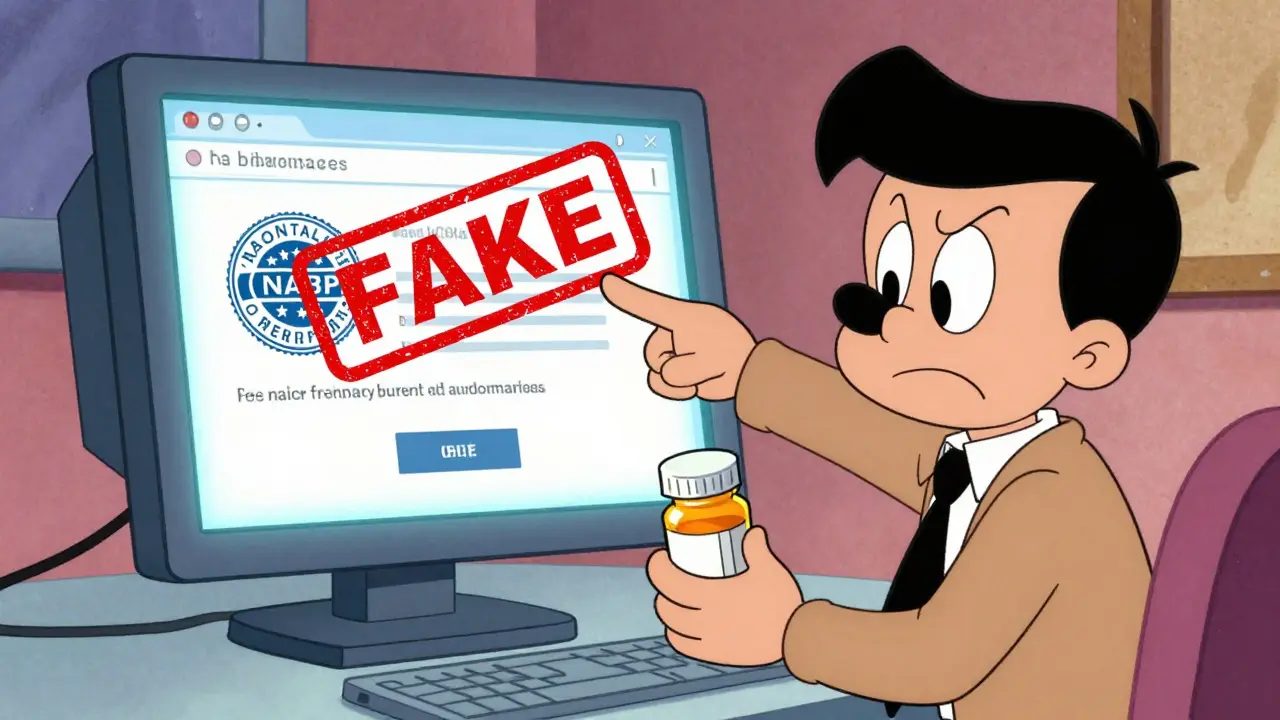
Also, fake pharmacies sometimes copy the NABP logo. That’s why you must go to the official NABP website to verify-not click a link on a pharmacy’s homepage. The real VIPPS seal links to the NABP’s verification page. If clicking it takes you to the pharmacy’s own site, it’s a scam.
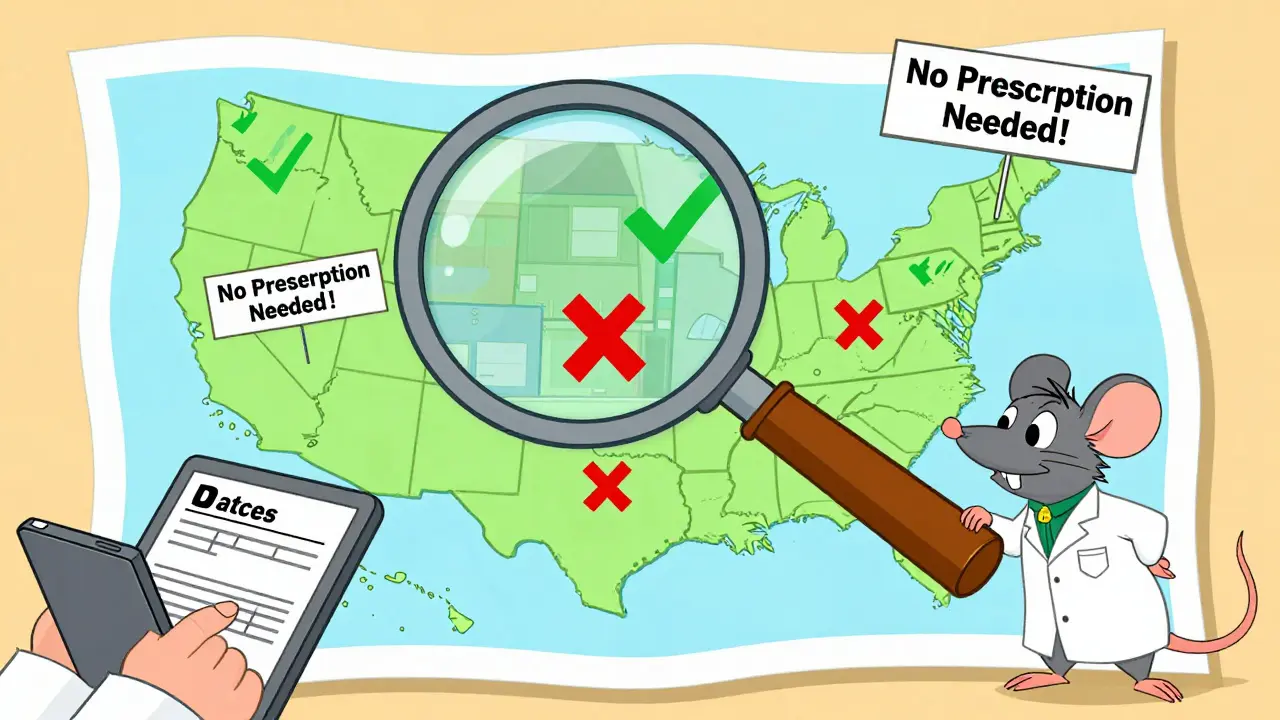
What Happens When You Use a Fake Pharmacy?
The risks aren’t theoretical. In 2023, the FDA shut down over 1,200 illegal online pharmacies in Operation Safety Script. Many of these sites sold fake versions of popular drugs like Viagra, Ozempic, and blood pressure meds. Some contained rat poison, lead, or fentanyl. Others had no active ingredient at all.According to NABP’s 2022 enforcement data, unlicensed pharmacies are 4.7 times more likely to dispense the wrong medication and 8.2 times more likely to be involved in controlled substance diversion. That means someone could be taking a fake version of their heart medication-and not even know it.
One consumer in Ohio lost $850 to a site that displayed a fake NABP seal. The pills he received were inert. His doctor didn’t find out until his blood pressure spiked. He ended up in the ER.
Online vs. Local Pharmacies: Which Is Safer?
There’s a myth that local pharmacies are always safe and online ones are always risky. That’s not true. Many local pharmacies are unlicensed or operate without proper oversight. And many online pharmacies are fully legitimate-VIPPS-accredited, with licensed pharmacists and secure systems.The key difference? Verification. Local pharmacies often display their license on the wall. You can see it. Online pharmacies don’t. That’s why you have to dig deeper. A legitimate online pharmacy will make it easy to verify their license. A fake one will bury it or hide it behind a “contact us” page.
Also, consider this: 87% of state boards now offer online license verification. That’s up from 63% in 2019. The system is getting better. But you still have to use it.
What to Do If You’ve Already Bought From a Fake Pharmacy
If you’ve ordered from a suspicious site, stop using the medication. Don’t throw it away-take it to your local pharmacy. They can help you dispose of it safely and report it to the FDA.Report the site to the FDA’s MedWatch program and the NABP’s Illegal Pharmacy Reporting Portal. Include screenshots, the website URL, and any communication you had with them. The more reports, the faster the FDA can shut them down.
Also, contact your doctor. Let them know what you took. Some counterfeit drugs can cause long-term damage, even if you only took one dose. Your doctor may need to run tests or adjust your treatment plan.
What’s Changing in 2025?
Regulators are catching up. In January 2024, California started requiring out-of-state pharmacies shipping to residents to provide an 800 number for direct pharmacist access. The FDA has launched a $15 million initiative to improve detection of fake online pharmacies, aiming for a 40% drop in consumer harm by 2026.The NABP is rolling out real-time license updates across 43 states. By 2027, experts predict national licensure standards will cut verification complexity by 60%. But until then, the responsibility falls on you.
There’s no app that automatically tells you if a pharmacy is safe. No magic button. Just five simple checks-and the willingness to do them.
How do I know if a pharmacy is licensed in my state?
Go to your state’s board of pharmacy website-search for “[Your State] board of pharmacy license verification.” Enter the pharmacy’s license number or name. If the license is active and in good standing, it’s legitimate. If it says “inactive,” “suspended,” or doesn’t show up at all, walk away.
Can I trust pharmacies that are listed on Google Ads?
No. Google allows ads from unlicensed pharmacies because it doesn’t verify their credentials. Many fake pharmacies pay to appear at the top of search results. Always verify the pharmacy through your state’s board or NABP Verify-even if it’s the first result.
What’s the difference between VIPPS and NABP Verify?
VIPPS is a certification program for online pharmacies that meet strict safety and operational standards. NABP Verify is a database that checks if a pharmacy holds a valid state license. A pharmacy can be in NABP Verify without being VIPPS-certified, but a VIPPS pharmacy must be in NABP Verify first. Look for both for maximum safety.
Are international pharmacies safe?
Most aren’t. The U.S. FDA does not approve most foreign pharmacies, and many sell counterfeit or unapproved drugs. Even if they claim to be “licensed in Canada,” that license doesn’t apply in the U.S. Only pharmacies with a U.S. state license and VIPPS certification are legally allowed to ship prescription drugs to U.S. residents.
What should I do if I suspect a pharmacy is fake?
Don’t buy from them. Report them to the FDA through MedWatch and to the NABP’s Illegal Pharmacy Reporting Portal. Include the website URL, screenshots, and any transaction details. Your report helps protect others.
Counterfeit drugs don’t come with warning labels. They look real. They feel real. But they can kill. The only way to stay safe is to verify before you buy. It takes five minutes. It could save your life.