Every year, over 2.3 million women worldwide are diagnosed with breast cancer. In the UK alone, about 55,000 new cases are found annually. The good news? More women are surviving than ever before - not because treatments have magically become easier, but because we’re catching it earlier. And that starts with mammography.
When Should You Start Screening?
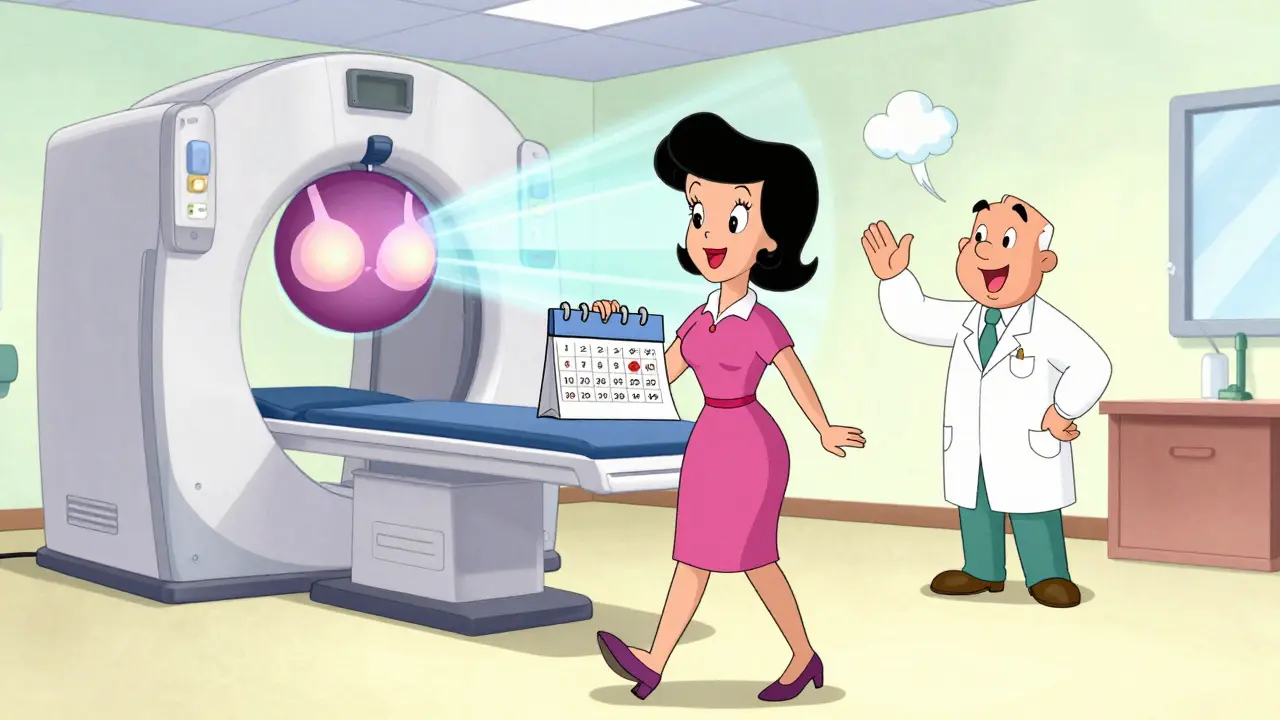
There’s been a lot of back-and-forth over the years about when to start mammograms. Some said 50. Others said 40. Now, most major groups agree: start at 40. The American College of Obstetricians and Gynecologists updated its guidelines in October 2024 to recommend that all women at average risk begin annual or biennial screening at age 40. The U.S. Preventive Services Task Force, the American Cancer Society, and the National Comprehensive Cancer Network all now support this shift. Why? Because breast cancer isn’t waiting until 50 to show up. More invasive cancers are being found in women in their 40s than ever before. You don’t need to wait for symptoms. If you have no family history, no genetic mutations, and no dense breasts - you’re still at risk. Screening isn’t just for high-risk women. It’s for everyone.What’s the Difference Between 2D and 3D Mammograms?
Most women still get 2D mammograms - standard X-ray images taken from two angles. But 3D mammography, also called digital breast tomosynthesis (DBT), is becoming the new standard. In a 3D mammogram, the machine takes dozens of low-dose X-rays as it moves around the breast. A computer then stacks them into a 3D image. This lets radiologists see through overlapping tissue, which is especially helpful if you have dense breasts. Studies show 3D mammograms find 20% to 40% more invasive cancers than 2D alone. They also reduce false alarms by up to 15%. That means fewer unnecessary biopsies and less anxiety. The American Society of Breast Surgeons now recommends 3D mammography as the preferred method for all women. Medicare and many private insurers cover it as a screening tool. If your clinic only offers 2D, ask if they have 3D available. It’s worth the wait.What About Dense Breasts?
About half of women over 40 have dense breast tissue. That’s normal - it’s not a disease. But dense tissue shows up white on a mammogram, and so do tumors. That makes cancers harder to spot. For women with dense breasts and no other risk factors, the USPSTF says there’s not enough proof to recommend extra tests like ultrasound or MRI. But the American Cancer Society and other groups say: if you have dense breasts, talk to your doctor. You might benefit from supplemental screening. MRI is the most sensitive tool for high-risk women - those with BRCA mutations, a strong family history, or a prior history of breast cancer. It finds cancers that mammograms miss. But it’s expensive, can give false positives, and isn’t recommended for average-risk women. Ultrasound is sometimes used as a follow-up, but it finds more benign lumps, leading to more biopsies. DBT is often the best middle ground - better than 2D, less intense than MRI.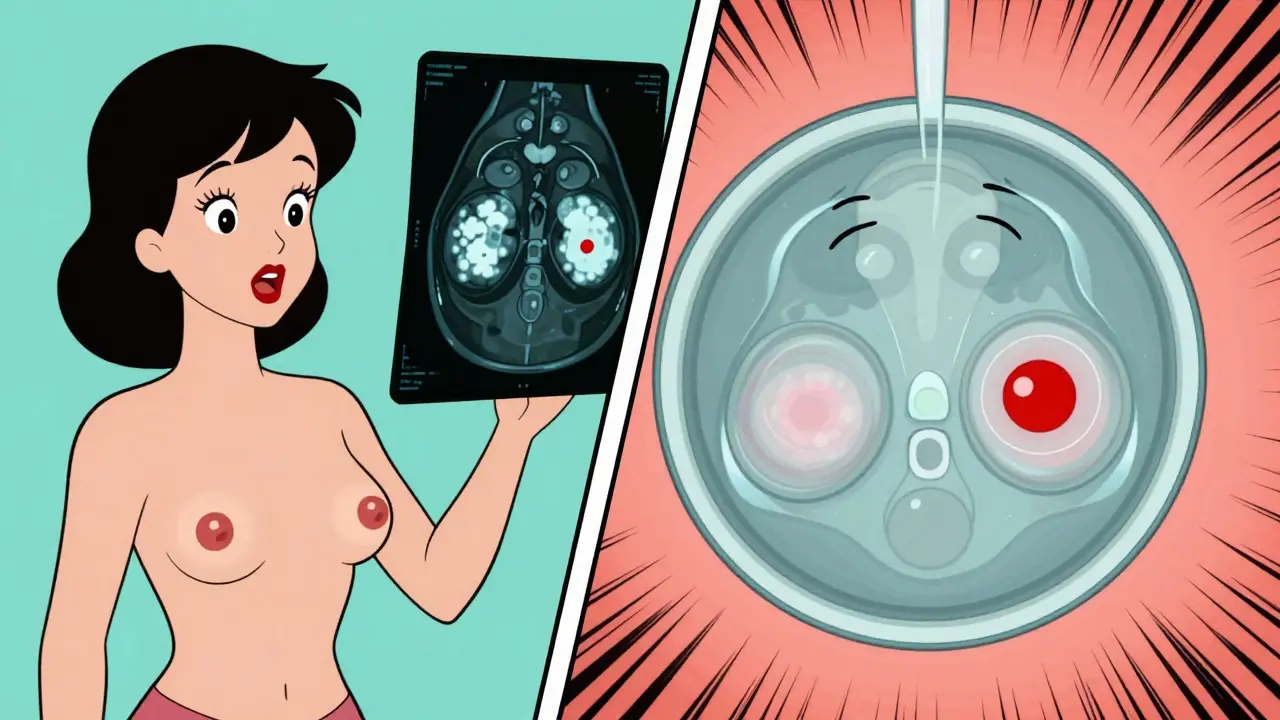
How Effective Is Screening Really?
Screening mammography doesn’t prevent cancer. But it saves lives. A major analysis of nine large studies found that regular screening reduces breast cancer deaths by about 12%. That might sound small, but it means thousands of women alive today because they caught their cancer early. The benefit grows the longer you screen. Women who get mammograms every year or two from age 40 to 74 lower their risk of dying from breast cancer more than those who start later or skip screenings. And here’s something important: screening works best when it’s consistent. Missing a year or two can delay diagnosis. If you’ve been told you’re “low risk,” don’t assume you’re safe. Most women who get breast cancer have no family history.When Do You Stop Screening?
There’s no magic age when you stop. The decision isn’t about your calendar - it’s about your health. Most guidelines say to keep screening as long as you’re in good health and your life expectancy is more than 10 years. That could mean 75, 80, or even beyond - depending on you. If you have serious heart disease, advanced dementia, or other conditions that limit your life expectancy, screening may do more harm than good. Unnecessary biopsies, anxiety, and over-treatment become bigger risks than the cancer itself. Talk to your doctor. Don’t let a form or a system make this decision for you.What Happens After a Diagnosis?
Finding a tumor on a mammogram is just the first step. The real work begins with staging and testing. Every breast cancer is different. Treatment depends on:- Stage (how big the tumor is and if it spread)
- Hormone receptors (is it fueled by estrogen or progesterone?)
- HER2 status (is the cancer driven by a specific protein?)
- Genomic tests (like Oncotype DX, which predict if chemo will help)

What’s Changing in 2026?
The biggest shift isn’t in machines - it’s in mindset. More clinics are now offering risk assessments by age 25. Tools like Tyrer-Cuzick calculate your lifetime risk based on family history, breast density, and other factors. If your risk is over 20%, you may qualify for annual MRI screenings starting at 30. Artificial intelligence is also being rolled out to help radiologists spot subtle changes in mammograms. Early studies show AI can reduce missed cancers by up to 10%. And there’s growing awareness that breast cancer doesn’t only affect cisgender women. Transgender men and nonbinary people with breast tissue should also be screened - and many are being left out because providers don’t know how to ask.What You Can Do Today
You don’t need to wait for your next appointment. Here’s what to do now:- If you’re 40 or older and haven’t had a mammogram, schedule one.
- Ask if your clinic offers 3D mammography - it’s better, and you deserve it.
- Know your breast density. It’s in your report. If you don’t know, call and ask.
- If you have a family history of breast or ovarian cancer, get genetic counseling - even if you’re under 40.
- Don’t ignore changes: a new lump, nipple discharge, skin dimpling, or persistent pain. Don’t wait for your next screening.
Do I need a mammogram if I have no family history of breast cancer?
Yes. About 8 out of 10 women diagnosed with breast cancer have no family history. Most cases happen in women with no known risk factors. Screening is for everyone, not just those with a genetic link.
Is 3D mammography covered by insurance?
In the U.S., Medicare and most private insurers cover 3D mammography as a screening tool. In the UK, NHS offers standard 2D mammograms, but private clinics often provide 3D. Ask your provider - it’s worth the extra step if available.
Can I rely on self-exams instead of mammograms?
No. Breast self-exams don’t reduce deaths from breast cancer. While knowing your body is helpful, mammograms catch tumors too small to feel - often before they can be noticed by touch. Don’t skip screening because you feel fine.
What if I’m afraid of radiation from mammograms?
The radiation dose from a mammogram is very low - about the same as a cross-country flight. Modern machines use the least amount possible. The risk from radiation is far smaller than the benefit of catching cancer early. Skipping screening because of fear puts you at greater risk.
Do I need to get screened every year?
It depends. Women 45 to 54 are generally advised to get screened yearly. After 55, you can switch to every two years if you prefer. But if you have dense breasts or higher risk, annual screening is still recommended. Talk to your doctor - don’t assume one size fits all.