Imagine you’re trying to copy a secret recipe - but you can’t see the ingredients, don’t know the cooking time, and the chef won’t tell you how they mix it. That’s what developing a complex generic drug feels like. These aren’t your ordinary pills or capsules. They’re inhalers that deliver medicine deep into the lungs, creams that need to penetrate skin just right, or injectables with nanoparticles smaller than a virus. And even though they’re meant to be exact copies of brand-name drugs, proving they work the same way is one of the toughest challenges in modern medicine.
What Makes a Generic Drug "Complex"?
Not all generics are the same. Simple ones - like a generic version of ibuprofen or metformin - are straightforward. The active ingredient is a single molecule, the body absorbs it the same way every time, and you can measure its effect by checking blood levels. That’s bioequivalence in its simplest form: if the blood concentration of the generic matches the brand-name drug within 80-125%, it’s approved. But complex generics? They’re different. The FDA defines them as products where the route of delivery, formulation, or active ingredient makes traditional testing methods unreliable. This includes:- Liposomal or nanoparticle injectables
- Inhalers like those for asthma or COPD
- Topical creams, gels, and ointments for eczema or psoriasis
- Transdermal patches
- Ophthalmic suspensions
- Drug-device combinations, like auto-injectors or nebulizers
Why Blood Tests Don’t Work for Complex Drugs
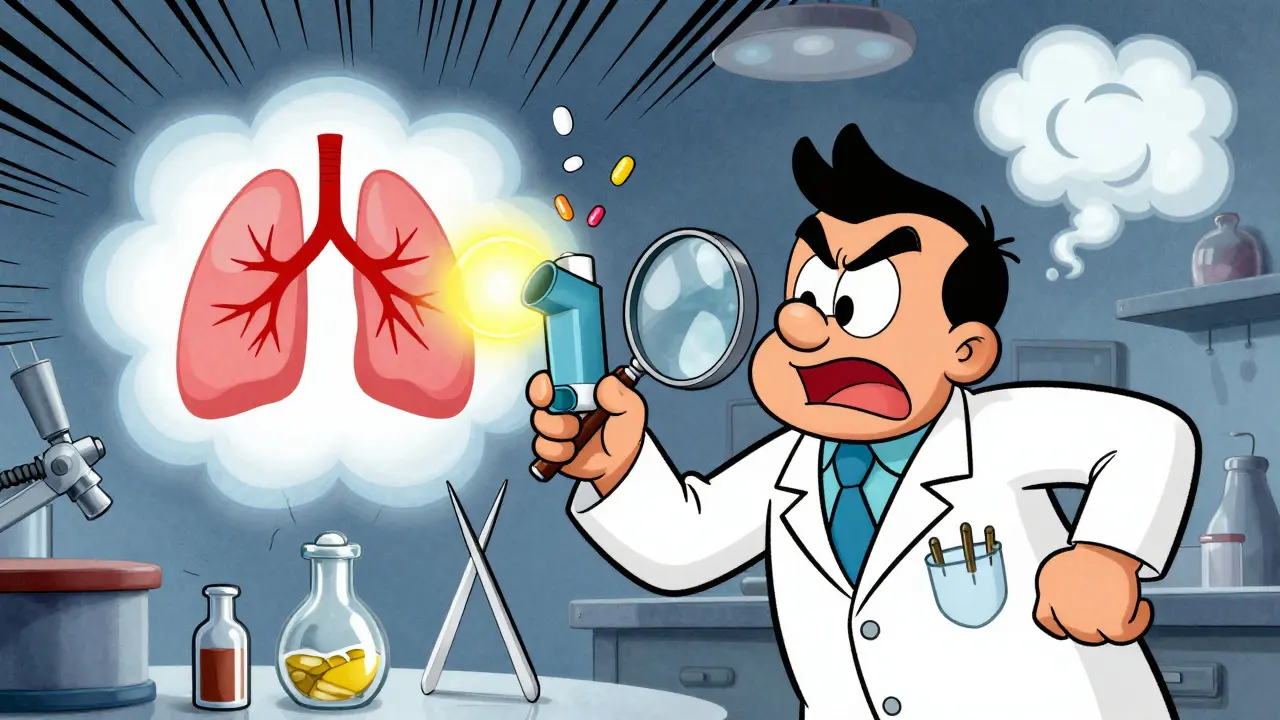
The standard bioequivalence study - measuring AUC and Cmax in the bloodstream - was designed for drugs that act systemically. But complex generics often work locally. A corticosteroid cream doesn’t need to enter your blood to treat eczema. It needs to sit in the top layers of your skin. If you measure blood levels, you’ll get nothing. Or worse, you’ll get misleading data. Same with inhalers. If a drug is meant to stay in the lungs, most of it never reaches the bloodstream. So even if the generic has the same active ingredient and dose, if the particle size is off by a few micrometers, it won’t deposit in the right part of the lung. The patient gets less medicine. The brand-name drug works. The generic doesn’t. And regulators have no easy way to prove it. This isn’t theoretical. In 2021, a generic version of a popular asthma inhaler was pulled from the market after post-market studies showed patients had worse symptom control. The generic had the same active ingredient - budesonide - but the aerosol plume was wider, the particles larger. It didn’t reach the small airways. The company didn’t know until after approval.The Reverse-Engineering Nightmare
Generic manufacturers don’t get the recipe. They don’t know the exact ratios of excipients, the temperature during manufacturing, the mixing speed, or how the drug is coated. They have to reverse-engineer it - a process called de-formulation. Think of it like trying to rebuild a car from a photo. You can see the shape, the wheels, the color. But you don’t know what kind of engine is inside, what fuel it uses, or how the transmission shifts. You guess. You test. You fail. You try again. For complex drugs, this takes years. One manufacturer spent 18 months just trying to match the particle size distribution of a single liposomal injection. They used 12 different analytical techniques - laser diffraction, electron microscopy, dynamic light scattering - and still couldn’t get it right until they changed the solvent used in the final filtration step. That’s the kind of detail no one tells you. And it’s expensive. Developing a complex generic costs 2.5 to 3 times more than a traditional one. And the failure rate? Over 70% at the bioequivalence stage. That’s why only 10-15% of complex generic applications get approved - compared to over 80% for simple generics.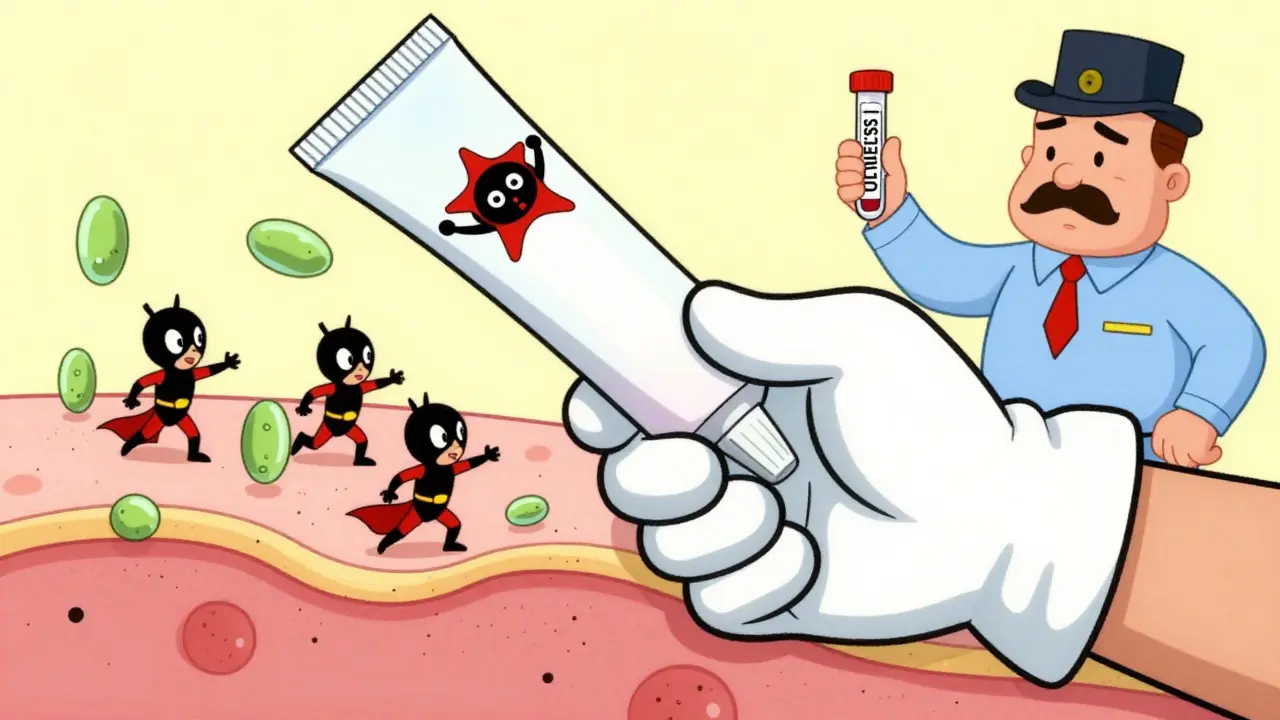
Regulatory Chaos Around the World
Even if you solve the science, you still have to deal with regulators. The FDA, EMA, and other agencies don’t agree on how to test complex products. For example, the FDA might accept in vitro lung deposition data for an inhaler. The EMA might demand a clinical endpoint study - meaning they want proof patients actually feel better, not just that the drug lands in the right place. That means a company might have to run two separate clinical trials just to get approval in the U.S. and Europe. This isn’t just inefficient. It’s a barrier to entry. Small generic companies can’t afford to jump through these hoops. That leaves the market dominated by a handful of big players, which drives up prices - the opposite of what generics are supposed to do.What’s Being Done to Fix This?
The FDA knows the problem. In 2022, they launched the Complex Generic Drug Product Development Program. Since then, they’ve published 15 new guidance documents - on topical steroids, inhaled budesonide, testosterone gels, and more. They’re funding research into:- Imaging tools to track skin penetration
- Computational models that predict how particles behave in the lung
- Physiologically-based pharmacokinetic (PBPK) modeling - which simulates how the drug moves through the body based on its physical properties

The Bigger Picture: Why This Matters
There are about 400 complex brand-name drugs on the market with no generic alternatives. Together, they cost the U.S. healthcare system over $120 billion a year. If even half of those had generics, savings could reach $60 billion annually. That’s not just money. It’s access. A patient with COPD shouldn’t have to choose between their inhaler and their rent. A child with severe eczema shouldn’t miss school because the cream is too expensive. Complex generics aren’t a niche topic - they’re a public health issue. And the market is growing. Sales of complex generics are projected to hit $45 billion by 2028. That’s a 24.6% annual growth rate. But growth won’t happen unless the science catches up.What’s Next?
The path forward isn’t about more testing. It’s about smarter testing. Regulatory agencies, manufacturers, and academic labs need to work together. Standardized methods. Shared data. Open collaboration. Manufacturers need to engage with regulators early - not wait until they’re ready to file. Companies that did this through the FDA’s Complex Generic Drug Product program saw approval rates 35% higher than those who didn’t. And regulators need to be flexible. If a new imaging tool can prove a cream penetrates the skin the same way as the brand, why force a clinical trial? If PBPK modeling shows consistent lung deposition, why require 100 human subjects? The goal isn’t to lower standards. It’s to match the science to the product. For simple drugs, blood levels work. For complex ones, we need better tools. The technology exists. The will to use it is what’s missing.Final Thoughts
Proving bioequivalence for complex generics isn’t just hard - it’s a reflection of how far we’ve come in drug delivery, and how slow regulation has been to catch up. We’ve built drugs that can target cells, penetrate skin, and deliver medicine precisely where it’s needed. But our methods for proving they work haven’t kept pace. The solution isn’t more regulations. It’s smarter science. Better tools. And a willingness to accept that the old rules don’t always fit the new reality. The patients waiting for affordable versions of these drugs aren’t asking for miracles. Just a fair shot at the same treatment everyone else gets.Why can’t we just use blood tests for complex generics like we do for regular ones?
Blood tests measure how much drug enters the bloodstream, but complex generics often work locally - like in the lungs, skin, or eyes. For example, an asthma inhaler’s job is to deliver medicine to the airways, not to circulate in the blood. Measuring blood levels gives misleading or zero data. That’s why regulators now require tests that measure drug deposition in the target tissue - using imaging, in vitro models, or advanced simulations.
What’s the biggest hurdle for generic manufacturers trying to copy complex drugs?
The biggest hurdle is reverse-engineering the product without knowing the original formula. Complex generics often have 10+ inactive ingredients, each affecting how the drug behaves. A change in particle size, mixing speed, or even the type of emulsifier can alter performance. Manufacturers must spend years testing thousands of variations just to get close - and even then, they might miss the exact manufacturing conditions.
Why do some complex generics fail after approval?
Many failures happen because post-market monitoring reveals differences in real-world use. For example, a generic inhaler might perform fine in lab tests but deliver larger particles in humid conditions. Or a topical cream might absorb differently when applied to cracked skin versus healthy skin. These subtle variations aren’t caught in controlled clinical trials - but they matter to patients.
How does the FDA’s Quality by Design (QbD) approach help?
QbD means designing the product with bioequivalence in mind from day one. Instead of testing after making the drug, manufacturers study how each ingredient and process step affects performance. They test stability under different temperatures, humidity levels, and light exposure. They map out critical quality attributes early. This reduces surprises later and cuts development time by up to 30%.
Is there hope for more complex generics to reach the market?
Yes. New tools like PBPK modeling, advanced imaging, and standardized analytical methods are making it easier to prove equivalence without relying on human trials. The FDA is actively publishing guidance for specific products, and industry-academic partnerships are creating shared testing protocols. If regulatory agencies align their requirements globally, approval rates could jump by 25-30% in the next five years.