Every night, while you sleep, millions of tiny creatures are feasting on your skin flakes. They don’t bite. They don’t crawl on you. But they’re making you sneeze, wheeze, and struggle to breathe. These are dust mites - microscopic arachnids that live in your mattress, pillows, and bedding. If you have allergies, they’re likely the real culprit behind your constant runny nose, itchy eyes, or asthma flare-ups. The good news? You don’t need expensive treatments or miracle sprays. You just need to change how you handle your bedding, humidity, and cleaning routine.
Why Dust Mites Are Your Silent Allergy Enemy
Dust mites aren’t the bugs you picture in horror movies. They’re too small to see - about 0.3 millimeters long. But their waste is powerful. One mite produces 20 droppings a day. And those droppings? They’re packed with proteins that trigger allergic reactions in 20 million Americans alone. The Mayo Clinic calls them the most common year-round indoor allergen. That means even if you think your allergies are seasonal, it’s probably dust mites making things worse in winter when you’re stuck indoors with the heat on. They thrive in warmth and moisture. Your bed is the perfect habitat: 70-80% humidity, 70°F, and a steady supply of dead skin. You shed about 1.5 grams of skin every night. That’s enough to feed millions of mites. And when you toss and turn, you’re stirring up their waste into the air. That’s why symptoms get worse at night or right after you make the bed.The One Thing That Actually Works: Humidity Control
Forget fancy sprays or expensive filters. The single most effective way to kill dust mites is to make your home too dry for them. Dust mites absorb moisture from the air. When humidity drops below 50%, they start to die. At 45% or lower, their population crashes within two weeks. In Birmingham, winters are damp. Summers can get sticky. That’s why so many people think they’ve tried everything and nothing works. The problem isn’t your cleaning - it’s your humidity. A digital hygrometer (costs $20-$30) placed near your bed tells you the truth. If it’s reading 60% or higher, you’re feeding the mites. A dehumidifier in the bedroom is the game-changer. You don’t need a giant unit. A 30-pint model running overnight at 45% RH will cut mite numbers by 90%. No chemicals. No scrubbing. Just dry air. Studies from the National Institute of Allergy and Infectious Diseases show this alone reduces allergen levels more than any other single step.Bedding: Wash It Right or Waste Your Time
Washing your sheets weekly sounds basic. But most people do it wrong. Cold water? That does almost nothing. Warm water? Gets you halfway. To kill 100% of dust mites, you need water at exactly 130°F (54.4°C). That’s hotter than most people think. Your washing machine’s “hot” setting might only hit 90-100°F. Check your settings. If it doesn’t reach 130°F, use the “sanitary” cycle - it’s designed for this. Don’t overload the machine. Fill it no more than half full. That gives the water room to agitate and carry away the mites and their waste. Use regular detergent - no special “allergy” formulas needed. The heat and motion do the work. After washing, dry everything on high heat for at least 15 minutes. The dryer finishes the job. Even if you can’t wash something in hot water - like a feather pillow - toss it in the dryer on high for 30 minutes. That kills mites too. Mattress and pillow encasements are next. Not the flimsy ones from discount stores. Look for ones labeled “allergen-proof” with a pore size of 10 micrometers or smaller. These block mites and their waste from escaping. They should last 5+ years if you wash them yearly. Cheap ones tear after six months. Read reviews. Look for ones tested by independent labs. You’ll pay $50-$80 per set, but it’s the only bedding upgrade that actually reduces allergens.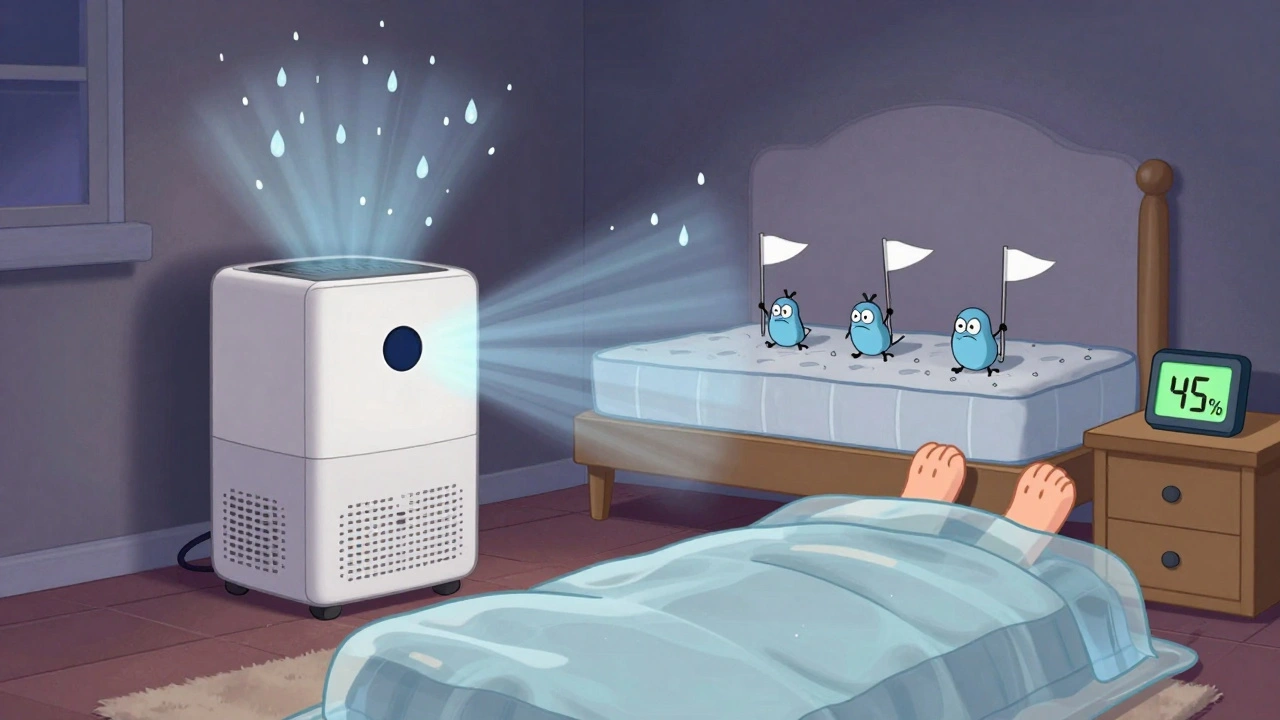
Cleaning: What Matters and What Doesn’t
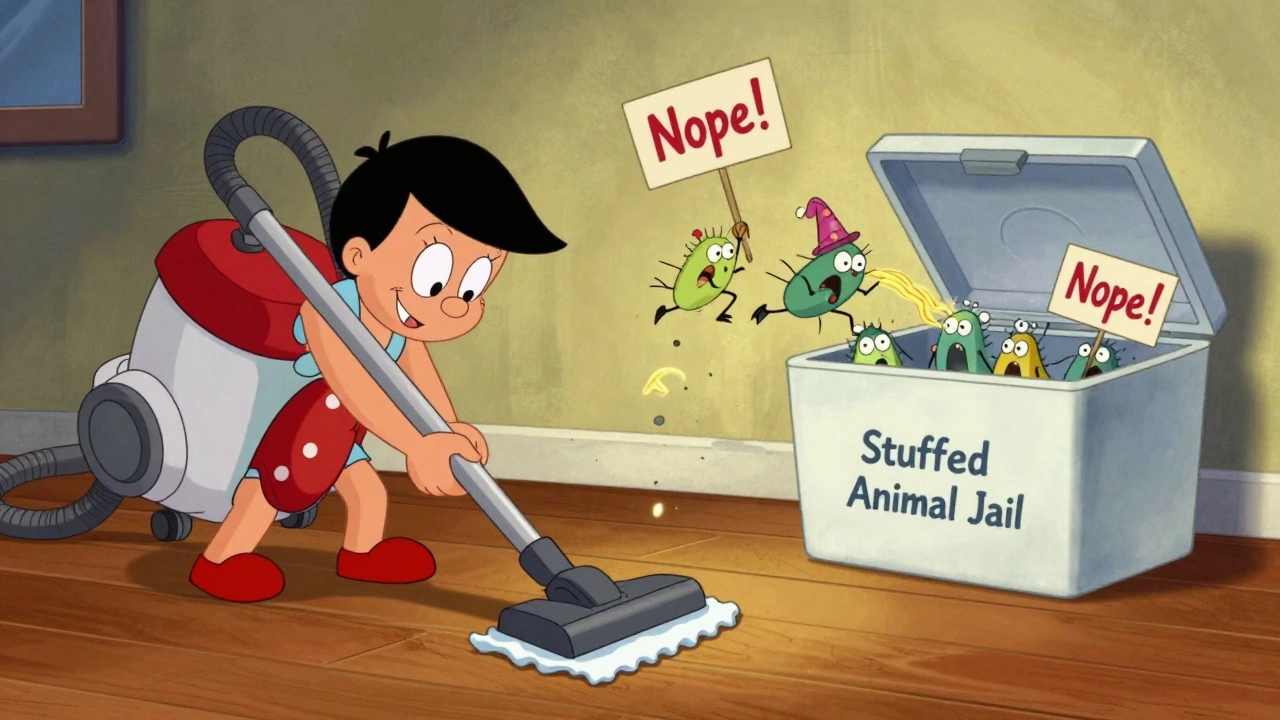
Vacuuming sounds like the obvious fix. But not all vacuums are equal. A regular vacuum just kicks dust mite waste back into the air. You need a HEPA vacuum. HEPA filters trap particles as small as 0.3 micrometers - small enough to catch mite droppings. Sweep slowly. Move at one foot per second. Fast cleaning misses most allergens. Carpet is the worst offender. Dust mites live deep in the fibers. If you can, replace carpet in the bedroom with hard flooring. Wood, vinyl, or tile. Easy to mop. No hiding spots. If you can’t remove carpet, steam clean it every 6 months. But don’t rely on it alone. Without humidity control, mites bounce back fast. Damp-mop hard floors weekly. Dust with a microfiber cloth - not a feather duster. Sprays and powders? Skip them. Tannic acid sprays claim to neutralize allergens, but they only work for a few weeks. Plant-based powders last longer but still need vacuuming. They’re not a solution - they’re a bandage. Freeze non-washable items. Stuffed animals, throw pillows, curtains - seal them in a plastic bag and put them in the freezer for 24 hours. Cold kills mites. Then vacuum them off after taking them out.The Real Cost - And What You Actually Need to Buy
You don’t need to spend $1,000. Here’s what works and what’s worth the money:- Hygrometer - $25. Non-negotiable. You can’t fix what you can’t measure.
- Dehumidifier - $150-$200. The most impactful purchase. Run it nightly.
- HEPA vacuum - $180-$250. Look for models with sealed systems (no air leaks).
- Encasements - $150 for mattress, pillows, box spring. Buy certified ones. Avoid “breathable” marketing gimmicks.
What Doesn’t Work - And Why People Give Up
Most people try one thing and quit. That’s why they think dust mite control doesn’t work. - Washing sheets in cold water - Only removes 20% of allergens. You’re fooling yourself. - Using air purifiers - They help with pollen and pet dander, but dust mite waste is too heavy to stay airborne long. Air purifiers won’t touch it. - Buying “mite-repellent” bedding - No such thing. Mites don’t care about lavender or tea tree oil. Those scents don’t kill them. - Washing every other week - Mites multiply fast. Weekly is the minimum. - Thinking “I don’t have allergies” - Even if you don’t feel symptoms, mites are still there. Their waste builds up. One day, your body snaps.Stick With It - It Gets Easier
The first two weeks are the hardest. You’re setting up the dehumidifier, buying encasements, learning your machine’s hot cycle. It feels like a chore. But after a month, it’s routine. You check the hygrometer like you check the weather. You throw sheets in the wash without thinking. You vacuum without grumbling. And then you notice something: you’re not waking up with a stuffy nose. You’re sleeping through the night. Your eyes don’t itch. You’re not reaching for antihistamines every morning. This isn’t magic. It’s science. And it’s been proven by the American College of Allergy, the Mayo Clinic, and decades of peer-reviewed research. You don’t need to be perfect. Just consistent.What Comes Next
If you’ve done all this and still struggle, look at your HVAC system. In older homes, ducts can leak moisture into bedrooms. A professional can test airflow and humidity distribution. Some people in Birmingham need whole-house dehumidifiers - but most don’t. The future of dust mite control is better materials and smarter tech. New encasements are being tested with antimicrobial fibers. AI-powered hygrometers will adjust your dehumidifier automatically. But for now, the old-school approach still wins: dry air, hot washes, and clean floors. You don’t need to live in fear of your bed. You just need to treat it like the allergen hotspot it is. And that starts tonight.Can I kill dust mites by freezing my bedding?
Yes, freezing non-washable items like stuffed animals or decorative pillows for 24 hours kills dust mites. But freezing doesn’t remove their allergenic waste. You still need to vacuum or shake them out after removing them from the freezer. Freezing is a helpful backup, not a replacement for hot water washing.
Do I need to wash my pillows every week?
Yes - if they’re washable. Most synthetic and down pillows can be washed in hot water (130°F) and dried on high heat. If your pillow can’t be washed, put it in the dryer on high for 30 minutes weekly. If you can’t do either, use an allergen-proof pillow encasement and replace the pillow every 1-2 years.
Is a HEPA filter vacuum really that much better than a regular one?
Yes. A regular vacuum stirs up dust mite waste into the air. A HEPA vacuum traps it. Studies show HEPA vacuums reduce airborne allergens by 60-70%, while standard vacuums may increase them. Look for sealed systems - if air leaks out around the handle or hose, it’s not truly HEPA.
Can I use essential oils or natural sprays to get rid of dust mites?
No. Essential oils like tea tree or eucalyptus might smell nice, but they don’t kill dust mites or neutralize their allergens. Some sprays claim to work, but independent tests show they reduce allergens by less than 20%. Relying on them gives a false sense of security. Stick to heat, dryness, and physical barriers.
How long until I notice a difference after starting dust mite control?
Most people feel better within 2-4 weeks. Humidity control starts reducing mite populations in days, but allergen levels in your bed take time to drop. If you’re consistent, your sneezing and congestion should improve noticeably by the end of the first month. For asthma sufferers, fewer nighttime attacks often show up sooner.