Fluoroquinolone Tendon Risk Calculator
Personal Risk Assessment
This calculator helps you understand your risk of tendon rupture when taking fluoroquinolone antibiotics like ciprofloxacin or levofloxacin. Based on factors identified in medical research, it estimates your relative risk compared to the general population.
Your Risk Assessment
Recommended Action
Fluoroquinolones are powerful antibiotics. They work against tough infections like pneumonia, complicated UTIs, and even anthrax. But for every benefit, there’s a hidden danger-especially for your tendons. If you’ve been prescribed ciprofloxacin, levofloxacin, or moxifloxacin, you need to understand the real risk: tendon rupture.
Why Fluoroquinolones Can Tear Your Tendons
These antibiotics don’t just kill bacteria. They interfere with how your body’s cells function at a deep level. Research shows they trigger cellular stress in tendons, damage mitochondria (the energy factories in your cells), and disrupt the signaling proteins that keep tendon tissue strong. The result? Tendons become brittle, inflamed, and prone to tearing-even without injury.The Achilles tendon, the thick band connecting your calf to your heel, takes the brunt of this damage. Studies show it’s involved in nearly 90% of all fluoroquinolone-related tendon injuries. But shoulders, hands, and even the rotator cuff can be affected too. And it doesn’t always happen while you’re still taking the drug. Symptoms can appear days after you finish the course-or even months later.
Who’s at Highest Risk?
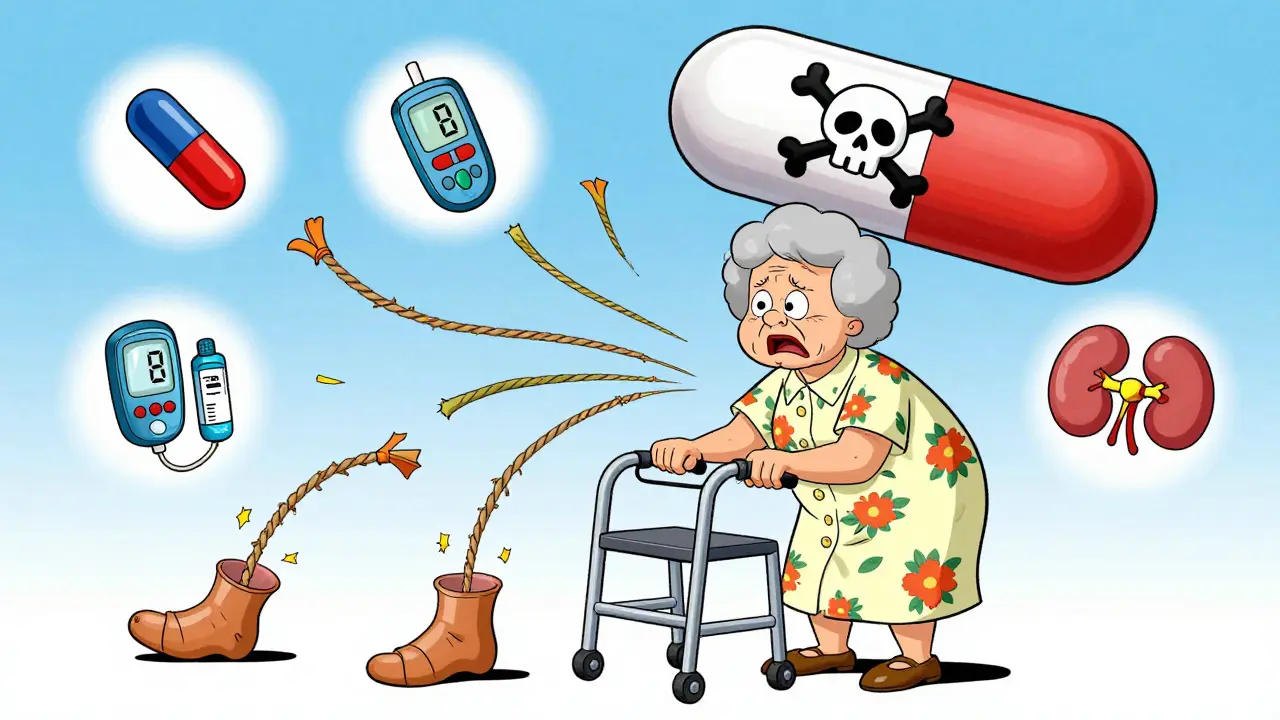
Not everyone who takes fluoroquinolones gets tendon damage. But certain people face dramatically higher odds.- Age 60 and older: Your tendons naturally weaken with age. Add fluoroquinolones, and your risk jumps. People over 80 have a 20 times higher chance of rupture compared to younger adults.
- On corticosteroids: Taking prednisone or other steroid pills or injections? This combination is dangerous. The risk of tendon rupture increases by 46 times. That’s not a small bump-it’s a cliff.
- Diabetes or kidney disease: Poor blood flow or reduced drug clearance makes tendon damage more likely.
- History of tendon problems: If you’ve had tendinitis before, your tendons are already vulnerable.
- Organ transplant recipients: Immunosuppressants and fluoroquinolones together create a perfect storm for tendon failure.
Women may also be slightly more affected than men, though the reason isn’t fully understood. And while these drugs are often used for short courses-5 to 14 days-the damage can happen fast. In some cases, pain starts within 48 hours. One documented case had tendon pain begin just two hours after taking the first pill.
The Numbers Don’t Lie
A UK study of over 6 million people found that those taking fluoroquinolones were more than four times as likely to develop tendinitis and twice as likely to suffer a full rupture compared to those who didn’t take them. In Taiwan, researchers tracked over 350,000 patients and found fluoroquinolone users had nearly double the rate of tendon disorders.Even more alarming: half of all tendon ruptures linked to these antibiotics happen within the first week of treatment. And up to 50% of cases occur after the drug is stopped. That’s why many doctors now say: if you feel sudden pain, swelling, or stiffness in a tendon-stop the medication immediately and call your doctor. Don’t wait. Don’t tough it out.
What the Regulators Say
The FDA added a black-box warning to fluoroquinolones in 2008-the strongest possible alert. They updated it again in 2013 and 2018 to emphasize that side effects can be permanent and disabling. The UK’s MHRA tightened rules in 2019: fluoroquinolones should only be used when no other antibiotic will work. The European Medicines Agency did the same.These aren’t just bureaucratic moves. They’re responses to real, documented harm. In the U.S. alone, doctors write about 25 million fluoroquinolone prescriptions every year. Many are for simple infections like sinusitis or bronchitis-conditions that often clear up on their own or with safer antibiotics. That’s why experts now say: fluoroquinolones should be a last resort, not a first choice.
What to Do If You’re Prescribed One
If your doctor suggests a fluoroquinolone, ask these questions:- Is there a safer antibiotic that would work just as well?
- Do I have any risk factors-age, steroids, diabetes, kidney issues?
- What symptoms should I watch for?
- What should I do if I feel pain in a tendon?
Don’t be afraid to push back. Your tendon health matters more than a quick fix. If you’re over 60, on steroids, or have a history of tendon problems, insist on alternatives like amoxicillin, doxycycline, or trimethoprim.
Signs of Trouble-Don’t Ignore Them
Tendon damage doesn’t always start with a pop or a snap. Often, it begins quietly:- Dull ache or sharp pain in the heel, shoulder, or wrist
- Swelling or warmth around a tendon
- Stiffness that doesn’t improve with rest
- Pain when moving or putting weight on the area
These symptoms can show up within days-or weeks after stopping the drug. If you notice any of these, stop taking the antibiotic immediately. Do not wait for the pain to get worse. Call your doctor. Get an ultrasound or MRI if needed. Early action can prevent a full rupture.
What Happens After a Rupture?
A torn tendon isn’t just a minor injury. It often requires surgery, months of physical therapy, and sometimes permanent loss of function. Many patients never fully recover their strength or mobility. In one study, over a third of people with fluoroquinolone-induced Achilles rupture had lasting pain and difficulty walking even after treatment.And recovery is harder if you’re older or have other health problems. Healing takes longer. Complications are more common. That’s why prevention is the only real strategy.
The Controversy: Do All Studies Agree?
Not every study agrees. A 2022 Japanese study of 504 patients found no clear link between fluoroquinolones and tendon rupture. But that study had limitations: small size, different population, and used a method that compared patients to themselves over time-something that can miss real-world patterns.The overwhelming majority of large-scale, real-world data from the U.S., UK, and Taiwan show a clear, consistent signal. Regulatory agencies worldwide have acted on this evidence. If 120 million patient records across multiple countries show the same risk, it’s not a fluke.
What’s Next?
Scientists are now trying to find biomarkers-blood tests or genetic markers-that could predict who’s most at risk. They’re also exploring whether newer versions of these drugs can be designed without the tendon-damaging side effects. But for now, the safest approach is simple: avoid fluoroquinolones unless absolutely necessary.The Infectious Diseases Society of America now recommends them only as third-line options for common infections. That means: try something safer first. If that fails, then consider fluoroquinolones-and only after a full risk assessment.