Choosing the Right Style for Your Lifestyle
Not all hearing aids are created equal, and the best one for you depends entirely on the severity of your hearing loss and where you spend your time. If you have severe to profound hearing loss, you likely need the power of a Behind-the-Ear (BTE) a style where the processor and battery sit behind the ear, connecting to a speaker in the canal via a tube model. A great example is the Phonak Naída Lumity L-UP, which is built for heavy-duty amplification and can last up to three weeks on a single battery charge. The trade-off here is size; some users with smaller ears find them a bit cumbersome to manage. For those who want a balance of power and discretion, the Receiver-in-Canal (RIC) a device where the speaker (receiver) is placed inside the ear canal, while the electronics remain behind the ear is the current gold standard. Devices like the Jabra Enhance Select 700 are popular because they feel lighter and often support LE Audio for better streaming. If you can't stand the idea of something hanging off your ear, you have a few "in-ear" options:- In-the-Ear (ITE): These fill the entire bowl of the ear. The Signia Active Pro IX, for instance, offers great Bluetooth 5.2 connectivity and a beefy 34-hour battery life.
- Completely-in-Canal (CIC) and Invisible-in-Canal (IIC): These are the "stealth" options. While brands like Eargo make these nearly invisible, you pay a price in functionality. Because they are so small, battery life often drops to around 16-20 hours, and you lose out on advanced AI features.
| Style | Best For | Avg. Battery Life | Visibility | Example Model |
|---|---|---|---|---|
| BTE | Severe Loss | 1-3 Weeks | High | Phonak Naída Lumity |
| RIC | Mild to Severe | 24-30 Hours | Low/Med | Jabra Enhance Select 700 |
| ITE | Moderate Loss | Up to 34 Hours | Medium | Signia Active Pro IX |
| CIC/IIC | Mild Loss/Cosmetic | 16-20 Hours | Very Low | Eargo series |
The Brains Behind the Sound: Amplification Technology
Modern devices don't just make things louder; they make things *clearer*. This is where Amplification Technology the process of selectively increasing the volume of specific frequencies while suppressing background noise comes in. Old aids amplified everything, which is why they often sounded like a rushing wind. Today's premium models use dual-chip architecture to eliminate lag. For example, the Phonak Audéo Infinio reduces sound delay to a staggering 0.4 milliseconds. Why does this matter? Because when the delay is too long, your own voice sounds like an echo in your head, which is incredibly annoying. We're also seeing the rise of Artificial Intelligence (AI) computational algorithms that allow hearing aids to analyze environments and adjust settings in real-time . The Starkey Edge AI, for instance, processes 290 million data points every second. It can tell the difference between a barking dog and a human voice, prioritizing the voice so you can actually hear your friend at a party. Some of these new platforms are even adding health monitoring, with plans for fall detection and blood oxygen tracking by 2026. Another breakthrough is the reduction of the "occlusion effect"-that plugged-up feeling you get when you wear a hearing aid. ReSound's Vivia platform uses Microphone Acoustic Vent (MAV) technology, which reportedly cuts that feeling by 45%, making the experience feel much more natural.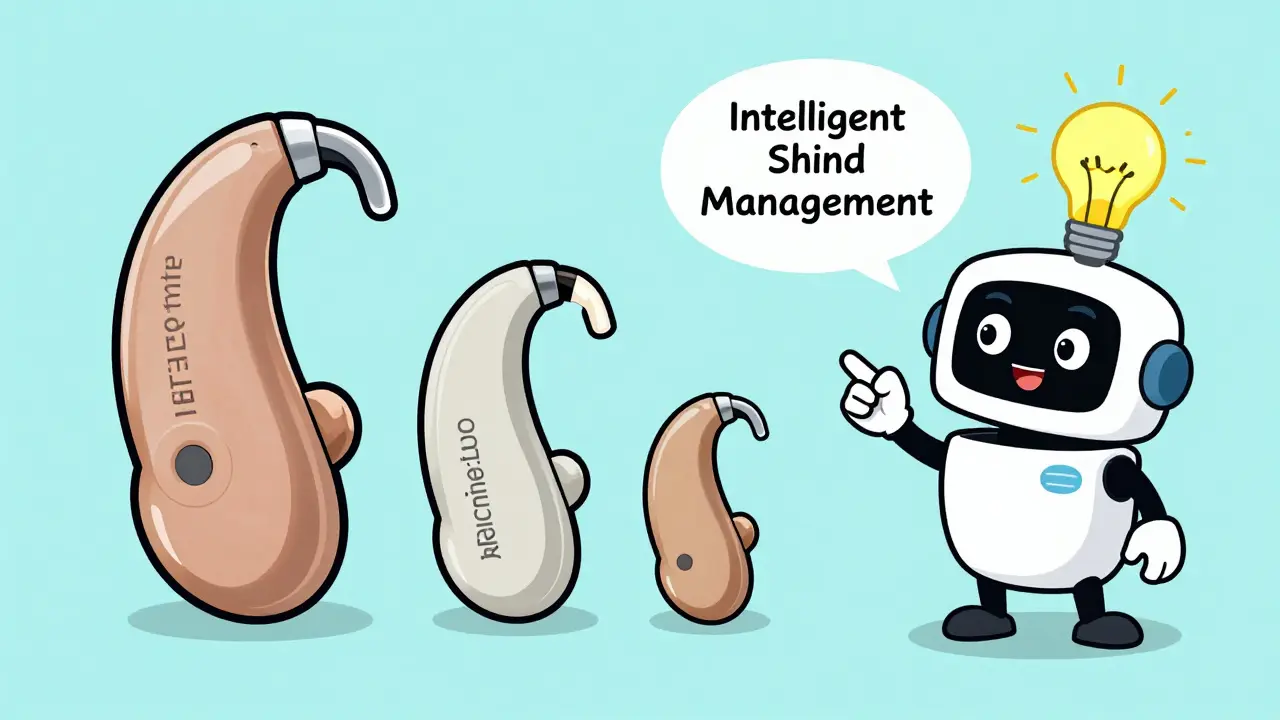
Fitting Your Device: Prescription vs. OTC
How you get your hearing aids is just as important as which ones you pick. You generally have three paths: the clinic, the telehealth screen, or the retail shelf.The Audiologist a healthcare professional specializing in the diagnosis and treatment of hearing and balance disorders route is the gold standard for precision. This usually involves 3 to 4 appointments over a few weeks. They do a diagnostic test, create a physical mold of your ear, and then fine-tune the amplification based on your specific hearing curve. It's expensive-premium pairs from brands like Oticon or Widex can cost between $3,500 and $7,500-but it ensures you aren't accidentally amplifying the frequencies that actually hurt your ears. Then there are Over-the-Counter (OTC) Hearing Aids hearing devices that can be purchased without a medical exam or prescription, intended for mild-to-moderate hearing loss . Thanks to FDA rules passed in 2022, you can now buy devices like the Jabra Enhance Select 700 for as low as $199 to $1,299. You handle the fitting via a smartphone app. While 85% of users successfully self-fit these, there is a risk. Some trials show that up to 68% of OTC users end up with suboptimal amplification because they aren't professionals at balancing frequencies.
The Learning Curve and Maintenance Pitfalls
Putting in a hearing aid isn't like putting on glasses; your brain has to relearn how to listen. Most people need 2 to 4 weeks to get used to the new sounds. You'll notice that things like the refrigerator humming or the sound of your own footsteps seem incredibly loud at first. This is normal-your brain has simply forgotten those sounds existed. One of the biggest enemies of a hearing aid isn't battery failure, but earwax. Roughly 42% of users deal with wax blockages every month, which can make a $5,000 device sound like a $5 toy. The fix is simple: use the manufacturer's cleaning tools weekly. This one habit can reduce device malfunctions by 67%. If you live in a humid climate, keep some silica gel packets in your storage case. It's a simple trick discussed frequently in user communities to keep the delicate electronics from corroding and extend the life of your batteries.
What to Expect in the Coming Years
We are moving toward a world where hearing aids are essentially wearable health computers. By 2027, nearly 41% of buyers are expected to use telehealth for their fittings, making the process faster and cheaper. We're also seeing the integration of Auracast broadcasting, which allows you to tune into a specific audio stream in a public place-like a museum guide or a specific TV in a sports bar-without needing a separate receiver. However, as these devices become more connected via Bluetooth, cybersecurity is becoming a talking point. Research suggests a small percentage of Bluetooth-enabled aids could be vulnerable to signal interception, though manufacturers are already working on stronger encryption to keep your conversations private.Are OTC hearing aids as good as prescription ones?
For adults with mild-to-moderate hearing loss, OTC aids can be an excellent, affordable entry point. However, they lack the professional fitting and diagnostic testing of prescription aids. If you have severe hearing loss or a complex medical history, a prescription model is significantly safer and more effective to avoid over-amplification.
How long do hearing aid batteries actually last?
It depends entirely on the style. BTE models with larger batteries can last several weeks. Rechargeable RIC and ITE models typically offer 24 to 34 hours of use. Very small CIC/IIC models usually have the shortest life, often ranging from 16 to 20 hours, though some users report lower real-world performance.
Why do some hearing aids feel like they are "plugging" my ear?
This is called the occlusion effect, where your own voice sounds booming or hollow. Newer technology, such as ReSound's MAV (Microphone Acoustic Vent), helps reduce this by allowing sound to escape the canal more naturally.
Can I use a hearing aid to stream music?
Yes, most modern RIC and ITE models support Bluetooth streaming. Look for devices with LE Audio support, as these provide higher sound quality and better battery efficiency for music and phone calls.
How often should I clean my hearing aids?
You should clean your devices weekly using the provided manufacturer tools. This prevents earwax buildup in the receiver and microphone, which is one of the most common causes of device failure.