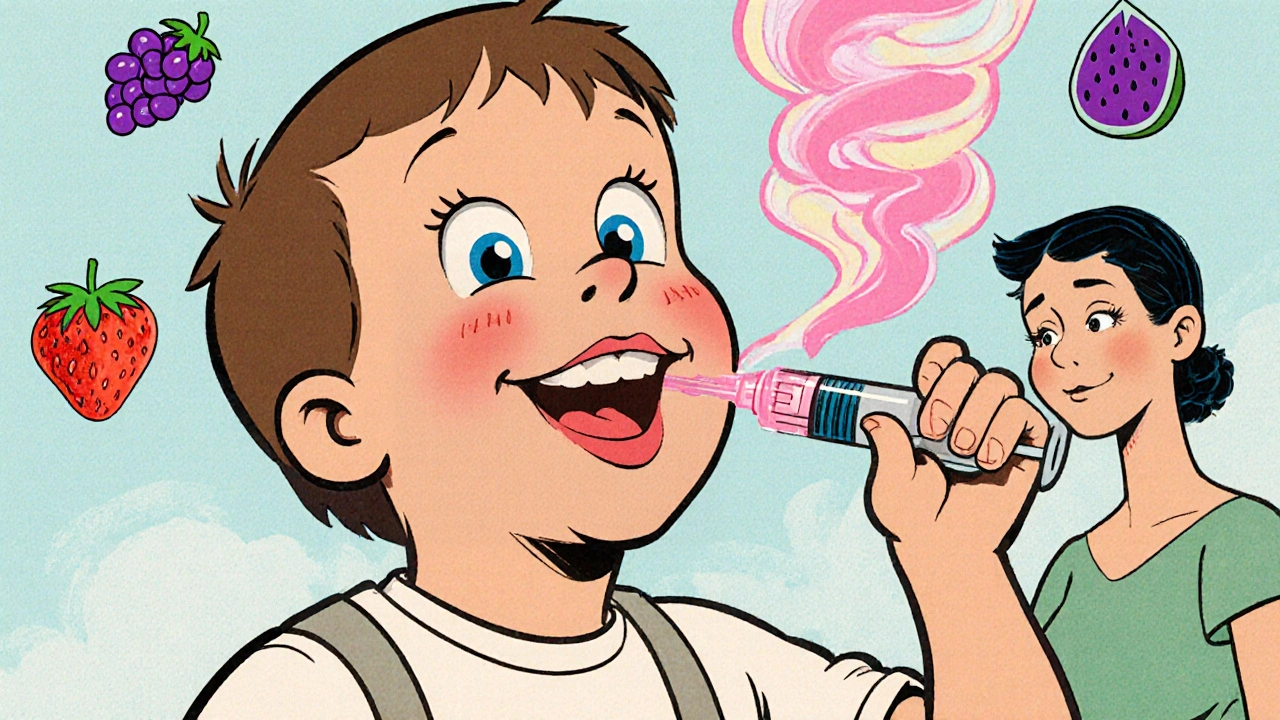
Imagine your child spitting out medicine every time you try to give it to them. You’ve tried mixing it with juice, hiding it in applesauce, even pretending it’s a magic potion-but nothing works. The clock’s ticking, the prescription’s half-empty, and you’re exhausted. This isn’t just a parenting struggle-it’s a widespread public health issue. pediatric medication flavoring isn’t a gimmick. It’s a proven, low-cost tool that turns medication time from a daily battle into something children actually look forward to.
Why Taste Matters More Than You Think
Most pediatric medications are liquid. That’s because kids can’t swallow pills easily. But here’s the problem: many of these liquids taste awful. Bitter, chemical, metallic-some even burn. And kids aren’t being picky. Their taste buds are more sensitive than adults’, and they don’t understand why they need to suffer for medicine. Research shows that bad taste is the #1 reason kids refuse their meds. One study found that over 78% of children had trouble sticking to their treatment plan, and half of those problems came straight from how the medicine tasted. Parents end up forcing it, which creates fear. Or they dilute it, which messes up the dose. Or they skip doses altogether. That’s not just inconvenient-it’s dangerous. When kids don’t take their antibiotics all the way through, infections come back stronger. Chronic conditions like asthma or epilepsy get worse. Adherence isn’t optional. It’s life-or-death.How Flavoring Services Actually Work
Flavoring services are offered by community pharmacies. A pharmacist takes your child’s liquid prescription-whether it’s amoxicillin, azithromycin, or something else-and adds a safe, food-grade flavoring agent right before handing it over. No special equipment. No extra cost to the manufacturer. Just a quick, simple step that changes everything. The flavorings used are sugar-free, dye-free, and allergy-safe. They don’t change the medicine’s strength or how it works. The active ingredient stays exactly the same. What changes is the experience. Instead of a bitter pill to swallow, your child gets something that tastes like grape, bubblegum, or watermelon. The most commonly re-flavored drugs? Augmentin, Amoxicillin, Azithromycin, Cefdinir, and Clindamycin. These are the antibiotics most often prescribed to kids. And the top flavors? Grape leads the pack, followed by bubblegum, strawberry, watermelon, and cherry. These aren’t random choices. They’re based on what kids actually like-and what works best at masking bitterness.The Numbers Don’t Lie
Let’s talk about real results. Before flavoring, non-compliance rates for pediatric liquid meds were as high as 76%. That means nearly four out of five kids weren’t taking their medicine as prescribed. After flavoring? That number dropped to 20%. That’s not a slight improvement. That’s a revolution. The National Community Pharmacists Association found that flavoring increased compliance from just 53% to over 90%. Think about that. More than 30 percentage points of improvement, just by making the medicine taste better. And it’s not just anecdotal. Pharmacies like Intermountain Healthcare rolled out flavoring services in 2023 and saw immediate drops in missed doses and repeat visits for unresolved infections. One parent in Mississippi said her child, who used to scream and cry at the sight of the medicine syringe, now asks for it. "It tastes like bubblegum," she told the pharmacist. "I didn’t think that was possible."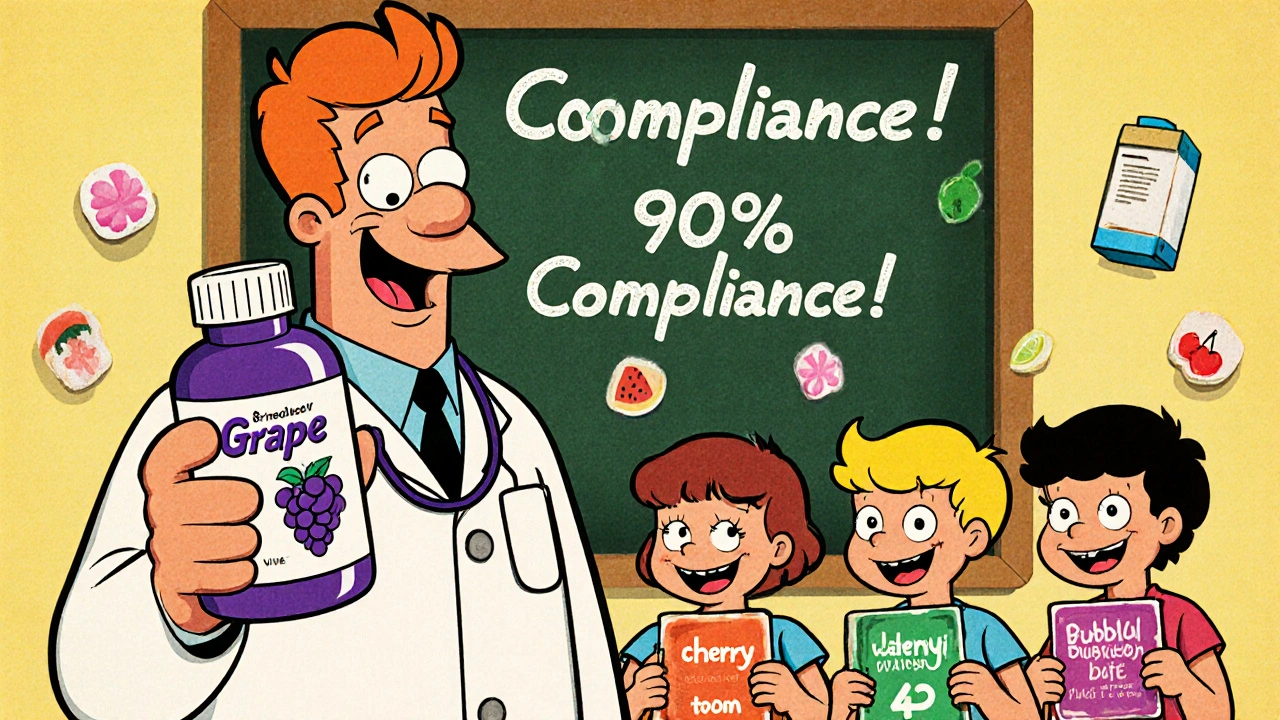
Flavoring vs. Other Workarounds
Parents have been trying to fix bad-tasting meds for decades. Mixing with juice. Hiding in pudding. Using a syringe to squirt it to the back of the throat. But these methods have hidden risks. Mixing medicine with food or drink can interfere with absorption. Some juices block how antibiotics work. High-sugar foods can cause stomach upset or tooth decay. And if your child doesn’t finish the whole bowl? You’ve no idea how much they actually got. Flavoring doesn’t just avoid these problems-it solves them. The flavoring agent is added directly to the medicine in a controlled way. The dose stays accurate. The effectiveness stays intact. And the child gets a consistent taste every time. Some might say, "Why not just use chewable tablets?" Good point. For some meds, tablets or orally disintegrating tablets are better. But not all drugs can be made that way. Antibiotics, for example, are unstable in solid form. Liquid is the only option. That’s where flavoring shines.What Parents Need to Know
This service isn’t magic. It doesn’t work on every single medicine. Some formulations are too thick, too reactive, or too unstable to mix with flavoring. That’s why pharmacists check before they add anything. They know which drugs play nice with which flavors. Also, not all pharmacies offer it yet. But it’s growing fast. In the U.S., it’s common in community pharmacies. The cost? Around $1.50 per prescription. That’s less than a cup of coffee. And the return? Better health, fewer doctor visits, less stress. Ask your pharmacist if they offer flavoring. Don’t wait until your child is crying over a bottle of medicine. Bring it up when you pick up the prescription. If they don’t offer it, ask if they can refer you to one that does.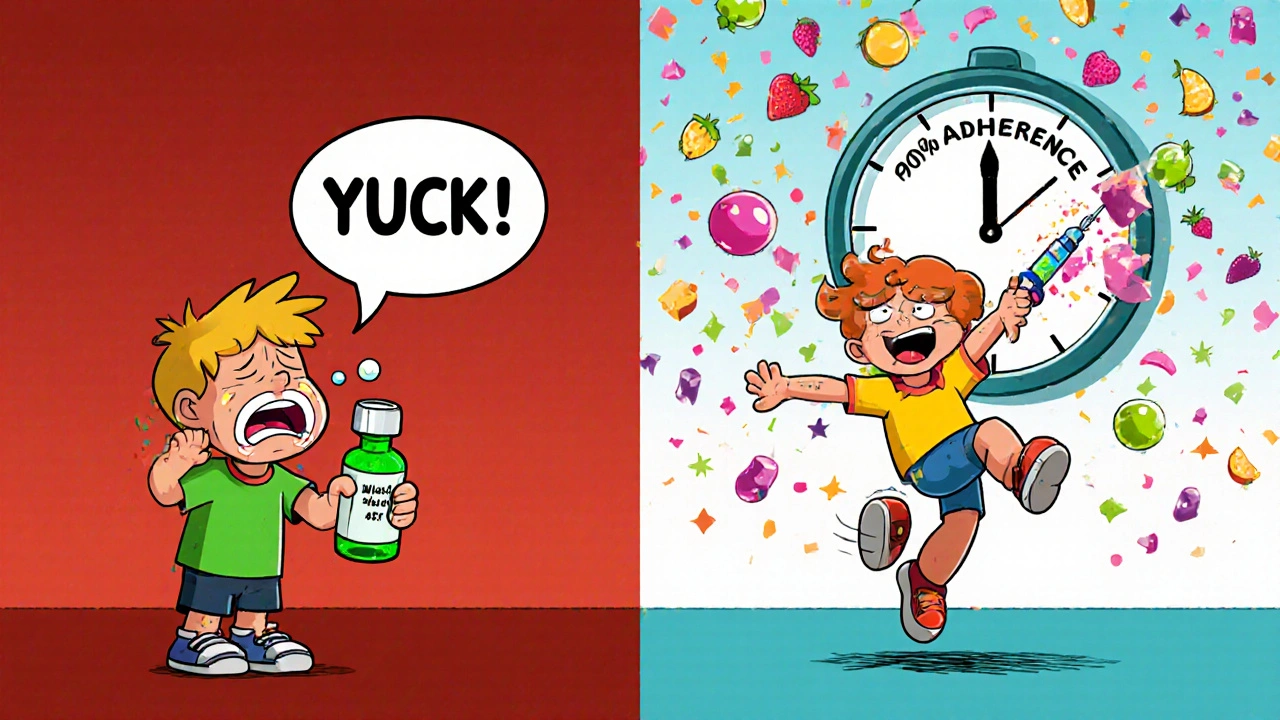
Real Stories, Real Impact
At Germantown Pharmacy in Mississippi, kids get to pick their flavor. It’s not just about taste-it’s about control. When a child gets to choose grape over strawberry, they feel involved. They’re not being forced. They’re participating. And that changes everything. One dad said his 4-year-old used to hide under the table every time he saw the medicine bottle. After flavoring it with bubblegum? The kid now runs to the kitchen when it’s time. "I didn’t think I’d ever hear those words," he said. "‘Daddy, can I have my medicine?’" Another mom told her pharmacist she’d been skipping doses for weeks because her daughter spit out the medicine every time. She didn’t know flavoring existed. When she found out, she cried. "I thought I was a bad mom," she said. "Turns out, I just needed the right tool."What’s Next for Pediatric Flavoring?
The science is clear. The results are proven. The demand is growing. But awareness is still low. Many parents don’t know this service exists until they’re in the middle of a meltdown. Future improvements are coming. Flavoring companies are developing new formulas that mask bitterness even better. Some are testing time-release flavors that keep the taste pleasant over the full course of treatment. Researchers are also looking at how flavoring affects long-term health outcomes-not just adherence, but hospitalization rates and antibiotic resistance. For now, the best thing you can do is ask. If your child’s medicine tastes bad, there’s a simple fix. You don’t have to suffer through daily battles. You don’t have to guess if your child got the right dose. You don’t have to feel guilty. Flavoring services turn a chore into a moment of care. And that’s not just smart pharmacy practice. It’s good parenting.Can any liquid medication be flavored?
Most liquid medications can be flavored, but not all. Pharmacists check for chemical compatibility-some drugs may change viscosity or stability when mixed with flavoring agents. Antibiotics like amoxicillin and azithromycin work well, but certain suspensions or those with alcohol or high acidity may not be suitable. Always let your pharmacist evaluate the specific medication before flavoring.
Is flavoring safe for kids with allergies?
Yes. Modern flavoring systems like FLAVORx use dye-free, sugar-free, and allergen-free ingredients. They’re designed to be safe for children with common allergies, including nuts, dairy, and gluten. Always confirm with your pharmacist that the specific flavoring agent used is free of your child’s known allergens.
How much does it cost to flavor a child’s medication?
The cost is typically $1.50 per prescription at pharmacies that offer the service, such as Intermountain Healthcare. This is a small fee added to the cost of the medication and is often covered by insurance or included in pharmacy service packages. It’s one of the most cost-effective ways to improve medication adherence.
Do flavorings affect how well the medicine works?
No. The flavoring agents are added after the medication is prepared and do not alter the active ingredients, dosage, or absorption rate. The FDA and pharmaceutical guidelines confirm that properly administered flavoring does not compromise the effectiveness of the drug. The goal is to improve taste, not change how the medicine functions in the body.
What if my child doesn’t like the flavor they chose?
Most pharmacies offer 5-10 flavor options, so you can try a different one next time. Some children develop strong preferences, which can make switching medications tricky. If your child resists a new flavor, ask your pharmacist for a list of flavors that work best with the new medication. They can suggest alternatives based on past success with similar drugs.
Can I flavor my child’s medication at home?
It’s not recommended. Over-the-counter flavorings aren’t designed for pharmaceutical use and may interfere with the drug’s stability or potency. Some household additives, like syrup or juice, can change how the medicine is absorbed or cause dangerous interactions. Only trained pharmacists should add flavoring to ensure safety and accuracy.
Is flavoring available outside the United States?
Yes, but availability varies. In the UK, Canada, Australia, and parts of Europe, similar services are offered by independent and chain pharmacies, though they may not use branded systems like FLAVORx. Ask your local pharmacist if they offer custom medication flavoring. In some countries, it’s offered as a compounding service under pharmacy regulations.