Have you ever left your medicine in the bathroom, the kitchen, or your car on a hot day? You might think it’s fine as long as it hasn’t passed the expiration date on the bottle. But here’s the truth: medication expiration isn’t just about time-it’s about temperature and moisture. Two things you can’t always control, but absolutely should.
Why Your Medicine Doesn’t Last as Long as the Label Says
The date printed on your pill bottle isn’t a magic cutoff. It’s a guarantee from the manufacturer that the drug will work as intended-if stored correctly. That means if you keep your medicine in a hot, steamy bathroom or a sun-baked car, it could lose strength weeks or even days before that date. The U.S. Food and Drug Administration (FDA) says expiration dates are only valid under recommended storage conditions. And those conditions? Cool, dry, and dark. Most medications are tested for stability at 20-25°C (68-77°F) with 35-65% humidity. That’s not your bathroom. That’s not your kitchen counter. That’s not your glove compartment.What Heat and Humidity Actually Do to Your Pills
Heat and moisture don’t just make medicine less effective-they change its chemistry. Take aspirin. When it gets wet, it breaks down into salicylic acid and vinegar. That’s why old aspirin sometimes smells like vinegar. It’s not just stale-it’s chemically altered. And that change can irritate your stomach more than the original pill. Capsules? They can soften, stick together, or crack open. That’s bad news for extended-release pills. If the coating breaks down, the drug releases all at once instead of slowly over hours. That can lead to dangerous spikes in blood levels. One pharmacist in Georgia saw a patient who took a crushed extended-release opioid tablet after it had degraded in humidity. The result? A near-fatal overdose. Liquid medications are even worse off. Insulin, for example, starts losing potency after just 24 hours at 37°C (98.6°F). That’s body temperature. Imagine leaving your insulin pen in a hot car during a summer trip. You might not see a difference in how it looks-but your blood sugar will.Which Medications Are Most at Risk?
Not all meds are created equal. Some are tough. Others? Fragile. High-risk medications:- Insulin: Must be refrigerated until opened. After that, it can stay at room temperature-but only below 25°C (77°F). Heat above 30°C (86°F) can cut potency by 20% in a day.
- Nitroglycerin: Used for heart attacks. It breaks down fast when exposed to heat or light. A degraded nitroglycerin tablet might not stop chest pain when you need it most.
- Thyroid meds (like levothyroxine): Even slight heat exposure above 27°C (80.6°F) can reduce absorption. That means you could be under-treated without knowing it.
- Antibiotic suspensions (like amoxicillin): Liquid antibiotics lose up to 40% of their strength in just 72 hours at room temperature. Taking a weak dose doesn’t just mean your infection won’t clear-it could make bacteria stronger.
- Biologics (like Humira or Enbrel): These are made from proteins. Heat above 8°C (46.4°F) can permanently damage their structure. Once broken, they won’t work at all.
- EpiPens: The spring mechanism can fail if exposed to temperatures above 30°C (86°F). In an allergic emergency, a broken EpiPen is a death sentence.
- Inhalers: The propellant inside can expand and cause the canister to explode at temperatures over 49°C (120°F). That’s not just a mess-it’s a hazard.
- Acetaminophen (Tylenol)
- Ibuprofen (Advil)
- Most statins (like atorvastatin)
- Most hard-shell capsules and tablets
Where NOT to Store Your Medicine
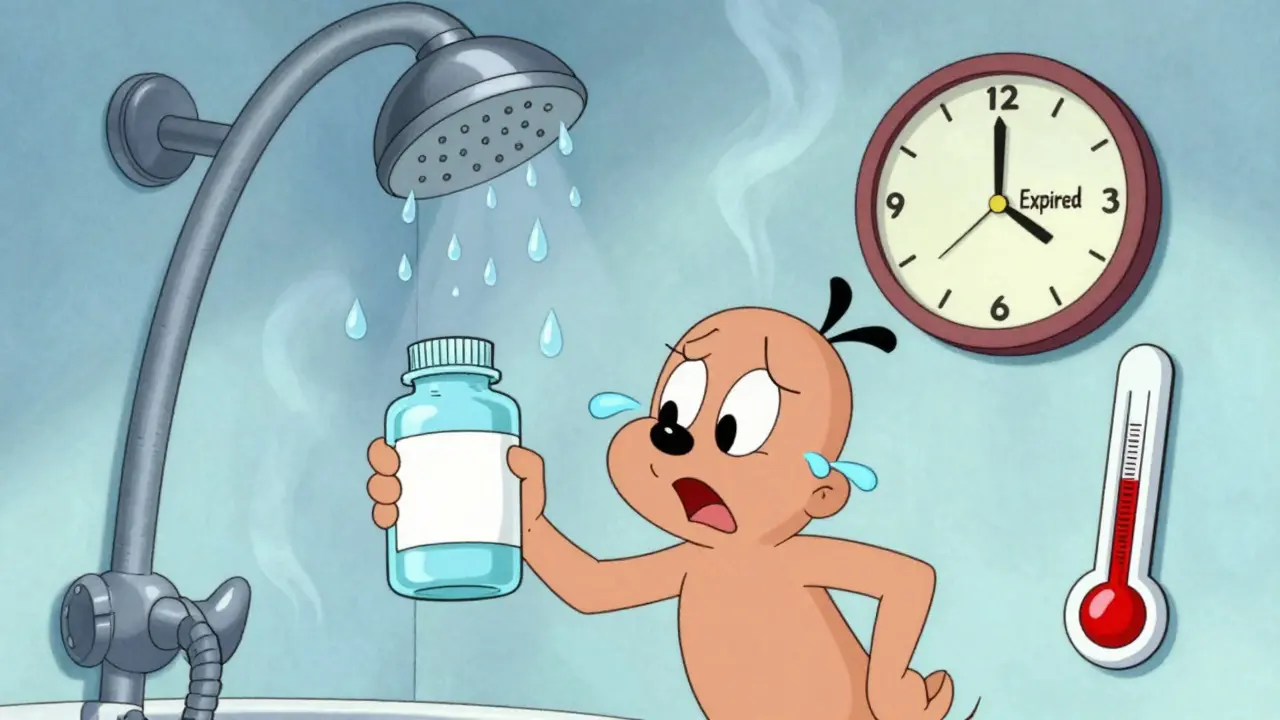
The bathroom is the worst place. Showers create humidity levels of 70-90%. That’s worse than a rainforest. Heat from the water vapor rises and settles on your medicine cabinet. Even if the room feels cool, the air around your pills is saturated. The kitchen? Close second. Near the stove, oven, or sink, temperatures regularly hit 32°C (90°F) or higher. Humidity spikes every time you boil water. A study from Ohio State University found that medicine stored above the stove lost up to 30% of its potency in just three months. Your car? Don’t even think about it. On a 30°C day, the inside of a parked car can hit 60°C (140°F). That’s hotter than an oven. Medications left there for a few hours can be ruined.
How to Tell If Your Medicine Is Damaged
Sometimes, you can see the damage. Other times, you can’t. That’s the scary part. Look for:- Color changes-pills turning yellow, brown, or cloudy
- Unusual smells-like vinegar, mildew, or chemicals
- Tablets that are sticky, cracked, or crumbling
- Capsules that are swollen, leaking, or fused together
- Liquids that are cloudy, thickened, or have particles
What You Should Do Instead
Here’s what actually works:- Store meds in a cool, dry place-like a bedroom drawer or a closet shelf.
- Keep them in their original bottles. Those caps are designed to seal out moisture.
- Avoid clear containers. Light degrades some drugs, like nitroglycerin and certain antibiotics.
- Use a small, sealed container with a desiccant pack (those little silica gel packets you find in new shoes or electronics) if you’re traveling.
- For insulin, thyroid meds, or biologics, carry a small insulated cooler with a cold pack when you’re out. Pharmacies sell these for under £10.
- Never leave medicine in a hot car-even for 10 minutes.
Why This Matters More Than You Think
Taking a weakened antibiotic might not make you sick right away. But it can make bacteria stronger. That’s how antibiotic resistance starts. And it’s already killing hundreds of thousands worldwide every year. Insulin that’s lost potency? That means high blood sugar. Over time, that leads to nerve damage, kidney failure, vision loss. An EpiPen that doesn’t fire during anaphylaxis? There’s no second try. The FDA says using expired or damaged medicine is risky-and possibly harmful. They’re not exaggerating. In a 2022 study, nearly 1 in 5 diabetic patients admitted to using insulin that had been left in a hot car. Half of them didn’t realize it might not work.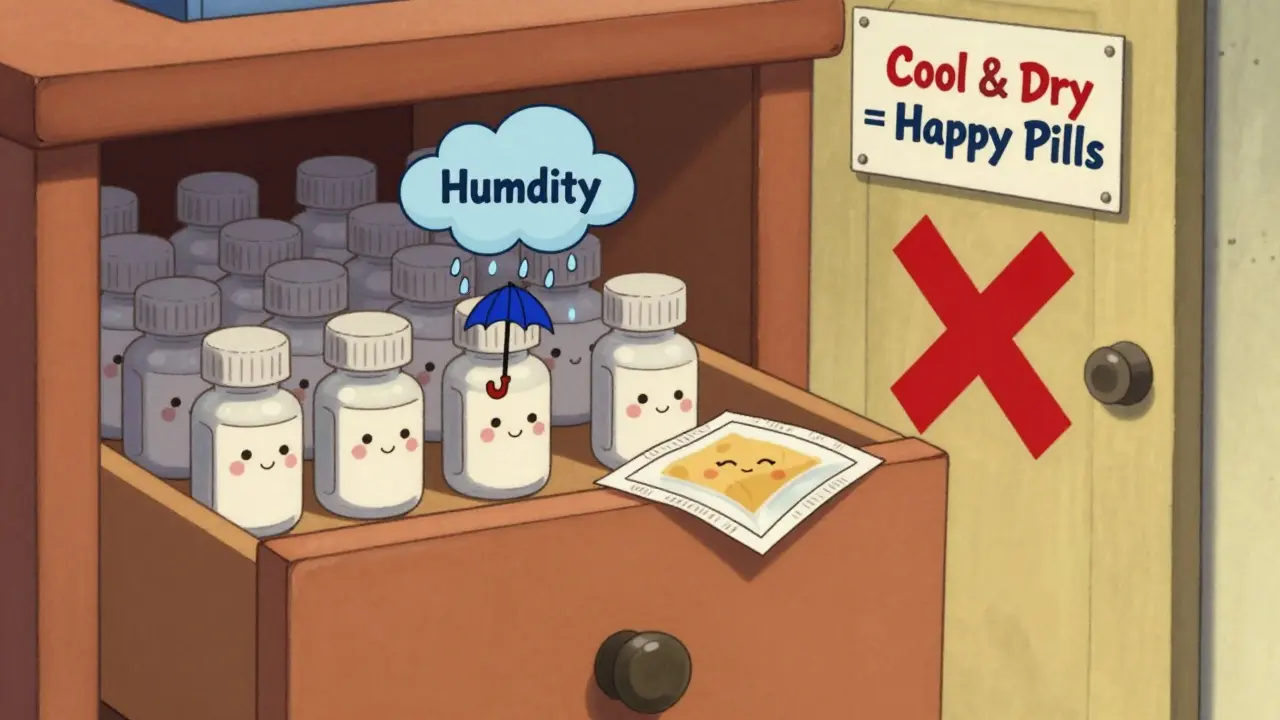
What’s Being Done-and What’s Next
Pharmaceutical companies are starting to catch on. Some new bottles now include temperature-sensitive labels that change color if exposed to heat. Others use opaque, moisture-proof packaging with built-in desiccants. Future tech? Smart pill bottles that connect to your phone and alert you if the temperature got too high. Imagine getting a notification: "Your insulin was in a 40°C car for 2 hours. Do not use." But until then, the responsibility is yours. You can’t rely on the label. You can’t trust the pharmacy to warn you. You have to be the one watching out.Frequently Asked Questions
Can I still use medicine after its expiration date if it looks fine?
No. Even if it looks normal, heat and humidity can damage the active ingredients without changing appearance. Medications like insulin, nitroglycerin, or antibiotics can become dangerously ineffective. The expiration date is only valid if stored properly. If you’re unsure, don’t risk it.
Is it safe to store medicine in the fridge?
Only if the label says so. Most pills don’t need refrigeration-cold and damp can actually damage them. But insulin, some antibiotics, and biologics must be kept between 2-8°C (35.6-46.4°F). Always check the instructions. If you’re unsure, ask your pharmacist.
What should I do if I accidentally left my medicine in a hot car?
If it’s a life-saving drug-like insulin, an EpiPen, or nitroglycerin-discard it immediately and get a new one. For other medications, check for visible signs of damage: color changes, odd smells, or sticky texture. If anything looks off, throw it out. When in doubt, replace it. Your health isn’t worth the cost of a new bottle.
Can I transfer pills to a pill organizer for travel?
Yes-but only for short trips and with precautions. Use a small, sealed, opaque container with a desiccant pack. Avoid plastic bags or clear organizers. Heat and humidity can still get in. And never leave your pill organizer in a hot car. Keep it with you in your bag, not in the glove compartment.
Do pharmacies check if my medicine has been exposed to heat?
Not usually. Pharmacies store medications properly, but once you take them home, it’s your responsibility. They won’t know if you left your pills in a hot car or bathroom. Always ask your pharmacist how to store your specific meds-and don’t assume they’re fine just because they came from the pharmacy.