Most people don’t think about expiration dates on medicine until they find an old bottle in the back of a drawer. But ignoring those dates can be risky - not because the pill turns toxic overnight, but because it might not work at all. And in some cases, that’s more dangerous than taking nothing.
What an Expiration Date Actually Means
The date on your medicine isn’t a "use-by" deadline like milk. It’s the last day the manufacturer guarantees the drug will work as intended. That means it still has its full strength, purity, and safety under proper storage conditions. The U.S. Food and Drug Administration (FDA) has required these dates since 1979. Every prescription and over-the-counter drug sold in the U.S. must carry one.
Manufacturers test drugs under heat, humidity, and light to see how long they hold up. Most pills last 1 to 5 years. Injections? Often 2 to 5 years. Eye drops? Usually 6 months to 2 years. Topical creams and patches? Around 1 to 3 years. These aren’t guesses - they’re based on real lab data.
How Expiration Dates Are Shown on Packaging
Look closely. The date might be written in different ways:
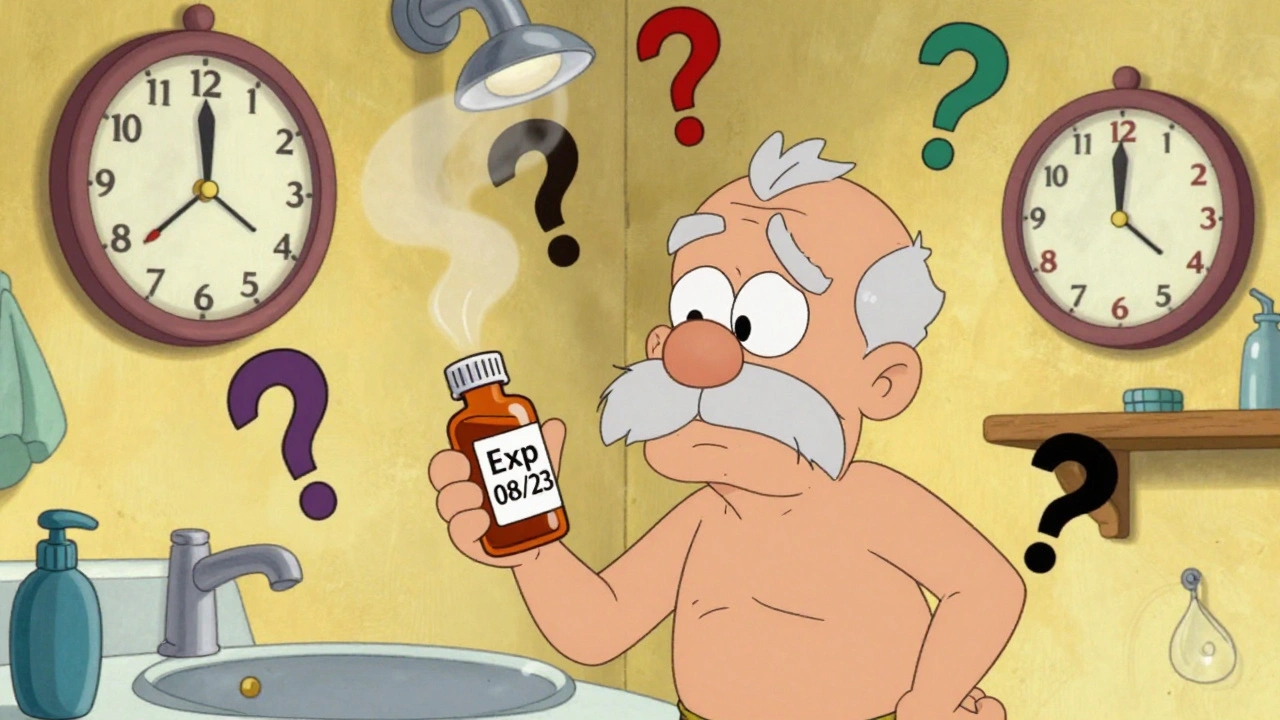
- "Exp 08/23" - means August 31, 2023
- "Expiry Date: 15/07/2024" - common in the EU, day/month/year
- "Use by: 2025-02-28" - used in newer packaging, year-month-day
- "Exp date: 2024" - if only the year is shown, it expires on December 31 of that year
You’ll also see labels like "Use before," "Expiry," or just "Exp." Don’t assume they mean the same thing. Always check the format. If you’re unsure, ask your pharmacist. They see this every day.
Pharmacy Labels vs. Manufacturer Labels
This is where things get confusing. When your pharmacist fills a prescription, they put their own label on the bottle. That label often says "Discard after 1 year" or "Do not use after [date]." That’s not the drug’s true expiration date. That’s the pharmacy’s "beyond-use date" - a safety buffer they add because once you open the bottle, exposure to air and moisture can change the medicine faster than the manufacturer predicted.
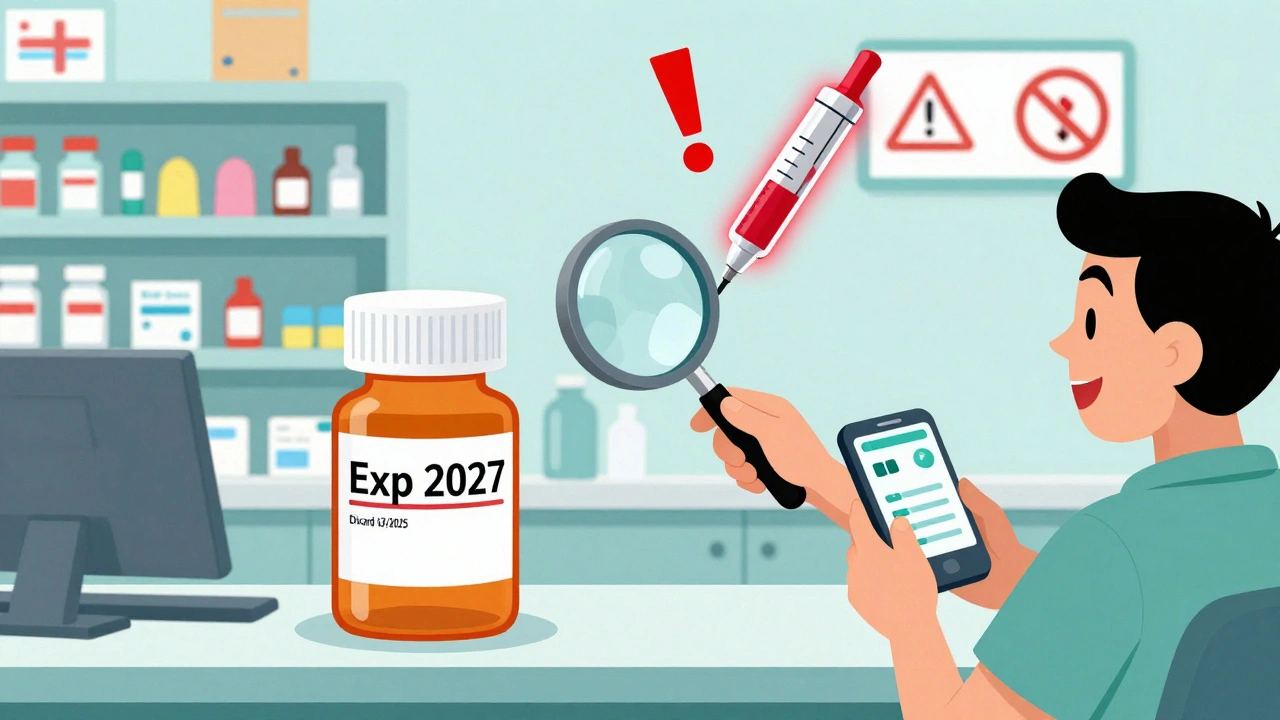
For example, your insulin might have a manufacturer expiration date of 2027. But your pharmacy label says "discard after 12/2025." That’s normal. The pharmacy isn’t wrong - they’re being extra cautious. The same goes for liquid antibiotics. Many last only 14 days after mixing, even if the bottle says it expires in 2026.
Always check both labels. If you’re unsure which date to follow, ask. Don’t guess.
Which Medications Are Dangerous to Use After Expiration?
Most drugs just lose potency over time. But some don’t just become weak - they become risky.
- Insulin: If it’s expired, your blood sugar can spike dangerously. No exceptions.
- Birth control pills: Even a small drop in hormone levels can lead to unintended pregnancy.
- Thyroid medication: Too little can cause fatigue, weight gain, or heart issues. Too much can trigger arrhythmias.
- Anti-platelet drugs (like aspirin or clopidogrel): These prevent clots. If they’ve degraded, you’re at higher risk of stroke or heart attack.
There’s a myth that tetracycline turns toxic after expiration. That was true for old versions made before the 1990s. Modern tetracycline doesn’t have that risk. But still - don’t take it past its date. It won’t work well, and you don’t need the risk.
What Happens When Medicine Expires?
It doesn’t explode. It doesn’t turn green. But here’s what really happens:
- Potency drops: A 2022 study found some painkillers lost up to 10% of their strength after 1 year past expiration. For antibiotics, that’s a problem - you might not kill the infection, just make it stronger.
- Chemical changes: Some ingredients break down into other compounds. Not always harmful, but not guaranteed safe either.
- Moisture and bacteria: Liquid medicines, eye drops, and inhalers can grow mold or bacteria if stored poorly or past their date.
And here’s the scary part: you usually can’t tell. A pill might look fine but be 30% weaker. A liquid might look clear but be contaminated. That’s why you can’t rely on sight or smell.
Storage Matters More Than You Think
Your medicine’s expiration date assumes it’s been stored correctly. If you keep it in a hot bathroom or a sunny windowsill, it degrades faster - even before the date.
Most pills are fine at room temperature (15-25°C). But some need refrigeration. Check the label. Insulin, some antibiotics, and biologics must stay cold. If you leave them in a car on a summer day, they’re ruined - even if the date is still months away.
Humidity is another killer. Don’t store pills in the bathroom. The steam from showers breaks them down. Keep them in a cool, dry place - like a bedroom drawer.
How to Avoid Mistakes
Here’s what actually works:
- Check both labels - manufacturer and pharmacy. Write down the earlier date.
- Take photos of the original packaging when you get a new prescription. Store it in your phone. You’ll need it if you ever question the pharmacy’s date.
- Ask for the manufacturer’s date when picking up prescriptions. Some pharmacists will write it on the bottle if you ask.
- Use apps like MedSafe or MyTherapy to set reminders 1-2 months before expiration.
- Don’t keep old meds - especially if you’ve had surgery, changed doctors, or switched treatments. Clear out your medicine cabinet every 6 months.
One patient in Birmingham told me she threw out a $200 inhaler because the pharmacy label said "discard after 6 months," but the bottle said 2027. She didn’t realize the pharmacy date was just a precaution. She ended up buying a new one - unnecessarily.
What to Do With Expired Medicine
Never flush pills down the toilet or toss them in the trash. That’s bad for the environment and dangerous if kids or pets get to them.
Take expired or unused meds to a pharmacy that offers a take-back program. In the UK, most community pharmacies accept old medications. If you’re unsure, call your local one. Some hospitals and police stations also have drop boxes.
If no take-back is available, mix pills with coffee grounds or cat litter, seal them in a bag, and throw them in the trash. Remove labels first to protect your privacy.
What’s Changing in the Industry
Pharmaceutical companies are starting to use smarter labels. Merck now puts time-temperature sensors on insulin pens - if the pen got too hot, the label changes color. The European Medicines Agency now requires this on many new products.
Some bottles have QR codes that link to real-time info: storage conditions, batch recalls, even expiration tracking. The FDA encourages this. But it’s still rare on OTC drugs.
For now, you still need to read the label yourself. Technology helps, but it doesn’t replace your eyes.
What to Do If You Accidentally Take Expired Medicine
If you took one pill that expired a month ago - don’t panic. Most likely, nothing happened. But if it’s insulin, thyroid meds, or antibiotics - call your doctor or pharmacist right away.
Watch for symptoms: nausea, dizziness, fever, or no improvement in your condition. If you’re on blood thinners or have a chronic illness, err on the side of caution.
And next time? Keep a small notebook or digital list of your meds with their expiration dates. It takes 30 seconds a month - and could save your life.
Can I still use medicine after the expiration date?
Most medicines remain safe and effective for years past their expiration date if stored properly - but not all. The FDA found 90% of stockpiled drugs still worked 15+ years later. But for personal use, it’s risky. Certain drugs like insulin, birth control, and thyroid meds should never be used after expiration. If you’re unsure, talk to your pharmacist.
Why do pharmacies put different expiration dates on my prescription?
Pharmacies add their own "beyond-use date" - usually 1 year from when they dispensed it - because once you open the bottle, air, moisture, and light can break down the medicine faster than the manufacturer predicted. For liquid antibiotics, it might be just 14 days. Always follow the earlier date.
What does "Exp 08/23" mean?
It means the medication expires on August 31, 2023. When only a month and year are shown, the expiration is the last day of that month. So "08/23" = August 31, 2023, not August 1.
Is it safe to keep medicine in the bathroom?
No. Bathrooms are too humid and hot from showers. Moisture can break down pills and liquids. Store medicine in a cool, dry place like a bedroom drawer - not above the sink or near the shower.
How do I know if my medicine has gone bad?
Look for changes: pills that are cracked, discolored, or smell strange. Liquids that are cloudy, have particles, or smell off. But here’s the catch - most medicines lose potency without any visible signs. If the date has passed, don’t risk it - especially for critical medications.
Can expired medicine cause antibiotic resistance?
Yes. If an antibiotic has lost potency, it may not kill all the bacteria. The surviving bacteria can multiply and become resistant. That’s why taking expired antibiotics is dangerous - not just because it won’t work, but because it can make future infections harder to treat.
Should I keep the original packaging?
Yes. The original box often has the manufacturer’s expiration date, lot number, and storage instructions. If you ever need to report a problem or check for a recall, that info is essential. Keep it in a small envelope or folder with your other medical records.