International Reference Pricing: How Countries Set Generic Drug Prices

International Reference Pricing: How Countries Set Generic Drug Prices

Martyn F. Dec. 12 2

When you buy a generic pill at the pharmacy, you might not think about how its price was decided. But behind every low-cost medicine is a complex system used by governments to keep prices down. This system is called international reference pricing - and it’s how most European countries control what they pay for generic drugs.

What Is International Reference Pricing?

International reference pricing (IRP) is when a country looks at what other countries pay for the same medicine and uses that to set its own price. It’s not about copying the cheapest price - it’s about using a group of similar countries as a benchmark. For generic drugs, this means governments don’t just let manufacturers charge whatever they want. Instead, they compare prices across borders and set a reimbursement level that pharmacies and hospitals can use.

This isn’t new. Italy started using it in 1984. By the 1990s, Spain, Portugal, and others followed. Today, 28 out of 32 European countries use IRP specifically for generic medicines, according to Medicines for Europe. The goal is simple: lower costs without cutting access. And it works. Countries using IRP for generics see prices 25% to 40% lower than those that don’t.

How It Works for Generics - Not Just Patented Drugs

Many people assume IRP is used the same way for brand-name drugs and generics. It’s not. For patented drugs, countries often use external reference pricing - comparing prices from other nations directly. But for generics, most countries use internal reference pricing.

Internal reference pricing means grouping together all generic versions of the same medicine - say, all 10mg tablets of metformin - and setting one reimbursement price. If a drug costs more than that group’s reference price, the patient pays the difference. If it’s cheaper, the pharmacy gets paid the full amount. This encourages competition among generic makers to be the lowest price in the group.

Germany’s system, called AMNOG, is a good example. It sets the reimbursement price at the lowest-priced generic in the group plus 3%. That pushes manufacturers to undercut each other. The Netherlands goes further - they combine IRP with mandatory discounts and tendering, which has brought generic prices down 65% to 85% compared to the original brand.

Which Countries Are Used as Benchmarks?

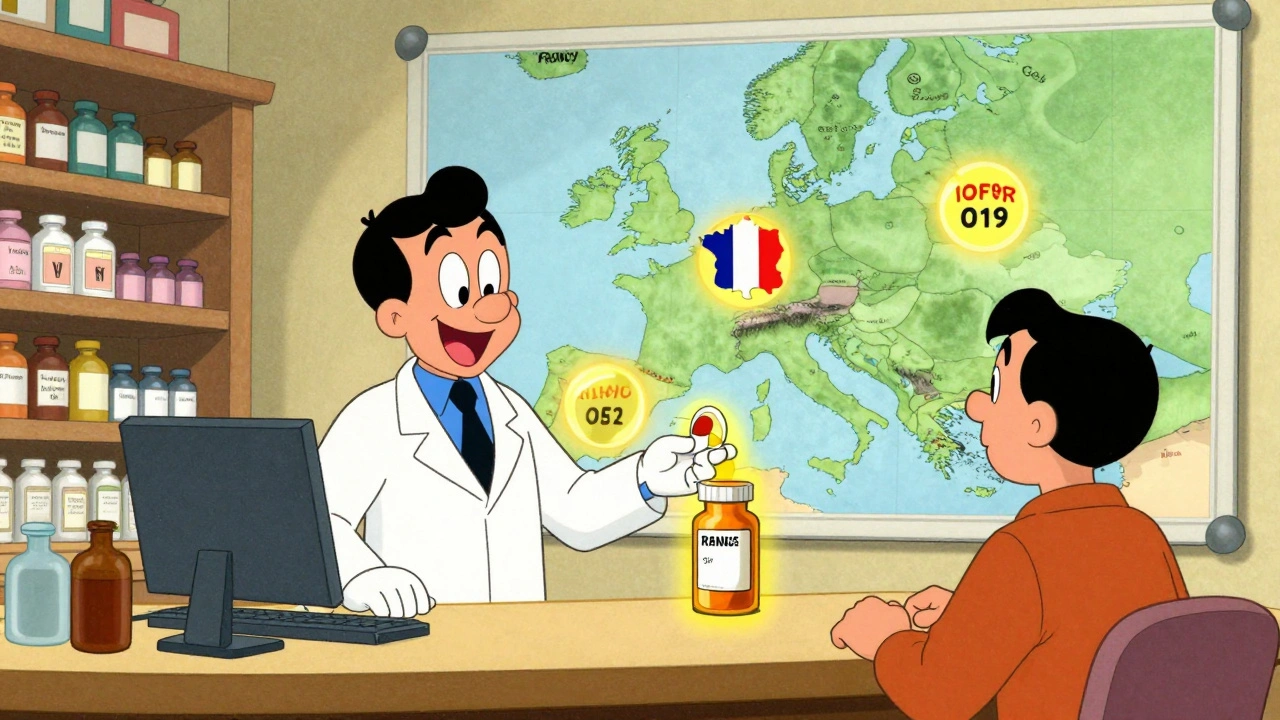
Countries don’t pick random nations to compare prices. They choose similar ones - economically, medically, and culturally. For Western Europe, the usual reference basket includes France, Germany, Italy, Spain, and the UK. Eastern European countries often look to Austria, Germany, and the Netherlands.

The European Federation of Pharmaceutical Industries and Associations (EFPIA) recommends using 5 to 7 countries. Why? Because too many countries create confusion. A 2020 study by Professor Panos Kanavos from the London School of Economics found that countries using 5-7 reference countries got a 28% average price drop - and kept 97% of medicines available. But when countries used more than 10, the price drop only went up to 31%, while shortages jumped by 12%.

Some countries tweak the math. Switzerland calculates its generic price as two-thirds of the average international price and one-third based on its own local prices. This keeps prices in line with Europe but protects against extreme swings.
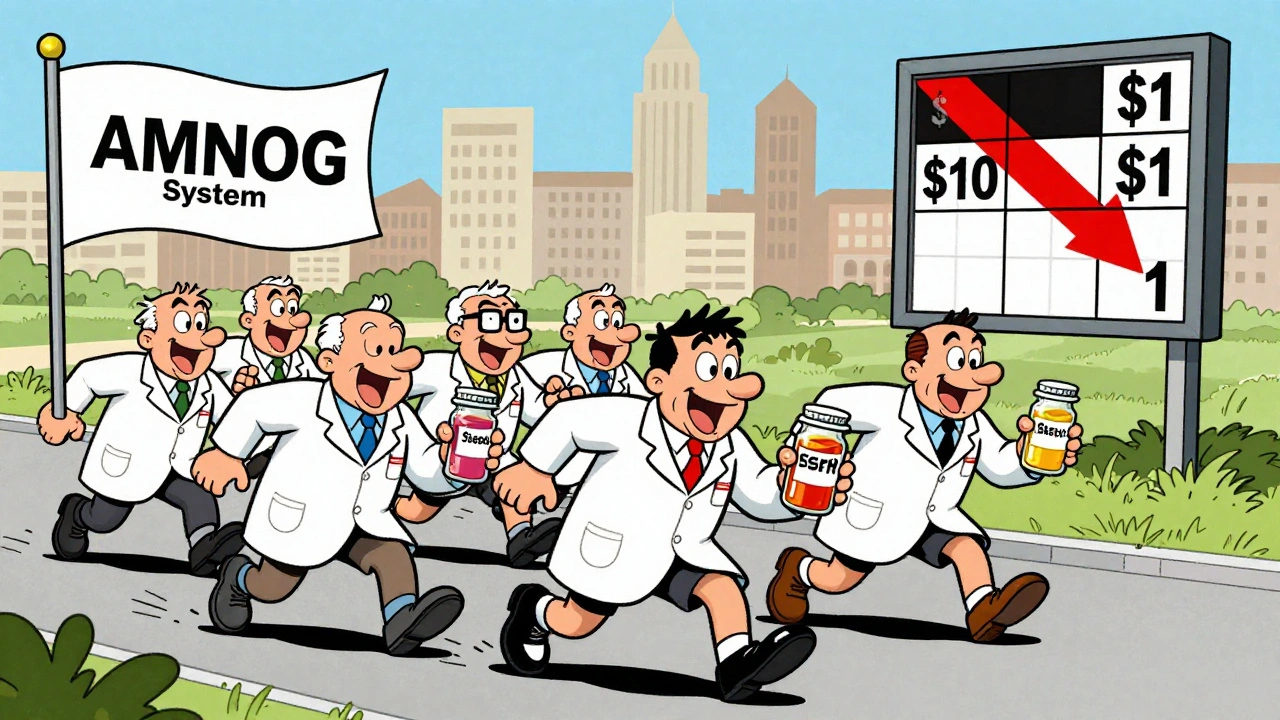
Generic drug makers race to lower prices, with Germany’s AMNOG system as the finish line in a retro cartoon scene.

The Hidden Costs: Shortages and Market Exit

IRP isn’t perfect. Lower prices mean thinner margins. For generic manufacturers, profit margins are already small - often under 10%. When IRP pushes prices too low, some companies just walk away.

Portugal saw 22 generic products disappear from the market in 2019 because manufacturers couldn’t make money at the set prices. Greece, during its financial crisis, slashed prices every quarter. The result? 37% of generic medicines had shortages between 2012 and 2015. Patients couldn’t get their usual brand, and pharmacists had to substitute - sometimes with products they didn’t trust.

A 2023 RAND Corporation study warned that complex generics - like inhalers or injectables - are especially at risk. These drugs cost almost as much to make as brand-name drugs, but IRP doesn’t always account for that. In countries with strict IRP, new complex generic applications dropped 17% between 2016 and 2020, according to FDA data.

How Patients and Pharmacists Experience IRP

Patients rarely see the policy. But they feel it.

In Spain, generic substitution - where a pharmacist swaps a brand for a cheaper generic - rose from 52% in 2010 to 89% today because of IRP. That’s good for cost savings. But 63% of Spanish pharmacists reported occasional shortages of the lowest-priced generic, forcing them to offer alternatives.

A 2021 OECD survey of 10 European countries showed that 78% of patients were happy with generic substitution. But 34% worried about quality differences. Some patients believe the cheapest pill isn’t the best. And while most generics are bioequivalent, the psychological effect matters.

Pharmacists in Greece told patient advocacy groups that 41% of patients struggled to get their preferred generic brand during the peak of IRP cuts. They’d get a different one - sometimes with a different shape, color, or even inactive ingredients. That’s not a safety issue, but it’s confusing.

Who Benefits? Who Loses?

The big winners are public health systems. Germany, France, and the Netherlands saved billions by using IRP. In 2022, Europe’s generic market was worth $140 billion - and IRP influenced 78% of it.

Generic manufacturers have mixed feelings. Teva’s 2022 report said IRP led to a 9% revenue drop in Europe, even though they sold 15% more pills. Sandoz, on the other hand, said well-designed systems helped them grow market share in 18 countries.

The real losers? Small manufacturers. Big companies like Teva and Sandoz can absorb price cuts. But smaller firms - the ones making niche generics - often can’t. They either exit the market or stop investing in new products.
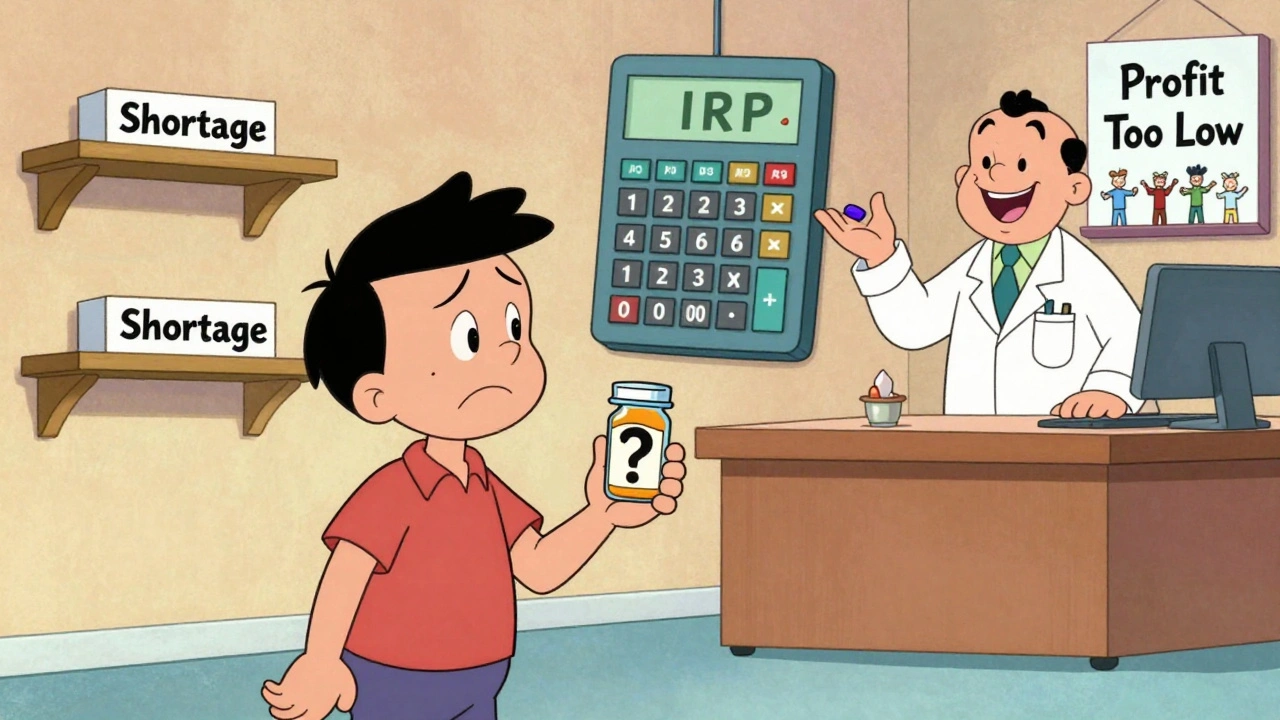
A patient faces a medicine shortage while a pharmacist offers an alternative pill, with a giant IRP calculator in the background.

What’s Changing in 2025?

IRP isn’t frozen in time. It’s evolving.

France launched a new system in January 2023 called dynamic reference pricing. Instead of setting prices once a year, it adjusts quarterly based on market share. If a generic becomes the most popular in its group, its price gets a small bump. Early results? An extra 8.2% in savings.

The European Commission is testing a European Reference Pricing Platform. It started in April 2023 with 15 generic medicines across seven countries. By 2025, they plan to cover 100. The goal? Harmonize pricing so companies don’t have to deal with 27 different systems.

IQVIA predicts that by 2027, 65% of European generic prices will be set by IRP - up from 58% in 2022. But the trend isn’t just about lowering prices anymore. It’s about smarter pricing. The OECD now recommends tiered systems - where more complex generics get higher reference prices based on therapeutic importance.

Why the U.S. Doesn’t Use IRP

The United States doesn’t use IRP for generics in its federal programs like Medicare or Medicaid. Some states, like Colorado, have tried it for Medicaid generics and saw 12-15% savings. But nationally, drug pricing is a mess of negotiations, rebates, and opaque contracts.

Canada uses IRP only for patented drugs. For generics, each province runs its own tendering system. That’s why you’ll see huge price differences between Ontario and Alberta.

The U.S. approach favors market competition over government benchmarks. But with insulin and other generics costing 10 times more than in Europe, some experts are asking: Is the U.S. system really working?

What Comes Next?

IRP will stay. It’s too effective at saving money to abandon. But the next phase is about balance.

Countries are starting to ask: How do we keep prices low without killing supply? How do we reward manufacturers who make complex generics? How do we prevent shortages?

The answer might be in flexible systems - ones that consider manufacturing cost, therapeutic value, and supply chain risk. Germany’s reference groups, which now include over 1,200 categories of generics, are a model. Each group is reviewed regularly. Prices aren’t just slapped on - they’re calculated with data.

For now, if you’re in Europe and you pick up a generic pill for $1, you’re seeing the result of a decades-long experiment in global pricing. It’s not perfect. But it’s working - for now.

Comments (2)
  • Bruno Janssen
    Bruno Janssen 13 Dec 2025

    So basically Europe is just price-fixing generics and calling it healthcare innovation? I get saving money, but when your grandma can’t get her meds because some bureaucrat in Berlin decided $0.12 is enough for a pill… that’s not efficiency. That’s cruelty wrapped in a spreadsheet.

    And don’t even get me started on how they ignore manufacturing complexity. Inhalers cost the same to make as biologics. Yet they’re priced like aspirin. Of course people stop making them.

    I’ve seen this play out in my own family. My uncle in Portugal got his heart med pulled off the shelf. Took him six months to find a substitute. He’s fine now, but he doesn’t trust any generic anymore.

    They think lower price = better system. They’re wrong. They’re just outsourcing the pain.

    And now the EU wants to make this a continent-wide system? Please. Just let the market work. We’re not all broke like Greece.

  • Scott Butler
    Scott Butler 13 Dec 2025

    Of course the Europeans are doing this. They’ve spent decades turning their economies into welfare zombies. If you can’t afford your meds, maybe you shouldn’t have had kids or moved to a country that taxes you into oblivion.

    Meanwhile in America, we pay what the drug is worth - not what some French bureaucrat thinks it should cost. We don’t punish innovation because we’re afraid of a 10% price difference.

    And now they want to export this broken model here? No thanks. I’d rather pay $50 for a pill that actually works than get the $1 version that’s missing half the active ingredient because the manufacturer gave up.

    Don’t bring your socialist pricing to my pharmacy.

Write a comment
Recent posts
The Best Deals on Amoxicillin: Where to Find Discounts on Amoxil

Discover the best offers on Amoxil, a well-known antibiotic used for bacterial infections. Learn about its medical uses, potential side effects, and how it interacts with other medications. Find out typical doses, advice on its use, and where to locate the most cost-effective deals. Uncover a list of resources for purchasing Amoxil affordably and safely.

Wellbutrin (Bupropion) vs Other Antidepressants: Full Comparison

A detailed comparison of Wellbutrin (bupropion) with major antidepressant alternatives, covering efficacy, side effects, special populations, and practical decision tips.

Transform Your Health and Well-being with the Incredible Herb Paris Dietary Supplement

I recently came across the incredible Herb Paris dietary supplement, which has the potential to transform your health and well-being. This powerful herb is packed with beneficial properties that can boost your immune system and improve your overall wellness. With its rich history in traditional medicine, Herb Paris is now available in a convenient supplement form that's easy to incorporate into your daily routine. Since I started taking it, I've noticed a significant improvement in my energy levels and general well-being. I highly recommend giving the Herb Paris dietary supplement a try if you're looking to enhance your health naturally.

About Us

NowRx.com is your top online resource for pharmaceutical information. Providing insight into a range of medications, treatments for various diseases, and valuable information about health supplements. Our focus is to deliver accurate, up-to-date knowledge to help our users make informed decisions about their health. Join us at NowRx.com for swift, reliable, and comprehensive medical information.