Travel Clot Risk Assessment Calculator
This tool estimates your risk of developing blood clots during international travel based on factors like age, medical conditions, and travel duration. According to CDC data, your risk increases by 10% for every decade after age 40.
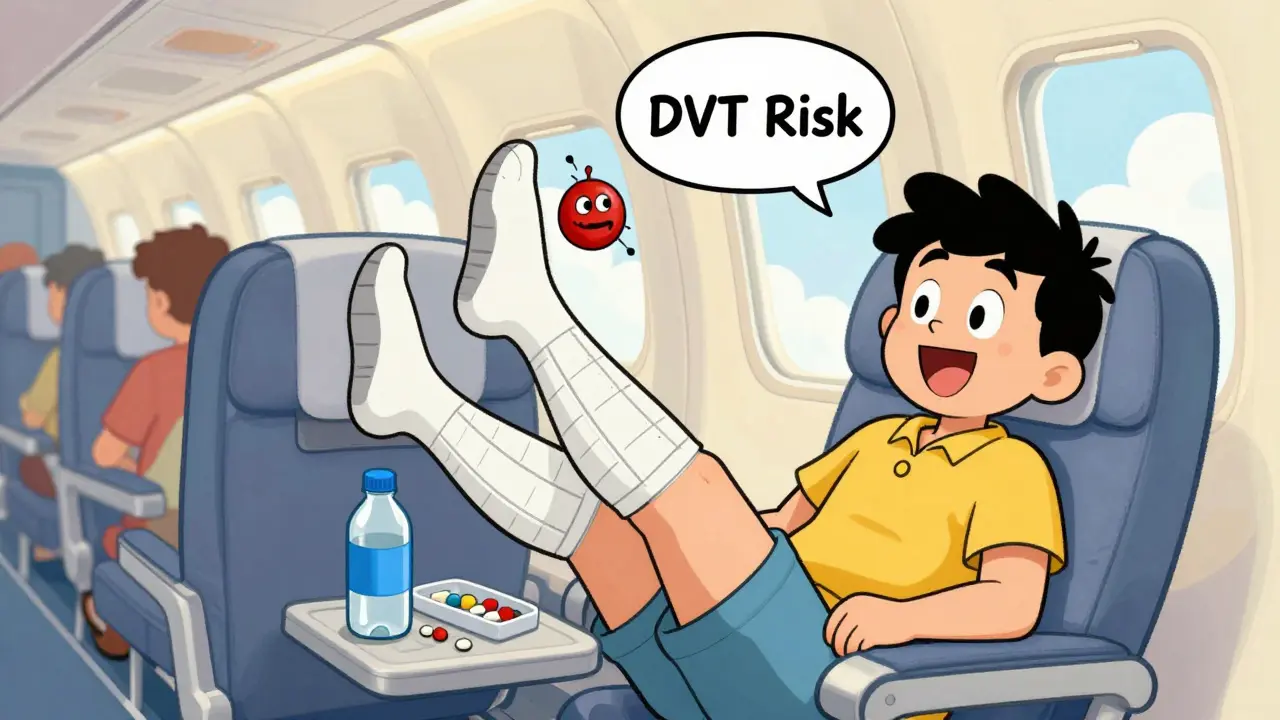
Traveling internationally while on blood thinners doesn’t have to be scary-but it does require smart planning. If you’re taking warfarin, rivaroxaban, apixaban, or any other anticoagulant, your biggest worry isn’t the flight itself. It’s the blood clots that can form when you sit still for hours. Deep vein thrombosis (DVT) and pulmonary embolism (PE) are real risks, especially if you’ve had a clot before, are over 40, have cancer, or just moved too little during your trip. The good news? You can fly safely. You just need to know what to do-and what not to do.
Why Travel Increases Your Clot Risk
Sitting for more than four hours, whether on a plane, train, or bus, slows blood flow in your legs. That’s when clots can start forming. This isn’t about economy class. It’s about immobility. The term "economy class syndrome" was used in the 1970s, but doctors now know it’s not the seat size-it’s the lack of movement. The CDC says your risk goes up 10% for every decade after age 40. If you have a BMI over 30, just had surgery, have cancer, or are on hormone therapy, your risk jumps even higher. For someone with multiple risk factors, the chance of a travel-related clot goes from 1 in 4,656 flights to about 1 in 1,000.Don’t Stop or Skip Your Medication
The biggest mistake people make? Skipping a dose because they’re worried about bleeding or because they’re traveling across time zones. That’s dangerous. Blood thinners don’t work if you take them inconsistently. If you stop, your blood becomes stickier-faster than you think. Dr. Susan Coogan, a vascular surgeon, says it plainly: "If you skip doses or stop taking them for a period of time, your blood can actually become MORE sticky." For warfarin users, timing matters. Don’t switch to your destination’s local time. Take your pill at the same clock time every day. If you’re flying from London to New York and normally take your dose at 7 p.m. UK time, keep taking it at 7 p.m. UK time-even if it’s 2 p.m. local time. That keeps your INR stable. If you’re on a DOAC like rivaroxaban or apixaban, you don’t need to monitor your blood, but you still need to take it at the same time each day. Set alarms. Use pill organizers. Don’t gamble with your meds.Compression Stockings Are Not Optional for High-Risk Travelers
If you’ve had a blood clot in the past, have active cancer, had major surgery in the last month, or have other risk factors, wear below-knee compression stockings. Not just any ones-these need to give 15-30 mmHg of pressure at the ankle. That’s the level recommended by the American College of Chest Physicians and the CDC. They’re not fashion accessories. They squeeze your legs just enough to keep blood moving. You can buy them at medical supply stores or online. Make sure they fit. Too loose? Useless. Too tight? Can cut off circulation. Ask your pharmacist to help you measure.DOACs vs. Warfarin: What’s Better for Travel?
If you’re choosing between warfarin and a DOAC (direct oral anticoagulant), DOACs win for travel. Warfarin needs regular blood tests (INR), has food interactions (especially leafy greens), and takes days to reach full effect. DOACs like rivaroxaban, apixaban, and dabigatran work within hours, don’t need blood tests, and have fewer dietary restrictions. But there’s a catch: cost. Warfarin costs about $4 for 30 pills. Rivaroxaban? Around $575. That’s why some people stick with warfarin. But if you’re traveling for more than a week and your INR is unstable, a personal INR monitor like the Roche CoaguChek® Mobile might be worth the $299 price tag. Test strips cost $7.49 each, but you’ll know your levels in minutes-no clinic needed. Another issue: availability. Apixaban isn’t sold in 32% of low-income countries, according to WHO data. If you’re heading somewhere remote, check ahead. Bring extra pills-enough for your whole trip plus a few extra days in case of delays. Keep them in your carry-on. Never check them.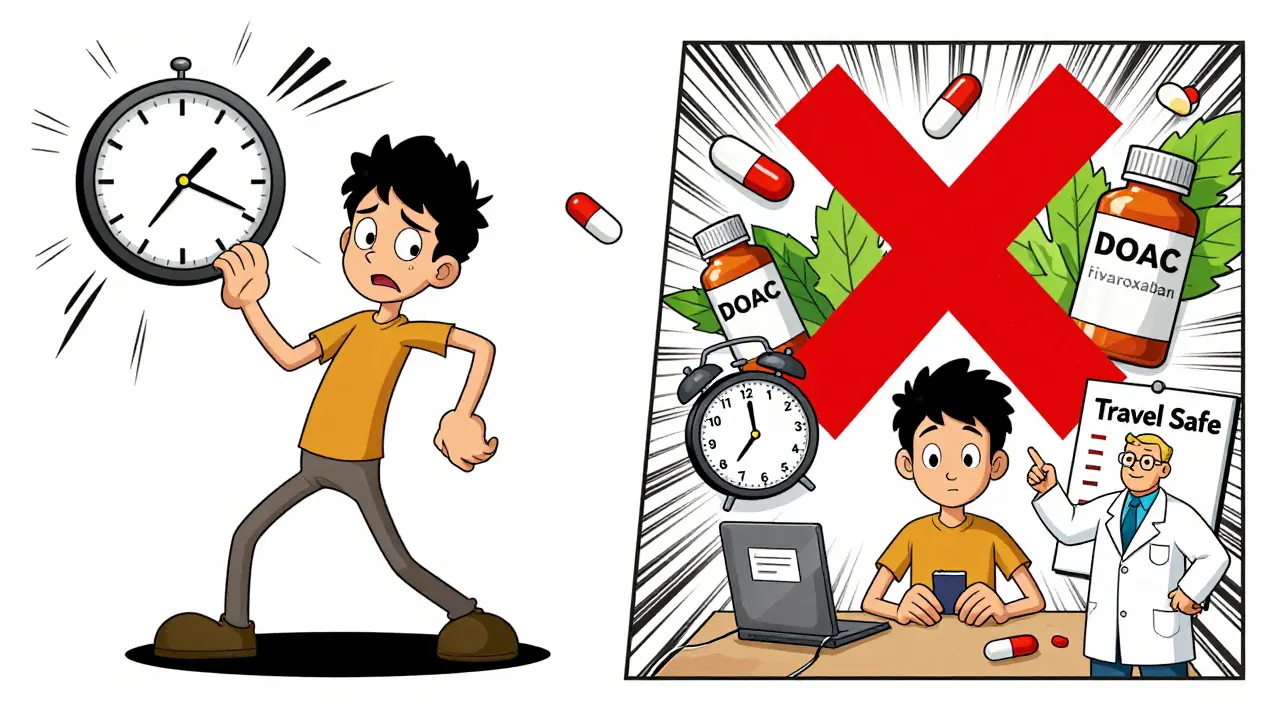
Move Every 2-3 Hours-Even If It’s Just a Walk
The best non-medical way to prevent clots? Move. Walk the aisle every two to three hours. If you’re on a train or bus, get off and stretch. Do calf exercises while seated: point your toes up toward your nose, then point them down. Repeat 10 times every 30 minutes. That’s it. No fancy gadgets. No magic pills. Just movement. Studies show this simple habit cuts clot risk significantly. Pick an aisle seat. It’s not about legroom-it’s about being able to get up without climbing over three people.Hydration and Alcohol: What You Drink Matters
Dehydration thickens your blood. That’s why drinking alcohol, coffee, or sugary soda on long flights increases your clot risk. Stick to water. Drink at least one glass per hour. If you’re on a 10-hour flight, aim for 10 glasses. Carry an empty bottle through security and fill it up. Avoid salty snacks-they make you thirsty and retain fluid. Your body doesn’t need extra sodium. It needs water.What to Do If You’re Recently Diagnosed With a Clot
If you’ve had a DVT or PE in the last four weeks, most experts advise against long-distance travel. Cambridge University Hospitals says wait at least four weeks. But the International Air Transport Association (IATA) says you can fly once you’re asymptomatic and stable on anticoagulants. There’s a gap here. If you’re unsure, talk to your doctor. Don’t rely on airline policies. Your health is more important than a flight schedule. If you’re cleared to travel, your doctor might prescribe a single dose of rivaroxaban 10 mg one to two hours before your flight. Or they might recommend a low molecular weight heparin shot (like dalteparin). But LMWH needs refrigeration and injections-hard to manage on the road. DOACs are easier, but only if you can get them at your destination.
Know the Warning Signs-Before It’s Too Late
Clots don’t always show up during the flight. They can form days-or even weeks-after you land. Watch for:- Swelling, pain, or warmth in one leg (72% of DVT cases show this)
- Chest pain that gets worse when you breathe deeply
- Sudden shortness of breath
- Coughing up blood
- Unusual bruising, nosebleeds, or blood in urine or stool (signs of bleeding)
What to Pack: Your Travel Anticoagulant Kit
Don’t leave home without these:- All your medications in original bottles, with labels
- Extra pills (at least 3-5 days’ worth)
- Copy of your latest INR result (if on warfarin)
- List of all meds, dosages, and your doctor’s contact info
- Compression stockings
- Personal INR monitor (if your levels are unstable)
- Water bottle
- Emergency contact card with your condition and meds
What About Aspirin?
Don’t take aspirin to "help" with clots if you’re already on anticoagulants. The ACCP says it doesn’t work-and it increases bleeding risk. You’re already on a powerful blood thinner. Adding aspirin is like turning up the volume on a speaker that’s already blasting. It doesn’t help. It just makes things louder-and more dangerous.Final Thought: You Can Still Travel-Just Be Smart
About 4 million Americans are on long-term blood thinners. Two out of three of them travel every year. You’re not alone. You’re not broken. You just need a plan. Take your meds. Move often. Drink water. Wear your stockings if you need them. Know the signs. And don’t let fear stop you from seeing the world. The goal isn’t to avoid travel. It’s to make it safe.Can I fly after having a blood clot?
Yes, if you’re asymptomatic and stable on anticoagulant therapy. Most guidelines say you can fly once your symptoms are gone and you’re on regular medication. However, many doctors recommend waiting at least four weeks after a DVT or PE diagnosis to reduce the risk of recurrence. Always check with your doctor before booking your flight.
Do I need to get my INR checked before traveling?
If you’re on warfarin, yes. Get an INR test one to two weeks before departure. Your target range is usually 2.0-3.0 for atrial fibrillation, or 2.5-3.5 for mechanical heart valves. If your INR is too high, you risk bleeding. Too low, and clots become more likely. If your INR is unstable or you’re traveling for more than two weeks, consider bringing a personal INR monitor.
Are DOACs safer than warfarin for travel?
For most travelers, yes. DOACs like rivaroxaban and apixaban don’t require blood tests, have fewer food interactions, and work faster than warfarin. But they’re expensive-up to 100 times the cost. Also, they may not be available in all countries. If you’re going somewhere with limited access to medications, carry extra pills and confirm availability beforehand.
Should I wear compression stockings on a long flight?
If you have one or more risk factors-like a past clot, cancer, recent surgery, or being over 40-yes. Wear below-knee graduated compression stockings with 15-30 mmHg pressure. They’re not a substitute for movement or medication, but they help reduce swelling and improve blood flow. Make sure they fit properly; too loose or too tight won’t help.
Can I drink alcohol while on blood thinners?
It’s best to avoid alcohol during travel. Alcohol dehydrates you, which thickens your blood and increases clot risk. It can also interfere with how your liver processes warfarin, making your INR unpredictable. Stick to water. If you must drink, limit it to one small drink and drink extra water alongside it.
What should I do if I think I have a blood clot while traveling?
Don’t wait. Seek medical help immediately. Symptoms include sudden leg swelling, chest pain, shortness of breath, or coughing up blood. Carry the contact info for local clinics at your destination. If you don’t speak the language, use a translation app. If you’re in a remote area, go to the nearest hospital. Clots can be life-threatening, and early treatment saves lives.
Can I bring my anticoagulant medication in my carry-on?
Always. Never check your medication. Airlines and security allow medications in carry-ons, even liquids. Keep them in original bottles with labels. Bring a doctor’s note if you’re carrying injectables like heparin. You may be asked to show it at security. Keep your meds with you at all times in case your luggage is lost.
Is it safe to travel if I have cancer and am on blood thinners?
Yes, but you’re at higher risk. Cancer increases clotting risk by 4-7 times. You should wear compression stockings, move frequently, stay hydrated, and avoid long periods of sitting. Talk to your oncologist before traveling. They may recommend a preventive dose of rivaroxaban or LMWH before your flight. Never skip your meds, even if you feel tired or unwell.