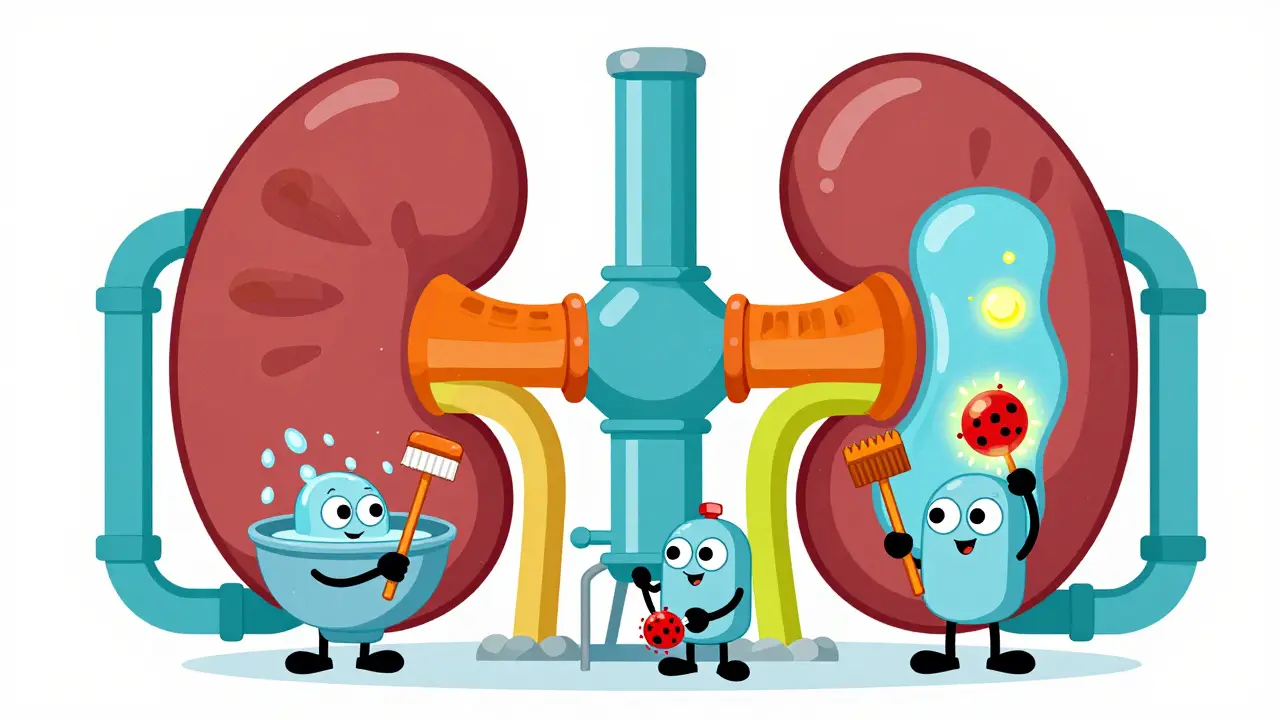
If you have recently seen a blood test result with a number next to "Creatinine" or "eGFR" and felt a wave of confusion, you are not alone. These tests are the gold standard for monitoring kidney function tests, but the numbers can feel like a foreign language. Whether you are managing high blood pressure, diabetes, or just had a routine check-up, understanding these markers helps you have a real conversation with your doctor about your health.
The Role of Serum Creatinine: The First Clue
To understand kidney health, we first have to look at Serum Creatinine is a waste product produced by the normal wear and tear of muscles in the body. It is filtered entirely by the kidneys and excreted in urine.
In a healthy system, your creatinine levels stay relatively stable. However, if your kidneys start to struggle, they can't clear this waste as effectively, and the levels begin to climb in your bloodstream. It sounds like a perfect marker, but there is a catch: creatinine is a "late marker." According to research from Physiopedia, you might need to lose nearly 50% of your kidney function before serum creatinine levels rise enough to trigger an alarm. This is why doctors never look at creatinine in isolation; they use it as a raw ingredient to calculate a much more precise number.
Your muscle mass also plays a huge role here. If you are a bodybuilder with massive muscle fibers, your baseline creatinine will be higher than someone who is frail or elderly, even if both sets of kidneys are working perfectly. This variability is why the next test on the list is so critical.
Decoding eGFR: The Speedometer of Kidney Health
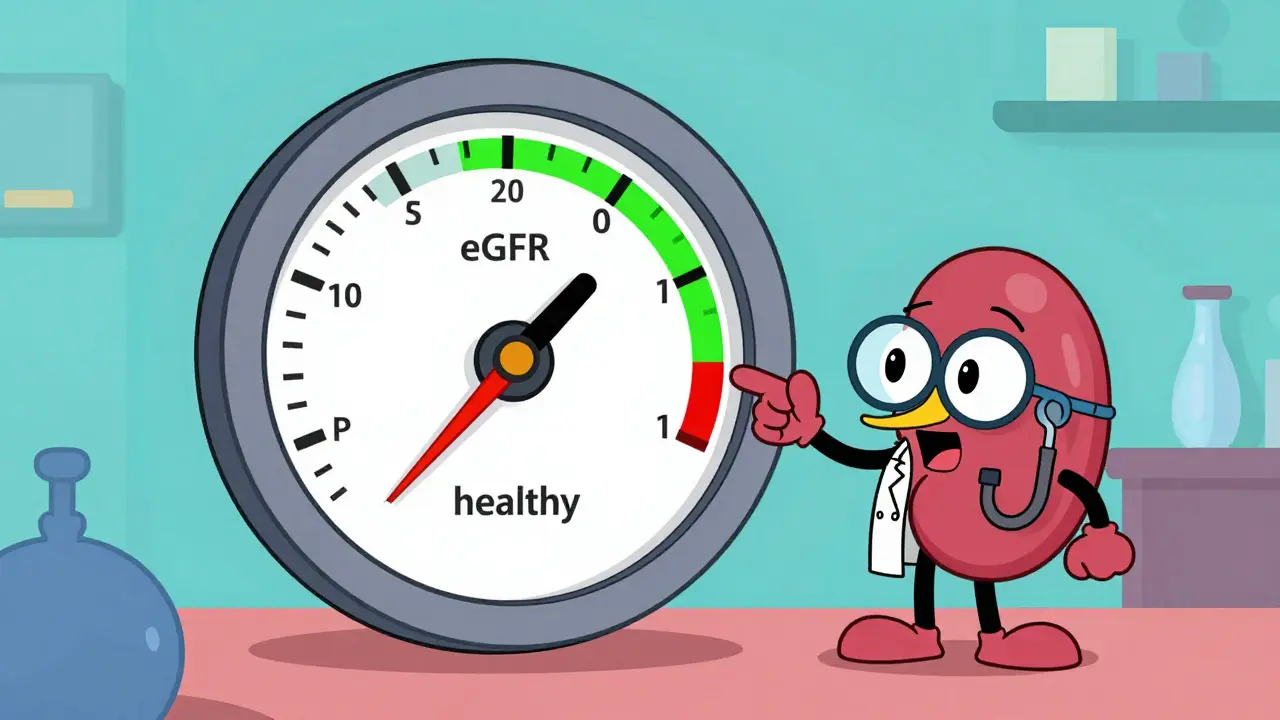
If creatinine is the raw data, eGFR (Estimated Glomerular Filtration Rate) is the actual analysis. eGFR is a calculated estimate of how many milliliters of blood your kidneys filter per minute per 1.73 square meters of body surface. Essentially, it is the "speedometer" of your kidney function.
Doctors don't measure GFR directly because that would require a complex, invasive procedure. Instead, they use the CKD-EPI equation, which takes your serum creatinine and factors in your age and sex to give an estimate. The result tells you exactly which stage of kidney health you are in. While a number of 90 or above is generally considered normal, a dip below 60 for three months or more usually points toward Chronic Kidney Disease (CKD).
| Stage | eGFR Range (ml/min/1.73 m²) | What it Means |
|---|---|---|
| Stage 1 | 90 or higher | Normal or mild damage |
| Stage 2 | 60 - 89 | Mildly decreased function |
| Stage 3a | 45 - 59 | Mild to moderate decrease |
| Stage 3b | 30 - 44 | Moderate to severe decrease |
| Stage 4 | 15 - 29 | Severely compromised function |
| Stage 5 | Less than 15 | Kidney failure (End-stage) |
Urinalysis and the ACR Test: Catching Leaks Early
While blood tests tell us how well the kidneys are filtering, urine tests tell us if the filter itself is damaged. Imagine a coffee filter with a tiny hole in it; the coffee still flows (the GFR might look okay), but grounds are leaking through. In your kidneys, those "grounds" are proteins called albumin.
Urine ACR (Albumin-to-Creatinine Ratio) is the gold-standard test used to detect proteinuria, or protein leakage, in the urine. Unlike the old-school dipstick tests-which are just chemically treated strips of paper-the ACR is a quantitative measurement that is far more accurate.
Finding albumin in your urine is often the very first sign of kidney stress, especially for people with diabetes or hypertension. If your ACR is between 3 and 70 mg/mmol, doctors will usually ask for a second early-morning sample to confirm if the leak is consistent or just a one-time fluke caused by intense exercise or a fever.
The 24-Hour Urine Collection: The Deep Dive
Sometimes a spot check isn't enough. If your doctor needs a complete picture of what's happening over a full day, they will order a 24-hour urine collection. This involves collecting every single drop of urine you produce for a full 24 hours into a large container. It is, admittedly, a bit of a chore, but it provides a much more comprehensive data set.
This test doesn't just look for protein. It measures levels of sodium, potassium, and oxalates. By comparing how much of these substances you consume versus how much you excrete, doctors can pinpoint exactly where the kidney's processing system is failing. It is the most reliable way to validate a suspected diagnosis when eGFR and ACR results are ambiguous.

When Blood Tests Lie: Limitations and Alternatives
It is important to remember that eGFR is an estimate. It relies heavily on the assumption that your muscle mass is average. If you are significantly overweight, very muscular, or pregnant, the creatinine-based eGFR can be misleading. A very muscular person might have high creatinine simply because they have more muscle to break down, making their kidneys look "worse" on paper than they actually are.
In these cases, doctors may turn to a Cystatin C test. Cystatin C is a protein produced by all nucleated cells in the body at a constant rate. Because it doesn't depend on muscle mass or diet, it often provides a much more accurate GFR estimate for people who don't fit the "average" body type.

Practical Steps for Maintaining Renal Health
If you are in a high-risk group-such as those with cardiovascular disease or chronic high blood pressure-regular screening is non-negotiable. The goal isn't just to find disease, but to slow its progression. Once kidney function drops to Stage 4 or 5, the focus shifts to management (like dialysis), but in Stages 1 through 3, you can often preserve your remaining function through lifestyle changes.
- Manage Blood Pressure: High pressure in the arteries damages the delicate filters (glomeruli) in the kidneys.
- Control Blood Sugar: Excess glucose acts like sandpaper on the kidney's filtration membranes.
- Watch the Meds: Be careful with long-term use of NSAIDs (like ibuprofen), as they can restrict blood flow to the kidneys.
- Stay Hydrated: Water helps the kidneys clear out the waste products we've been discussing.
Does a high creatinine level always mean kidney failure?
No. Creatinine levels can be elevated due to high muscle mass, a high-protein diet, or certain medications. It is also temporarily spiked by severe dehydration. This is why doctors use the eGFR calculation, which adjusts the creatinine value based on your age and sex to get a more accurate picture.
Why do I need both a blood test and a urine test?
Blood tests (eGFR) tell us the capacity of the filter-how much blood is being cleaned. Urine tests (ACR) tell us the integrity of the filter-whether it is leaking proteins it should be keeping. You can have a normal eGFR but a high ACR, which is often the first warning sign of early kidney disease.
How often should I have my kidney function checked?
For most healthy adults, a basic metabolic panel once a year during a physical is sufficient. However, if you have diabetes, hypertension, or a history of acute kidney injury, your doctor will likely recommend eGFR and ACR testing at least once or twice a year to monitor for any decline.
Can kidney function improve after a bad test result?
It depends on whether the injury is acute or chronic. Acute Kidney Injury (AKI), caused by things like severe dehydration or a sudden medication reaction, can often be reversed. Chronic Kidney Disease (CKD) is generally permanent, but with strict blood pressure and glucose control, you can significantly slow the decline and maintain your current stage for many years.
Is the "dipstick" urine test reliable for kidney disease?
Not really. While dipsticks are great for quick checks of UTI or glucose, they aren't sensitive enough to catch the early stages of albuminuria. Current guidelines from the UK Kidney Association recommend a quantitative ACR test instead, as it is much better at detecting small amounts of protein leakage.
Next Steps for Your Results
If you are looking at a lab report right now, don't panic over a single single-digit variance. Kidney function fluctuates based on what you ate, how much water you drank, and your activity level that day. The most important thing is the trend over time. If your eGFR is steadily dropping or your ACR is steadily rising over several months, that is when a specialist, such as a nephrologist, needs to get involved. Bring your historical results to your next appointment and ask: "How does this result compare to my baseline from last year?"