
Most people have never heard of IgA deficiency - and that’s not surprising. It’s the most common primary immune disorder, affecting roughly 1 in every 500 people in the UK and US. But here’s the twist: 90% of those people don’t even know they have it. They live normal lives, never needing special treatment. Until one day, they or someone they love needs a blood transfusion - and that’s when things can go dangerously wrong.
What Exactly Is IgA Deficiency?
Immunoglobulin A, or IgA, is the body’s first line of defense in places like your nose, throat, lungs, and gut. It’s the antibody that stops germs before they even get inside. When you have IgA deficiency, your body either makes almost none of it - less than 7 mg/dL - or none at all. Your IgG and IgM levels? Perfectly normal. That’s what makes it "selective" - only one piece of your immune system is missing. It’s not caused by drugs or illness. It’s genetic. If a close relative has it, your risk jumps 50 times higher. It’s not rare. It’s just quiet. Most people only find out after a reaction to blood, or after repeated infections that don’t make sense.Who Gets Symptomatic - and Why?
About 90% of people with IgA deficiency never have symptoms. The other 10%? They’re the ones who keep getting sick. Sinus infections. Ear infections. Bronchitis. Pneumonia. One in three will have chronic ear infections. One in five will have ongoing diarrhea or gut issues like giardiasis. About 1 in 10 will develop celiac disease. And nearly a third will have some kind of autoimmune problem - rheumatoid arthritis, lupus, inflammatory bowel disease. Allergies are also common. About 1 in 4 people with IgA deficiency have eczema, asthma, hay fever, or allergic conjunctivitis. Why? Because without IgA to block allergens at the mucosal surface, your immune system gets confused. It starts attacking harmless things - or worse, your own tissues. Diagnosis is simple: a blood test. Nephelometry or turbidimetry. If your IgA is below 7 mg/dL and your other antibodies are normal, that’s it. No fancy scans. No biopsies. Just a lab result.The Real Danger: Blood Transfusions
This is where things get life-threatening. About 20 to 40% of people with IgA deficiency develop anti-IgA antibodies. These aren’t harmless. They’re like landmines in your bloodstream. If you get blood that contains IgA - which most donated blood does - your immune system goes into overdrive. You can have a full-blown anaphylactic reaction within minutes. Symptoms? Hives. Swelling. Trouble breathing. Blood pressure crashing. Heart failure. In 10% of these reactions, it’s fatal. That’s not theoretical. That’s documented in medical journals. One patient in Birmingham had a routine transfusion after surgery. She’d never been told she had IgA deficiency. She went into cardiac arrest on the ward. She survived - but only because a nurse noticed the drop in oxygen and called a code. The problem? Most hospitals don’t test for it unless someone has already had a reaction. And most patients don’t know they have it until they’re in the ER.
How to Stay Safe During a Transfusion
If you’ve been diagnosed with IgA deficiency, you need a clear plan - and you need to make sure every doctor, nurse, and paramedic knows it. The gold standard is IgA-depleted blood. That means the plasma has been removed, and the red cells are washed to remove 98% of IgA. The result? Less than 0.02 mg/mL of IgA left. That’s safe. But it’s not easy to get. It takes 48 to 72 hours to order. And it costs three times more than regular blood. Washed red blood cells are another option. They’re processed on-site, which takes 30 to 45 minutes. Not ideal in an emergency, but better than nothing. Before any transfusion, you should have an anti-IgA antibody test. It’s not perfect - 5 to 10% of people get false negatives - but it’s the best tool we have. If you’ve had a reaction before, you’re automatically considered high-risk. No exceptions.What You Must Do Right Now
If you’ve been diagnosed with IgA deficiency - or if you suspect you might have it - here’s what you do:- Get a medical alert bracelet or necklace. Engrave: "Selective IgA Deficiency - Requires IgA-Depleted or Washed Blood Products".
- Carry a wallet card with your diagnosis, your doctor’s contact, and the transfusion protocol.
- Give a copy to your GP, your dentist, and your local hospital’s blood bank.
- Ask your doctor to document your condition in your electronic health record with a red flag.
- If you’re pregnant, tell your OB. Newborns can inherit IgA deficiency - and they’re vulnerable too.
Why Most Doctors Don’t Know This
You’d think every hospital would have a protocol for this. But they don’t. A 2023 survey found that 42% of IgA-deficient patients had been treated by a healthcare provider who didn’t know what IgA deficiency was. In emergency rooms, where time is tight and records are missing, that’s deadly. Some countries - like the UK - have guidelines. Others don’t. The American Association of Blood Banks says test everyone with IgA deficiency before transfusion. The European Society for Immunodeficiencies says only test those who’ve had a reaction. That’s a 30% difference in practice. And it’s not just about policy - it’s about awareness.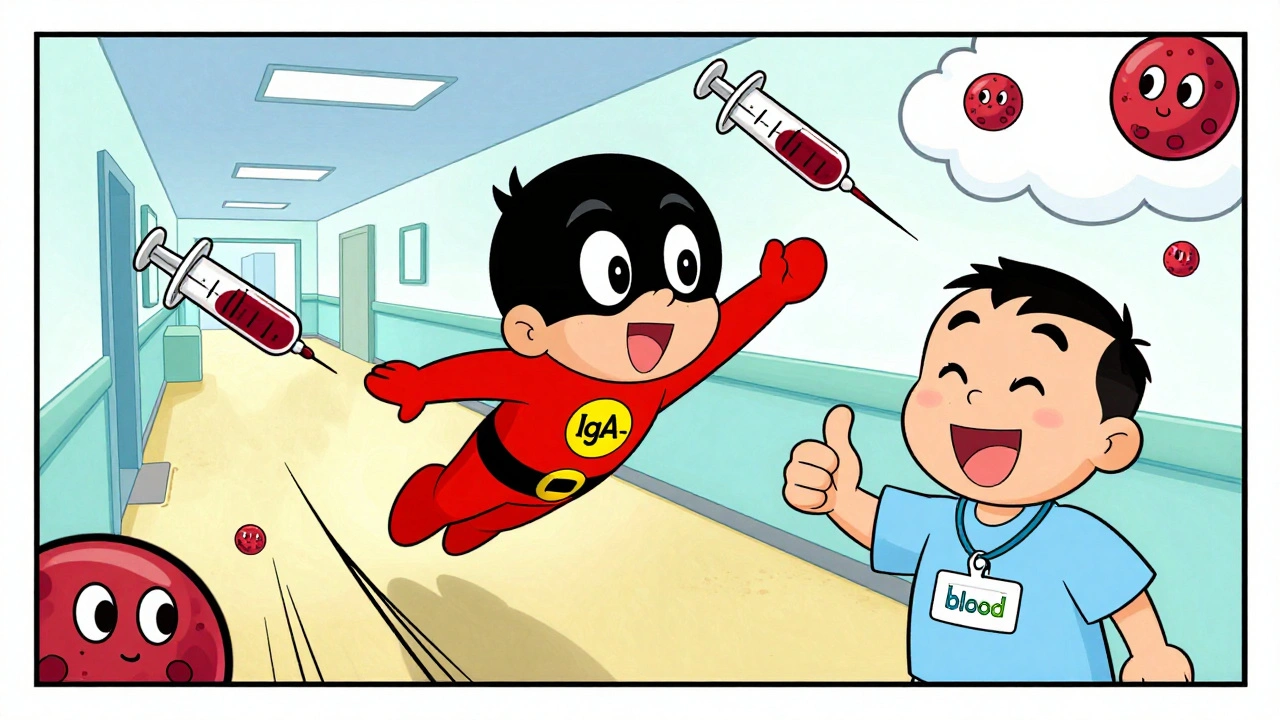
What About Long-Term Health?
The good news? Most people with IgA deficiency live normal lives. A 20-year study showed 95% have a normal life expectancy. The key is management. If you’re symptomatic:- Get screened for celiac disease every year - a simple blood test for tissue transglutaminase antibodies.
- Have pulmonary function tests twice a year to catch early signs of bronchiectasis.
- Watch for joint pain, rashes, or unexplained fatigue - signs of autoimmune disease.
- Use antibiotics only when necessary. Overuse can make you more vulnerable.
The Future: What’s on the Horizon?
Researchers are testing recombinant human IgA - lab-made IgA that could be given as a replacement therapy. So far, only 12 patients worldwide have received it. It’s experimental. But it’s promising. For now, prevention is everything. If you have IgA deficiency, you’re not broken. You’re just different. And with the right knowledge - and the right precautions - you can live fully, safely, and without fear.Frequently Asked Questions
Can IgA deficiency be cured?
No, there is no cure for selective IgA deficiency. It’s a lifelong condition caused by genetics. But most people don’t need treatment. Those who do manage it with careful monitoring, avoiding triggers, and using special blood products during transfusions.
Can I donate blood if I have IgA deficiency?
No. People with IgA deficiency are not allowed to donate blood. Their blood contains anti-IgA antibodies, which could cause severe reactions in recipients who also have IgA deficiency. Even if you feel fine, your blood isn’t safe for others with this condition.
Is IgA deficiency the same as having low immunity?
Not exactly. Most people with IgA deficiency have normal IgG and IgM levels, so their overall immune system works fine. But because IgA protects mucosal surfaces, they’re more prone to infections in the lungs, gut, and sinuses. It’s not general weakness - it’s a specific gap in defense.
Can my children inherit IgA deficiency?
Yes. IgA deficiency runs in families. If one parent has it, each child has about a 1 in 4 chance of inheriting it. It’s not guaranteed, but genetic screening is available if you’re planning a family and have a known diagnosis.
What should I do if I need emergency surgery?
Always carry your medical alert card or bracelet. Call ahead to the hospital’s blood bank and ask them to prepare IgA-depleted or washed red blood cells. If you’re unconscious, someone with your card can tell the team. Emergency staff are trained to look for medical alerts - don’t assume they’ll know unless you make it visible.
Are there any vaccines I should avoid?
No. Standard vaccines - flu, pneumonia, tetanus, hepatitis - are safe and recommended. In fact, staying up to date on vaccines is one of the best ways to prevent infections. Live vaccines (like MMR or varicella) are also generally safe in IgA deficiency because your other antibodies are normal. Always check with your immunologist first, but most vaccines are fine.