More than half of people with chronic conditions like high blood pressure, diabetes, or cholesterol don’t take their meds as prescribed. It’s not laziness. It’s forgetfulness. Confusion. Side effects. Cost. Or just not feeling sick enough to bother. But skipping pills doesn’t just mean you’re not feeling better-it means your condition is getting worse, and your risk of hospital stays, heart attacks, or strokes goes up. The good news? You can measure your own adherence-and fix it-without fancy tech or a doctor’s lecture.
What Does "Medication Adherence" Really Mean?
Adherence isn’t just about taking your pills. It’s about taking them right. That means:- Taking the right dose
- At the right time
- For the full time your doctor ordered
How to Track Your Adherence-Without Spending a Penny
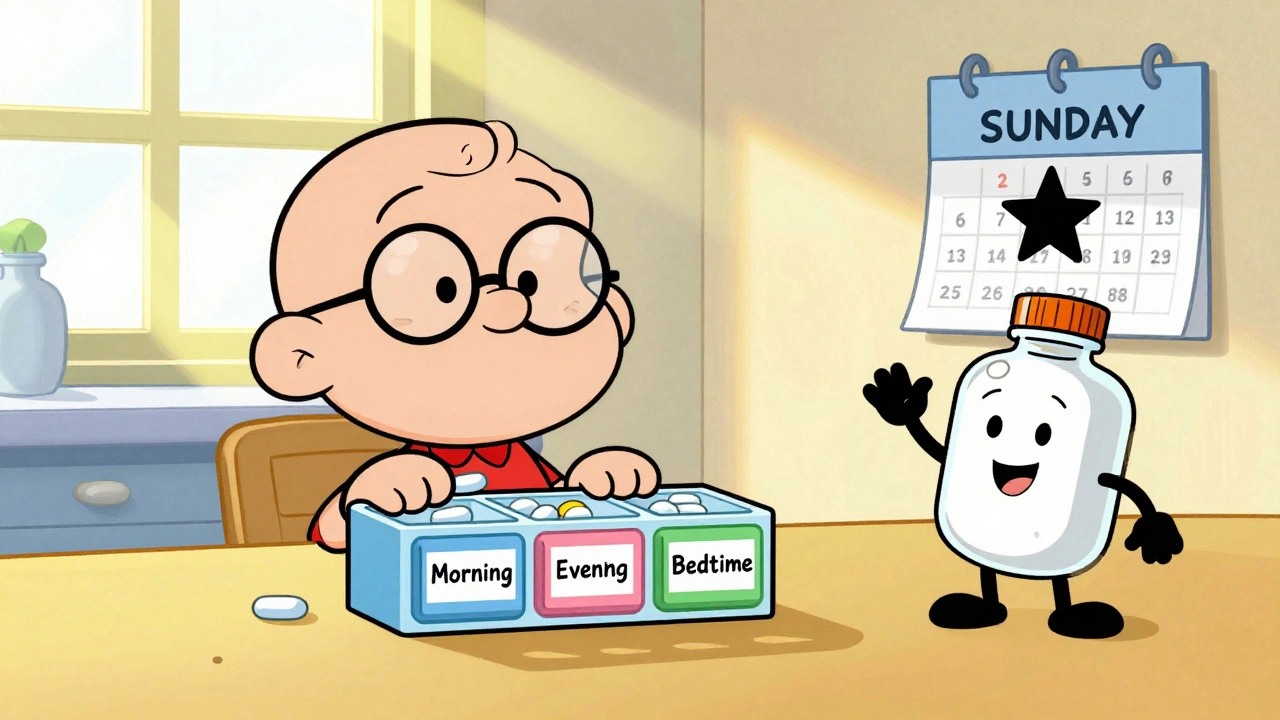
You don’t need an app or a smart bottle. You don’t need to buy a device that costs $50. Here’s how real people in Birmingham, London, or Manchester track their meds-simply, honestly, and accurately.- Use a pillbox with days and times labeled. Buy one with four compartments (morning, noon, evening, bedtime). Fill it every Sunday. If a compartment is still full on Wednesday, you missed doses. No guessing.
- Keep a handwritten log. Grab a notebook or print a free calendar. Each time you take a pill, put a big checkmark. No checkmark? That’s your red flag. Don’t write "took it"-write the time. Did you take it at 8 a.m. or 8 p.m.? Timing matters.
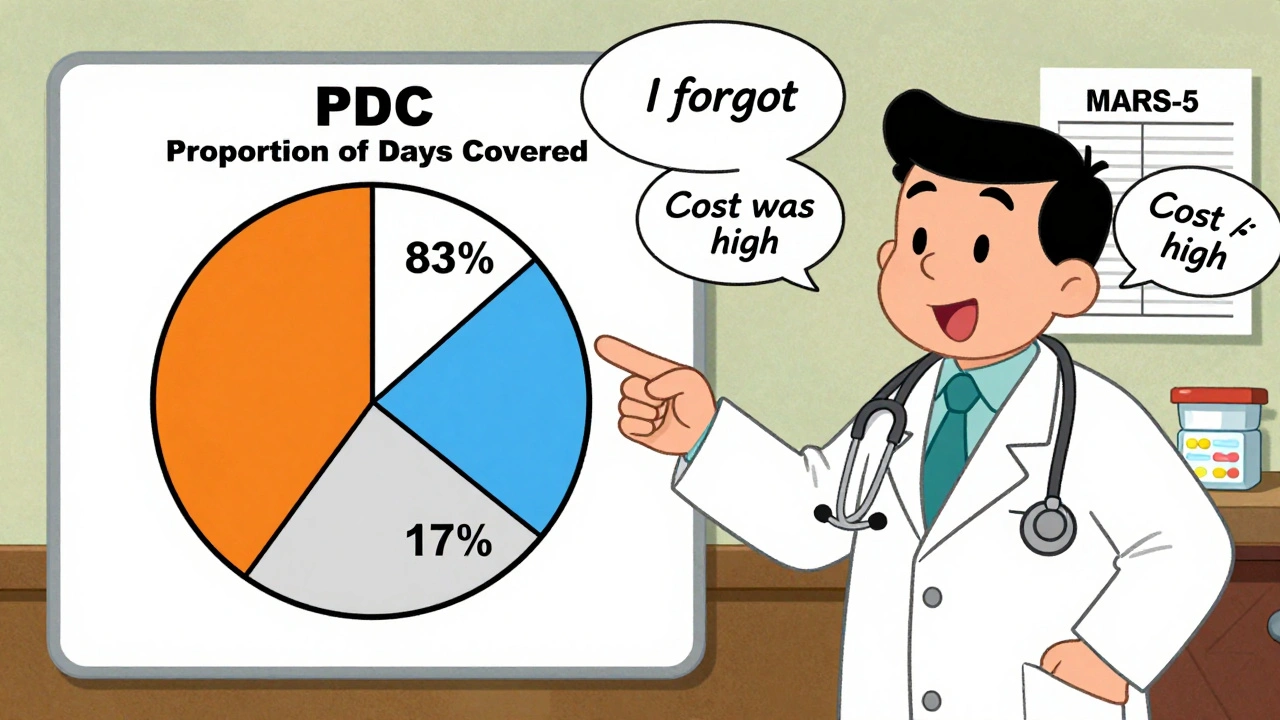
- Check your prescription refill history. Log into your pharmacy’s website or call them. Look at your last 3 fills for each chronic med. If you’re supposed to get a 30-day supply every month but you’re picking it up every 45 days? You’re falling behind. The metric they use is called PDC-Proportion of Days Covered. If it’s under 80%, you’re at risk.
- Ask yourself the MARS-5 questions. This is a simple 5-question tool doctors use. Rate yourself on a scale of 1 to 5 (1 = very often, 5 = never):
- Do you ever forget to take your medicine?
- Have you ever skipped a dose because you felt worse after taking it?
- Do you ever stop taking your medicine when you feel better?
- Do you ever take less than prescribed because you’re worried about side effects?
- Do you ever take your medicine at the wrong time?
Why Your Pharmacy’s Data Isn’t Enough
Your pharmacy knows you picked up your statin last week. But they don’t know if you threw it in the trash. Or if you took it with coffee instead of water. Or if you only took it on weekends. That’s why claims-based data (like PDC) only tells part of the story. A 2014 study found that when patients said they were 90% adherent, electronic monitors showed they were actually only 60% adherent. People lie-not out of guilt, but because they think they’re supposed to take their meds. They remember the days they did. They forget the days they didn’t. That’s why combining methods works best. Use your pillbox to catch the missed doses. Use your log to spot patterns. Use your refill history to see if you’re running out early or late. Together, they paint a real picture.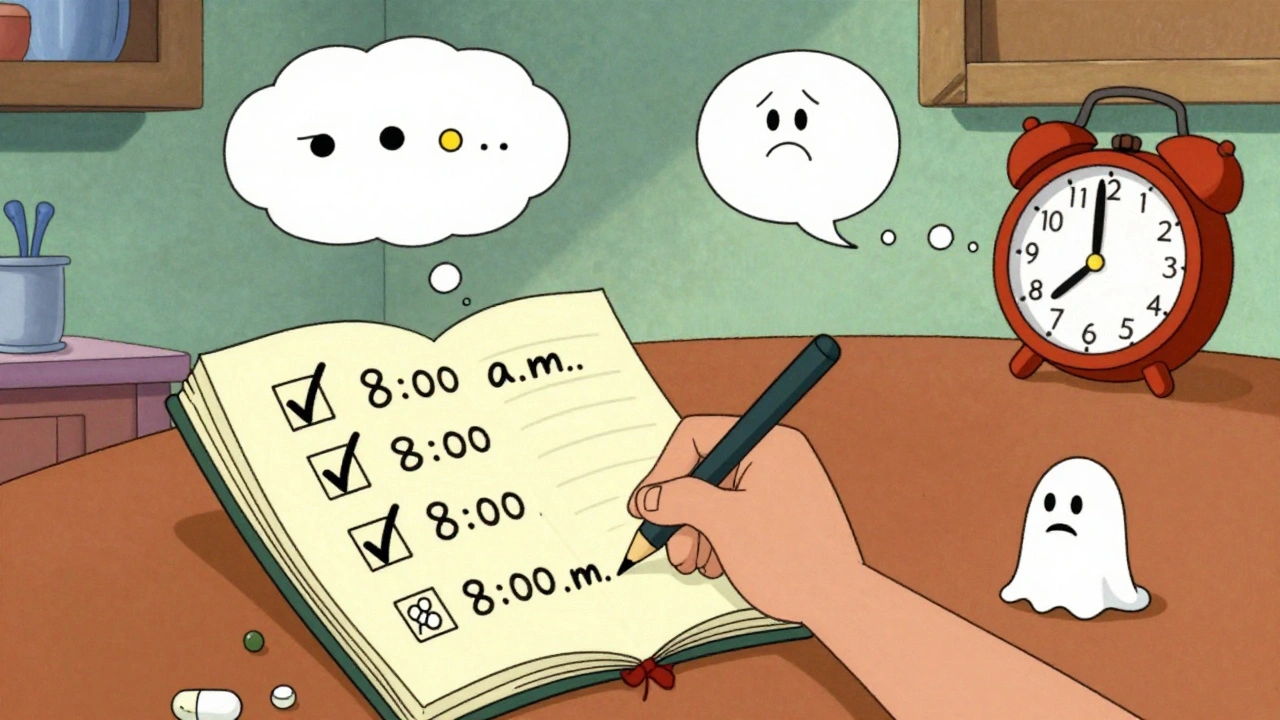
Common Reasons People Miss Doses (And How to Fix Them)
- Too many pills → Ask your doctor about combination pills. Some blood pressure meds now come in one tablet that does the job of three.
- Side effects → Don’t quit. Talk to your doctor. Maybe your dose is too high. Maybe you need a different drug. There are 10+ options for most chronic conditions.
- Cost → Ask your pharmacist about generic versions. Or ask if your insurer has a mail-order program. In the UK, NHS prescriptions cost £9.90 per item-but if you take 5+ meds a month, a prepayment certificate saves you hundreds.
- Forgetfulness → Set a phone alarm. Link your pill to a daily habit: "After I brush my teeth, I take my pill." Use a pillbox with alarms built in-some cost under £15.
- Feeling fine → Remember: you feel fine because the meds are working. Stopping them doesn’t make you healthier-it makes you sicker.
When to Ask for Help
You don’t have to figure this out alone. If your PDC is below 80%, or your MARS score is over 12, talk to your pharmacist or GP. Say this: "I’m trying to get better at taking my meds. Can we look at my refill history together?" Pharmacists are trained for this. They see it every day. In 2024, the American Pharmacists Association launched a Medication Adherence Certification program-so now, many UK pharmacists are trained in this too. You can also ask about:- Medication therapy management (MTM) services
- Home delivery programs
- Blister packs pre-filled by the pharmacy
What’s New in 2025
New tools are coming. Smart pill bottles that text you when you miss a dose. AI that predicts who’s likely to stop taking meds based on EHR data. But for now, the best tool is still you-with a pillbox, a pen, and a honest conversation. The NHS is now required to track adherence for diabetes, hypertension, and cholesterol meds. If you’re on one of those, your doctor will soon be checking your refill rates. Don’t wait for them to ask. Start tracking now.Your 7-Day Adherence Checklist
Print this. Tape it to your fridge. Use it every week.- Did I take all my pills at the right time?
- Did I refill each prescription before I ran out?
- Did I miss any doses because I felt fine?
- Did I skip any because of cost or side effects?
- Did I take any pills with food or drink that might interfere?
- Did I write down every dose I took?
- Do I feel more in control of my health this week than last?
What’s the best way to measure medication adherence at home?
The most practical way is combining a labeled pillbox with a daily log. Check your pharmacy refill records every month to calculate your PDC (Proportion of Days Covered). If you’ve had 25 days of medication supply over a 30-day period, your PDC is 83%. That’s good. Below 80% means you’re at risk. Add the MARS-5 questionnaire to spot hidden reasons for skipping doses.
Is taking my pill 2 hours late the same as missing it?
For most chronic meds-like blood pressure or cholesterol pills-being 1-2 hours late is fine. Your body doesn’t notice. But for insulin, antibiotics, or seizure meds, timing is critical. Always check your medication leaflet or ask your pharmacist. If you’re unsure, assume timing matters and set an alarm.
Can I trust my memory to tell me if I took my pill?
No. Studies show people remember taking their meds 30-50% more than they actually did. This is called recall bias. You remember the days you took it. You forget the days you didn’t. That’s why you need a physical tracker-a pillbox, a calendar, or an app. Memory is not reliable for health.
Why does my doctor care if I miss a few pills?
Missing just 20% of your doses can make your treatment fail. For example, if you’re on a statin and miss 1 in 5 pills, your cholesterol stays high. That increases your risk of heart attack by up to 40%. It’s not about discipline-it’s about science. Your body needs consistent levels of medicine to work.
Are there free tools to help me track my meds?
Yes. The NHS offers free printed medication charts. Many pharmacies give out free pillboxes. You can download free printable calendars from NHS Choices or use your phone’s calendar app with reminders. You don’t need to pay for apps-most are just digital versions of what you can do with pen and paper.
What if I can’t afford my medication?
Talk to your pharmacist or GP. In the UK, you may qualify for an NHS Prepayment Certificate if you take multiple prescriptions monthly-it costs £114.50 a year and covers unlimited prescriptions. You can also ask about generic versions, patient assistance programs, or mail-order pharmacies. Never skip doses because of cost-there are always solutions.