When menopause hits, many women notice something unexpected: the scale creeps up, clothes get tighter around the middle, and diets that used to work suddenly don’t anymore. It’s not laziness. It’s not a lack of willpower. It’s biology. Menopause weight gain isn’t just about eating too much-it’s about how your body changes when estrogen drops, muscle fades, and your metabolism slows down. And understanding that shift is the first step to taking control.
Why Your Body Stores Fat Differently After Menopause
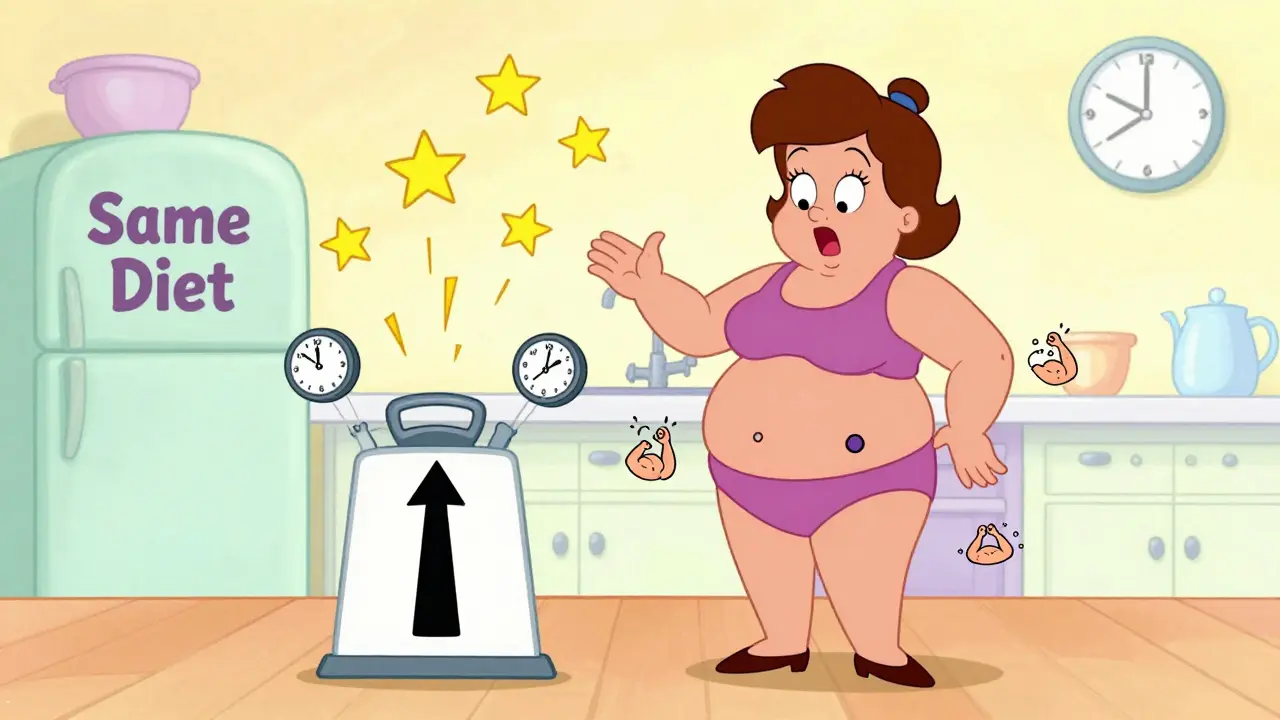
Before menopause, fat tends to settle in the hips, thighs, and buttocks. That’s estrogen at work. It tells fat cells to store energy in those areas. But as estrogen levels plunge-dropping by 60-70% during the transition-your body’s fat storage rules change. Suddenly, fat moves to your abdomen. Visceral fat. The kind that wraps around your organs. This isn’t just cosmetic. Visceral fat is metabolically active. It releases inflammatory chemicals and makes your body less sensitive to insulin. Research shows postmenopausal women are nearly five times more likely to develop abdominal obesity than women before menopause. And here’s the kicker: you can gain 1.5 kilograms (3.3 pounds) per year during perimenopause-even if you eat the same amount and exercise the same way you did before. Why? Because your body’s energy needs change. Your resting metabolic rate drops by 2-3% every decade after 30. Menopause adds another layer: muscle loss. Women lose 3-8% of muscle mass per decade. During menopause, that rate spikes by an extra 1-2% per year. Less muscle means fewer calories burned at rest. So even if your calorie intake stays the same, your body starts storing more fat.The Hormone Puzzle: Estrogen, Testosterone, and Appetite
It’s not just estrogen falling. It’s the imbalance that follows. When estrogen drops, testosterone becomes relatively more dominant. That doesn’t mean you suddenly grow a beard-it means fat cells in your belly respond differently. They start storing more fat. Then there’s appetite. Estrogen helps regulate leptin, the hormone that tells your brain you’re full. When estrogen drops, leptin levels fall by 20-30%. At the same time, sleep disruptions from hot flashes and night sweats boost ghrelin-the hunger hormone-by 15-25%. So you’re hungrier, less satisfied after meals, and more likely to crave carbs and sugar. A 2023 analysis from the British Menopause Society found that women who maintained the same diet and activity levels still gained 4.5-6.8 kg (10-15 pounds) during the menopausal transition. That’s not overeating. That’s physiology.Why Old Strategies Don’t Work Anymore
You’ve probably tried cutting calories. Maybe you did low-fat diets, intermittent fasting, or cardio-heavy routines. And it didn’t work. Or it worked for a while, then stalled. That’s because those methods don’t address the root causes. Cutting calories without building muscle makes your metabolism slower. Doing endless steady-state cardio burns calories during the workout-but doesn’t rebuild the muscle that keeps your metabolism running all day. A University Hospitals survey in August 2023 found that 67% of women said diets that worked before menopause became useless afterward. Reddit’s r/menopause community has thousands of posts from women saying things like: “I’ve run 5Ks for 20 years. I eat clean. I still gained 25 pounds in 3 years.” The problem isn’t you. It’s that your body’s rules changed. You’re no longer fighting the same enemy.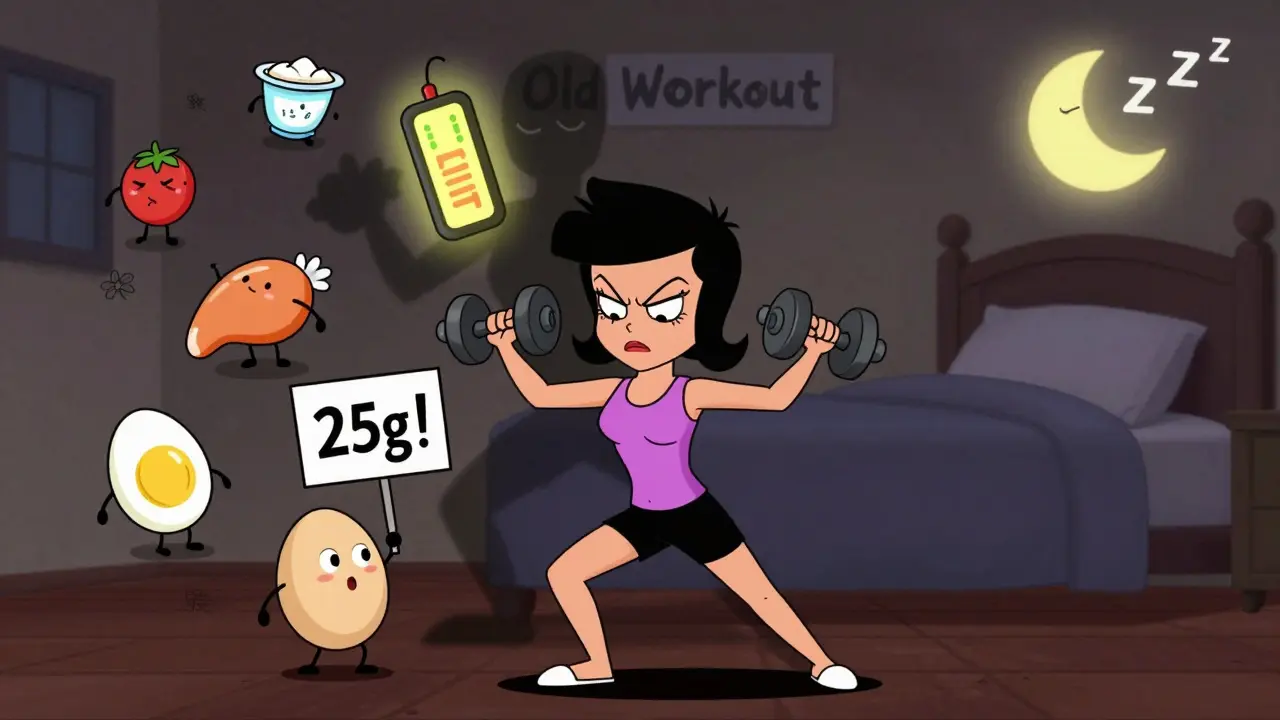
The Real Solution: Muscle, Protein, and Movement
The most effective strategy isn’t about eating less. It’s about changing what you do and how you fuel your body. Strength training is non-negotiable. Research from Menopause: The Journal of The North American Menopause Society (2022) shows that women who lifted weights 2-3 times a week for six months gained 1.8-2.3 kg of lean muscle and lost 8-12% of abdominal fat. Muscle doesn’t just burn calories-it protects your metabolism. Every pound of muscle you build increases your daily calorie burn by 6-10 calories. That adds up. Protein matters more than ever. As you age, your body becomes resistant to building muscle from protein. This is called anabolic resistance. To fight it, you need more protein, spread across meals. Aim for 25-30 grams per meal. That’s about three eggs, a chicken breast, or a scoop of whey. The British Menopause Society recommends 1.2-1.6 grams of protein per kilogram of body weight daily. For a 70 kg (154 lb) woman, that’s 84-112 grams of protein a day. HIIT helps too. High-intensity interval training-short bursts of effort followed by rest-boosts metabolism for hours after the workout. It also helps burn visceral fat. Do 1-2 sessions a week: 20 minutes of sprints, cycling, or bodyweight circuits.Sleep and Stress: The Hidden Drivers
You can’t out-train poor sleep. Hot flashes and night sweats disrupt rest for 75% of perimenopausal women. And every hour of lost sleep raises ghrelin and lowers leptin. That means more hunger, more cravings, and less fat burning. Aim for 7-8 hours of sleep. Cool your bedroom. Avoid alcohol and caffeine after 2 p.m. If hot flashes are keeping you up, talk to your doctor about non-hormonal options like gabapentin or clonidine-both have shown success in clinical trials. Stress also plays a role. High cortisol levels from chronic stress promote abdominal fat storage. Try daily walks, breathing exercises, or yoga. Even 10 minutes a day can lower cortisol.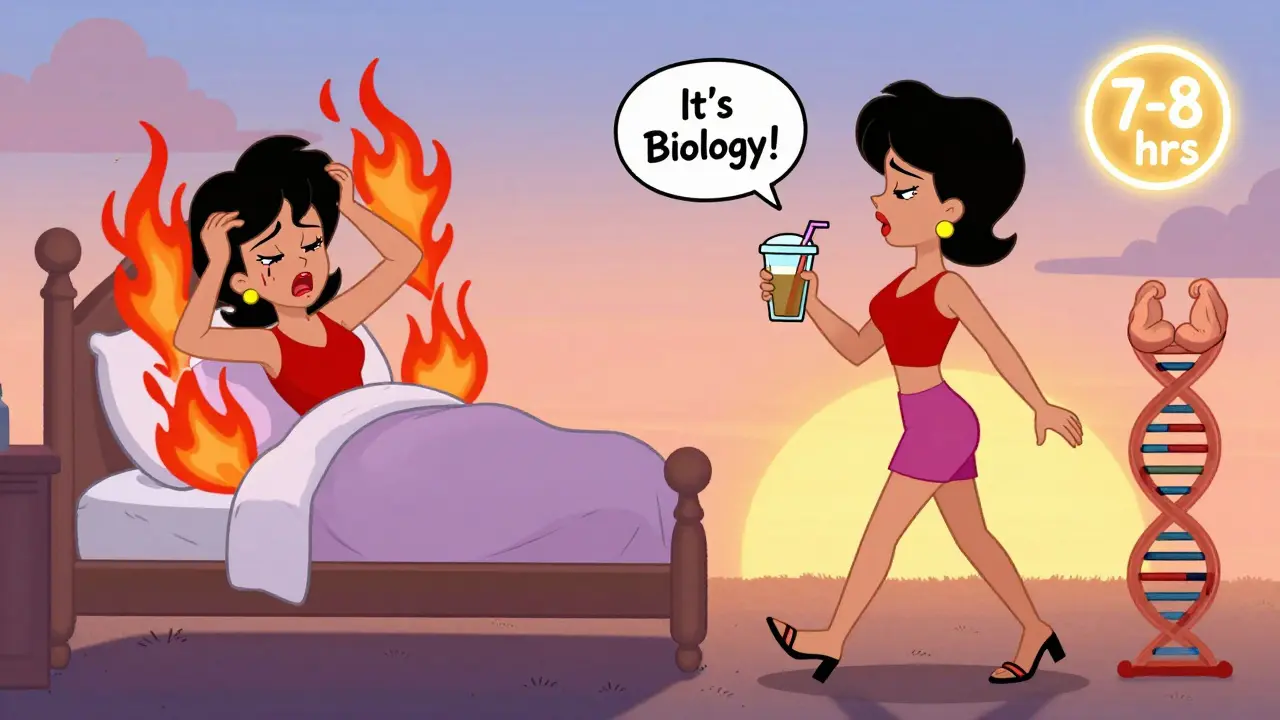
What Doesn’t Work (And Why)
Not all advice is created equal. - Extreme calorie restriction? It backfires. Your body thinks it’s starving. It holds onto fat and breaks down muscle. You end up slower, hungrier, and more frustrated. - Only cardio? Running and cycling burn calories, but they don’t rebuild muscle. Without strength training, you’ll lose lean tissue and slow your metabolism further. - Detox teas, supplements, or “menopause diets”? There’s no magic pill. The market for menopause weight loss products is booming-projected to hit $32.4 billion by 2028-but most lack clinical proof. Stick to what’s been tested: movement, protein, sleep.What’s Next: Personalized Medicine
The future of menopause weight management is personal. Mayo Clinic launched a metabolic testing protocol in January 2023 that measures 17 hormones and markers to build individualized plans. The NIH is funding a $12.5 million study called EMPOWER to see if early hormone therapy can prevent fat redistribution. And bimagrumab, a new drug in Phase 3 trials, is showing promise: it increases muscle by 5-7% and cuts fat by 8-10% in just 24 weeks. But you don’t need to wait for the future. Right now, you have everything you need: your body, your movement, your food choices. The tools are simple. The science is clear. The key is consistency.Getting Started: A Realistic 3-Month Plan
You don’t need to overhaul everything overnight. Start here:- Week 1-4: Add two strength sessions per week. Focus on compound moves: squats, lunges, push-ups, rows. Use dumbbells, resistance bands, or bodyweight. No gym? Do 20 minutes at home.
- Week 5-8: Add one HIIT session. Try 8 rounds of 30 seconds of jumping jacks or stair climbs, followed by 60 seconds of rest. Keep it short.
- Week 9-12: Track protein intake. Use a free app like MyFitnessPal. Aim for 25-30 grams at breakfast, lunch, and dinner. Add a protein-rich snack if needed (Greek yogurt, cottage cheese, nuts).
- Every day: Walk 30 minutes. Sleep 7+ hours. Cut alcohol. Hydrate. These small habits compound.
Results take time. Most women see changes in 3-6 months. Don’t weigh yourself daily. Measure your waist. Notice how your clothes fit. Track energy levels. That’s the real progress.
Why am I gaining weight even though I eat the same as before?
Your metabolism slows down due to falling estrogen and muscle loss. Even if your calorie intake stays the same, your body burns fewer calories at rest. Research shows women gain 1.5 kg (3.3 lbs) per year during perimenopause without changing their diet or activity level. It’s not about overeating-it’s about changing biology.
Is abdominal fat more dangerous than fat elsewhere?
Yes. Visceral fat-the kind that wraps around your organs-releases inflammatory chemicals and increases insulin resistance. Postmenopausal women with abdominal fat have a 3.2 times higher risk of metabolic syndrome, even if their overall BMI is normal. It’s not just about appearance; it’s about heart health and diabetes risk.
Should I take hormone therapy to prevent weight gain?
Hormone therapy isn’t a weight loss treatment. But for some women, early estrogen therapy may help reduce fat redistribution by maintaining estrogen levels. The NIH is currently studying this in the EMPOWER trial. However, hormone therapy has risks and isn’t recommended solely for weight control. Talk to your doctor about your personal health history before considering it.
How much protein do I really need after menopause?
Aim for 1.2 to 1.6 grams of protein per kilogram of body weight daily. For a 70 kg (154 lb) woman, that’s 84-112 grams per day. Spread it across meals: 25-30 grams at breakfast, lunch, and dinner. This helps fight muscle loss and supports metabolism. Most women get far less than this-especially if they avoid meat or dairy.
Can I lose belly fat without going to the gym?
Yes. You don’t need weights or machines. Bodyweight squats, wall push-ups, step-ups on a stair, and resistance bands can build muscle. Combine that with daily walking and better sleep, and you’ll see changes. The goal isn’t to look like a fitness influencer-it’s to rebuild muscle, lower visceral fat, and protect your long-term health.
Menopause isn’t the enemy. It’s a transition-and your body is asking you to adapt. You don’t need to fight it. You need to work with it. Build muscle. Eat enough protein. Sleep well. Move daily. That’s the strategy. And it works.