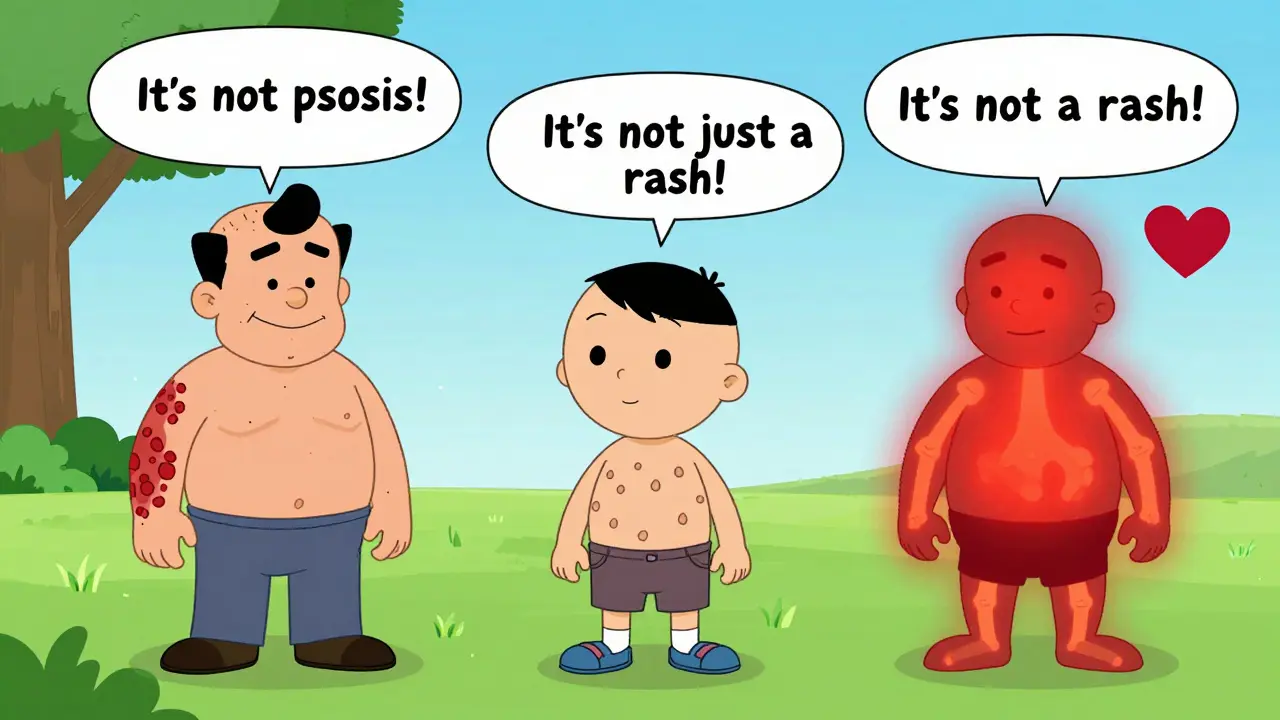
Psoriasis isn’t just a rash. It’s a full-body immune system glitch that shows up on the skin - sometimes as thick, scaly plaques, other times as tiny drop-like spots, or even as widespread inflammation that affects joints, heart health, and metabolism. About 125 million people worldwide live with it, and the type you have changes everything about how you treat it. If you’re dealing with plaque psoriasis (which 80-90% of people have), guttate psoriasis (8-10%), or something more systemic, the right treatment isn’t one-size-fits-all. It’s about matching the right tool to the right problem.
Understanding the Three Main Types
Plaque psoriasis is the classic version: raised, red patches covered in silvery scales, usually on elbows, knees, scalp, and lower back. It’s stubborn, it’s visible, and it doesn’t just sit on the skin - it’s tied to inflammation inside your body. Guttate psoriasis hits differently. It often comes on suddenly after a strep throat infection, especially in kids and young adults. Instead of thick plaques, you get dozens of small, teardrop-shaped spots across the torso, arms, and legs. It can clear up on its own, but for some, it turns into chronic plaque psoriasis. Then there’s the hidden side: systemic involvement. Around 30% of people with psoriasis develop psoriatic arthritis. Many also face higher risks for heart disease, diabetes, and metabolic syndrome. That’s why treating the skin alone isn’t enough anymore.
Topical Treatments: The First Line
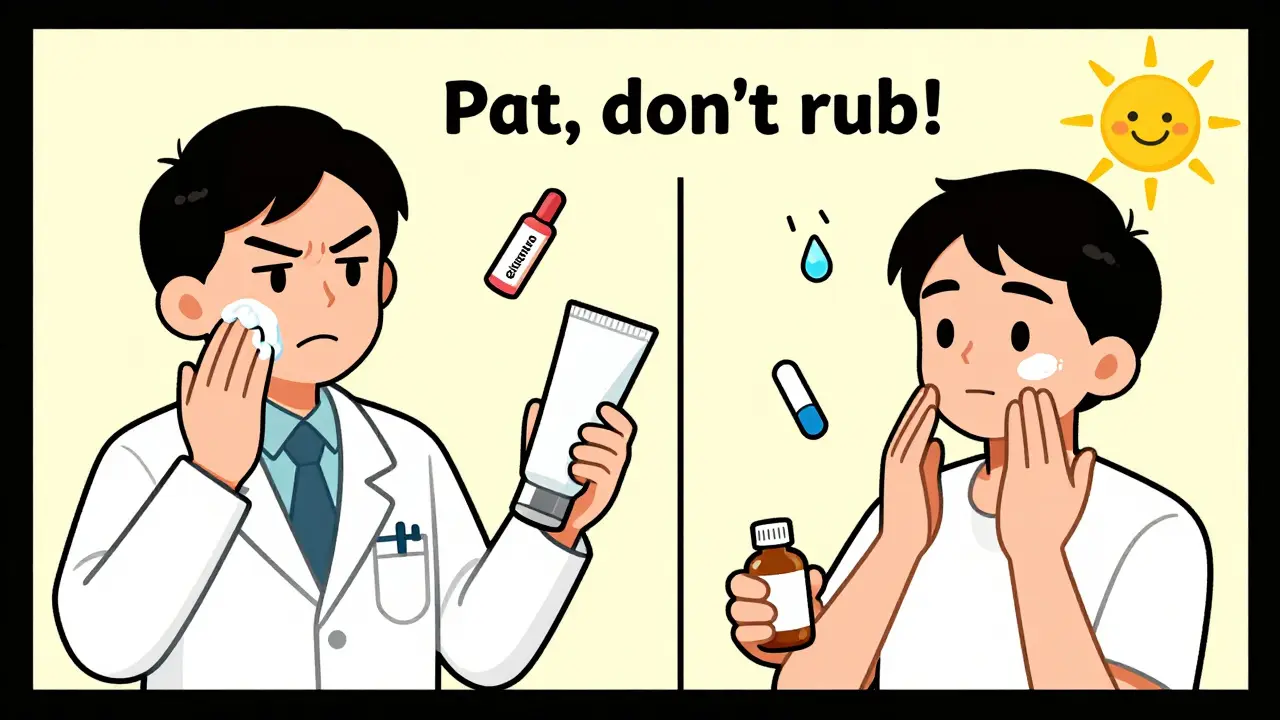
If your psoriasis covers less than 5% of your body, creams and ointments are where you start. Corticosteroids are the go-to - from mild (class VII) to strong (class I). But they’re not magic. Used alone, they clear about 30-40% of plaques at best. The real game-changer is combining them. A 0.005% calcipotriol and betamethasone foam, for example, clears 89% of genital psoriasis cases. That’s because calcipotriol slows down skin cell overgrowth while the steroid calms inflammation. Newer topicals like tapinarof cream (1%) work differently - they activate a natural anti-inflammatory pathway in the skin. In trials, 35.4% of users hit 75% skin clearance after 12 weeks. But here’s the catch: most people stop using topicals too soon. Studies show adherence jumps from 30% to 75% when patients watch a short video on how to apply them correctly. Don’t skip the technique. Rubbing it in hard doesn’t make it work faster. Gently pat it on, twice a day, and wait.
Oral Systemic Drugs: When Topicals Aren’t Enough
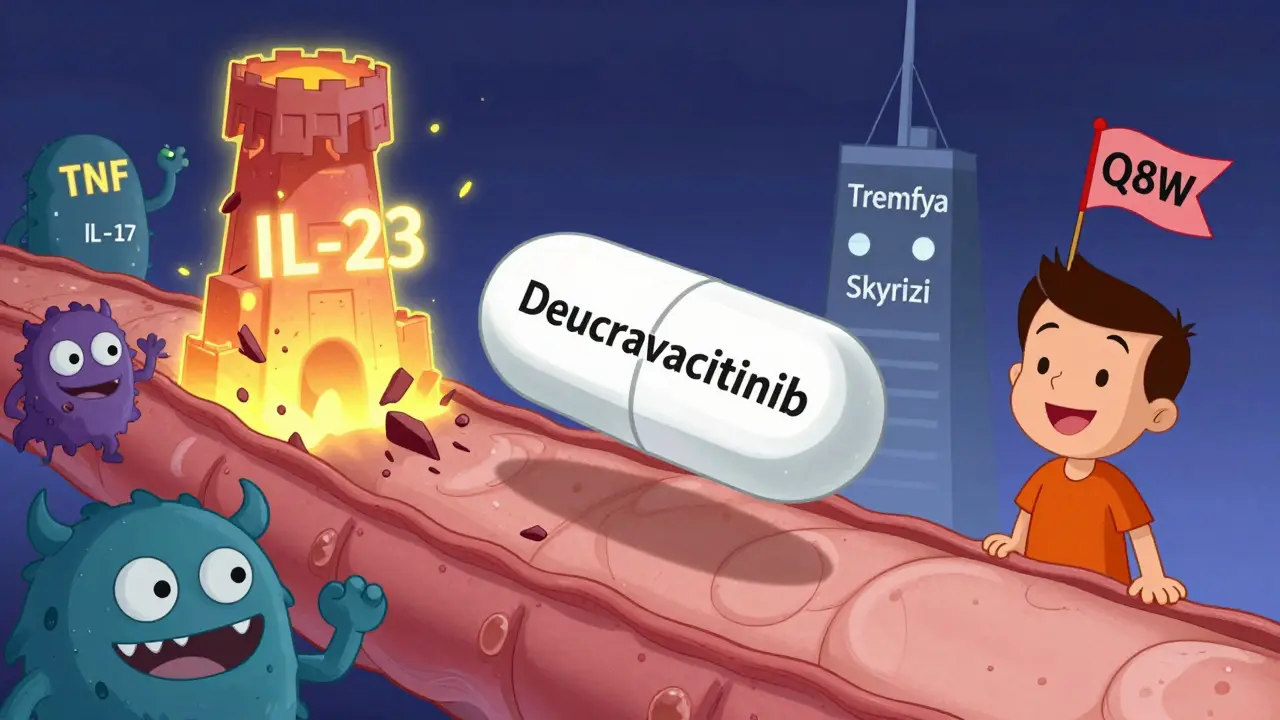
When psoriasis spreads beyond the elbows and knees, you need something that works from the inside. Methotrexate has been the backbone for decades - 10 to 25 mg a week. It brings about 50-60% skin clearance in 16 weeks. But it’s not gentle. Liver checks, blood tests, and folic acid supplements are mandatory. Cyclosporine works faster - 60-70% clearance in 12 weeks - but it’s a short-term fix. Kidney damage limits its use to 1-2 years. Then there’s acitretin, a vitamin A derivative. It helps with nail and scalp psoriasis but can dry out skin and eyes. And it’s off-limits if you’re planning a pregnancy - it stays in your body for years. Apremilast (Otezla) is a newer oral option. It’s easier on the body - no blood work needed - but only about one-third of users hit 75% clearance. Still, it’s a solid choice if you can’t take injections or have liver issues. Now, deucravacitinib is changing the game. Taken as a single daily pill, it blocks a key enzyme in the inflammation pathway. In trials, 58.7% of patients cleared 75% of their skin in 16 weeks. It’s not as strong as biologics, but it’s a real alternative for people who want pills over needles.
Biologics: The Precision Medicine Revolution
This is where psoriasis treatment got smarter. Biologics don’t just suppress your whole immune system - they target specific troublemakers. Think of them like sniper rifles instead of shotguns. The big three families are TNF inhibitors, IL-17 blockers, and IL-23 blockers. TNF drugs like adalimumab (Humira) have been around the longest. They clear 78% of plaques at 16 weeks. But newer players are leaving them behind. IL-17 inhibitors like secukinumab (Cosentyx) hit 79% of users with 90% skin clearance. They work fast - noticeable improvement in 2 weeks. But they’re not safe for everyone. If you have Crohn’s or ulcerative colitis, IL-17 drugs can make it worse. That’s where IL-23 inhibitors shine. Guselkumab (Tremfya), risankizumab (Skyrizi), and tildrakizumab (Ilumya) block the root of the problem - the IL-23 pathway that kicks off the whole inflammatory cascade. In the VOYAGE trials, 84% of people on guselkumab cleared 90% of their skin. And the dosing? Just every 8 weeks after the first few shots. That’s a huge win for quality of life.
Which Biologic Is Best for You?
It’s not just about effectiveness - it’s about your life. Guselkumab leads in long-term results: 85-90% of users stay clear after 6 years. Risankizumab has the highest persistence rate - 78% of people keep using it after 12 months. If you have scalp or nail psoriasis, guselkumab is the clear winner: 74% of users saw near-complete clearance of scalp involvement. If you need fast relief before a big event, secukinumab works quicker than guselkumab. But if you have IBD, avoid IL-17 drugs entirely. IL-23 inhibitors are your safest bet. Cost is real - biologics can run $30,000-$35,000 a year. But 85% of insured patients pay under $150 a month thanks to manufacturer assistance programs. Talk to your pharmacy. Ask for patient support. Most companies will ship your injections to your door and train you on how to give them yourself.
The Future: Oral Biologics and Beyond
Right now, the most exciting development isn’t a new injection - it’s a pill. Oral peptide therapies are in phase 3 trials, targeting IL-23 receptors without needles. One drug showed 82% of users cleared 90% of skin, matching injectable biologics. That’s huge. If approved, it could replace half of today’s biologics. Also on the horizon: ICP-488, a TYK2 inhibitor. In early trials, 78% of users hit 75% skin clearance in 12 weeks. It’s oral, it’s potent, and it’s being watched closely. Even more surprising: some patients on guselkumab are now being studied for treatment cessation. The GUIDE trial is testing whether early, aggressive treatment can put psoriasis into long-term remission - maybe even a functional cure. Early results suggest that if you hit 100% clearance within 6 months, you might be able to stop and stay clear for over a year.
Real Talk: What Patients Say
Reddit and patient forums are full of stories. One user wrote: "After failing methotrexate and Humira, guselkumab cleared 95% of my plaques in 3 months. Quarterly shots? Life-changing." Another: "Took four months for secukinumab to work. I needed results for my job interview - I wish I’d known about the faster options." Cost is still a barrier. But 87% of people using the National Psoriasis Foundation’s Biologics Navigator say it helped them get coverage. And for those struggling with stubborn plaques, community tips are gold: use occlusion (cover the area with plastic wrap) overnight after applying steroid cream. Run a humidifier in winter. Avoid alcohol and stress - both are major triggers. And if your first biologic fails? Don’t just try another. Experts now say you need to know your immune endotype. If your body’s main driver is interferon, not IL-17, switching to an IL-23 blocker might be the only thing that works.
What to Do Next
Start by getting your PASI score - a doctor-measured assessment of how much skin is affected. If it’s above 10, or if your quality of life score (DLQI) is over 10, biologics are no longer optional - they’re standard care. Ask your dermatologist about IL-23 inhibitors first. They’re more effective, safer for most people, and easier to stick with. If cost is a concern, ask about patient assistance programs - they’re more generous than you think. If you’re on topicals, make sure you’re applying them right. Watch a 5-minute video. Use a mirror. Track your progress. And don’t give up. Psoriasis treatment has changed more in the last five years than in the last fifty. There’s hope - and better options - than ever before.