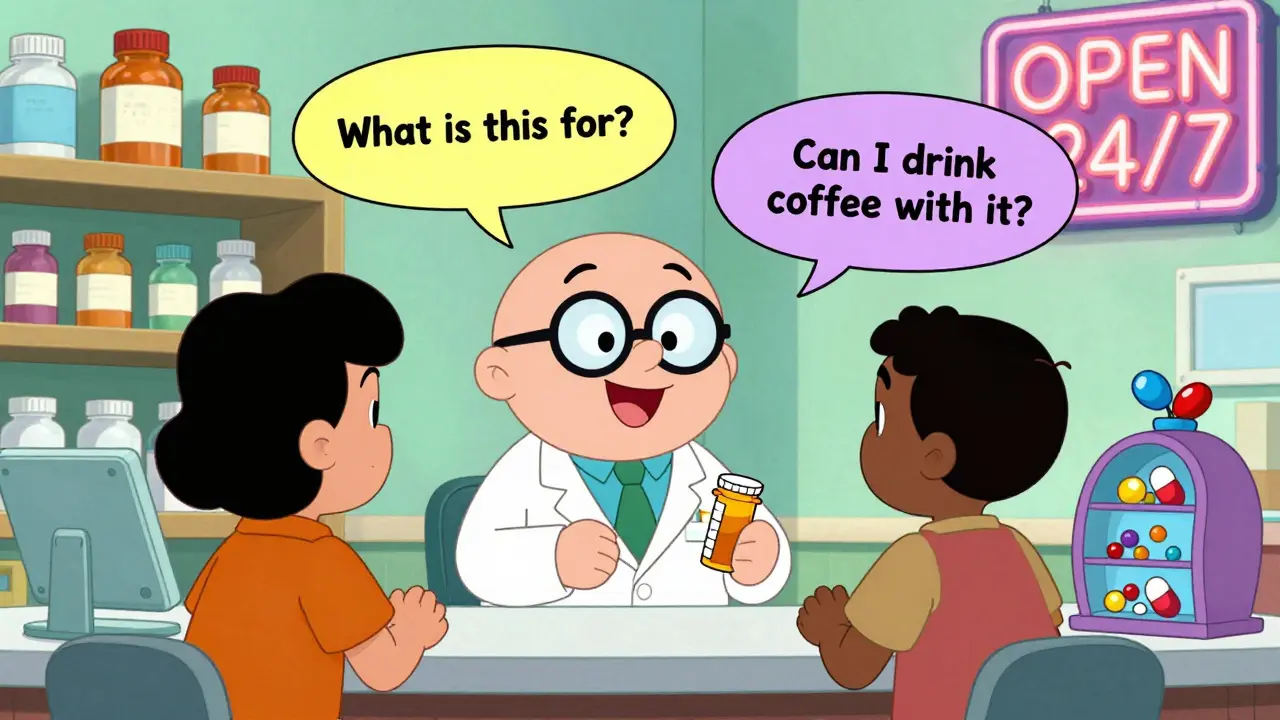
Most people know to ask their doctor about a new prescription. But how many stop to ask the person who actually hands them the bottle - the pharmacist? In the UK, pharmacists are some of the most accessible healthcare professionals. You don’t need an appointment. You don’t need to wait weeks. You walk in, and they’re right there. Yet, too many people leave without asking the most important questions. And that’s where things go wrong.
What is this medicine really for?
- What is this medication for?
- How will I know if it’s working?
- Is this treating the symptom or the cause?
It sounds simple, but 30% of medication errors happen because patients don’t understand why they’re taking a drug. You might get a pill for high blood pressure, but if you think it’s just for headaches, you’ll stop taking it when your head stops hurting. That’s dangerous. Your pharmacist can explain what the medicine actually does in your body - whether it lowers cholesterol, blocks pain signals, or stops bacteria from multiplying. They can also tell you how long it usually takes to see results. Some meds work in hours. Others take weeks. Knowing this stops you from thinking it’s not working when it’s just too early.
How and when should you take it?
- Should I take this with food or on an empty stomach?
- What time of day is best?
- Can I drink alcohol or drive while taking this?
One in two people mess up their dosing schedule. Some pills need to be taken with food so they don’t upset your stomach. Others need to be taken on an empty stomach or they won’t absorb properly. Taking a blood pressure pill at night instead of morning can cause dizziness when you wake up. Some antibiotics must be spaced evenly - every 8 hours, not just three times a day. And don’t assume it’s safe to drink. Many common meds - including painkillers, antidepressants, and antibiotics - react badly with alcohol. Your pharmacist will tell you what to avoid, including activities like driving if the drug causes drowsiness or blurred vision.
What side effects should you watch for?
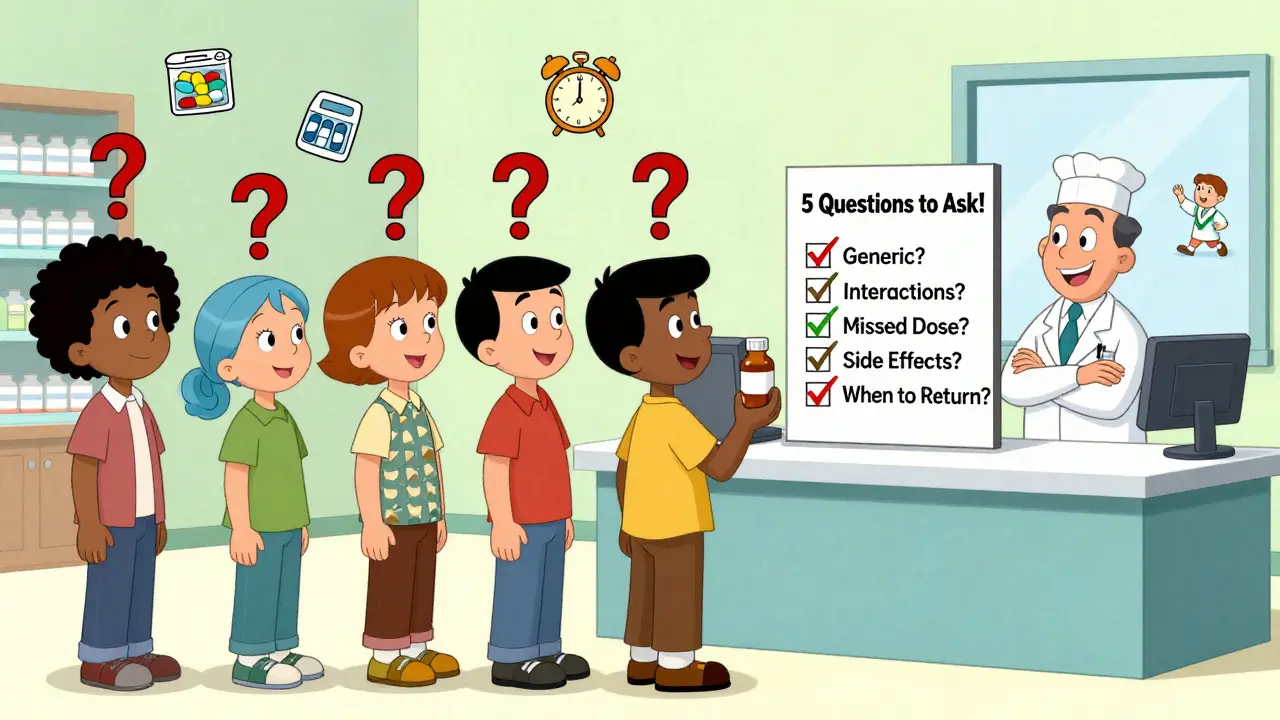
- What are the most common side effects?
- Which ones mean I need to call a doctor right away?
- How can I manage the mild ones?
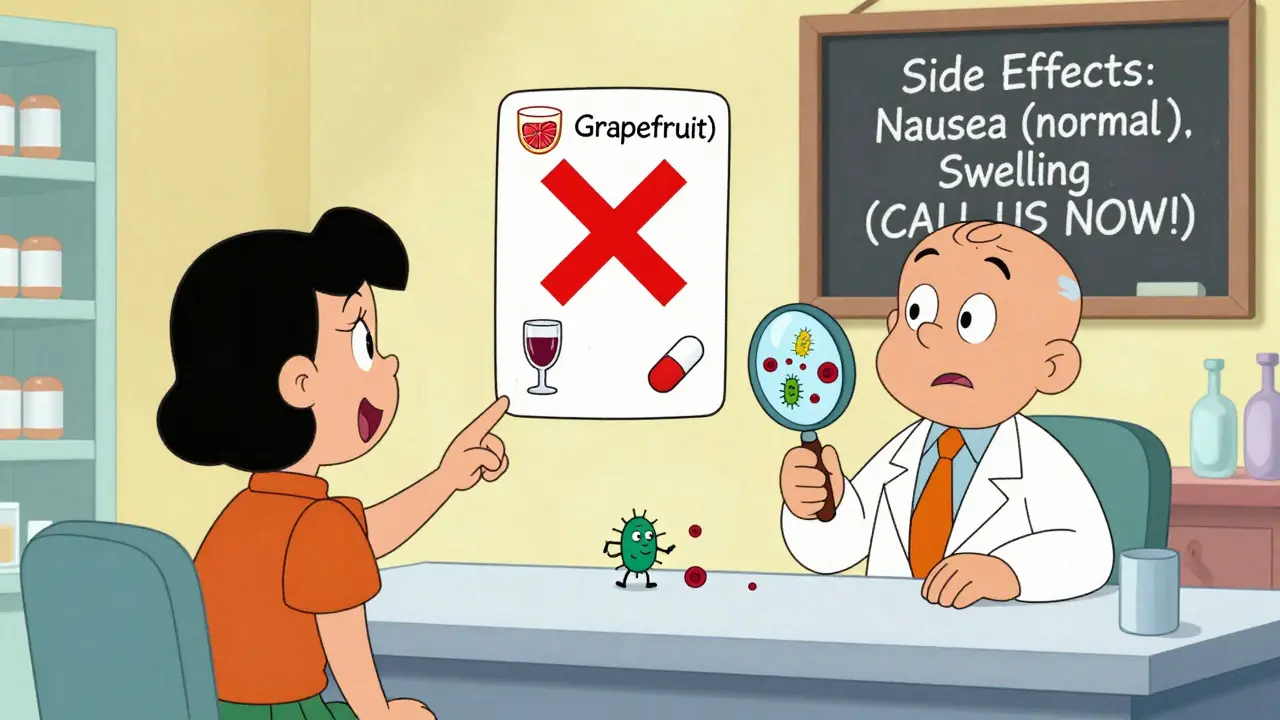
Side effects scare people. But not all side effects are dangerous. Nausea, dry mouth, or mild dizziness are common and often fade after a few days. But some signs - like swelling of the face, trouble breathing, chest pain, or sudden mood changes - mean you need help immediately. Your pharmacist knows the red flags. They’ve seen what happens when people ignore early warning signs. For example, if you’re on a statin for cholesterol and start having unexplained muscle pain, that could be a sign of a rare but serious condition. Your pharmacist can tell you whether to keep taking it or get checked out. They’ll also suggest practical fixes: taking the pill with a snack to reduce nausea, using a humidifier for dry mouth, or switching to a different brand if the side effects are too rough.
Could this interact with something else I’m taking?
- Does this interact with my other prescriptions?
- What about supplements, vitamins, or herbal remedies?
- Are there foods I should avoid?
This is where things get risky. The FDA says 15% of hospital admissions are caused by bad drug interactions - and most of them could’ve been avoided. People take St. John’s Wort for mood, turmeric for inflammation, or magnesium for sleep - but they never tell their doctor or pharmacist. And that’s a problem. St. John’s Wort can make birth control fail. Turmeric can thin your blood dangerously if you’re also on warfarin. Grapefruit juice can turn a simple blood pressure pill into a toxic dose. Your pharmacist checks all of this. Bring your full list - every pill, every capsule, every tea bag. They’ll scan it against their database and flag anything dangerous. Don’t assume your doctor knows what you’re taking. They might not. But your pharmacist will.
What if I miss a dose?
- What should I do if I forget to take it?
- Can I double up next time?
- Is there a better way to remember?
Missed doses are one of the biggest reasons treatments fail. For chronic conditions like diabetes, high blood pressure, or depression, skipping even one dose can undo weeks of progress. But doubling up? That’s just as bad. Some drugs build up in your system - take too much and you risk poisoning. Your pharmacist will tell you exactly what to do: skip the missed dose and go back to your schedule, or take it as soon as you remember if it’s still within a few hours. They can also suggest tools: pill organizers, phone alarms, or apps that send reminders. Some pharmacies even offer blister packs with days of the week printed on them. Ask for it. It’s free.
Are there cheaper or simpler options?
- Is there a generic version?
- Can I get a larger supply to save money?
- Are there non-drug alternatives?
Brand-name drugs cost up to 85% more than generics - and they do exactly the same thing. The law says generics must match the brand in strength, safety, and effect. But most people don’t know that. Your pharmacist can switch you to a generic without asking your doctor - if it’s allowed. They can also check if you qualify for discount programs or patient assistance plans. Some pharmacies offer £4 prescriptions for common meds. And if you’re on a long-term drug, ask about a 90-day supply. It often costs less per pill. And if you’re taking multiple pills for the same issue - like two different acid reducers - they might spot a duplicate and suggest cutting one. That saves money and reduces side effects.
How will we know if this is working?
- Will I need blood tests or check-ups?
- When should I come back for a review?
- What signs mean I need to see my doctor again?
Most people take meds until the bottle’s empty - then stop. But many drugs need monitoring. Blood thinners require regular INR tests. Diabetes meds need HbA1c checks. Thyroid medicine needs TSH levels tracked. Your pharmacist knows which ones need follow-up and when. They’ll tell you what numbers to watch for and what to do if your symptoms don’t improve. If you’ve been on a new antidepressant for three weeks and still feel flat, they’ll say: “Give it another week, but if no change by then, talk to your GP.” They’re the ones who notice patterns - like a patient who keeps running out of insulin early because they’re not storing it right. That’s the kind of thing doctors miss. Pharmacists catch it.
Where can you find trustworthy info?
- Can you recommend a reliable website or leaflet?
- Is there a patient guide for this medicine?
- What should I avoid online?
The internet is full of bad advice. One Reddit user shared how they nearly had a seizure after reading a blog that said to stop their epilepsy drug cold turkey. Your pharmacist knows which sources are real. They can point you to NHS Choices, the British National Formulary (BNF), or the manufacturer’s official patient leaflet. They’ll warn you against forums, YouTube videos, or influencers pushing miracle cures. They’ve seen what happens when people trust random blogs over science.
How to make the most of your visit
Pharmacists are busy. On average, they have just 5-7 minutes to help you when you pick up a prescription. So come prepared.
- Bring a list of everything you take: prescriptions, OTC meds, vitamins, herbs, even cough syrup.
- Write down your questions ahead of time. Don’t rely on memory.
- Ask them to explain instructions in their own words - then repeat it back to them. This ‘teach-back’ method cuts errors by 40%.
- If you’re on multiple meds, ask for a medication review. Many pharmacies offer this for free.
- Don’t be shy. If you don’t understand, say so. There’s no such thing as a dumb question.
One study found that patients who asked just three specific questions had 65% fewer medication-related problems. That’s not magic. That’s knowledge.
Final thought: You’re not just a customer
You’re a patient. And your pharmacist is part of your care team. They’re not just filling orders. They’re preventing hospital visits, saving lives, and helping you live better. But they can’t do that if you don’t talk to them. Next time you pick up a prescription, pause. Ask one question. Then ask another. You might just save yourself from a mistake you didn’t even know you were about to make.
Can I ask my pharmacist about side effects even if I’ve been taking the medicine for months?
Yes, absolutely. Side effects can appear anytime, even after months of use. Your pharmacist can help you determine if a new symptom - like muscle pain, dizziness, or mood changes - is linked to your medication. They can also advise whether you need to see your doctor or if it’s something manageable on your own.
Do pharmacists know about all my other prescriptions?
Most community pharmacies in the UK keep digital records of all prescriptions filled there. But they won’t know about meds you get from other pharmacies or from your GP unless you tell them. Always bring a full list - including over-the-counter drugs and supplements - to every visit. This is the only way to catch dangerous interactions.
Is it okay to take my medication with tea or coffee?
It depends. Some antibiotics, like tetracycline, won’t work if taken with dairy or calcium-rich drinks. Others, like thyroid meds, need to be taken on an empty stomach with water only. Caffeine can interfere with certain antidepressants and stimulants. Always ask your pharmacist - don’t assume it’s safe. Water is always the safest choice unless they say otherwise.
Can pharmacists change my prescription if it’s too expensive?
They can’t change your prescription, but they can suggest alternatives. If a brand-name drug is too costly, they can ask your GP if a generic version is acceptable. They can also check for discount programs, patient assistance schemes, or switch you to a different formulation (like a tablet instead of a liquid) that costs less. Some pharmacies offer £4 prescriptions for common meds.
What if I don’t understand the instructions on the label?
Don’t guess. Go back to the pharmacy and ask them to explain it again. Labels use medical terms like “qid” or “prn” - which mean “four times a day” and “as needed.” Pharmacists are trained to translate this into plain language. If you’re still unsure, ask them to write it down for you. This is their job - and they want you to get it right.