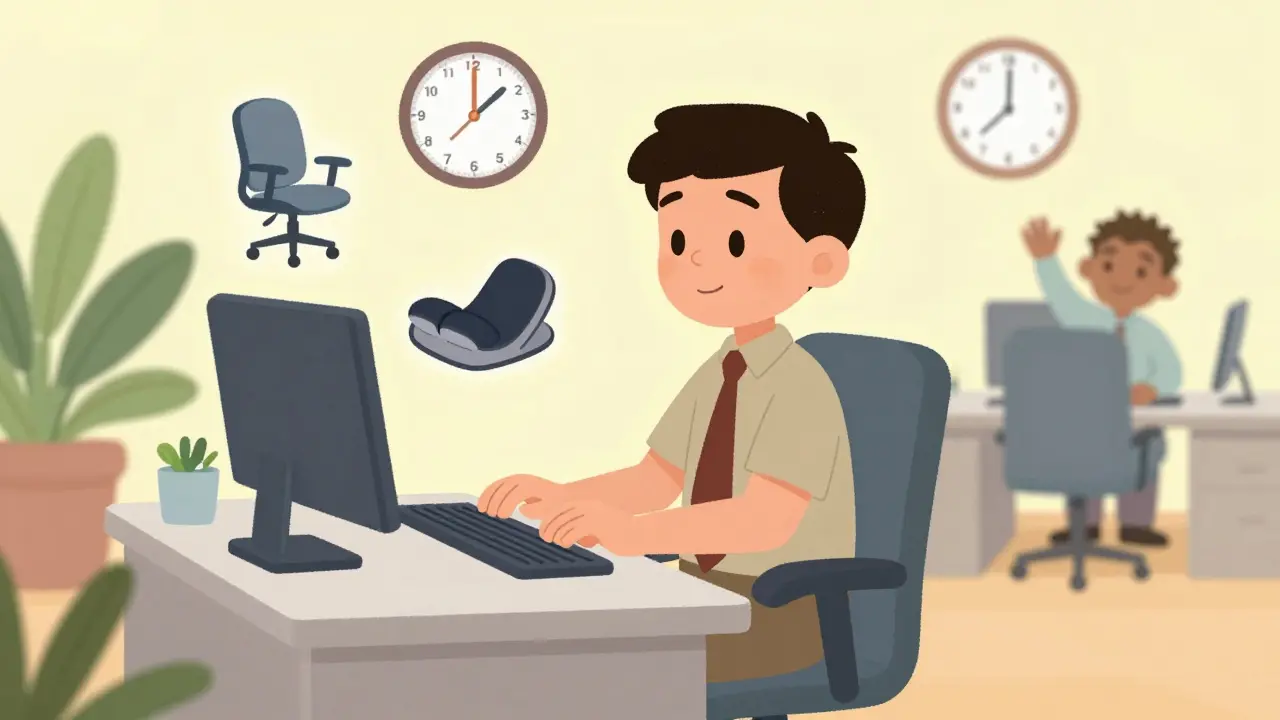
Going back to work after living with chronic pain isn’t just about showing up-it’s about staying. For millions of people, pain that lasts longer than three months isn’t something you can just push through. It affects how you sit, stand, walk, type, and even focus. The good news? You don’t have to choose between your health and your job. The law protects you. And with the right plan, most people can return to work successfully-without sacrificing their well-being.
What Counts as a Disability Under the Law?
Chronic pain isn’t just a symptom-it’s a recognized disability under the Americans with Disabilities Act (ADA) when it limits major life activities like sitting, lifting, walking, or concentrating. The Equal Employment Opportunity Commission (EEOC) confirms this in its 2021 guidance. That means if your pain makes it hard to do core parts of your job, your employer is legally required to make reasonable changes to help you work. This isn’t a favor. It’s the law.
But here’s the catch: the ADA only applies to employers with 15 or more workers. If you’re at a smaller company, check your state rules. California, for example, protects employees at companies with just five or more workers. Federal employees have even stronger protections under the Rehabilitation Act of 1973, with clearer processes and higher approval rates-87% of requests were approved in 2022, according to the Office of Personnel Management.
What Kind of Accommodations Actually Work?
Accommodations aren’t one-size-fits-all. What helps one person might do nothing for another. The most effective ones are tied directly to how your pain affects your daily tasks. Here’s what’s working right now:
- Ergonomic workstations: Adjustable standing desks (cost: $300-$1,200), ergonomic chairs ($200-$1,000), and specialized keyboards or mice ($50-$300) reduce strain on joints and muscles. One study found that ergonomic adjustments cut work-related pain by 37% when guided by an occupational therapist.
- Flexible scheduling: Starting later to avoid morning stiffness, taking 5-15 minute breaks every 1-2 hours, or working from home part-time can make a huge difference. People with conditions like fibromyalgia or arthritis often need these breaks to manage flare-ups.
- Environmental changes: Moving your desk closer to the bathroom or elevator, lowering your workstation to avoid reaching, or adding a heated cushion for cold-sensitive conditions (like MS) are simple but powerful fixes. Temperature control matters-12-15% of people with chronic pain say heat or cold triggers their symptoms.
- Assistive tech: Voice recognition software ($100-$300), footrests ($25-$150), or cushioned mats for standing jobs can reduce physical stress. One employee with chronic lower back pain reported cutting her pain levels in half after adding a footrest and switching to a sit-stand desk.
- Duty adjustments: If you can’t lift heavy boxes or stand for hours, your employer may reassign non-essential tasks. This isn’t about lowering standards-it’s about keeping you productive without worsening your condition.
Here’s the kicker: 56% of these accommodations cost nothing. Simple things like shifting your schedule or letting you take breaks don’t require a single dollar. The median cost for the rest? Just $300-one-time.
How to Ask for Accommodations (Without Getting Turned Down)
Asking for help is hard. Fear of being seen as weak, or worse-unreliable-keeps 62% of people with chronic pain from speaking up. But the way you ask matters more than you think.
Don’t say: “I’m in pain. Can you help?”
Do say: “I have chronic lower back pain diagnosed by my doctor. It makes it hard to sit for more than 45 minutes without increased discomfort. I’m requesting a sit-stand desk and 10-minute breaks every 90 minutes to manage this. I’ve attached my doctor’s note explaining the functional limits.”
Specificity wins. Vague requests lead to 55% higher denial rates, according to Ut Health Austin. Employers aren’t mind readers. They need clear, documented links between your condition and your work tasks.
Always put your request in writing. Mention the ADA. Attach medical documentation that explains your diagnosis, how it affects your ability to do your job, and what changes would help. Dr. Braverman from Ut Health Austin says this simple step doubles your chances of getting approved.
The Interactive Process: What Happens After You Ask?
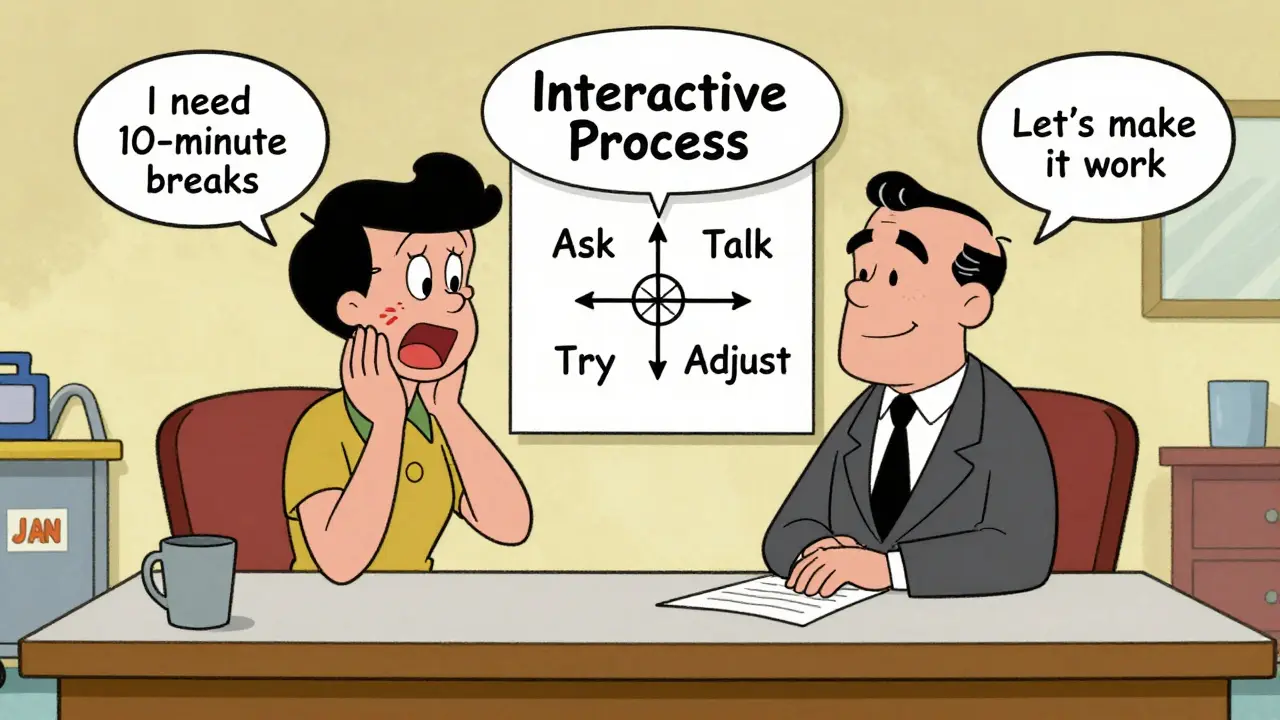
Once you submit your request, your employer must enter the “interactive process.” That means they have to talk to you-actually talk-and try to find a solution. They can’t just say no or offer the first thing they think of. You have the right to suggest options, and they can’t force you to accept one you don’t think will work.
Timeline varies. Federal agencies must respond within 10 business days. Private companies don’t have a legal deadline, but they must act “promptly.” If they ignore you for weeks, that’s a violation. The Job Accommodation Network (JAN) helps resolve 82% of these issues without lawsuits.
One common mistake? Employers think accommodations are only for permanent conditions. But chronic pain flares up. A broken leg gets better. Chronic pain doesn’t. That’s why temporary adjustments-like working remotely during a flare-are just as valid. In fact, 41% of denials happen because employers don’t understand this.
What If They Say No?
Employers can deny an accommodation if it causes “undue hardship”-meaning it’s too expensive or disruptive given the size of the business. But this bar is higher than most think. For a company with 500 employees, a $500 desk isn’t hardship. For a small shop with five workers, maybe it is.
If you’re denied, ask for a written explanation. Then contact JAN for free advice. They’ll help you understand if the denial was legal. If not, you can file a complaint with the EEOC. Between 2021 and 2022, ADA complaints related to chronic pain rose 17%-and many were resolved in the employee’s favor.
Gradual Return: A Better Way Back
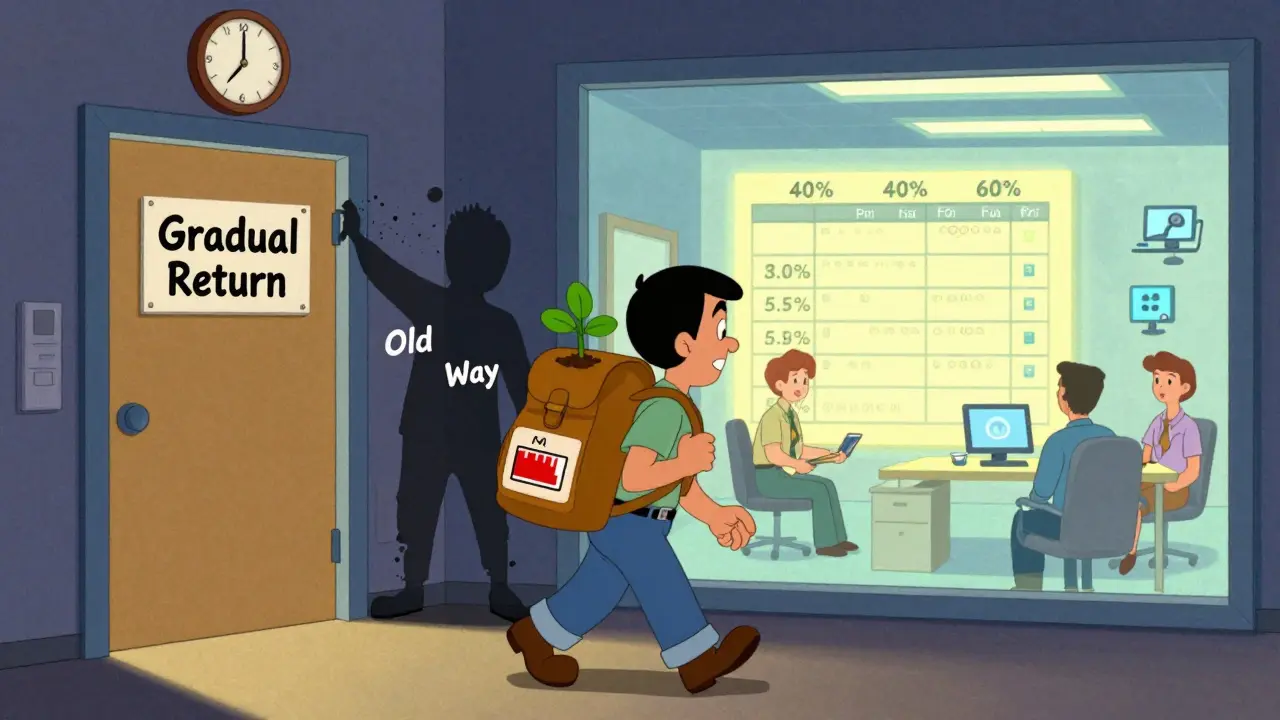
Going from full medical leave to full-time work overnight rarely works. That’s why more employers are using “graduated return-to-work” plans. You start at 20-50% of your normal hours, with accommodations in place. As your body adjusts, you slowly increase your time.
Studies show this approach leads to 63% higher long-term retention than jumping straight back in. It’s not about being lazy-it’s about sustainability. You’re not just returning to a job. You’re returning to a life.
Why Culture Matters More Than You Think
Even the best accommodation fails if your boss is unsupportive or coworkers don’t understand. Research shows employees with strong workplace relationships are 2.3 times more likely to get their needs met.
That’s why education matters. Some managers still think chronic pain is “all in your head.” Training programs that explain invisible disabilities reduce stigma and improve outcomes. In federal agencies, where supervisors get this training, approval rates are 87%. In private companies without it? Closer to 50%.
If your workplace is resistant, bring data. Share the JAN report: 56% of accommodations cost nothing. Share the CDC stats: over 50 million U.S. adults live with chronic pain. You’re not alone. And you’re not asking for special treatment-you’re asking for the right to work.
What’s Changing in 2026?
Long COVID has reshaped the conversation. The EEOC confirmed in 2021 that persistent pain from long COVID qualifies as a disability. That’s opened doors for thousands who were previously dismissed.
The Department of Labor’s Return to Work Initiative, launched in January 2023, is funding states to create standardized RTW protocols. Wearable tech that tracks movement and pain levels is starting to be used in 7% of cases-helping prove functional limits objectively.
Legislation is also moving. Proposals to expand FMLA coverage to smaller employers could give millions more people job protection during medical leave. The future isn’t about working through pain-it’s about working with it.
Final Thought: You Belong at Work
Chronic pain doesn’t make you less capable. It just means your body works differently. The goal isn’t to cure the pain-it’s to build a work life that fits around it. You’ve already survived the hardest part: living with pain every day. Now it’s time to reclaim your place at work. You don’t need to suffer in silence. You don’t need to quit. You just need to speak up-and know your rights.
Can my employer fire me because I have chronic pain?
No. Under the ADA and Rehabilitation Act, firing someone because of a chronic pain condition that qualifies as a disability is illegal. Employers must provide reasonable accommodations unless doing so causes undue hardship. If you’re terminated after requesting an accommodation, you may have grounds for a discrimination claim with the EEOC.
Do I need a doctor’s note to get accommodations?
Yes. Your employer can legally ask for medical documentation that confirms your diagnosis, explains how your condition affects your ability to perform job duties, and suggests possible accommodations. The note doesn’t need to list every detail-just enough to connect your pain to your work limitations.
What if my job requires standing all day?
You can still request accommodations. Options include anti-fatigue mats, scheduled seated breaks, adjustable-height workstations, or rotating tasks with a coworker. The key is showing that your pain makes prolonged standing unsafe or unsustainable. Courts have upheld accommodations for standing jobs in retail, healthcare, and manufacturing roles.
Can I work remotely as an accommodation?
Yes. Remote work is one of the most common and effective accommodations for chronic pain. It eliminates commuting stress, allows for flexible breaks, and lets you control your environment. Employers must consider it unless your job truly requires in-person presence-like surgery or in-person customer service.
How long do accommodations last?
They last as long as they’re needed. Chronic pain isn’t a one-time issue-it can flare or improve. Accommodations can be adjusted over time. If your pain changes, you can request new or modified accommodations. There’s no expiration date as long as the need remains and the accommodation is still reasonable.
Is there financial help to pay for accommodations?
Some states offer tax credits or grants for employers who make workplace modifications. The federal Work Opportunity Tax Credit (WOTC) can apply in certain cases. Additionally, vocational rehab agencies in many states provide funding for assistive devices. Contact your state’s vocational rehabilitation office to explore options.
What if my employer doesn’t know about the ADA?
You’re not expected to be the expert. Provide them with resources from the Job Accommodation Network (JAN), which offers free, authoritative guides for employers. JAN also offers direct consultation to employers-many don’t realize they can call for help. Often, just sharing JAN’s website (askjan.org) is enough to get them on board.