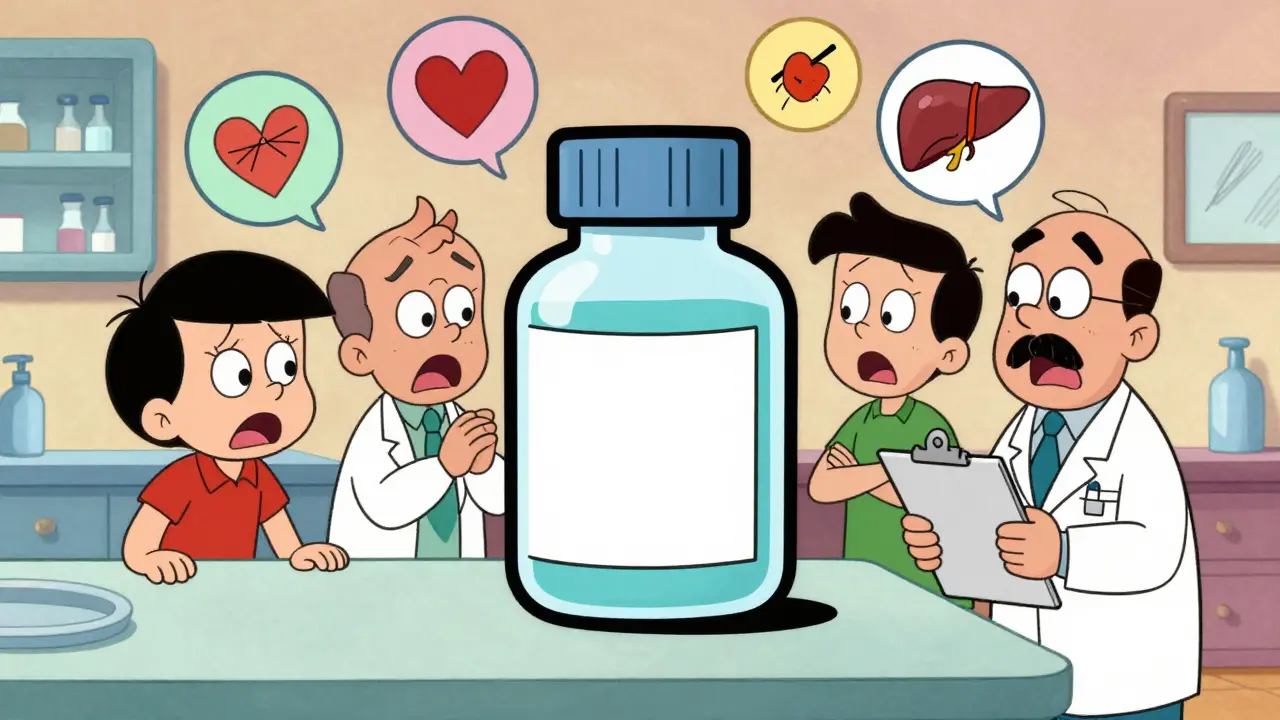
When you pick up a prescription, you might notice a bold, black-bordered box on the medication guide. It’s not a design choice-it’s a red flag. This is a black box warning, the strongest safety alert the U.S. Food and Drug Administration (FDA) can require for a prescription drug. It doesn’t mean the medicine is dangerous for everyone. But it does mean: if you take this drug, something serious could happen-and you need to know what it is.
What Exactly Is a Black Box Warning?
A black box warning, officially called a boxed warning, is a mandatory safety notice printed in a thick black border on the label and prescribing information of certain medications. It’s not a suggestion. It’s a legal requirement. The FDA only adds these warnings after real-world data shows a drug can cause life-threatening or permanently disabling side effects. These aren’t rare side effects you might read about in tiny print. These are events that have actually happened-sometimes multiple times-and were serious enough to demand attention.As of 2022, more than 400 prescription drugs in the U.S. carry this warning. That’s about 15% of all approved medications. You’ll find them on drugs for depression, diabetes, cancer, seizures, and even some painkillers. The warning isn’t added during clinical trials. It’s added after the drug is already on the market and doctors and patients have been using it. That’s why newer drugs often don’t have them yet-there hasn’t been enough time to spot the hidden risks.
Why Do These Warnings Exist?
The FDA doesn’t slap on a black box warning lightly. It happens in four specific cases:- The drug has been linked to serious, sometimes fatal, side effects that outweigh the benefits for some people.
- The side effects can be avoided-if the drug is used correctly, at the right dose, or in the right patient group.
- The drug was only approved for very limited use, like treating a rare condition or only after other treatments failed.
- The drug poses a higher risk to certain groups: children, pregnant women, older adults, or people with specific health conditions.
Take rosiglitazone, a diabetes drug. After studies showed it increased the risk of heart attacks, the FDA added a black box warning in 2007. Usage dropped by 70%. But even then, 3.8 million people were still prescribed it-because for many, the benefits of controlling blood sugar outweighed the risks, especially when monitored closely.
Another example is fluoxetine (Prozac), used for depression and anxiety. It carries a black box warning for increased suicidal thoughts in children and teens during the first few weeks of treatment. That doesn’t mean kids can’t take it. It means doctors must watch closely during early treatment and families need to know what signs to look for.
Who Sees These Warnings-and Do They Understand Them?
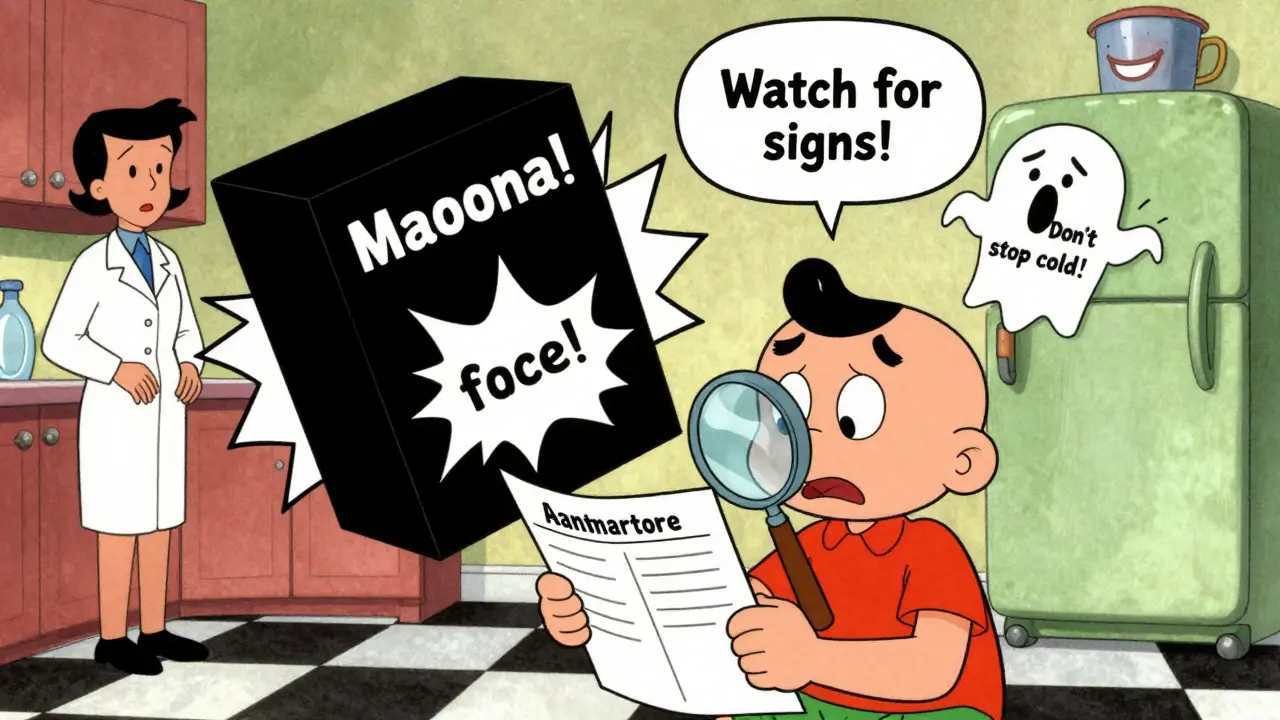
The warning is meant for doctors first. Pharmacists see it. Patients? Sometimes. Studies show that 78% of patients say they want to know about a black box warning before starting a drug. But only 42% remember their doctor ever talking about it. That’s a big gap.Many patients find out about the warning by accident-reading the package insert, searching online, or hearing about it on Reddit or YouTube. One pharmacist in Birmingham told me a patient came in panicked after seeing a black box warning on their antidepressant. They thought they had to stop immediately. But the warning wasn’t saying "don’t take this." It was saying: "Watch for suicidal thoughts in the first month. Call us if you feel worse."
That’s the key. These warnings aren’t stop signs. They’re caution signs. They tell you what to watch for and when to act.
What Should You Do If Your Medicine Has a Black Box Warning?
If you’re prescribed a drug with a black box warning, here’s what to do:- Ask your doctor-not just what the warning says, but why they’re choosing this drug for you. What are the alternatives? What’s the risk for someone with your health history?
- Ask your pharmacist-they’re trained to explain these warnings in plain language. They can tell you what symptoms to watch for and when to call for help.
- Read the medication guide-it’s usually printed inside the pill bottle. Don’t ignore it. Look for the black box section.
- Know the red flags-for example, if you’re on an antidepressant, watch for sudden mood swings, new suicidal thoughts, or extreme agitation. If you’re on a heart medication, watch for chest pain, fainting, or irregular heartbeat. Write these down. Don’t rely on memory.
- Don’t stop abruptly-many drugs with black box warnings can’t be stopped suddenly. Stopping an antiseizure drug or an antidepressant too fast can cause seizures, severe withdrawal, or worsening symptoms. Always talk to your doctor first.
There’s a myth that if a drug has a black box warning, it’s unsafe. That’s not true. Many life-saving drugs have them. Cancer drugs like doxorubicin carry black box warnings for heart damage. But without them, tumors wouldn’t shrink. The goal isn’t to avoid these drugs-it’s to use them wisely.
How Are These Warnings Decided?
The FDA doesn’t guess. They rely on data. Every year, over 1.2 million reports of side effects come into the FDA’s MedWatch system-from doctors, pharmacists, patients, and drug companies. When a pattern emerges-like 50 reports of sudden liver failure linked to a specific drug-the FDA investigates. They look at medical records, hospital data, and scientific studies.If the evidence is strong enough, they contact the drugmaker and ask them to propose warning language. The FDA reviews it, often tightens it, then approves it. The warning then appears on all new bottles and inserts. It’s a slow process, but it’s based on real harm, not theory.
Since 2008, the FDA’s Sentinel Initiative has used electronic health records from millions of patients to spot safety signals faster. In 2022 alone, the agency added or updated 37 black box warnings. Most of them were for cancer and heart drugs-areas where the risks are high but so are the rewards.
Can a Black Box Warning Be Removed?
Yes-but it’s rare. Since 2000, only 12 black box warnings have been fully removed. Why? Because the FDA requires proof that the risk is no longer real. For example, if a drug was warned for liver damage because of a few cases in the 1990s, but newer studies show it’s safe when liver function is monitored, the warning might be changed. But outright removal? That’s almost unheard of.Some warnings are modified instead. For example, a drug once warned for all children might now only warn for those under 12. Or a warning about heart risk might now include a note that it only applies to patients with existing heart disease. The FDA updates labels as science evolves-but the bar for removing a warning is very high.
What’s Changing in 2025?
The FDA is testing new ways to make warnings more useful. One big change coming in 2025 is an AI-powered safety system that scans health records and pharmacy data to spot dangerous patterns faster. Right now, it takes months to spot a risk. With AI, the FDA hopes to cut that time by 40%.They’re also testing "dynamic labeling"-digital labels that update in real time as new data comes in. Imagine your pill bottle’s QR code linking to a webpage that shows the latest safety updates, not just the 2022 version. That could help patients and doctors stay current without waiting for a new printed insert.
But for now, the black box remains the most powerful tool we have. It’s not perfect. It’s not always understood. But when used right, it saves lives.
Final Thoughts: Don’t Panic. Pay Attention.
A black box warning isn’t a reason to refuse treatment. It’s a reason to be informed. Many people live healthy, full lives while taking drugs with these warnings-because they knew the risks, they watched for signs, and they talked to their care team.If you’re on a medication with a black box warning, you’re not alone. You’re also not at risk just because the warning exists. What matters is how you use the drug-and whether you’re being watched closely enough to catch problems early.
Ask questions. Read the guide. Trust your instincts. And if something feels off-call your doctor. That’s the whole point of the box.
Does a black box warning mean I should stop taking my medication?
No. A black box warning means the drug has serious risks, but those risks may still be outweighed by the benefits for your condition. Stopping abruptly can be dangerous-many of these drugs require gradual tapering. Always talk to your doctor before making any changes.
Are black box warnings only in the U.S.?
Yes, the black box format is unique to the U.S. FDA. Other countries, like the UK and Canada, use different systems-such as "contraindications," "precautions," or "serious adverse reactions"-but none use the same bold black border. The level of risk they flag may be similar, but the presentation is different.
Can over-the-counter drugs have black box warnings?
No. Black box warnings only apply to prescription drugs. Even powerful OTC painkillers like high-dose ibuprofen or naproxen carry warnings in their labeling, but they don’t use the black box format. The FDA reserves this level of alert for drugs that require a doctor’s oversight.
Why don’t I hear about black box warnings more often from my doctor?
Doctors often assume patients will read the medication guide or that the warning is obvious. But studies show many patients miss it. Time constraints, language barriers, or fear of causing anxiety can lead to skipped conversations. If you’re unsure, ask directly: "Does this drug have any serious risks I should watch for?"
How long does it take for a black box warning to appear after a drug is approved?
It can take years. Clinical trials involve thousands of people-but real-world use involves millions. Rare side effects, like liver damage in one in 10,000 patients, often only show up after widespread use. The average time from approval to a black box warning is 3 to 7 years. That’s why newer drugs often don’t have them yet.
Do black box warnings affect drug prices?
Not directly. But they can reduce sales. After a black box warning, prescriptions often drop by 25-30% in the first year. Some patients switch to alternatives. Some doctors avoid prescribing it. But if the drug is the best option for a serious condition, many patients still take it-especially if there are no good alternatives.
Can I report a side effect if I think it’s linked to a black box warning?
Yes. The FDA’s MedWatch program accepts reports from patients and providers. If you experience a serious side effect, even if it’s not listed in the warning, report it. Your report could help others. Visit fda.gov/medwatch or call 1-800-FDA-1088.