When you pick up a generic pill at the pharmacy, you expect it to work just like the brand-name version-same effect, same safety. But since 2018, a hidden threat has been lurking in some of these medications: nitrosamine contamination. These aren’t random impurities. They’re carcinogenic compounds that can form during manufacturing, and even tiny amounts over time may increase cancer risk. The FDA has pulled over 40 drug products from shelves since then, and the fallout is still unfolding.
How Nitrosamines Got Into Generic Drugs
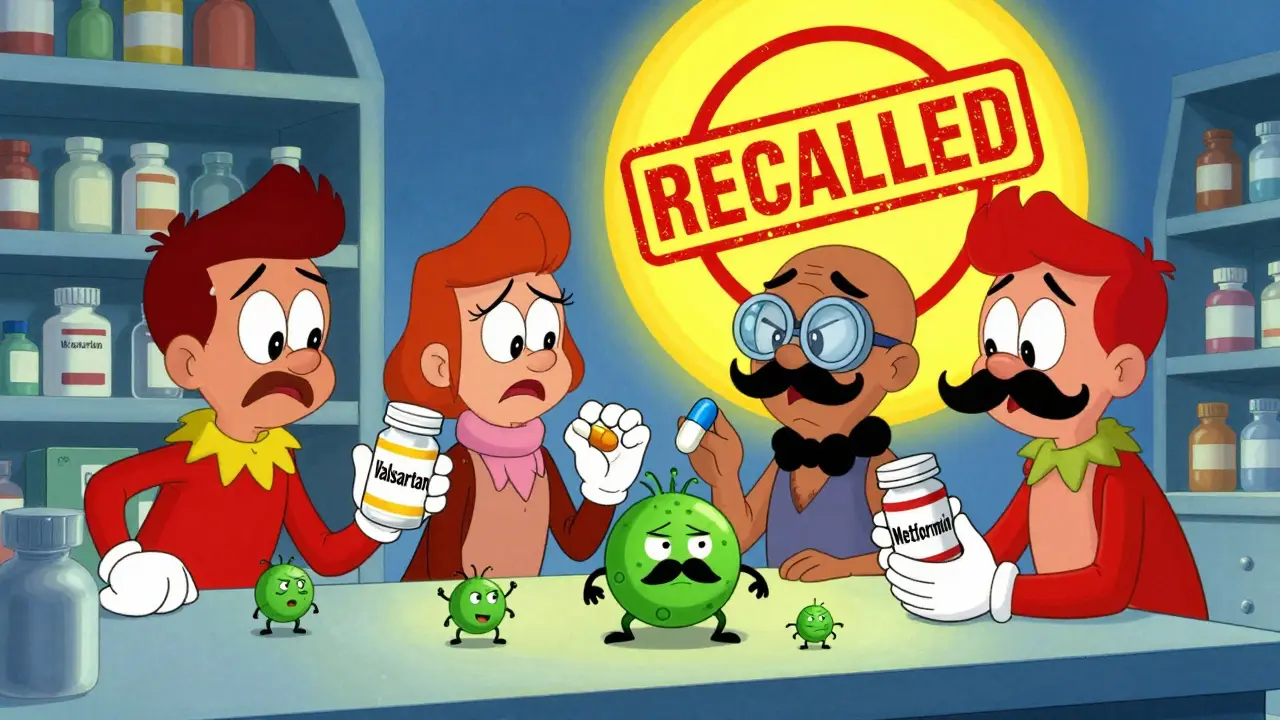
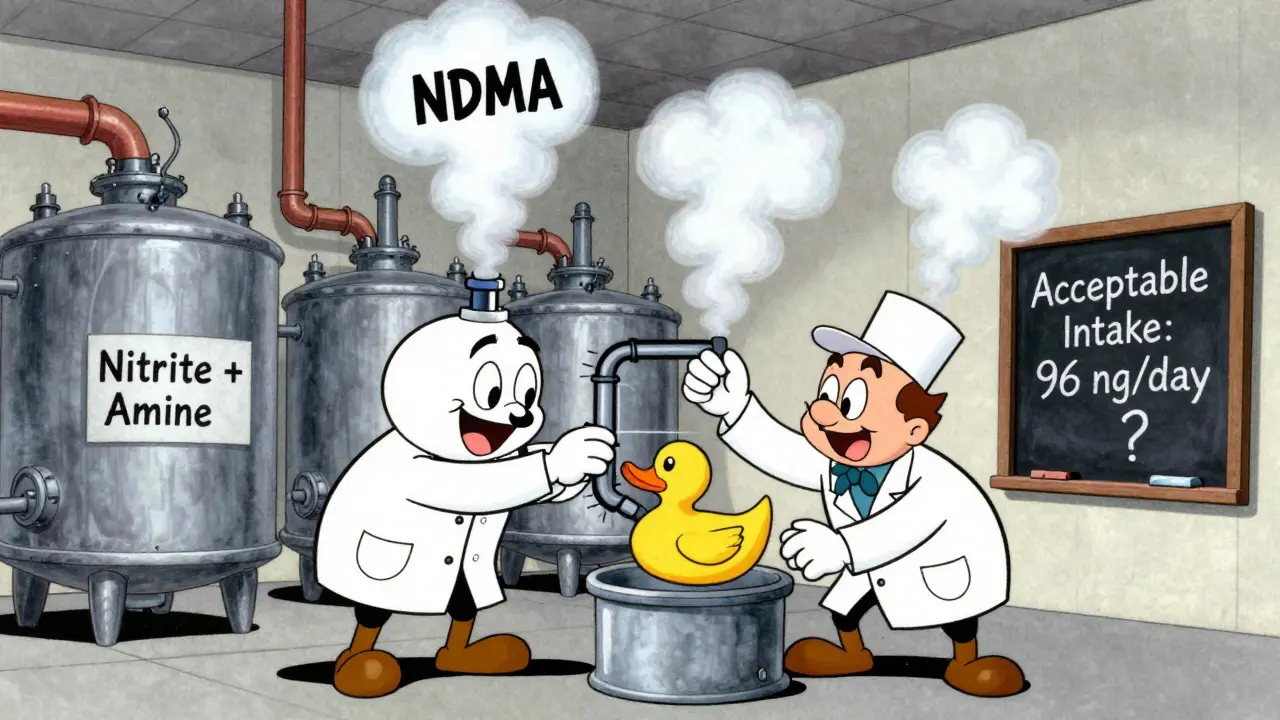
Nitrosamines aren’t added on purpose. They form accidentally when certain chemicals react under specific conditions. Think of it like rust forming on metal-but instead of iron and oxygen, it’s amines (common in drug molecules) and nitrites (found in some excipients or solvents) combining during production or storage. This can happen at multiple points: in the active ingredient, during tablet compression, or even inside the packaging itself. A 2024 FDA case study found that blister packs made with amine-based adhesives were releasing nitrosating agents that contaminated tablets over time. That’s not something most manufacturers were looking for back in 2018.The first major wake-up call came with valsartan, a blood pressure medication. In July 2018, the FDA announced that several batches contained N-nitrosodimethylamine (NDMA), a known animal carcinogen. Within weeks, recalls spread across multiple ARB drugs-valsartan, losartan, irbesartan. Patients suddenly couldn’t get their meds. Pharmacies ran out. And it wasn’t just ARBs. Ranitidine (Zantac), a popular heartburn drug, was pulled entirely in 2020 after NDMA was found even in unopened bottles. Then came metformin, duloxetine, varenicline. Each time, the same pattern: trace levels, but enough to trigger regulatory action.
The FDA’s Evolving Rules
At first, the FDA treated all nitrosamines the same. NDMA and NDEA had clear limits: 96 nanograms and 26.5 nanograms per day, respectively. But as more complex nitrosamine drug substance-related impurities (NDSRIs) popped up-like N-nitroso-varenicline and N-nitroso-duloxetine-the agency had to adapt. In August 2023, it released new guidance requiring compound-specific limits for each NDSRI, even if they appeared in tiny amounts. For example, N-nitroso-duloxetine’s acceptable intake is 96 ng/day, but that’s not because it’s more dangerous-it’s because the toxicology data says so.What made this harder was the math. If a drug contains two different nitrosamines, you can’t just add their limits. The FDA says total exposure must not exceed 100% of acceptable risk. So if one impurity hits 80% of its limit and another hits 80% of its, you’re already over. That forced manufacturers to test every batch for multiple compounds simultaneously. Only advanced LC-MS/MS equipment can detect these at levels below 3 nanograms per milliliter. Many small labs didn’t have the tools-or the budget-to keep up.
Why the Deadline Was Softened
Originally, the FDA set August 1, 2025, as the deadline for full compliance with NDSRI controls. But by early 2025, it became clear: this wasn’t realistic. A process engineer at a mid-sized generic maker in Ohio told a colleague on Reddit that his team spent 18 months and over $2 million just to trace the source of nitrosamines in their metformin line. They had to replace solvents, change drying temperatures, revalidate every batch, and retest stability for 12 months. That’s not a fix-it’s a rebuild.Another company in Germany found that one supplier’s magnesium stearate contained trace nitrites. That single batch contaminant caused NDEA formation in three different ARB products. Fixing it meant switching suppliers, requalifying new materials, and redoing all stability studies. It took 14 months. By then, the FDA had already reviewed hundreds of submissions and realized many manufacturers were stuck in a loop of trial, failure, retry.
On June 23, 2025, the FDA quietly updated its guidance. Instead of demanding full compliance by August 1, it now asks companies to submit progress reports. You don’t have to fix everything by then-you just have to show you’re working on it. The agency admitted: “Mitigation strategies vary widely and can demand extensive time and supply-chain adjustments.” That’s a rare admission from a regulator known for rigid timelines.
Who’s Being Hit the Hardest
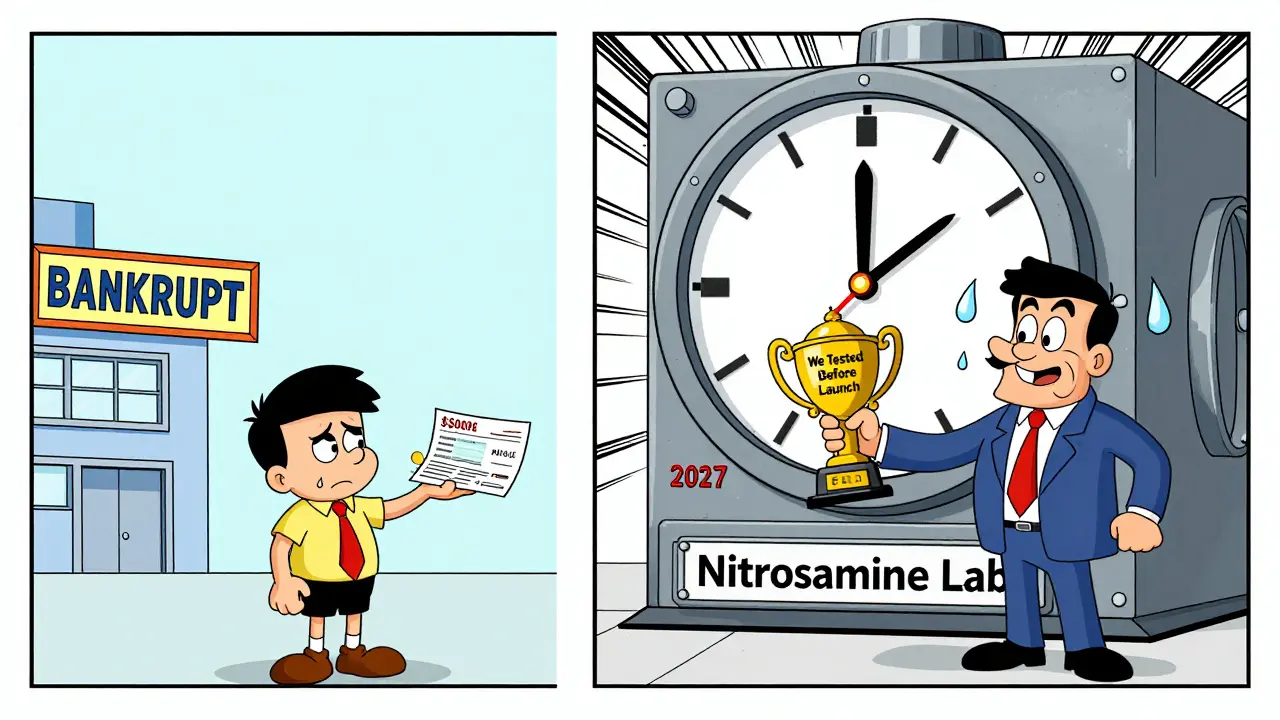
It’s not just the big players. Teva, Fresenius Kabi, and Sun Pharma have teams of chemists and analysts dedicated to nitrosamine control. But smaller manufacturers? They’re caught between a rock and a hard place. A 2025 industry survey by SK Pharmteco found that comprehensive nitrosamine testing programs cost between $500,000 and $2 million per year for mid-sized firms. That’s money most generic makers don’t have. Profit margins on older drugs like metformin or lisinopril are already thin-sometimes under 5%. Add $1 million in compliance costs, and you’re looking at zero or negative margins.The result? Consolidation. The FDA’s own data shows that 15-20% of ARB products had supply shortages between 2018 and 2020 because manufacturers couldn’t reformulate fast enough. Smaller companies either shut down or got bought out. The market now favors those with deep pockets, established quality systems, and global supply chains. If you’re a generic maker without a dedicated analytical lab, you’re at risk of being priced out.
What Patients Should Know
If you’re on a generic blood pressure, diabetes, or antidepressant drug, you might be worried. But here’s the truth: the risk from trace nitrosamines is long-term, not immediate. You won’t get sick tomorrow. But over years of daily exposure, even nanograms can add up. That’s why the FDA doesn’t just look at “is it safe today?”-it asks, “is it safe over 20 years?”Don’t stop taking your medicine. If your drug was recalled, your pharmacy should have switched you to a safe version. If you haven’t heard anything, check the FDA’s recall database. You can search by drug name and lot number. If your prescription hasn’t changed since 2022, it’s likely been reformulated and tested. The FDA now requires all new generic approvals to include nitrosamine risk assessments. Older drugs? They’re being reviewed one by one.
What’s Next
The nitrosamine crisis isn’t over. The FDA is now looking at other drug classes-antibiotics, antivirals, even some over-the-counter supplements. Packaging materials are under increased scrutiny. Blister films, bottle liners, and even ink used on tablets are being tested for amine content. One manufacturer found that a red dye used in a generic pill was reacting with a solvent to form a new nitrosamine no one had seen before.Manufacturers are now building controls into new drug development-not just as an afterthought. Companies that caught the issue early are already ahead. One firm reformulated an antidepressant during its original approval process, avoiding a recall entirely. That’s now their selling point: “We tested before launch.”
Regulators aren’t slowing down. The FDA’s Office of Generic Drugs has made nitrosamine control a top priority through at least 2027. Expect more guidance, more testing requirements, and more pressure on manufacturers. The goal isn’t perfection-it’s prevention. Because once a drug is out there, and people are taking it daily, the cost of waiting is measured in lives.
What are nitrosamines, and why are they dangerous?
Nitrosamines are chemical compounds that can form when amines react with nitrites under certain conditions. They are classified as probable or possible human carcinogens by the International Agency for Research on Cancer (IARC). Even tiny amounts-measured in nanograms per day-can increase cancer risk over long-term exposure. Common types found in drugs include NDMA, NDEA, and NDSRIs like N-nitroso-varenicline.
Which generic drugs have been recalled due to nitrosamines?
The FDA has recalled over 40 drug products since 2018. Major examples include ARBs like valsartan, losartan, and irbesartan; ranitidine (Zantac); metformin (for diabetes); duloxetine (Cymbalta); varenicline (Chantix); and some antibiotics and antidepressants. Recalls continue as new nitrosamine impurities are discovered in older medications.
How does the FDA determine safe levels of nitrosamines?
The FDA sets Acceptable Intake (AI) limits based on lifetime cancer risk. For NDMA, it’s 96 nanograms per day. For NDEA, it’s 26.5 ng/day. For newer impurities like N-nitroso-duloxetine, limits are compound-specific and based on toxicology studies. If multiple nitrosamines are present, the total exposure must not exceed 100% of acceptable risk, meaning even low levels of several impurities can trigger a recall.
Why did the FDA delay the August 2025 compliance deadline?
The FDA realized many manufacturers couldn’t complete full reformulation and testing within the original timeline. Fixing nitrosamine contamination often requires changing raw materials, redesigning processes, and gathering 12+ months of stability data. In June 2025, the agency shifted from requiring full compliance to asking for progress reports. This gives companies more time while still holding them accountable.
Are all generic drugs at risk?
No. Most generic drugs are safe. The FDA has reviewed thousands of products, and only those with specific chemical structures or manufacturing processes are at risk. Drugs containing secondary or tertiary amines-especially those made with certain solvents, excipients, or packaging materials-are more likely to form nitrosamines. If your drug hasn’t been recalled and you haven’t been notified of a change, it’s likely been cleared.
How can I check if my medication has been recalled?
Visit the FDA’s Drug Recalls page and search by drug name or lot number. You can also ask your pharmacist to check the lot on your prescription bottle. If your drug was affected, your pharmacy should have provided a replacement. Never stop taking your medication without talking to your doctor.