Off-Label Insurance Coverage Estimator
Insurance Coverage Calculator
Estimate your likelihood of insurance coverage for off-label prescriptions
Coverage Estimate
Your estimated insurance coverage likelihood
Insurance companies often require off-label prescriptions to be supported by recognized medical guidelines like the NCCN Compendium or published peer-reviewed studies to cover them. This tool provides a general estimate based on the information provided.
Every year, millions of Americans take medications that weren’t originally approved by the FDA for their specific condition. A child with autism might be given an antipsychotic meant for schizophrenia. A cancer patient could get a drug approved for lung cancer to treat a rare sarcoma. Someone struggling with obesity might be prescribed a diabetes pill that’s not yet labeled for weight loss. This isn’t an error. It’s off-label drug use-and it’s more common than most people realize.
What Exactly Is Off-Label Drug Use?
Off-label drug use happens when a doctor prescribes a medication for a purpose, dosage, age group, or route of administration that hasn’t been officially approved by the FDA. The drug itself is approved-just not for that specific use. For example, the antidepressant amitriptyline is FDA-approved for depression, but doctors often prescribe it off-label for chronic nerve pain. Methotrexate, originally approved for cancer and psoriasis, is now routinely used off-label for rheumatoid arthritis and other autoimmune diseases. The FDA approves drugs based on clinical trial data submitted by manufacturers. These trials focus on specific conditions, doses, and patient groups. But once a drug is on the market, the FDA doesn’t control how doctors use it. That’s because the agency regulates drugs, not the practice of medicine. A 1996 court case in Ohio made this clear: prescribing decisions are a matter of medical judgment.How Common Is Off-Label Prescribing?
About 20% of all prescriptions in the U.S. are written for off-label uses. But that number hides big differences between specialties. In pediatrics, up to 62% of prescriptions are off-label because most drugs have never been tested in children. In psychiatry, about 31% of prescriptions fall outside approved labels. In oncology, the number jumps to 85%-nearly all cancer drugs are used off-label at some point. Why so high in cancer care? Because tumors don’t care about FDA labels. A drug that targets a specific gene mutation might work in breast cancer, lung cancer, or even rare tumors. If the science supports it, doctors use it-even if the label says otherwise. The same goes for rare diseases. There are over 7,000 rare conditions, but fewer than 600 FDA-approved treatments. Off-label use fills the gap.Why Do Doctors Do It?
Doctors turn to off-label prescribing for three main reasons: lack of alternatives, strong evidence, and patient need. First, many conditions simply don’t have approved treatments. For example, there are no FDA-approved drugs for certain childhood epilepsy syndromes. Doctors rely on older antiseizure medications that were never tested in kids but have decades of clinical use. Second, strong evidence often exists long before formal approval. A drug might be used off-label for years based on case reports, small studies, or expert consensus. Only after enough data accumulates does a manufacturer invest $50-100 million and five to seven years to get formal approval. Until then, doctors use what works. Third, patients need options. A 2021 case in the New England Journal of Medicine described a woman with a rare autoimmune disorder. All approved treatments failed. She was given intravenous immunoglobulin-off-label-and recovered. It took three months of insurance appeals to get coverage, but it saved her life.The Risks: When Off-Label Use Goes Wrong
Off-label use isn’t risk-free. Without formal trials, long-term side effects, drug interactions, or safety in specific populations may be unknown. The most infamous example is Fen-Phen. Fenfluramine and phentermine were approved separately for weight loss. When used together off-label, they caused severe heart valve damage. The combination was pulled from the market in 1997 after thousands of patients were injured. Another concern is pediatric use. In 2004, a study found that 62% of psychiatric prescriptions for children were off-label. Many of these drugs had never been tested in kids. Some led to increased suicidal thoughts, weight gain, or metabolic issues. Parents often aren’t warned that the use is off-label-and insurance may not cover it. Even when the science is solid, patients can be caught off guard. One patient on a health forum reported being prescribed quetiapine (an antipsychotic) for insomnia. She gained 40 pounds and developed prediabetes. Her doctor didn’t mention the off-label nature or the metabolic risks. She didn’t know to ask.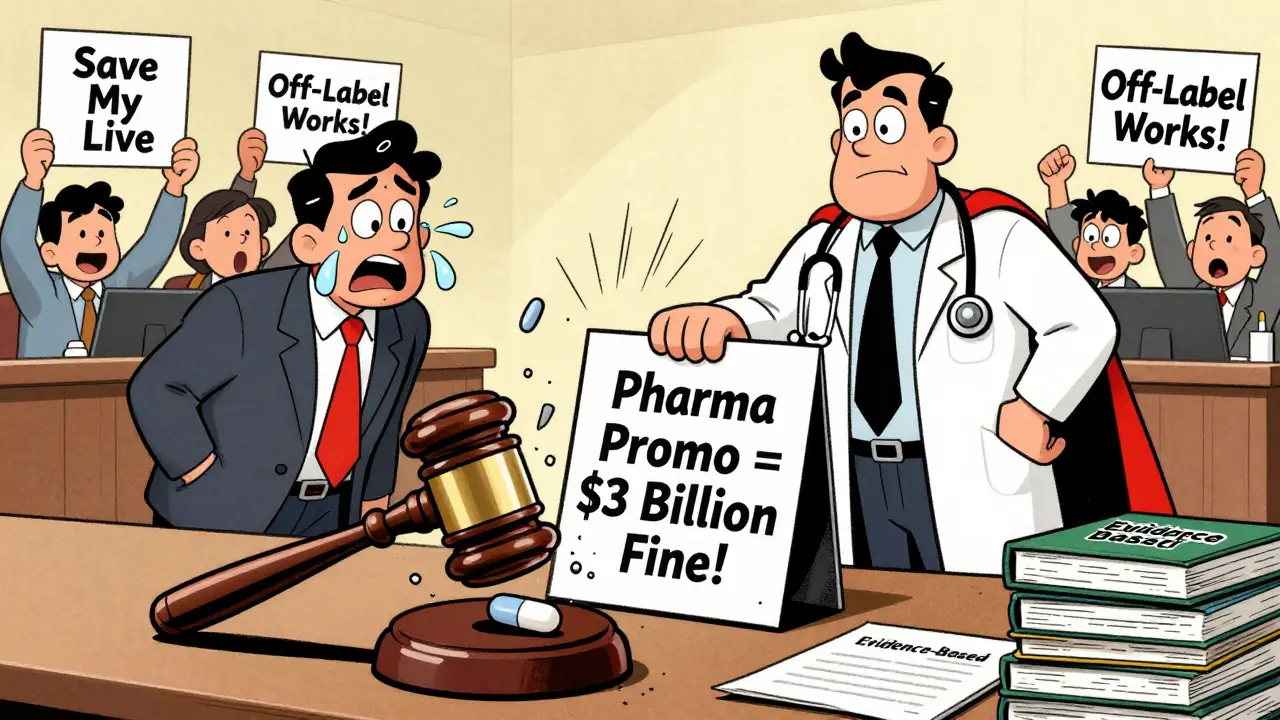
What About Insurance and Cost?
Insurance companies are not required to cover off-label uses. Many have strict rules. UnitedHealthcare, for example, only pays if the use is listed in recognized compendia like the National Comprehensive Cancer Network (NCCN) guidelines or published in peer-reviewed journals. For patients, this means delays-or denial. One oncologist on Reddit shared that she prescribes vincristine weekly for a rare sarcoma instead of the standard biweekly schedule because it works better. But every time, she has to fight for prior authorization. It takes days. The patient’s treatment is delayed. Some drugs are cheaper off-label. For example, generic metformin (a diabetes drug) is now widely used off-label for weight loss. It costs $10 a month. The brand-name version, Ozempic, costs over $1,000. But insurance won’t cover Ozempic for weight loss unless the patient has diabetes.How Do Doctors Decide What’s Safe?
Good doctors don’t guess. They rely on evidence. The hierarchy matters: systematic reviews and randomized trials are best. Case reports and expert opinion are weaker. Resources like the Off-Patent Drugs Database (from the NHS) and the NCCN Compendium rate off-label uses by strength of evidence. Oncologists use NCCN guidelines to justify prescriptions to insurers and hospitals. In fact, Medicare uses these same guidelines to determine coverage. A 2023 study found that physicians spend an average of 27 minutes per patient researching off-label uses. That’s time they could spend with the patient. Many say the real burden isn’t the prescribing-it’s the paperwork, appeals, and explaining why.What’s the Role of Pharmaceutical Companies?
Pharmaceutical companies are forbidden from promoting off-label uses. Doing so can lead to massive fines. In 2012, GlaxoSmithKline paid $3 billion to settle charges of illegally marketing Paxil for depression in children and Wellbutrin for weight loss and sexual dysfunction. Pfizer paid $2.3 billion in 2012 for promoting Bextra and Neurontin for unapproved uses. The FDA cracked down hard after these cases. Today, companies can’t even send doctors reprints of studies suggesting off-label uses unless they’re distributed in a neutral, non-promotional way. But here’s the irony: companies know off-label use happens. And they benefit from it. More prescriptions mean more revenue-even if they didn’t legally ask for them.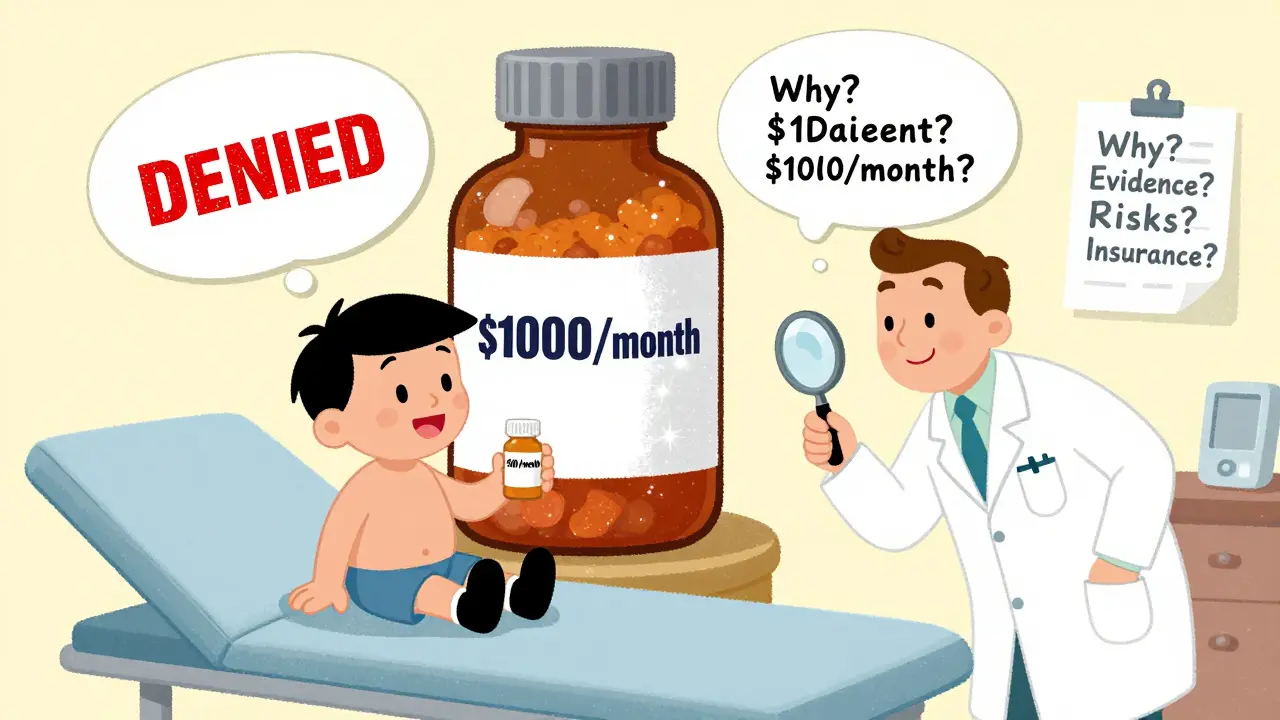
Is Off-Label Use Changing?
Yes. The 21st Century Cures Act of 2016 gave the FDA more flexibility to use real-world data-like electronic health records and patient registries-to approve new uses faster. That means fewer drugs will need to be used off-label in the future. The FDA’s 2023 draft guidance on real-world evidence is a big step. If a drug shows consistent benefit in thousands of real patients, the agency may approve it without waiting for new clinical trials. Still, off-label use isn’t disappearing. In oncology, rare diseases, and pediatrics, the need will always outpace formal approvals. As Dr. Robert Califf, FDA Commissioner, said in 2023: “Off-label use remains a necessary component of medical practice, but we must improve mechanisms for generating evidence to support these uses more efficiently.”What Should Patients Know?
If your doctor prescribes a drug off-label, ask:- Why is this drug being used for my condition?
- Is there strong evidence supporting this use?
- What are the known risks?
- Will my insurance cover it?
- Are there approved alternatives?
Final Thoughts
Off-label prescribing isn’t a loophole. It’s a lifeline. It’s how medicine adapts when science moves faster than bureaucracy. It’s how children with epilepsy get treated. How cancer patients survive when no approved drug works. How people with rare diseases find hope. But it’s not magic. It’s medicine-rooted in evidence, guided by judgment, and sometimes hindered by red tape. The goal isn’t to eliminate off-label use. It’s to make it smarter, safer, and better supported by data.Is off-label drug use legal?
Yes, off-label prescribing is legal in the U.S. The FDA approves drugs for specific uses, but it does not regulate how doctors prescribe them. Once a drug is on the market, physicians can prescribe it for any condition they believe is medically appropriate. However, pharmaceutical companies are strictly prohibited from marketing or promoting drugs for off-label uses.
Why don’t drug companies get off-label uses approved?
Getting a new indication approved by the FDA requires expensive and time-consuming clinical trials-often costing $50 million to $100 million and taking 5-7 years. If a drug is already generic or the market for the new use is small (like a rare disease), companies often don’t see a financial return on that investment. Off-label use lets them profit without the cost of approval.
Is off-label prescribing dangerous?
It can be, if done without evidence. Some off-label uses are well-supported by research and have saved lives. Others lack solid data and carry unknown risks. The danger comes not from off-label use itself, but from using drugs without proper evidence, monitoring, or patient consent. For example, using weight-loss drugs like semaglutide off-label in healthy people without long-term safety data can lead to metabolic complications.
Can insurance deny coverage for off-label drugs?
Yes. Insurance companies often deny coverage for off-label uses unless they’re supported by recognized medical guidelines like the NCCN Compendium, published in peer-reviewed journals, or approved for a similar condition. Patients may need to appeal or pay out-of-pocket. This creates access barriers, especially for expensive cancer drugs.
How can I find out if my prescription is off-label?
Ask your doctor directly. You can also check the FDA’s drug label on the DailyMed website or consult the prescribing information in the drug’s package insert. Look for the “Indications and Usage” section-if your condition isn’t listed there, the use is off-label. Pharmacists can also help clarify.