Palliative Care Symptom Balance Calculator
Adjust for Your Situation
Find the right balance between symptom relief and side effects in palliative care. Based on guidelines from UPenn, NCHPC, and Fraser Health.
Your Personalized Trade-Off
Estimated Relief:
Side Effect Risk:
Key Recommendation:
When someone is living with a serious illness, the goal shifts from curing to comfort. It’s not about fighting the disease anymore - it’s about making every day as peaceful as possible. That’s where palliative and hospice care come in. But here’s the hard truth: the very medications that ease pain, shortness of breath, or nausea can also make someone drowsy, confused, or even more uncomfortable. Finding the right balance isn’t just about giving drugs - it’s about listening, adjusting, and knowing when to stop.
What’s the Difference Between Palliative and Hospice Care?
Palliative care is not just for people who are dying. It’s for anyone with a serious illness - cancer, heart failure, COPD, dementia - and it can start the day someone gets diagnosed. It works alongside treatments like chemotherapy or surgery. The goal? Reduce suffering. That means managing pain, nausea, anxiety, or trouble breathing - not just the physical stuff, but the fear, isolation, and spiritual distress too. Hospice care is a kind of palliative care, but with a specific focus. It’s for people with a life expectancy of six months or less, who’ve decided to stop curative treatments. It’s not about giving up - it’s about choosing quality over quantity. Hospice teams show up in homes, nursing homes, or hospice centers. They don’t just hand out meds; they help families understand what’s coming, how to care for their loved one, and how to say goodbye with dignity.The Core Challenge: Relief vs. Side Effects
Opioids like morphine are the gold standard for pain and breathlessness in advanced illness. But they can cause drowsiness, constipation, or even confusion. A patient might say, “I feel better, but I can’t talk to my granddaughter.” That’s not progress - it’s a trade-off that needs rethinking. Take delirium, for example. One in three patients nearing the end of life experiences it. It looks like agitation, hallucinations, or sudden silence. Doctors often reach for haloperidol - and it works. But if given too long, it can make someone too still, too quiet, too disconnected. The UPenn Comfort Care Guidelines say: “Check the EKG before starting, and stop it once the person is calm.” That’s not just protocol - it’s humanity. Dyspnea - trouble breathing - is another big one. Opiates help. But so does a fan on the face, sitting upright, or a quiet room. The American Academy of Family Physicians gives opiates a “B” rating - meaning solid evidence. But they also say: “Don’t forget the non-drug stuff.” A simple change in position can do more than another milligram of morphine.How Do Clinicians Know What to Do?
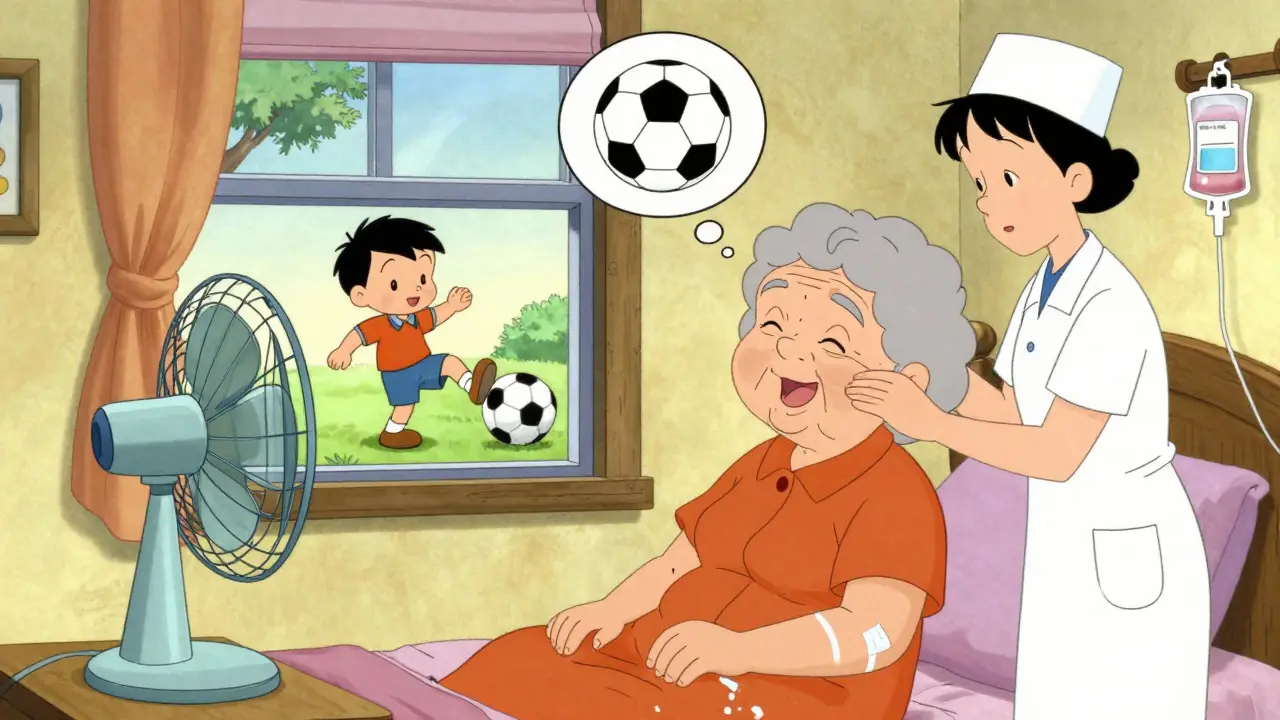
There’s no single rulebook. Different places use different guidelines. The NHS in England demands detailed pain assessments: “Where is it? What does it feel like? On a scale of 0 to 10, how bad is it right now?” They even use body diagrams so patients can point to where it hurts. This cuts medication errors by 22% in some areas. In the U.S., the National Coalition for Hospice and Palliative Care (NCHPC) breaks care into eight domains - physical, psychological, social, spiritual. That’s broad. It means a social worker might help with bills, a chaplain with guilt, and a nurse with a nausea patch - all at the same time. The Fraser Health guidelines in Canada are simpler: symptom by symptom. Need help with bowel obstruction? Corticosteroids have good evidence. Octreotide? Not so much. They’re clear: “Don’t use what doesn’t work.” But here’s the catch: no guideline replaces the person in front of you. A 78-year-old woman with lung cancer might want to stay alert to watch her grandson’s soccer game. A 62-year-old man with advanced ALS might want to sleep through the night. One dose doesn’t fit both.
What Gets Overlooked? The Silent Symptoms
Pain is loud. But what about existential suffering? The fear that you’re a burden? The guilt over not being able to say goodbye properly? Dr. Harvey Chochinov’s research shows this kind of distress makes physical pain feel worse. It’s why talking - really talking - matters more than you think. Family resistance is another hidden hurdle. A daughter might say, “They’re too drowsy - give less morphine.” But if the pain comes back, the patient suffers. The NCHPC guidelines say families need to understand: “The right to live and die free of pain, with dignity.” That’s not just a slogan. It’s a promise. Then there’s documentation. Nurses report spending 43% of their time on paperwork. One nurse in Birmingham told me: “I spent 20 minutes filling out a form while my patient was groaning. I wish I’d spent those minutes holding their hand.”What’s New in 2026?
The field is changing. In 2023, Fraser Health added guidance on cannabinoid therapy. For some patients, cannabis reduced opioid needs by 37%. But 29% got dizzy. It’s not magic - it’s another tool, with its own risks. Digital tools are coming. Pilot programs using apps to track symptoms in real time improved control by 18%. Imagine a patient tapping “pain level 7” on a tablet. The nurse gets an alert. No waiting for the next shift. No guesswork. Tele-palliative care is growing fast. In rural areas, 55% of counties have no palliative specialist. By 2027, telehealth could reach 40% of those patients. A video call with a palliative nurse might mean the difference between a painful night and a quiet one. And research is digging deeper. A 2022 JAMA study found genetic variants that predict how someone responds to opioids. In five years, we might test a patient’s DNA before starting morphine - not to avoid it, but to give the right dose from day one.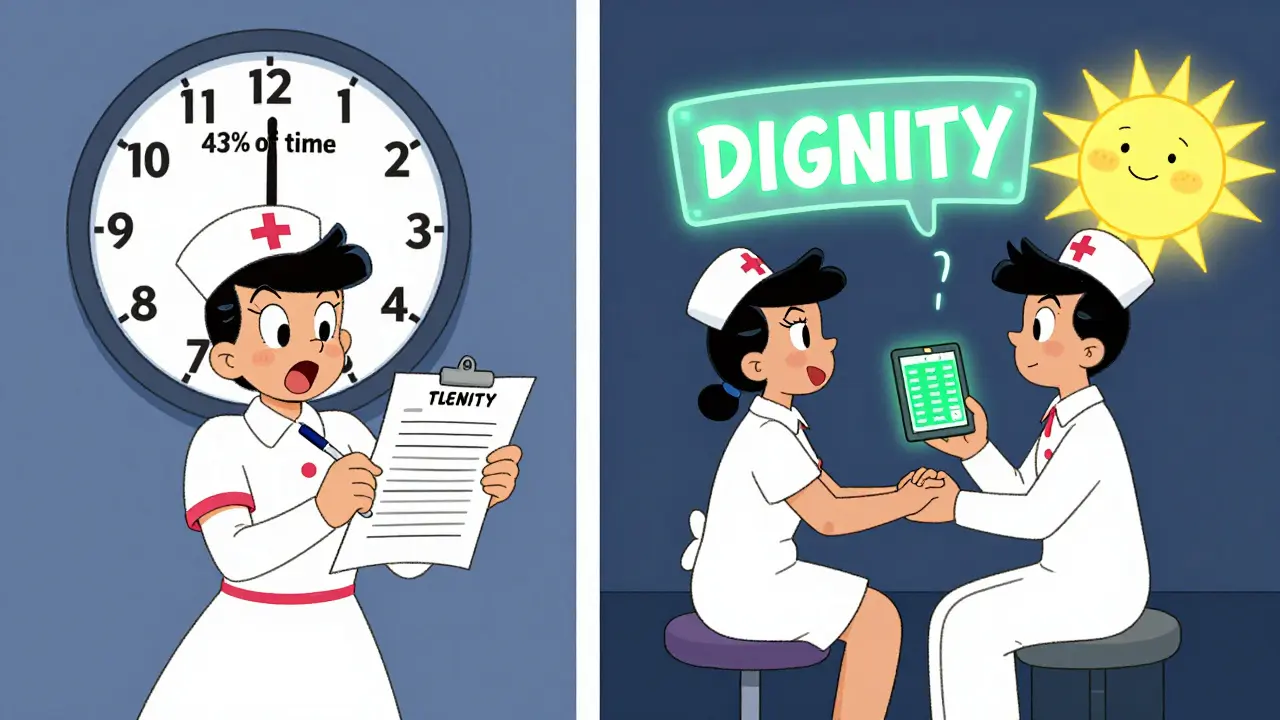
What Should You Do If You’re Facing This?
If you or someone you love is entering palliative or hospice care:- Ask for a full symptom assessment. Don’t just say “I’m in pain.” Describe where, how, when, and what makes it better or worse.
- Speak up about side effects. If you’re too sleepy to talk, say so. If you’re constipated, ask for help. These are treatable - not inevitable.
- Request non-drug options. A cool cloth, soft music, a quiet room, a hand to hold - these aren’t luxuries. They’re part of care.
- Ask who’s on the team. Is there a social worker? A chaplain? A pharmacist? You need more than a doctor.
- Know the goals. Is the goal to stay alert? To sleep? To be free of nausea? Make sure everyone agrees.
Final Thought: It’s Not About Dying - It’s About Living
Palliative and hospice care aren’t about the end. They’re about the moments that matter. The last time you hear someone laugh. The last time you hold their hand. The last time they say your name clearly. The best care doesn’t just stop pain - it protects presence. It doesn’t just numb symptoms - it honors dignity. And it knows that sometimes, the most powerful medicine isn’t a pill - it’s being there.Is hospice care only for people who are dying?
Hospice care is specifically for people with a life expectancy of six months or less who have chosen to stop curative treatments. But palliative care - which includes hospice - can begin at any stage of a serious illness and can be used alongside treatments like chemotherapy or surgery. Many people benefit from palliative care early, even if they’re still fighting the disease.
Do opioids make people too sleepy to talk to loved ones?
Yes, opioids can cause drowsiness, especially at first. But this isn’t inevitable. Dosing is adjusted over time. If someone becomes too sleepy, the team can reduce the dose, switch to a different opioid, or add a stimulant like methylphenidate. The goal is comfort - not unconsciousness. Regular check-ins help find the right balance.
Can non-drug methods really help with symptoms like pain or breathlessness?
Absolutely. A fan blowing gently on the face can ease shortness of breath better than extra oxygen. A warm blanket, soft music, or a quiet room can reduce anxiety. Positioning - sitting upright or leaning forward - helps with breathing. These aren’t alternatives to meds; they’re partners. Many patients say they feel more in control when they can choose these simple comforts.
Why do some families resist giving pain medication?
Often, it’s fear. Families worry that morphine will “kill” their loved one or make them “drugged up.” But pain itself is more dangerous - it raises blood pressure, stresses the heart, and causes sleeplessness. The real risk isn’t the medicine - it’s untreated suffering. Education helps. When families understand that comfort is the goal, not sedation, they often change their minds.
Is palliative care only for cancer patients?
No. While many people associate it with cancer, palliative care helps anyone with serious illness - heart failure, COPD, kidney disease, dementia, ALS, and more. In fact, nearly half of all palliative care patients today have non-cancer diagnoses. The focus is on suffering, not the disease label.
How do I know if my loved one is getting good palliative care?
Ask these questions: Do they assess symptoms regularly? Do they explain treatment choices? Do they involve the patient in decisions? Are non-drug options offered? Is the team available 24/7? Is there a social worker or chaplain? If the answer is yes to most, they’re likely getting quality care. Good palliative care doesn’t just manage symptoms - it restores peace.
For more information, the Center to Advance Palliative Care offers free online training modules used by over 12,000 clinicians annually. Their resources help families and providers alike navigate these difficult decisions with clarity and compassion.