Drug Safety Data Source Selector
Select parameters to see which data source is most appropriate for your scenario.
Real-world evidence is critical for monitoring drug safety after approval. Clinical trials only test drugs on thousands of patients for a few years. But once millions of people use a drug daily, rare side effects or long-term risks might appear. That's where registries and claims data come in. These real-world sources track how drugs perform outside controlled studies, helping regulators and doctors spot problems faster. Let's break down exactly how these systems work and why they matter.
What Are Registries for Drug Safety?
Disease registries are structured systems that collect detailed health information about patients with specific conditions. For example, the SEER cancer registry tracks over 20 million cancer patients across the U.S. These registries gather data like lab results, imaging scans, treatment details, and even patient-reported symptoms. Unlike clinical trials, they follow patients for decades, showing how drugs affect people in everyday life.
Product registries focus on patients using specific medications. The Scientific Registry of Transplant Patients (SRTR) monitors organ transplant recipients. In 2021, SRTR data helped the European Medicines Agency approve a new dose of tacrolimus, an immunosuppressant drug. Registries provide 37.2% more detail on long-term outcomes than claims data alone, according to a 2021 study. But they’re expensive to run-small registries cost $1.2 million upfront and need $300,000 yearly to maintain.
How Claims Data Tracks Drug Safety
Claims data comes from billing records hospitals and doctors send to insurance companies. It includes ICD-10 diagnosis codes, CPT procedure codes, and NDC medication codes. This data shows what treatments patients received and when. For example, Medicare claims data covers 65+ million Americans, with 15+ years of continuous records per patient.
The FDA uses claims data for large-scale safety checks. In 2015, they analyzed 1.2 million Medicare beneficiaries to study entacapone (a Parkinson’s drug) and found no heart risks. Commercial databases like IBM MarketScan (200 million lives) and Optum Clinformatics (100 million lives) help pharmaceutical companies monitor drug safety globally. Claims data catches 95-98% of hospital visits but only 45-60% of lab results. It’s perfect for spotting rare side effects in huge populations, like a 1-in-10,000 reaction.

Registries vs. Claims Data: Key Differences
| Feature | Registries | Claims Data |
|---|---|---|
| Population Size | 1,000-50,000 patients | 100+ million patients |
| Clinical Detail | High (lab results, imaging, symptoms) | Low (mostly diagnosis codes) |
| Long-Term Coverage | 5-10 years typically | 15+ years (Medicare) |
| Best For | Rare diseases, specialized treatments | Large-scale safety signals |
| Main Limitation | Small sample sizes, high cost | Coding errors (15-20% of records) |
Regulators Rely on Both Sources
The FDA has approved 12 drugs or new uses between 2017-2021 using real-world evidence. For instance, pembrolizumab (Keytruda) got an expanded indication in 2017 based on registry data from expanded access programs. The European Medicines Agency (EMA) launched Darwin EU in 2021, connecting 32 healthcare databases across Europe to monitor drug safety in real time.
Dr. Amy Abernethy, former FDA Principal Deputy Commissioner, said: "RWE from registries can match randomized trials for certain safety questions." But there are challenges. Claims data alone has a 22% false positive rate for safety signals, according to a 2022 JAMA study. That’s why regulators now combine both sources. The International Council for Harmonisation recommends merging registry and claims data to cut false positives by 40%.
Current Trends and Innovations
The global real-world evidence market hit $2.14 billion in 2022 and is expected to grow to $10.7 billion by 2030. Pharmaceutical companies now spend 8-12% of their safety budgets on RWE-up from 3-5% in 2017. Recent innovations include:
- AI-powered signal detection that reduces false alarms by 28% (JAMA Network Open, 2024)
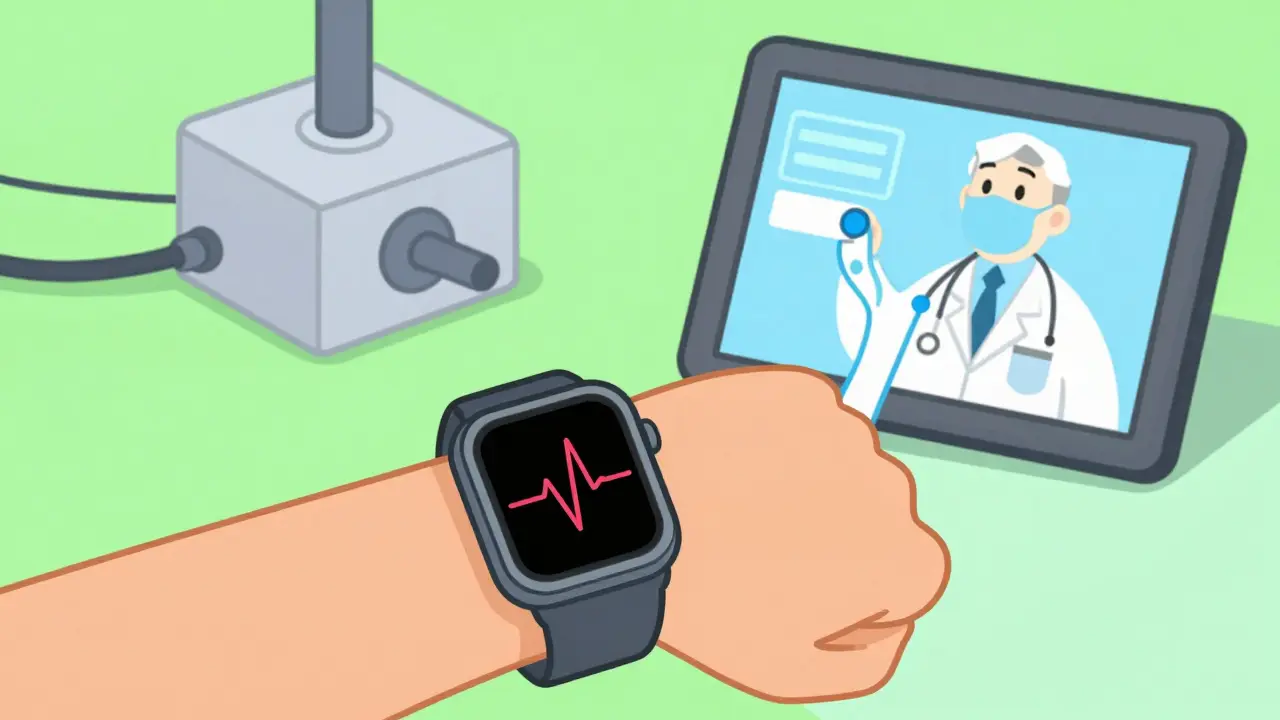
- Wearables integration (Novartis uses smartwatches to track heart rhythms for Entresto patients)
- FDA’s REAL program standardizing registry data for 20 rare diseases by 2026
Drug safety monitoring is also getting faster. In 2023, the FDA reviewed 107 RWE submissions-up from 29 in 2018. For cancer drugs, 38% of safety reports use registry data. Heart medications rely most on claims data (45% of submissions).
Challenges and Solutions
Using registries and claims data isn’t simple. Data standardization eats up 40-60% of project resources. Privacy rules like HIPAA and GDPR add complexity. A 2020 AHRQ report found 15-20% of diagnosis codes in claims data are wrong. Registries struggle with participation bias-only 60-80% of eligible patients join voluntary studies.
Solutions are emerging. The FDA Sentinel Initiative connects 11 healthcare systems to monitor 300+ million patient records safely. Statistical methods now fix "immortal time bias" (a common error in claims data analysis) by 35-50%. For rare diseases, the FDA’s 2024 draft guidance requires registries to have at least 80% data completeness for key variables before use.