When you walk into a pharmacy, you expect the person behind the counter to be licensed, trained, and legally allowed to dispense your medication. But what if they aren’t? Counterfeit drugs don’t just come from shady online sellers-they can also come from unlicensed or suspended pharmacists operating in plain sight. That’s why state pharmacy boards exist: to make sure only qualified professionals are handling your prescriptions.
Every U.S. state, plus D.C., Puerto Rico, Guam, and the U.S. Virgin Islands, has its own pharmacy board. These aren’t bureaucratic red tape machines-they’re the frontline defense against unqualified practitioners. As of 2023, these boards oversee roughly 350,000 pharmacists and 300,000 pharmacy technicians. That’s over half a million people with direct access to your health. If even a fraction of them were practicing without a valid license, the risk of harm would be real.
How State Pharmacy Boards Protect You
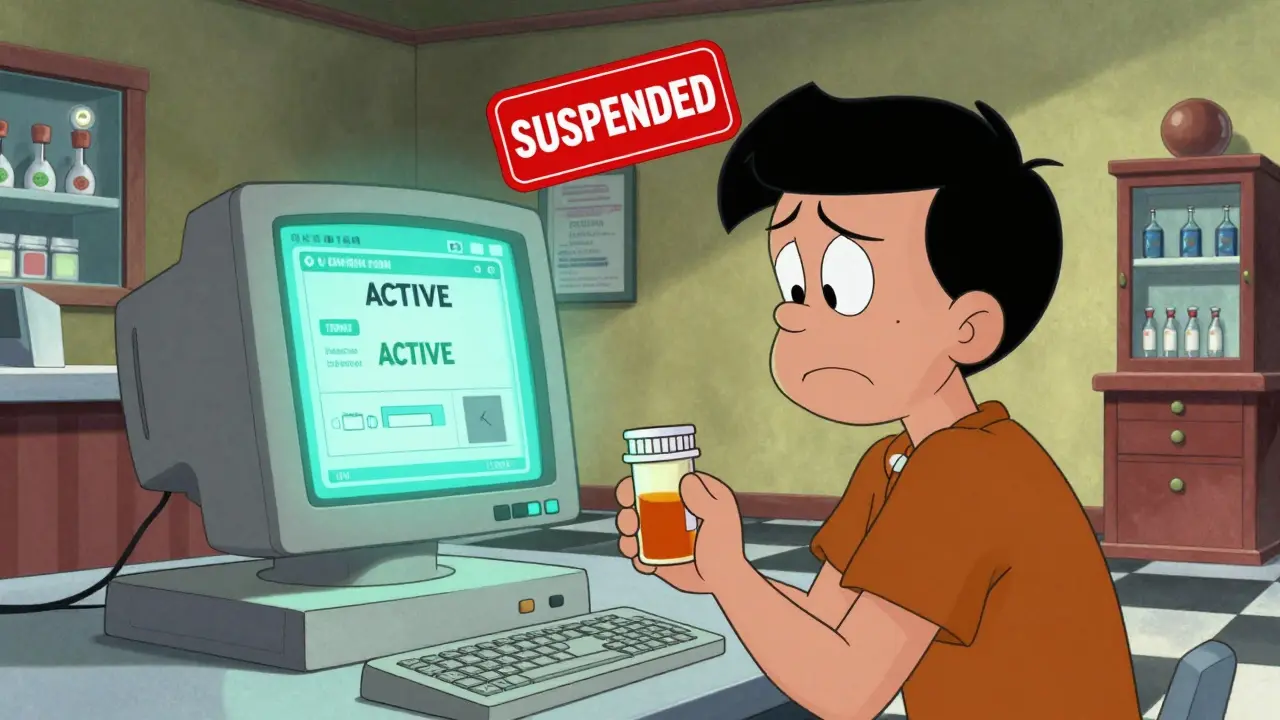
State pharmacy boards don’t just issue licenses. They monitor them. They investigate complaints. They suspend or revoke licenses when someone breaks the rules. And they make that information public. A license isn’t a one-time stamp-it’s a living credential that can change status overnight. Someone might be active today, suspended tomorrow after a complaint, and revoked next month after a court ruling.
Take Maryland, for example. Their board tracks 15 different license statuses: Active, Suspended, Revoked, Probation, Retired, Deceased, and more. If a pharmacist’s license is suspended for drug diversion or fraud, that status shows up immediately in their public lookup system. The same goes for expiration dates. Many states allow a short grace period after expiration, but if the renewal isn’t processed, the license reverts to inactive. That’s why checking the status matters more than just seeing a license number.
According to the National Association of Boards of Pharmacy (NABP), 47% of disciplinary actions against pharmacists involve practicing with an expired or invalid license. That’s not a small number. It’s a pattern. And it’s why employers-from hospitals to CVS-are now required to verify licenses directly with the state board, not just accept a copy of a card or a screenshot.
How to Verify a License Yourself
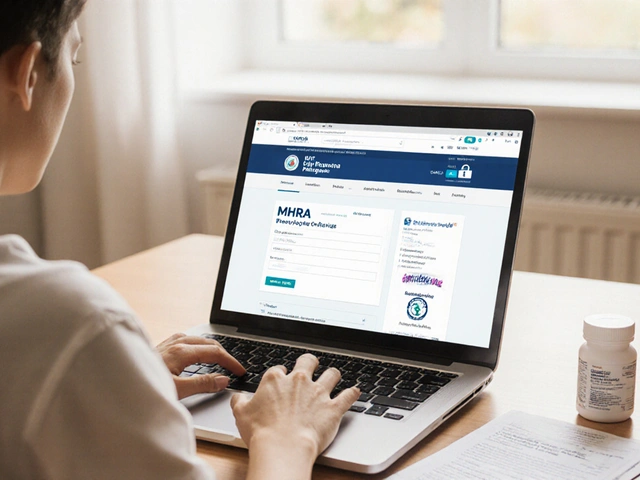
Verifying a license is simple, free, and takes less than five minutes. Here’s how:
- Go to the official website of the state’s board of pharmacy. Search for “[State] Board of Pharmacy” - don’t use third-party sites.
- Find the “License Verification” or “Verify a License” link. It’s usually under “For the Public” or “License Lookup.”
- Enter the pharmacist’s full legal name. Avoid nicknames or middle initials unless you’re sure.
- If you know the license number, use it. It’s more accurate than a name search.
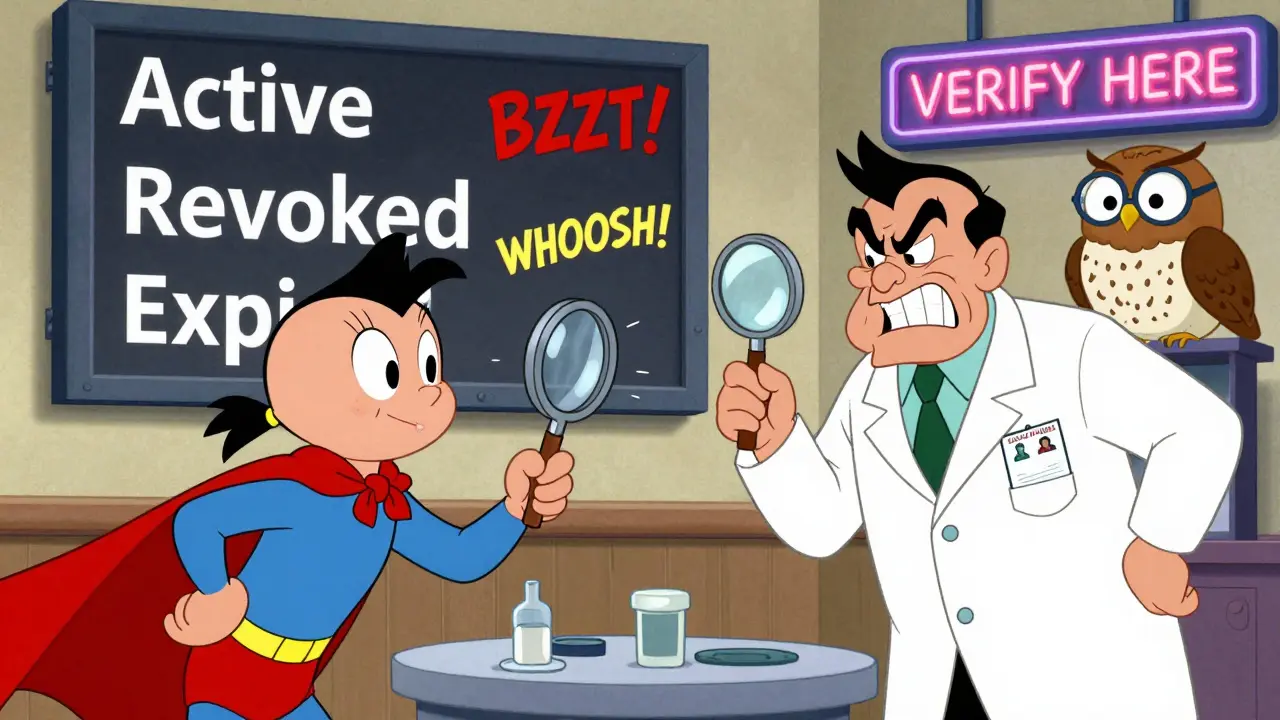
- Check the status. Is it “Active”? If not, don’t assume it’s okay. Look for “Suspended,” “Revoked,” or “Expired.”
- Review the issue and expiration dates. If the expiration date is more than a year old, the license is likely not current.
- Double-check the name spelling. Some boards show maiden names or previous legal names.
Some states, like Maryland, let you search by city, zip code, or license type (pharmacist, technician, intern). Others, like D.C., warn that partial information gives inaccurate results. Less is more. If you’re unsure, try the name alone first. Too many filters can cancel out the right match.
Most systems update within 7-14 days after a change. But delays happen. One Reddit user reported their new license didn’t show up for three weeks after passing the exam. That’s why if you’re hiring someone, don’t rely on their word. Call the board. Use the official system.
Why Third-Party Services Can Be Dangerous
You might see services like NABP Verify or private credentialing platforms that promise to check licenses across states. They’re convenient-but they’re not the official source.
NABP Verify, launched in 2020, is a paid service ($59/year) that gives pharmacists a digital badge and tracks licenses in multiple states. It’s great for pharmacists who work across borders. But here’s the catch: it doesn’t replace state boards. It supplements them. And it’s not real-time. If a pharmacist is under investigation in Texas but their license hasn’t been formally suspended yet, NABP Verify might still show “Active.”
Dr. Susan Cornell, a pharmacy law expert, wrote in the Journal of the American Pharmacists Association that state boards have a 15% slower update cycle for disciplinary actions than medical boards. That means a license might look fine for up to two weeks after a suspension. Third-party services often rely on the same delayed data.
For employers, patients, and insurers, the only authoritative source is the state board. The American Pharmacists Association (APhA) says it plainly: verify directly with the state board. Not a third party. Not HR. Not a colleague’s email.
What Happens When You Find a Problem
Let’s say you’re a patient and you check your pharmacist’s license. It says “Revoked.” What now?
First, don’t panic. But do act. Leave the pharmacy. Don’t pick up your prescription there. Call the board. Most have a public hotline. Maryland’s is (410) 764-4755. D.C.’s is (202) 576-6000. Report what you found. They’ll investigate. You’re not making a complaint-you’re helping protect others.
If you’re an employer and you hire someone with a revoked license, you’re liable. Hospitals and retail chains now require primary source verification before anyone starts work. In 2023, 78% of hospitals and 63% of retail pharmacies stopped accepting self-reported or employer-verified credentials. They now demand proof from the state board. That’s because the cost of a single incident-wrong dosage, counterfeit drug, patient harm-can run into millions.
What’s Changing in 2025
State boards are getting better. Maryland’s system was upgraded in January 2023 and now handles over 150,000 searches in six months. NABP announced in August 2023 that NABP Verify will include pharmacy technicians by Q2 2024. And 23 states have joined the Interstate Pharmacy Licensure Compact (IPLC), which lets pharmacists practice across borders with one license.
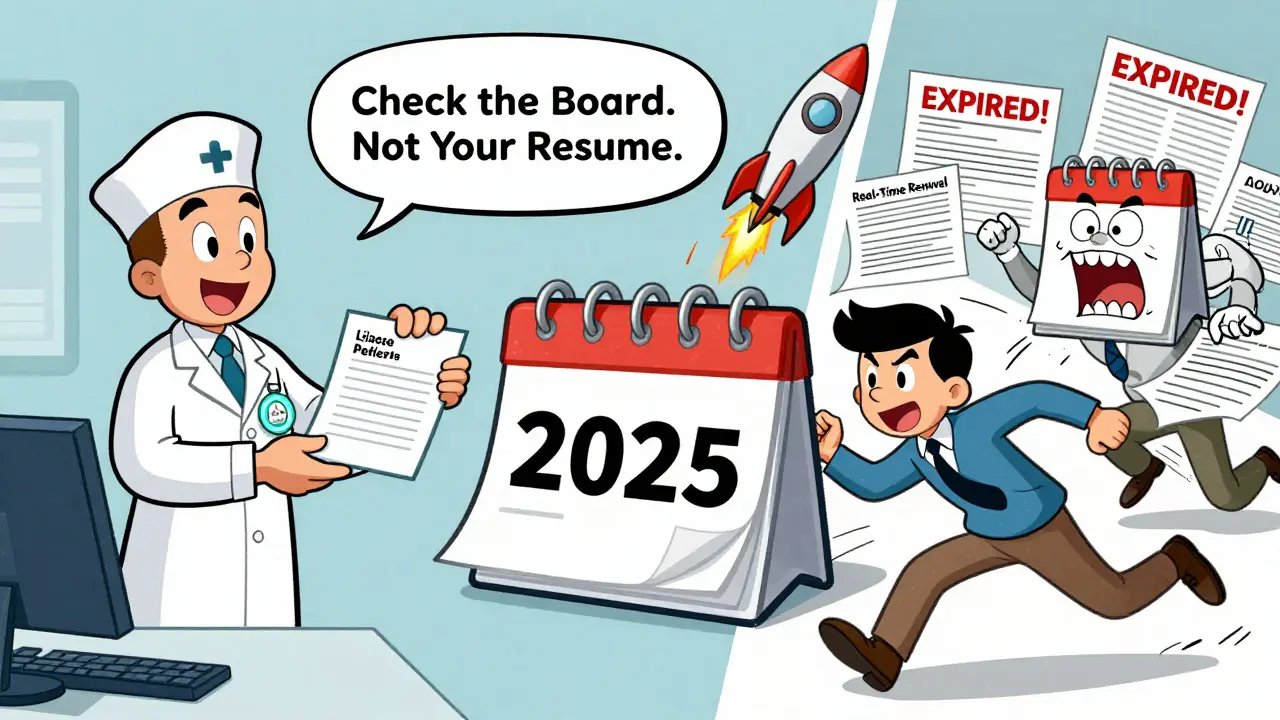
By 2025, the NABP predicts 90% of state boards will move to real-time updates. That means if a license is suspended at 3 p.m., it’ll show as suspended by 3:05 p.m. That’s a huge leap from the current 7-14 day lag.
But don’t wait for that. Right now, you have the power to check. And you should.
Common Mistakes and How to Avoid Them
- Mistake: Using a name like “John Smith” without a middle initial. Fix: Try variations. Search “J. Smith” if “John Smith” returns nothing.
- Mistake: Assuming “Active” means the license is current. Fix: Check the expiration date. If it’s over a year old, call the board.
- Mistake: Relying on a LinkedIn profile or a resume. Fix: Always go to the state board’s official site. No exceptions.
- Mistake: Thinking a license from another state is valid here. Fix: Each state has its own rules. A license from California doesn’t mean anything in Ohio unless it’s been transferred.
One pharmacist in Colorado reduced her credentialing time from 14 days to 3 days by using NABP Verify-but only after verifying each license individually with her state board first. That’s the smart way: use tools to streamline, but never skip the source.
Final Checklist: Verify Like a Pro
- Use only the official state board website.
- Search by full name and license number if available.
- Confirm the status is “Active” and the expiration date is current.
- Check for disciplinary history-even if the license is active.
- Don’t trust screenshots, emails, or third-party portals.
- If in doubt, call the board. Most have free phone support.
Counterfeit drugs are dangerous. But so are unlicensed pharmacists. You can’t see a bad license. But you can check for one. And if you’re responsible for your health-or someone else’s-you should.
How do I verify a pharmacist’s license in my state?
Go to your state’s official Board of Pharmacy website. Look for a “License Verification” or “Verify a License” tool. Enter the pharmacist’s full legal name and, if possible, their license number. Check the status (Active, Suspended, Revoked), issue date, and expiration date. Most systems are free and available 24/7. Avoid third-party sites-they’re not official.
Is NABP Verify a reliable alternative to state boards?
NABP Verify is useful for pharmacists who practice in multiple states, but it’s not a replacement for state board verification. It’s a paid service that aggregates data, but it doesn’t update in real time. If a license is suspended in one state, NABP Verify might still show it as active for up to two weeks. Always verify directly with the state board for legal and safety purposes.
Can a pharmacist practice with an expired license?
No. Once a license expires, the pharmacist is no longer legally allowed to dispense medication. Some states allow a short grace period (usually 30-90 days) to renew, but during that time, the license status may still show as “Active” in the system. Always check the expiration date. If it’s passed, the license is invalid-even if the status says “Active.”
Why do some state verification systems take so long to update?
State pharmacy boards often process renewals and disciplinary actions manually or in batches. While some states have moved to real-time systems, most still rely on legacy infrastructure. The average update lag is 7-14 days. The Federation of State Medical Boards found pharmacy boards update disciplinary records 15% slower than medical boards. That’s why it’s critical to verify directly and not assume the system is up to date.
What should I do if I find a pharmacist with a revoked license?
Stop using that pharmacy immediately. Do not pick up or fill any prescriptions there. Contact your state’s Board of Pharmacy using their public hotline or complaint form. Provide the pharmacist’s name, license number, and the pharmacy location. Your report helps protect others. State boards take these reports seriously-they’re a key part of public safety.
Do I need to verify a pharmacy technician’s license too?
Yes. Pharmacy technicians handle medication packaging, inventory, and sometimes even fill prescriptions under supervision. In 2023, 32 states required technicians to be licensed. Since NABP Verify will include technicians in Q2 2024, you should check each state’s board website for technician licensing status. A technician without a valid license can cause serious errors-even if the pharmacist is licensed.
Are pharmacy license verification systems secure?
Most state pharmacy board websites are secure, but they’re not immune to cyberattacks. The Healthcare Information and Management Systems Society reported a 22% increase in attacks on state health agency databases in 2022. Always use the official .gov or .state.[state].us website. Avoid clicking links from emails or ads. Never enter personal information on unofficial sites.