When you take a medication, you expect it to help - not hurt. But sometimes, even common drugs can trigger dangerous reactions. These aren’t just rashes or upset stomachs. Severe adverse drug reactions can kill you in minutes or leave you permanently disabled. Knowing the warning signs and acting fast can save your life - or someone else’s.
What Makes a Drug Reaction Severe?
Not all bad reactions are emergencies. A mild rash or nausea might be annoying, but a severe adverse drug reaction (ADR) is life-threatening. The U.S. Food and Drug Administration defines a serious ADR as one that causes death, is life-threatening, requires hospitalization, leads to permanent damage, or causes a disability. The World Health Organization says it’s any harmful, unintended response to a drug at normal doses.Three drugs cause the most serious reactions in the U.S.: anticoagulants (like warfarin), diabetes medications (like insulin), and opioids (like morphine). These aren’t rare drugs - they’re used daily. That’s why recognizing danger signs matters more than ever.
Four Types of Severe Reactions - And What to Watch For
Severe drug reactions fall into four main types. Each has different symptoms, timing, and risks.- Type I (IgE-mediated): Anaphylaxis - This is the most urgent. It strikes fast - usually within minutes to two hours after taking the drug. Symptoms include swelling of the throat or tongue, wheezing, sudden drop in blood pressure, hives, dizziness, and vomiting. Without treatment, death can happen in under an hour. The mortality rate for untreated anaphylaxis is 0.3% to 1%. But with epinephrine, survival jumps to over 95%.
- Type II (Cytotoxic): Blood cell destruction - This one sneaks up. It may take 5 to 10 days after taking a drug like penicillin or sulfonamides. The immune system attacks your own red blood cells or platelets. Signs: unexplained bruising, bleeding gums, pale skin, extreme fatigue, or dark urine. It can lead to hemolytic anemia or severe thrombocytopenia.
- Type III (Immune complex): Serum sickness - Appears 7 to 14 days after exposure. You might get a fever, joint pain, swollen lymph nodes, and a red, itchy rash. Drugs like cefaclor or certain antivirals can trigger this. It’s not usually deadly, but it can damage kidneys or other organs if ignored.
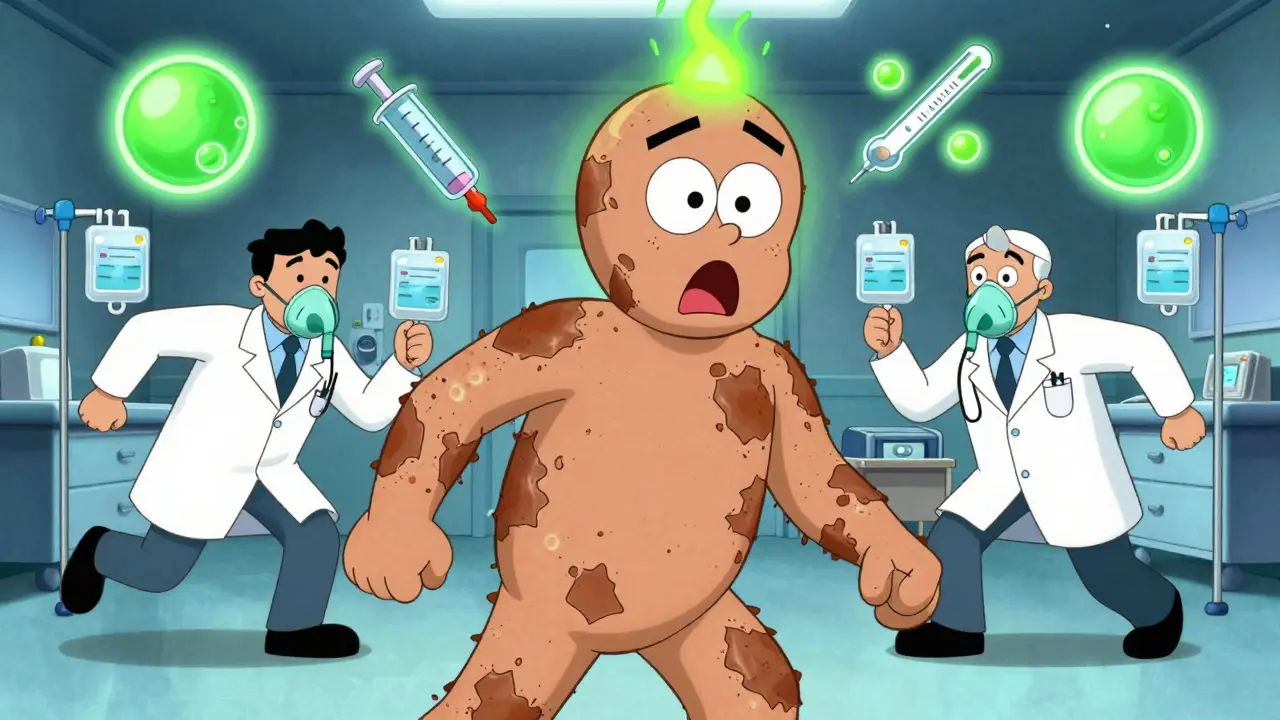
- Type IV (Delayed T-cell): Skin destruction - This includes Stevens-Johnson Syndrome (SJS) and Toxic Epidermal Necrolysis (TEN). These are rare but deadly. SJS affects less than 10% of your skin. TEN affects over 30%. Skin blisters, peels off like a burn, and mucous membranes (mouth, eyes, genitals) ulcerate. Mortality? 10% for SJS. Up to 50% for TEN. These reactions often start with flu-like symptoms - fever, sore throat - before the skin explodes.
When to Call 911 - The Emergency Signs
You don’t need to be an expert to know when to act. If any of these happen after taking a new drug - even if you’ve taken it before - get help now:- Difficulty breathing or wheezing
- Swelling of the lips, tongue, or throat
- Sudden dizziness, fainting, or passing out
- Fast, weak pulse or cold, clammy skin
- A rash that spreads fast and turns into blisters or peeling skin
- High fever with a rash and swollen glands
- Severe mouth, eye, or genital sores
- Unexplained bleeding or bruising
Don’t wait to see if it gets worse. Don’t try antihistamines first. Don’t call your doctor’s office. If you suspect a severe reaction, call 911 or go to the nearest emergency room. Every minute counts.
Epinephrine Is the Lifesaver - But Only If Used Right
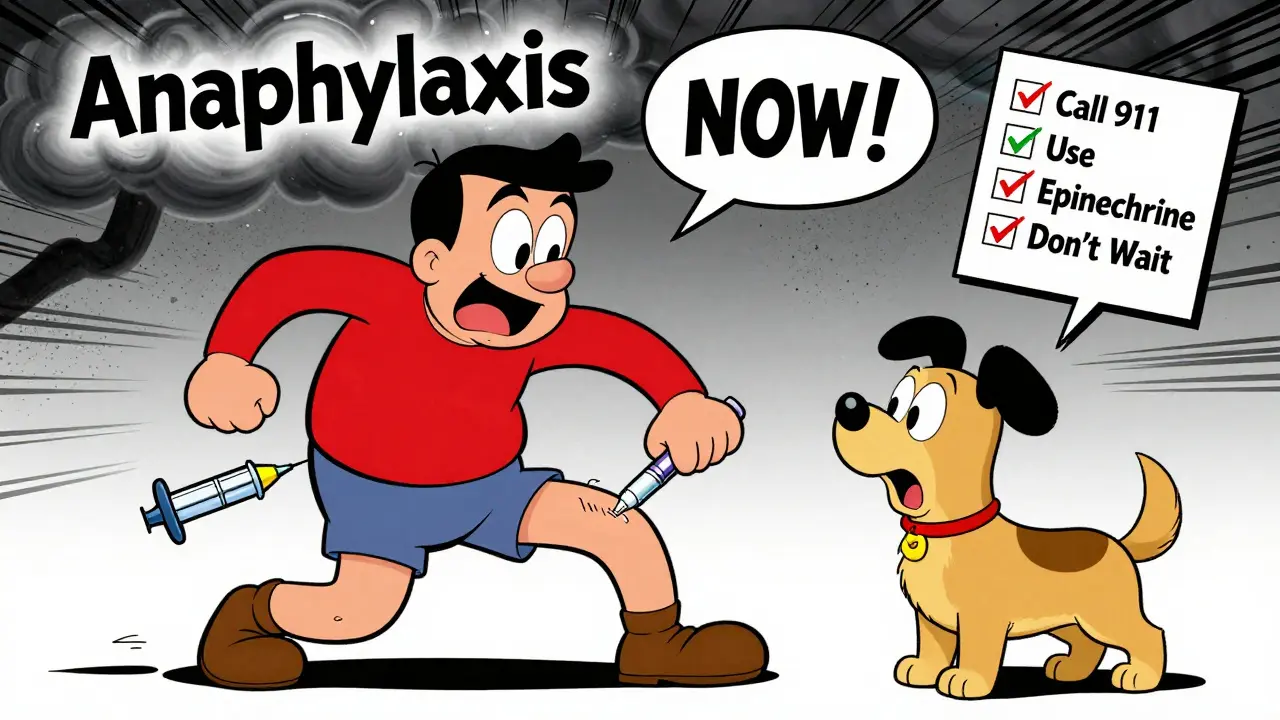
For anaphylaxis, epinephrine is the only treatment that stops death. Antihistamines? They help with itching - but they don’t stop airway swelling or low blood pressure. Steroids? They reduce inflammation later - but not in the first critical minutes.Epinephrine works by tightening blood vessels, opening airways, and boosting heart function. It’s given as an injection into the outer thigh - not the arm or buttocks. The dose is 0.01 mg per kg of body weight. For most adults, that’s 0.3 to 0.5 mg. Auto-injectors (like EpiPen) are designed for this. If symptoms don’t improve in 5 minutes, give a second dose.
People with known severe allergies should carry two epinephrine injectors at all times. One might not be enough. And they need to know how to use them - not just once, but every six months. Training isn’t optional. A 2021 Resuscitation Council UK guideline says: “Initial treatment should not be delayed by a lack of a complete history or definite diagnosis.” If you’re unsure, give epinephrine anyway.
What Happens in the ER?
Emergency teams follow a clear protocol: ABCDE.- Airway - Is the throat swelling? Is there a tube or oxygen?
- Breathing - Are oxygen levels dropping? Is there wheezing?
- Circulation - Is blood pressure crashing? Are IV fluids started?
- Disability - Is the person confused or unconscious?
- Exposure - Is there a rash? Are there blisters? Is skin peeling?
For anaphylaxis: epinephrine, oxygen, IV fluids, antihistamines, and steroids. For SJS/TEN: immediate stop of the drug, transfer to a burn unit, IV fluids, pain control, and infection prevention. For blood disorders: blood tests, stopping the drug, and sometimes transfusions.
Doctors don’t guess. They look at timing, symptoms, and what drug was taken. The National Action Plan for Adverse Drug Event Prevention (2023) stresses using electronic health records to flag high-risk combinations - like mixing NSAIDs with blood thinners.
Prevention Starts With You
You can’t avoid every reaction - but you can reduce your risk.- Know your drug allergies. Write them down. Tell every doctor, pharmacist, and ER nurse.
- Ask: “Could this drug cause a severe reaction with what I’m already taking?”
- Keep a list of all medications - including supplements and over-the-counter pills.
- If you’ve had a reaction before, get tested. Allergists can do skin or blood tests to confirm.
- Carry your epinephrine. Always. Even if you think you’re “fine now.”
- Wear a medical alert bracelet if you have a history of severe reactions.
Some people avoid all drugs out of fear. That’s dangerous too. Stopping needed medications - like insulin or blood pressure pills - can kill you faster than a rare reaction. Work with your doctor. Don’t guess.
What Comes After the Emergency?
Surviving a severe reaction doesn’t mean you’re safe. You need follow-up.- See an allergist within 2 to 4 weeks. They’ll help you identify the drug and confirm the reaction type.
- Get a written action plan. It should say: “If X happens, do Y.”
- Update your medical records. Make sure every provider knows your allergy.
- Ask about alternatives. If you had a reaction to penicillin, there are 10+ other antibiotics.
- Report the reaction. Use the FDA’s MedWatch system or your country’s equivalent. This helps others.
Over 20 million suspected adverse drug reactions are reported worldwide each year. Most are never documented. Your report could prevent someone else’s death.
Can a drug reaction happen even if I took it before without problems?
Yes. Drug reactions aren’t always predictable. Your immune system can change over time. You might take amoxicillin ten times with no issue - then suddenly develop a life-threatening rash on the 11th. That’s why you should never assume safety just because it worked before.
Is it safe to use an expired epinephrine auto-injector?
If you’re having an anaphylactic reaction and have no other option, use the expired injector. Epinephrine doesn’t suddenly turn to poison after its expiration date - it just loses some potency. Even a weak dose is better than no dose. But replace it as soon as possible. Always carry two, and check expiration dates every six months.
Can over-the-counter drugs cause severe reactions?
Absolutely. NSAIDs like ibuprofen and naproxen cause more than 15% of severe drug reactions. Aspirin can trigger anaphylaxis in people with asthma. Even herbal supplements like echinacea or kava can cause liver failure or skin reactions. Just because something is sold without a prescription doesn’t mean it’s safe.
What if I’m not sure it’s a drug reaction?
If you’re unsure, treat it like one. If you have swelling, trouble breathing, or a rash with fever, go to the ER. Doctors are trained to rule out infections, heart attacks, or other conditions. But if it’s a drug reaction, delay could cost your life. It’s better to be safe than sorry.
Do I need to stop all my medications if I have a reaction?
Only stop the drug you suspect caused the reaction - and only under medical guidance. Don’t stop insulin, blood pressure meds, or seizure drugs on your own. Stopping those can be deadly. Emergency teams will help you identify the culprit and safely manage the rest of your treatment.