Cervical Myelopathy: Causes, Symptoms, and What You Need to Know
When the spinal cord in your neck gets squeezed, it’s called cervical myelopathy, a condition where spinal cord compression in the neck leads to nerve damage and loss of function. Also known as cervical spondylotic myelopathy, it’s not just neck pain—it’s your nervous system struggling to send signals to your arms, hands, and legs. This isn’t something that goes away with rest. It’s a progressive issue, often caused by wear and tear, bone spurs, or slipped discs pressing on the spinal cord.
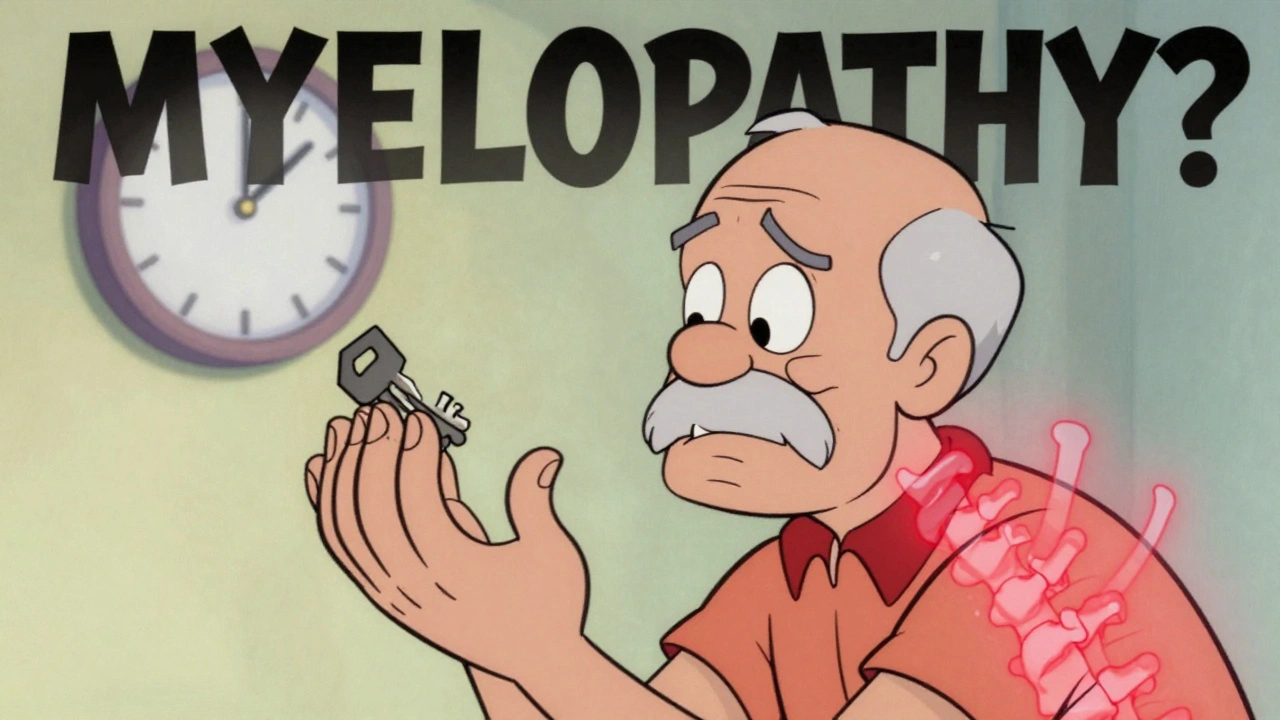
People with cervical myelopathy often notice their hands getting clumsy—buttons won’t fasten, keys drop, or they spill coffee for no reason. Tingling in the fingers, weakness in the arms, and trouble walking steadily are common. Some feel like they’re walking on cotton. These aren’t random symptoms. They’re signs your spinal cord is being compressed. The damage builds slowly, which is why many ignore it until it’s advanced. It’s most common in people over 50, but younger folks with injuries or genetic conditions can get it too. spinal cord compression, the direct pressure on the spinal cord that causes cervical myelopathy is the root problem. Without relief, it can lead to permanent numbness, muscle wasting, or even loss of bladder control.
What causes this pressure? degenerative disc disease, the natural breakdown of spinal discs over time that often leads to bone spurs and narrowing of the spinal canal is the biggest culprit. Arthritis in the neck, thickened ligaments, or even a herniated disc can add to the squeeze. It’s not caused by poor posture alone, but long-term strain can make it worse. You can’t reverse the damage with stretches or massage—but you can stop it from getting worse. That’s where diagnosis and treatment come in. MRI scans show exactly where the cord is being squished. Physical therapy helps manage symptoms, but surgery is often the only way to take pressure off the spinal cord and prevent further decline.
The posts below cover real-world issues tied to cervical myelopathy—from how medications affect nerve pain, to why certain drugs can mask symptoms until it’s too late. You’ll find guides on spotting early warning signs, understanding treatment trade-offs, and what to ask your doctor before agreeing to surgery. Some posts dive into how other conditions like diabetes or autoimmune disorders complicate nerve damage. Others explain how to track symptoms over time so you don’t downplay them. This isn’t just about neck pain. It’s about protecting your movement, your independence, and your future function. What you learn here could help you catch it early—or help someone you love avoid a preventable decline.