Spinal Stenosis Symptoms: What to Watch For and When to Act
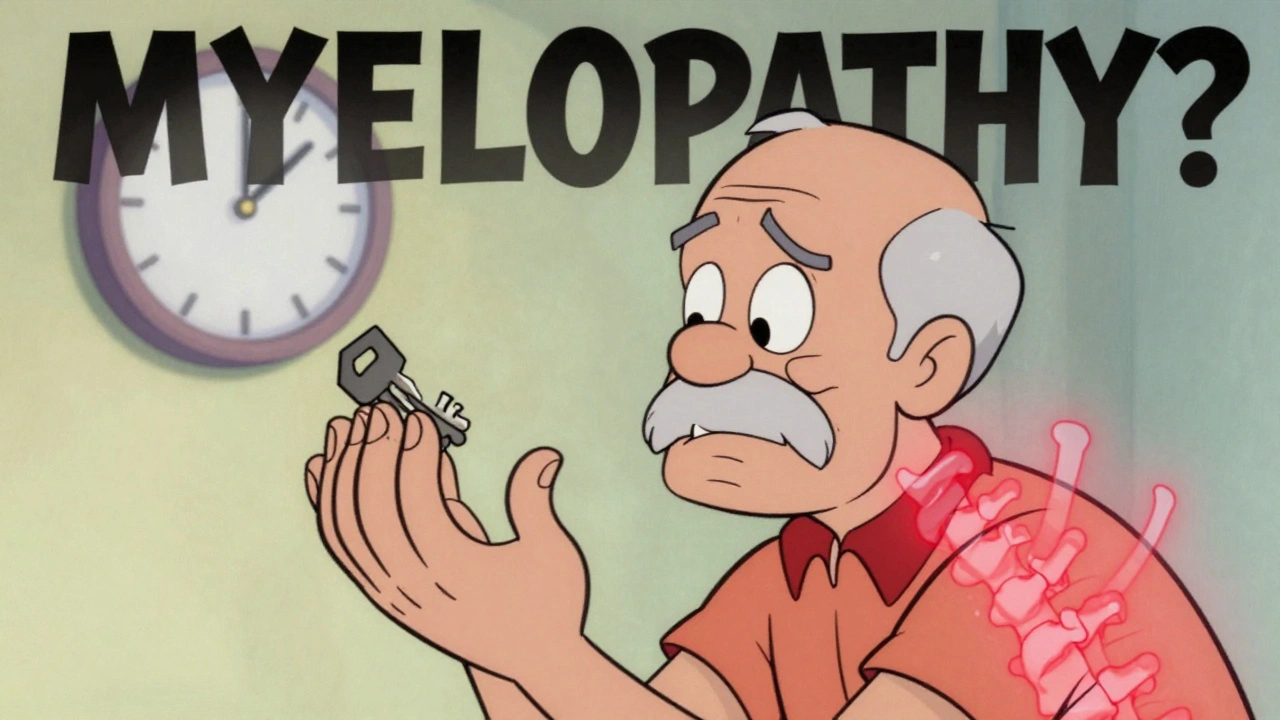
When your spinal stenosis, a narrowing of the spaces inside your spine that puts pressure on the nerves. It often happens as you age, but it’s not just "normal back pain"—it’s a physical change in your spine that can block nerve signals. Spinal stenosis symptoms don’t always show up all at once. They creep in: maybe your legs feel heavy after walking a block, or you get tingling in your feet when standing too long. Some people notice their balance feels off, or they need to lean forward on a cart to relieve pressure—that’s a classic sign. The spine’s canal shrinks over time due to bone spurs, thickened ligaments, or disc issues, squeezing the nerves that run down to your legs and feet.
This isn’t just about your back. The real problem is what happens to your nerves, the pathways that carry signals between your brain and body. When compressed, they misfire—causing numbness, burning, or sharp pain that radiates down one or both legs. That’s called radiculopathy. In severe cases, you might lose muscle strength in your legs or have trouble controlling your bladder or bowels—these are red flags that need immediate attention. Many people mistake these symptoms for arthritis or just getting older, but spinal stenosis has a distinct pattern: symptoms get worse with standing or walking, and improve when you sit or bend forward. That’s because bending opens up the space around the nerves.
It’s also tied to other conditions you might already be dealing with. If you have degenerative disc disease, a common wear-and-tear condition where spinal discs break down over time, you’re more likely to develop spinal stenosis. Same goes for osteoarthritis in the spine. These aren’t separate problems—they’re part of the same chain reaction. That’s why treatment often looks at the whole spine, not just the pain spot. You might need physical therapy to strengthen core muscles, or medication to reduce inflammation. In some cases, surgery is the only way to create enough space for the nerves to function again.
What you’ll find below are real, practical posts that break down exactly what these symptoms mean, how they’re diagnosed, and what options actually work. You’ll see how people confused spinal stenosis with sciatica, how certain meds can make it worse, and what non-surgical strategies help most. No fluff. No guesswork. Just clear, tested info from people who’ve been there—and the doctors who treat them.