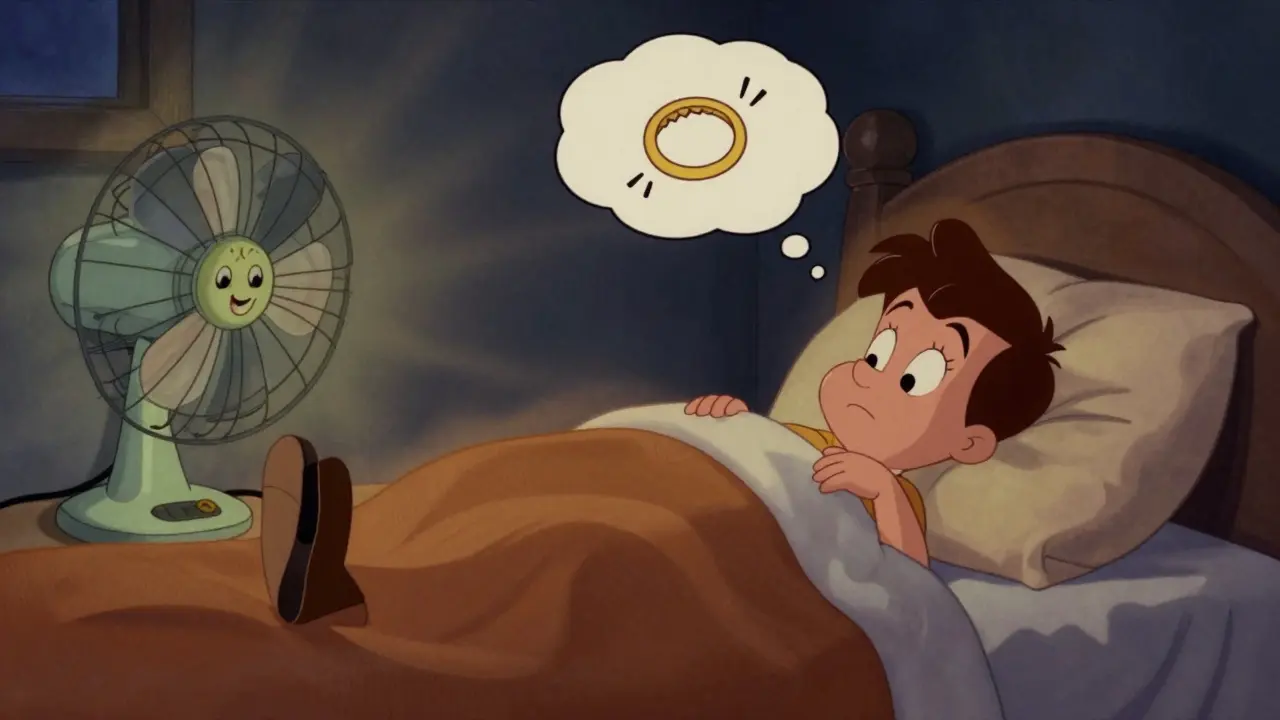
When the house goes quiet and your eyes finally close, that ringing, buzzing, or hissing doesn’t stop. It gets louder. For nearly 15% of adults worldwide, sleep isn’t rest-it’s a battle against a sound only they can hear. Tinnitus isn’t just an ear issue; it’s a sleep disruptor that feeds on silence. The quieter the room, the more your brain fixates on the noise inside your head. And the worse your sleep, the worse the tinnitus becomes. It’s a loop. But it’s not hopeless. There are proven, practical ways to break it-starting tonight.
Why Tinnitus Gets Worse at Night
It’s not in your head-literally. Your brain doesn’t create the sound, but it does amplify it when there’s nothing else to focus on. In daylight, traffic, conversations, and background music give your auditory system something else to process. At night, with no external noise, your brain turns up the volume on the internal signal. Studies show this can make tinnitus feel up to 40% louder in quiet environments. Add in stress, fatigue, or a room that’s too dry or too warm, and your sleep becomes even harder to find.The Science of Sound Masking
The most effective immediate fix isn’t silence-it’s sound. But not just any sound. White noise, the kind you hear from a fan or a basic app, covers a wide range of frequencies. For many, it’s too harsh. Pink noise, which has more low-end energy, is softer. But the real winner? Brown noise. It’s deeper, rumbling, and more like rainfall or distant thunder. According to Widex’s 2023 clinical guide, 68% of users find brown noise most effective for nighttime tinnitus. Why? It matches the low-frequency rumble many people hear and creates a steady “wall of sound” that drowns out the sharpness of tinnitus without being jarring. The volume matters just as much as the type. Healthy Hearing recommends setting your sound therapy just under the volume of your tinnitus. Too loud, and you strain your ears. Too soft, and your brain keeps searching for the noise. Aim for a level where the tinnitus is still faintly there-but no longer dominating. This reduces perceived loudness by 30-50% without causing new stress.Devices That Actually Work
You don’t need expensive gear, but you do need reliable tools. A $25 desktop fan can work wonders if it runs consistently. It produces 45-55 decibels-enough to mask tinnitus without being disruptive. But if you want precision, dedicated sound machines are better. The LectroFan Classic, priced at $99.99, offers 20 different fan sounds and noise types, all adjustable in 1-decibel increments. Users report sleep onset time dropping from over 90 minutes to under 30 after switching to brown noise at 52dB. Smartphone apps are tempting, but they’re unreliable. Battery drain, accidental silencing, and inconsistent audio quality make them poor long-term solutions. One study found 38% of users stopped using apps within two weeks. Stick to hardware. If you have hearing loss, modern hearing aids with notch therapy can help. Devices like Widex Moment 4.0 can play a customized tone that cancels out your specific tinnitus frequency. But if your hearing is normal, these won’t work. Don’t waste money on them unless you’ve had a full hearing test.Environment Matters More Than You Think
Your bedroom isn’t just a place to sleep-it’s a sensory environment. The Sleep Foundation recommends keeping the temperature between 60-67°F (15.6-19.4°C). Too warm, and your body struggles to enter deep sleep. Too cold, and you tense up. Both make tinnitus feel worse. Humidity is often ignored. Dry air dries out the membranes in your ears, making auditory nerves more sensitive. Aim for 40-60% humidity. A simple humidifier, especially one with a quiet setting, can make a noticeable difference. If you live in a dry climate or use central heating, this step alone might be the missing piece.
Stress Is the Hidden Driver
Tinnitus doesn’t just disrupt sleep-it’s worsened by sleep deprivation. When you’re tired, your body pumps out more cortisol. Studies show cortisol levels rise 25-30% during tinnitus flare-ups. That spike makes your brain hyper-alert to the noise, creating a feedback loop. That’s why sound therapy alone isn’t enough. Cognitive Behavioral Therapy (CBT) for tinnitus is one of the most powerful tools available. A 2022 meta-analysis found it reduces nighttime distress by 72% after eight weeks. But it’s not easy. Only 38% of people complete the full program. If you can access a licensed therapist trained in tinnitus CBT, it’s worth it. If not, start with free resources. The AHA Savannah “Quiet Nights” toolkit offers guided exercises to reframe how you react to the sound-turning fear into neutrality.The 60-Minute Pre-Sleep Ritual
Successful users don’t just turn on a sound machine. They build a routine. According to data from 12 clinical trials, people who combine sound therapy with a 60-minute wind-down ritual see 47% greater improvement than those who use one method alone. Here’s what works:- 20 minutes of screen-free reading (paper book only-no backlit devices)
- 20 minutes of quiet meditation or breathing (try box breathing: inhale 4 sec, hold 4 sec, exhale 4 sec, hold 4 sec)
- 20 minutes of sound setup (adjust volume, test noise type, make sure the device is stable)
What Doesn’t Work (And Why)
Some strategies sound good but backfire. Here’s what to avoid:- Complete silence-your brain will hunt for the tinnitus louder than ever.
- Over-reliance on earplugs-they can make tinnitus feel more intense by blocking all ambient noise. If you use them, choose ones with 15dB attenuation, not noise-canceling models.
- Alcohol or sleeping pills-they may help you fall asleep faster, but they fragment your sleep cycles, making tinnitus worse the next day.
- Checking your phone at night-blue light suppresses melatonin, and scrolling triggers stress. One user on Reddit reported that quitting nighttime phone use dropped their sleep onset time by 40 minutes.

Real People, Real Results
Reddit’s r/tinnitus community has over 48,000 members sharing their wins and failures. One user, u/SilentNights87, tried everything for two years. Then they bought a LectroFan, set it to brown noise at 52dB, and stuck to a strict sleep schedule. Their Oura Ring showed sleep onset time dropped from 90+ minutes to under 30. Another, u/EarRinging2023, had hyperacusis-so loud sounds hurt. They needed custom earplugs plus CBT. Their story? “It took six months. But I’m sleeping through the night.” Trustpilot reviews show a split. White Noise Lite has a 4.7/5 rating with 83% of 5-star reviews saying they fell asleep faster. Tinnitus Relief Support? 2.9/5. Why? Many users say it doesn’t match their tinnitus frequency. That’s why personalization matters.What’s Next: The Future of Tinnitus Relief
In May 2023, the FDA cleared the Lenire device-the first prescription system that combines sound with gentle electrical pulses to the tongue. In trials, it reduced tinnitus severity by 65%. It’s not for everyone-it’s expensive and requires a doctor-but it’s a sign of progress. New AI tools are also emerging. The Tinnitus Talk app (version 2.3.1) now uses your phone’s mic to analyze your tinnitus tone and recommends matching sound therapy. Widex’s latest hearing aids adjust in real-time. And researchers at McMaster University are testing EEG-linked systems that change sound therapy based on your brainwaves during sleep. Early results show 78% improvement in sleep efficiency. By 2026, 40% of tinnitus solutions will use biometric feedback. The future isn’t just about masking noise-it’s about listening to your brain.Start Tonight: Your Action Plan
You don’t need to fix everything at once. Pick one thing and do it for seven days.- Day 1-3: Track your tinnitus. What does it sound like? High-pitched? Low? Constant? Pulsing? Use a notebook or the free Tinnitus Handicap Inventory tool.
- Day 4: Set up a sound source. Try a fan first. If it’s not enough, borrow a LectroFan or download a brown noise app on a tablet (not your phone) and leave it on all night.
- Day 5-7: Start your 60-minute wind-down. No screens. Just reading, breathing, and adjusting volume.
- Week 2: Add a humidifier if your air feels dry. Check your room temperature.
- Week 3: Stick to the same bedtime and wake time-even on weekends. Within two weeks, you’ll notice your brain starts to expect sleep.
Frequently Asked Questions
Can tinnitus go away on its own at night?
Tinnitus rarely disappears completely on its own, especially if it’s been present for more than six months. But its impact on sleep can be dramatically reduced. The goal isn’t to eliminate the sound-it’s to make it so quiet in your mind that you stop noticing it during sleep. Sound therapy and routine help your brain learn to filter it out.
Is white noise better than brown noise for tinnitus?
For most people, brown noise is more effective. White noise has equal energy across all frequencies, which can sound harsh or hissy. Brown noise is deeper and more soothing, with energy concentrated in lower frequencies-where many tinnitus sufferers hear their ringing. Clinical surveys show 68% of users prefer brown noise for sleep.
Should I use earplugs to block out tinnitus at night?
No. Earplugs block outside noise, which makes your brain focus harder on the internal tinnitus sound. If you need to reduce environmental noise (like a snoring partner), use low-attenuation earplugs (15dB) and combine them with a sound machine. Never use them alone.
Can I use my phone as a tinnitus sound machine?
It’s possible, but not ideal. Phones die, apps glitch, and notifications interrupt sleep. A dedicated sound machine is more reliable. If you must use a phone, put it on airplane mode, plug it into a charger, and use a speaker-not headphones. Avoid apps that require interaction during the night.
How long until I see results from sound therapy?
Most people notice improvement within 3-7 nights. But full adaptation takes 2-3 weeks. Your brain needs time to rewire how it responds to the sound. Don’t quit if it feels strange at first. The discomfort usually fades as your nervous system adjusts.
Does caffeine affect tinnitus at night?
Yes. Caffeine increases stress hormones and can heighten tinnitus perception. Avoid coffee, tea, chocolate, and energy drinks after 2 p.m. Even small amounts in the afternoon can delay sleep onset and make tinnitus feel louder when you finally lie down.