Cholesterol Medication Comparison Tool
Your Health Information
What to Expect
This tool estimates LDL reduction based on clinical trial data and helps you compare treatment options.
Important Note: Results are for educational purposes only. Always discuss with your healthcare provider before making treatment decisions.
Ezetimibe
Blocks cholesterol absorption in your gut. Works alone or with statins.
LDL Reduction
15-22%
Monthly Cost
$4 (with discount)
Cardiovascular Benefit
Proven (modest)
Bempedoic Acid
Blocks cholesterol production in the liver. First non-statin oral drug with proven heart benefits.
LDL Reduction
17-23%
Monthly Cost
$231 (with discount)
Cardiovascular Benefit
Proven (strong)
Results
Enter your information above to see your estimated results.
When statins don’t work - or cause side effects - what’s next? For millions of people, the answer isn’t giving up on lowering cholesterol. It’s turning to ezetimibe and bempedoic acid, two oral medications designed specifically for those who can’t tolerate statins or still aren’t reaching their LDL targets. These aren’t magic bullets, but they’re real, proven options with clear benefits and realistic limits.
Why do people need alternatives to statins?
Statins are the gold standard for lowering LDL (bad) cholesterol. A high-intensity statin like atorvastatin or rosuvastatin can slash LDL by 50-55%. But about 7% to 29% of people can’t take them because of muscle pain, weakness, or cramps - a condition called statin intolerance. Some people just can’t stick with the medication, no matter how much they want to. Others have liver issues, kidney problems, or take other drugs that interact badly. When statins aren’t an option, doctors need something else.How ezetimibe works - and what it can do
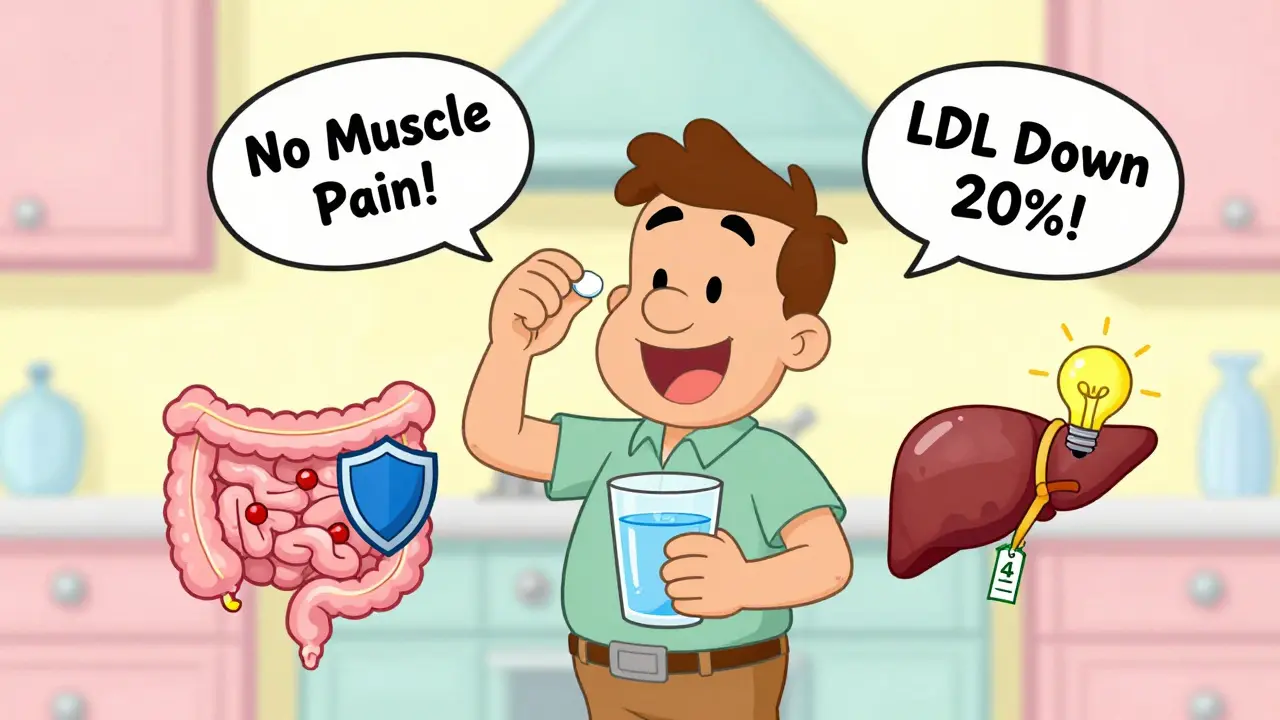
Ezetimibe (brand name Zetia, now widely available as a generic) has been around since 2002. It doesn’t touch the liver like statins do. Instead, it blocks a protein in your small intestine called NPC1L1. This protein is responsible for absorbing cholesterol from the food you eat. By stopping it, ezetimibe cuts dietary cholesterol absorption by about half. As a standalone treatment, ezetimibe lowers LDL by 15-22%. That might sound modest compared to statins, but it’s consistent. When you add it to a statin, it pushes LDL down even further - another 18-25% on top of what the statin already did. That’s why it’s often paired with low-dose statins in people who can tolerate a little bit but not enough. It’s taken as a single 10 mg pill once a day. No timing issues. No food restrictions. And because it’s been generic for years, you can get it for as little as $4 a month through Medicare Part D or other discount programs. Side effects are rare - mostly just mild stomach upset. It’s one of the safest cholesterol drugs out there.Bempedoic acid - the newer option with real heart benefits
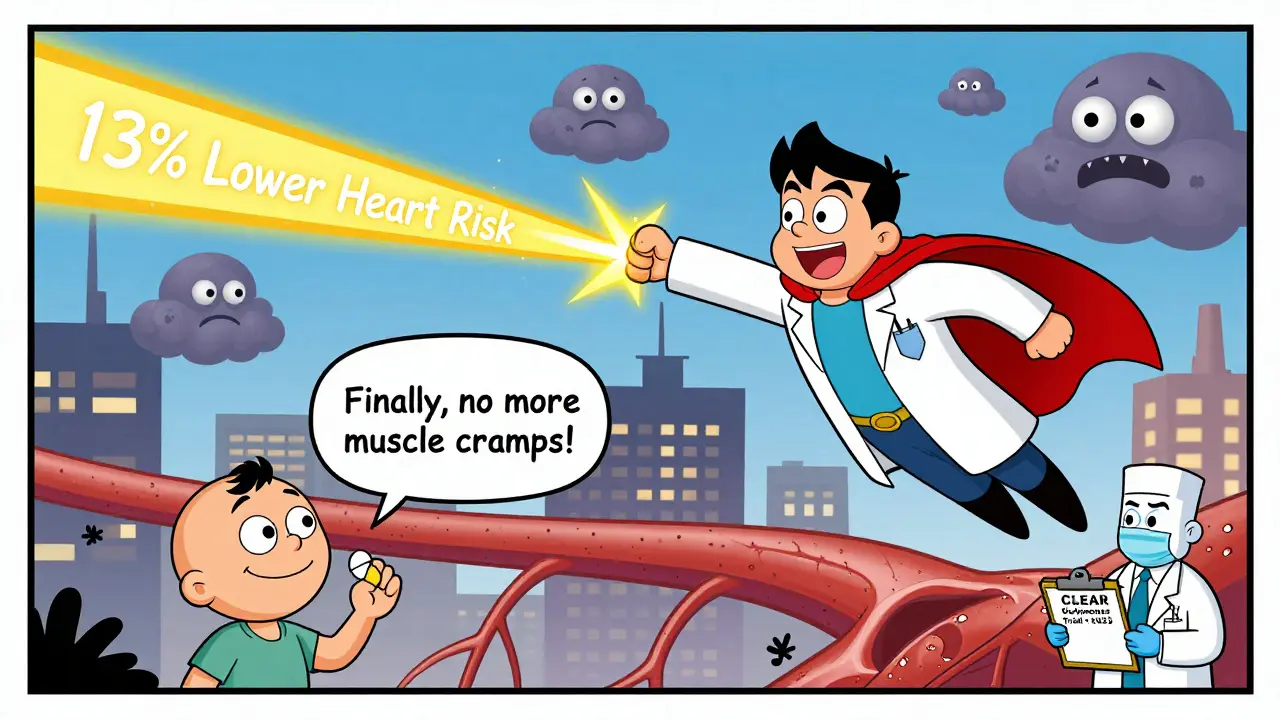
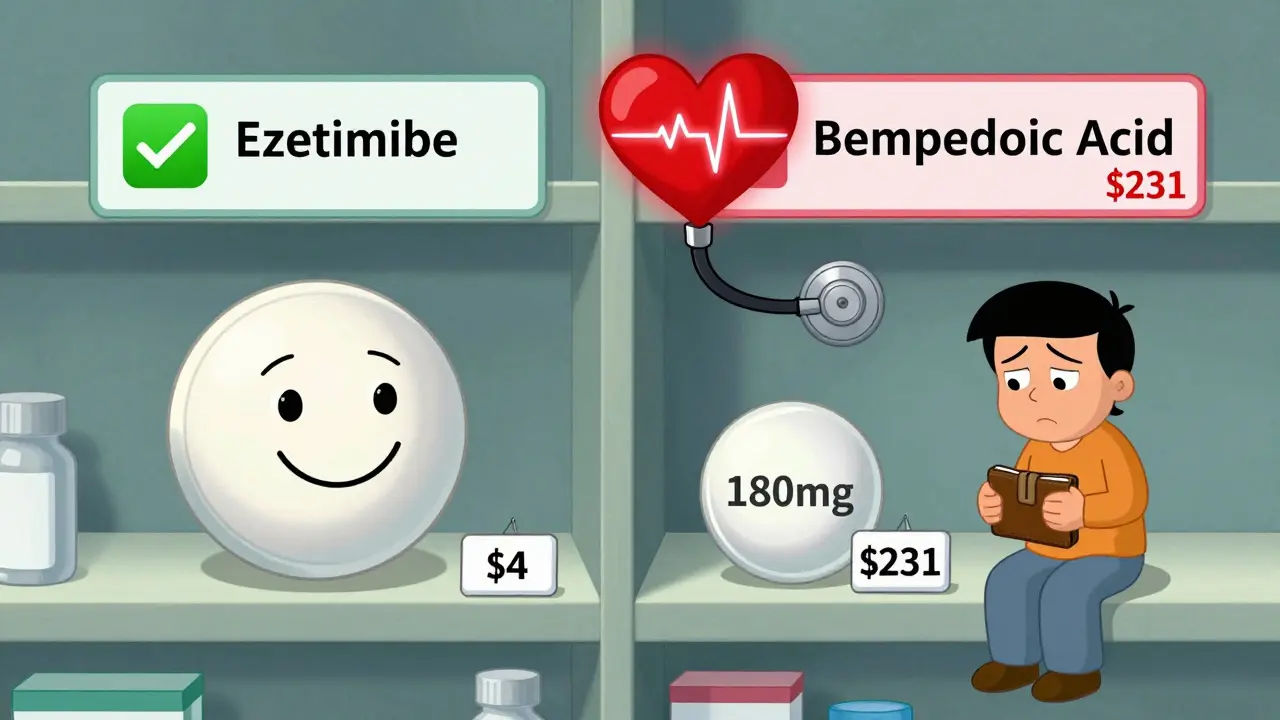
Bempedoic acid (Nexletol) got FDA approval in 2020, and it’s different from anything that came before. Instead of blocking cholesterol absorption like ezetimibe, it stops the liver from making cholesterol in the first place. But here’s the clever part: it’s a prodrug. That means it’s inactive until it reaches the liver, where a specific enzyme activates it. That enzyme? It’s not found in muscle tissue. So unlike statins, bempedoic acid doesn’t cause muscle pain. As a monotherapy, bempedoic acid lowers LDL by 17-23%. When combined with ezetimibe (as Nexlizet), it drops LDL by 35-40%. That’s close to what moderate-intensity statins do. But the real game-changer came from the CLEAR Outcomes trial in 2023 - a massive study of nearly 14,000 people with heart disease who couldn’t take statins. Those taking bempedoic acid had a 13% lower risk of heart attack, stroke, or death from heart disease over 3.5 years. That’s not a small number. It’s the same level of benefit you’d expect from statins, given how much LDL they lowered. It’s taken as a 180 mg tablet once daily. Like ezetimibe, it’s easy to remember. But here’s the catch: it costs around $231 a month with discounts - over 50 times more than generic ezetimibe. Without insurance, that’s a heavy burden. Some patients report joint pain in real-world use - higher than what trials showed - so monitoring is important.How do they compare to each other - and to statins?
| Feature | Ezetimibe | Bempedoic Acid |
|---|---|---|
| LDL reduction (monotherapy) | 15-22% | 17-23% |
| LDL reduction (with statin) | +18-25% | +15-22% |
| Dosing | 10 mg once daily | 180 mg once daily |
| Cost (monthly, with discount) | $4 | $231 |
| Primary side effect | Mild GI upset | Joint pain (real-world) |
| Cardiovascular benefit proven? | Yes, modest | Yes, strong (CLEAR Outcomes) |
| Best for | Cost-sensitive patients, statin add-on | Statin-intolerant patients needing outcomes data |
What about PCSK9 inhibitors? Are they better?
PCSK9 inhibitors like evolocumab and alirocumab lower LDL by 50-60% - more than any oral drug. But they’re injections, given every two weeks or monthly. They cost over $1,000 a month. They’re powerful, but not practical for everyone. Ezetimibe and bempedoic acid fill a middle ground: effective enough, oral, and with real-world outcomes data (especially bempedoic acid). They’re not replacements for PCSK9 drugs in very high-risk patients, but they’re often the next step after statins fail.Who should use these drugs?
Doctors don’t jump straight to these. First, they confirm statin intolerance. That means trying at least two different statins at low and moderate doses over 3-6 months. If muscle pain keeps coming back, then alternatives make sense. Ezetimibe is ideal if:- You’re on a low-dose statin and still not at target
- You’re cost-conscious
- You want a simple, safe option with decades of use
- You have confirmed statin intolerance
- You have established heart disease (ASCVD) or are at very high risk
- You need proven reduction in heart attacks and strokes
- You can afford it or have good insurance coverage
What to expect when you start
Your doctor will check your LDL before you start, then again in 4 to 12 weeks. For ezetimibe, a 10% drop is considered a good sign. For bempedoic acid, aim for at least 15%. If you don’t see that, it might mean you need a different approach - maybe a combination, or even a PCSK9 inhibitor. Some patients on bempedoic acid report joint pain. If you notice stiffness or discomfort in your knees or shoulders, tell your doctor. Tendon rupture is rare, but it’s been reported - especially in people over 60 or those taking corticosteroids. Also, bempedoic acid can raise levels of certain statins if taken together. If you’re on simvastatin or rosuvastatin, your dose may need to be lowered. Always tell your doctor what else you’re taking.