When someone suddenly struggles to breathe, their skin breaks out in hives, and their throat feels like it’s closing, time isn’t just tight-it’s running out. This isn’t just a bad allergy day. It’s anaphylaxis, a life-threatening allergic reaction that can kill in minutes if not treated right away. And the only thing that can stop it? Epinephrine. Not antihistamines. Not steroids. Not waiting to see if it gets worse. Epinephrine-given fast, in the right place, and without hesitation.
What Anaphylaxis Really Looks Like
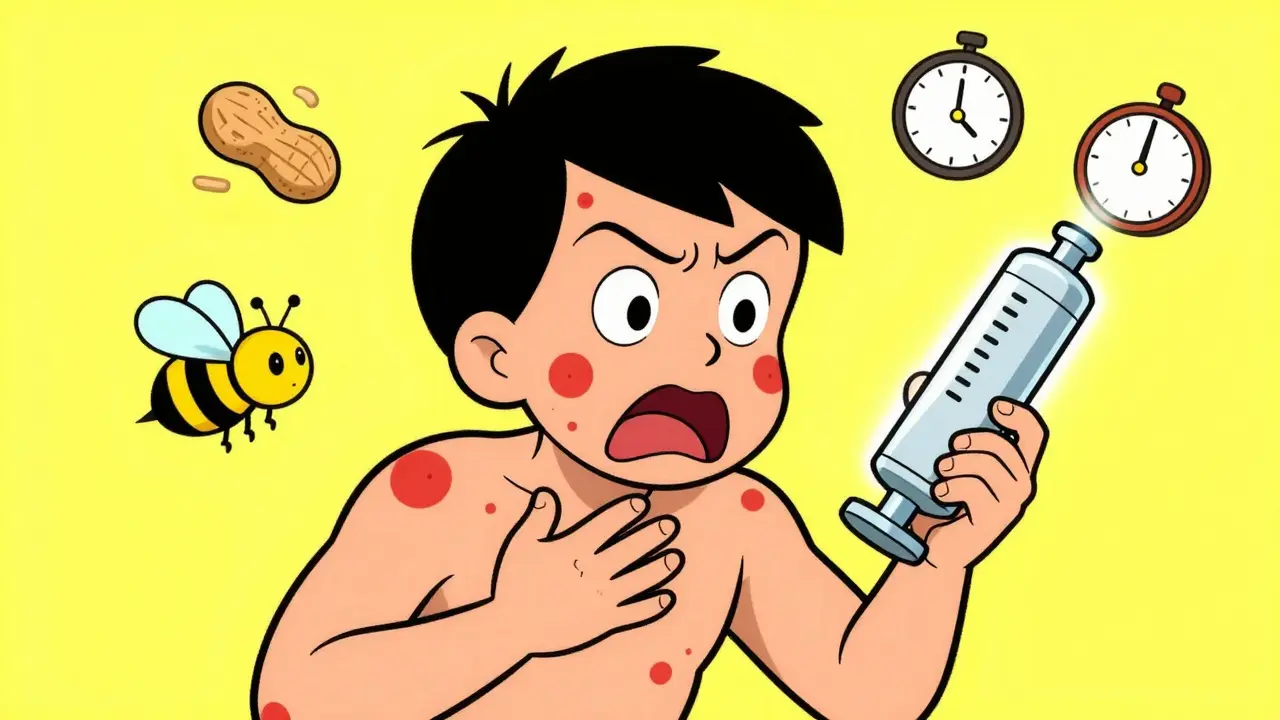
Anaphylaxis doesn’t start with a sneeze or a runny nose. It hits fast-often within seconds or minutes after exposure to an allergen. You might notice a few things at once: a red, itchy rash spreading across the chest or face, lips or tongue swelling up, or a sudden feeling of warmth and dizziness. These aren’t just uncomfortable symptoms. They’re warning signs your body is shutting down. The medical definition is simple: if you have skin or mucosal changes (like hives or swelling) plus trouble breathing, low blood pressure, or ongoing stomach pain or vomiting after exposure to something you’re allergic to-you’re having anaphylaxis. About 80 to 90% of cases involve skin reactions. Around 70% involve breathing problems like wheezing or tightness in the throat. One in three people will have low blood pressure, which can lead to fainting or cardiac arrest. Common triggers? Foods top the list. Peanuts, tree nuts, shellfish, milk, and eggs cause about 90% of food-related anaphylaxis. Insect stings-especially from bees, wasps, or fire ants-account for nearly 10% of cases in U.S. emergency rooms. Medications like penicillin are another major cause, responsible for three out of four drug-induced reactions. Even latex gloves can set it off in sensitive people.Why Epinephrine Is the Only Thing That Works
Epinephrine isn’t just a treatment-it’s the only treatment that can reverse the dangerous cascade of anaphylaxis. It works in two key ways: it tightens blood vessels (to raise blood pressure and stop swelling) and opens up airways (to help you breathe). Without it, your body keeps releasing chemicals that cause your throat to swell, your lungs to spasm, and your heart to fail. Antihistamines like Benadryl? They might help with mild itching or a rash, but they do nothing to stop airway collapse or shock. A Cochrane review found they have zero effect as the only treatment for anaphylaxis. Steroids? They don’t help during the acute reaction-they might reduce the chance of a second wave hours later, but they’re useless when you’re gasping for air. Emergency medicine specialists agree: 97% say epinephrine is the only acceptable first-line treatment. Delaying it is the biggest reason people die. Studies show that when epinephrine is given within five minutes of symptom onset, 85% of patients improve. When it’s delayed past 30 minutes, that number drops to 42%. In one study, half of the people who died from anaphylaxis never got epinephrine at all.How to Use an Epinephrine Auto-Injector
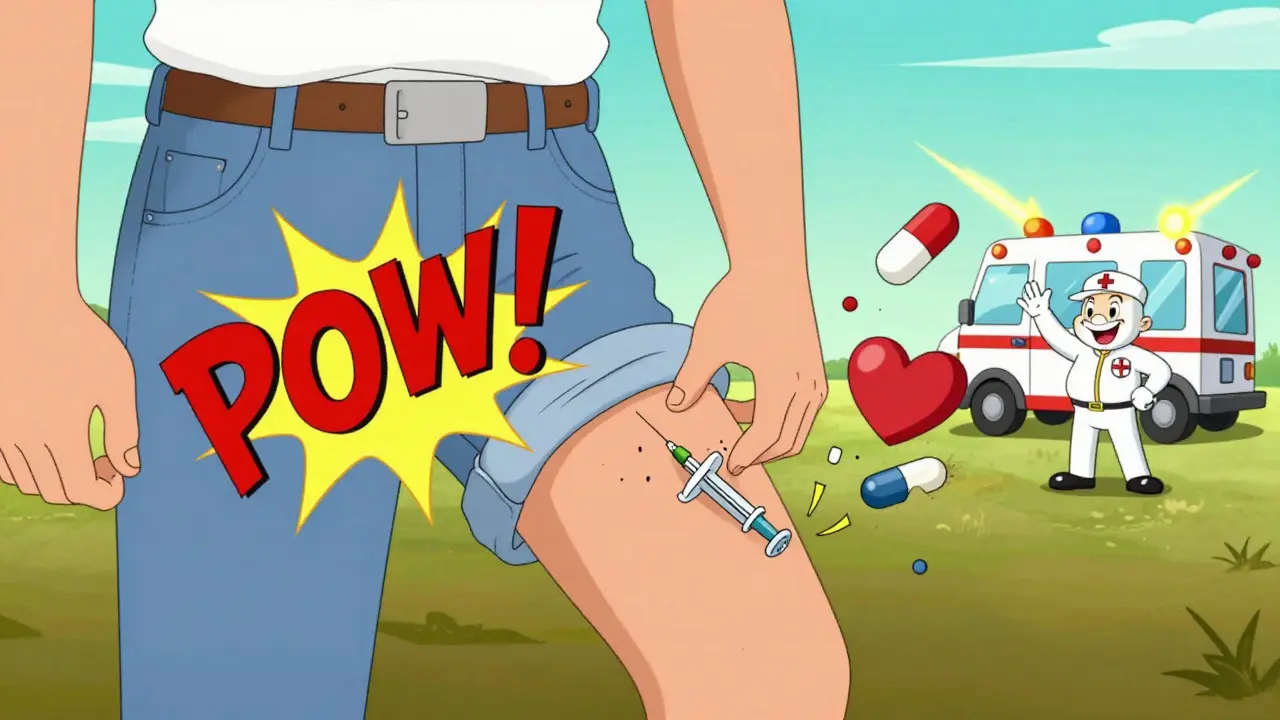
There are several brands-EpiPen, Auvi-Q, Adrenaclick, and now Neffy, a nasal spray. But they all work the same way: inject into the outer thigh. Not the arm. Not the butt. The thigh, specifically the front side, where the muscle is thickest and blood flow is fastest. That’s how you get the drug into your system in about eight minutes instead of twenty. Here’s how to use it:- Remove the safety cap (usually a blue or gray tab).
- Place the injector firmly against the outer thigh, through clothing if needed.
- Push down hard until you hear a click.
- Hold it in place for three seconds.
- Remove and massage the area for 10 seconds.
Who Needs One-and How to Keep It Ready
About 1.6% of Americans-over five million people-have had anaphylaxis. That number is rising, especially among children. Peanut allergies in kids tripled between 1997 and 2008. Schools across the U.S. now keep stock epinephrine on hand because of this. In fact, 92% of U.S. schools have it available for anyone who needs it, not just students with known allergies. If you’ve had a reaction before, or if you’re at high risk, you should carry two auto-injectors at all times. Why two? Because sometimes one isn’t enough. About 20% of people need a second dose within 5 to 15 minutes. If you don’t have a second one, you’re putting your life at risk. Store your injector at room temperature-between 68°F and 77°F. Don’t leave it in the car, in a hot glovebox, or in a freezing backpack. Heat and cold can break down the medicine. Check the expiration date every month. Most last 12 to 18 months. Set a phone reminder. Use an app. Mark your calendar. Expired epinephrine doesn’t work.Why People Don’t Use It-And How to Fix It
The sad truth? Nearly half of people with anaphylaxis delay using their epinephrine. Why? They think it’s just a bad rash. They’re scared of the needle. They don’t want to make a scene. Or they don’t know how to use it. Studies show 68% of people who’ve been trained still use the device wrong during a real emergency. Needle fear affects nearly a quarter of users. Many think they need to see a doctor before using it. That’s deadly. The fix? Practice. Every month. Use a training device-those plastic ones that make a click but don’t have medicine. Practice on a pillow, on your leg, on a friend. Get comfortable. Teach your kids, your partner, your coworkers. Schools and workplaces should have mandatory training sessions. If you’re a parent, don’t just hand your child the injector. Show them how to use it. Then show them again. And again.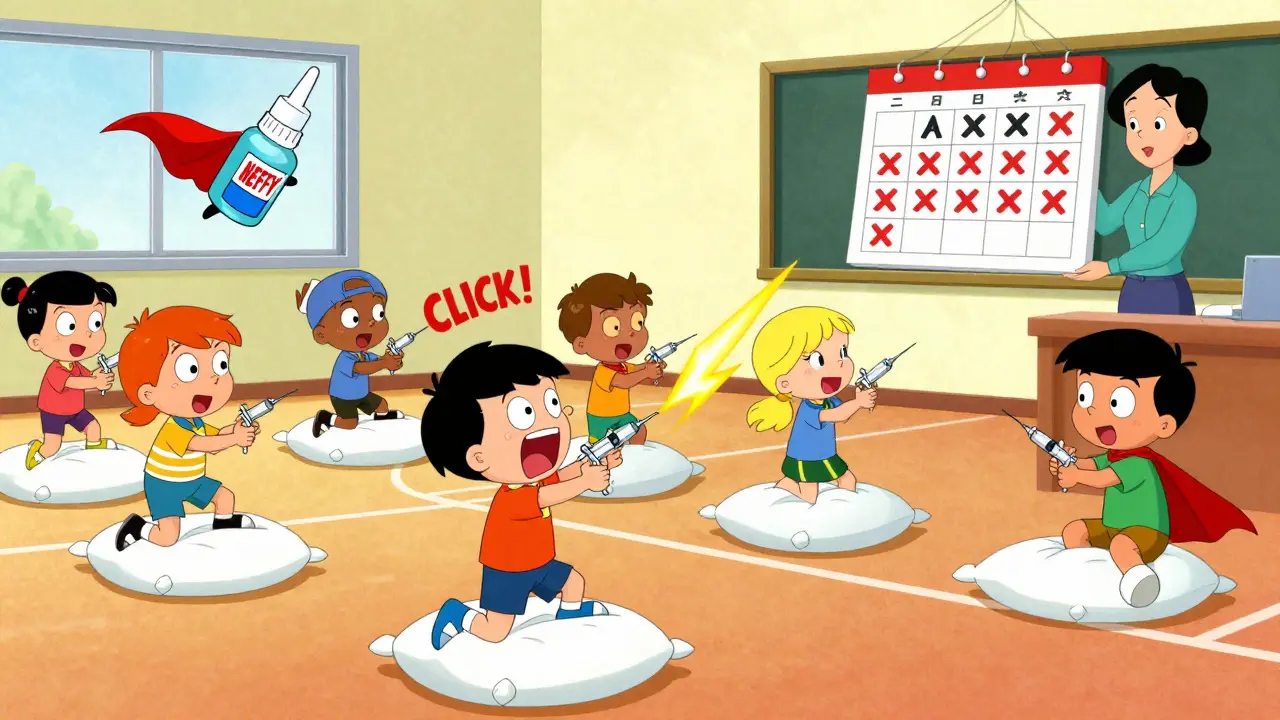
The Cost and Access Problem
Epinephrine auto-injectors cost between $375 and $650 for a two-pack in the U.S. without insurance. That’s a lot for a device you hope you never use. But prices have dropped. In 2016, the average out-of-pocket cost was $325. By 2023, it was $185-thanks to generic versions and competition. Now, generics cover 70% of prescriptions. Still, access isn’t equal. Only 45% of low-income patients can keep their prescriptions filled. People skip doses because they can’t afford refills. That’s not just a financial issue-it’s a public health crisis. If you’re struggling to pay, ask your doctor about patient assistance programs. Many manufacturers offer discounts or free devices for those who qualify.What’s Next?
New options are coming. Neffy, the nasal spray approved in 2023, gives people who hate needles another choice. It works just as fast and is already being used in schools and airports. Companies are working on smart injectors that connect to your phone and alert emergency contacts when used. Extended shelf-life versions are in trials-some could last up to three years. There’s also promising research into drugs like omalizumab (Xolair), which can reduce the frequency of reactions in high-risk patients. One study showed people on it needed 67% fewer epinephrine doses. But it’s not a replacement. It’s a backup. Epinephrine will still be the first and only line of defense for years to come.Final Reminder: Act Fast
Anaphylaxis doesn’t ask for permission. It doesn’t wait for you to finish your meal, get to the car, or call your doctor. It strikes. And it kills quickly. The best thing you can do is know the signs, carry two injectors, practice using them, and never, ever wait. If you or someone you love has a known allergy, talk to your doctor. Get trained. Make a plan. Keep your injectors with you. And if you ever suspect anaphylaxis-give epinephrine first. Then call 911. Everything else comes after.Can antihistamines stop anaphylaxis?
No. Antihistamines like Benadryl may help with mild itching or hives, but they do nothing to reverse airway swelling, low blood pressure, or shock-the life-threatening parts of anaphylaxis. Relying on them alone can be deadly. Epinephrine is the only treatment that works.
Where should I inject epinephrine?
Always inject into the outer thigh-the vastus lateralis muscle. This area has the best blood flow, so the medicine gets into your system fastest. You can inject through clothing if needed. Never inject into the arm, buttocks, or veins. The thigh is the only recommended site.
Do I need to go to the hospital after using epinephrine?
Yes. Even if you feel better, you must go to the emergency room. Anaphylaxis can come back hours later in what’s called a biphasic reaction. Hospitals will monitor you for at least 12 hours, especially if you have asthma, heart disease, or needed more than one dose of epinephrine.
How often should I replace my epinephrine injector?
Most auto-injectors expire in 12 to 18 months. Check the expiration date on the device every month. Set a phone reminder to replace it before it expires. Using an expired injector may not work, and you can’t risk it in an emergency.
Can I use someone else’s epinephrine injector?
Yes. In an emergency, using someone else’s injector is better than not using one at all. Dosing is based on weight, not identity. An adult dose (0.3 mg) is safe for most teens and adults. A child dose (0.15 mg) is appropriate for kids between 15 and 30 kg. Never wait to find the right person’s injector-use the one you have.
Are there needle-free options for epinephrine?
Yes. Neffy, a nasal spray approved by the FDA in 2023, delivers epinephrine through the nose. It works just as quickly as an injection and is a good option for people with needle fear. It’s approved for people weighing at least 66 pounds (30 kg) and is now being adopted in schools and public spaces.