Every year, millions of people in the U.S. switch from brand-name pills to their cheaper generic versions. You might have done it yourself-maybe your insurance pushed you to, or you saw the price drop from $150 to $12 and thought, “How can this possibly be the same thing?” You’re not alone. Many people wonder: Are generic drugs really just as good as brand-name medications? The short answer is yes-for most people, most of the time. But the full story is more detailed, and it matters if you’re managing a chronic condition like high blood pressure, thyroid disease, or epilepsy.
What Exactly Makes a Drug “Generic”?
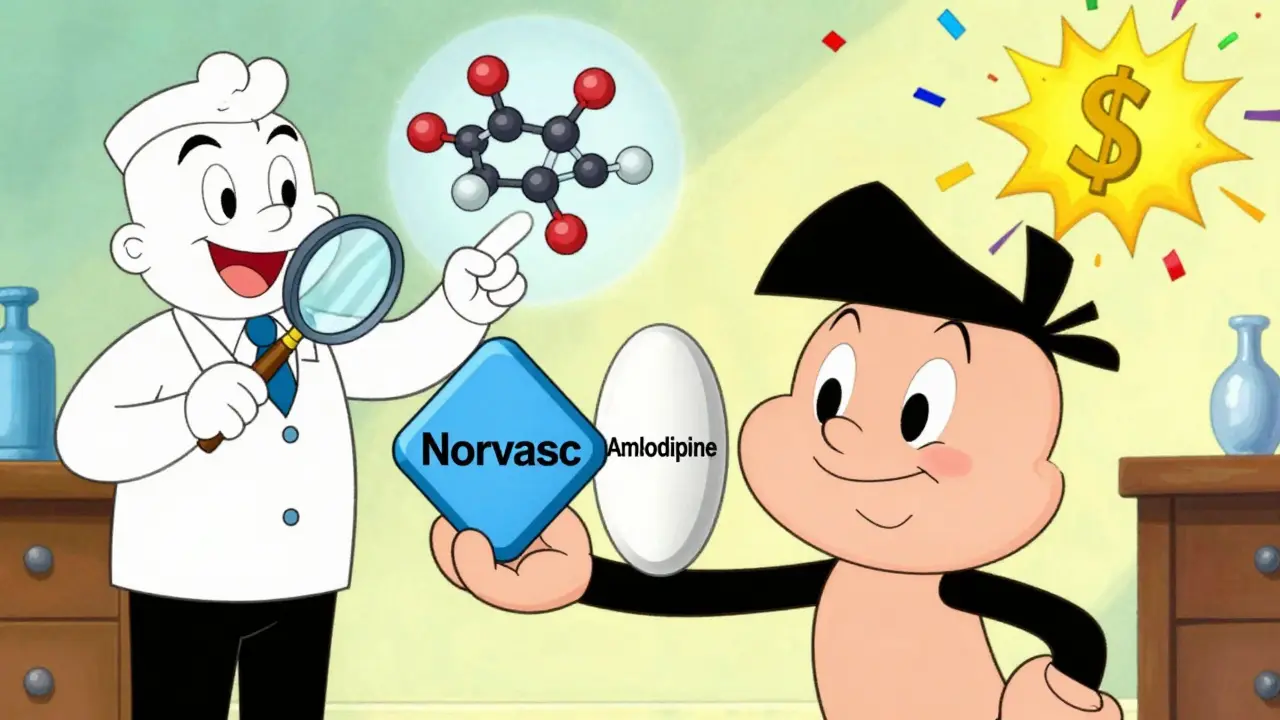
A generic drug isn’t a copycat or a knockoff. It’s the exact same medicine, chemically speaking. The FDA requires that generic drugs contain the same active ingredient, in the same strength, same dosage form (tablet, capsule, injection), and same route of administration (oral, topical, etc.) as the brand-name version. That means if you’re taking 10 mg of amlodipine for high blood pressure, whether it’s called Norvasc or a generic, the molecule doing the work is identical. The difference comes in the inactive ingredients-things like fillers, dyes, and binders. These don’t affect how the drug works, but they can change the pill’s color, shape, or taste. That’s why your generic amlodipine might be a white oval instead of the blue diamond-shaped brand-name version. These changes are required by law so generics can’t look identical to the original, protecting trademark rights. To get approved, generic manufacturers must prove bioequivalence. That means when you swallow the pill, your body absorbs it at the same rate and to the same extent as the brand. The FDA’s standard? The amount of drug in your bloodstream (measured as AUC and Cmax) must fall within 80% to 125% of the brand’s levels. That’s not a wide margin-it’s a tight scientific window. For most drugs, this ensures the generic works just like the original.How Do We Know They Work the Same?
You don’t have to take the FDA’s word for it. Real-world data backs it up. A massive 2019 study in JAMA Internal Medicine tracked over 3.5 million patients using generics for conditions like diabetes, high blood pressure, depression, and osteoporosis. The results? No meaningful difference in how well the drugs worked. Patients on generics had the same rates of hospital visits, heart attacks, and complications as those on brand-name versions. Even more surprising, a 2020 study in Austria found patients on generic blood pressure meds actually had lower death rates than those on brand names. But researchers didn’t conclude generics were better-they pointed to something else: patients on generics were more likely to stick with their meds because they cost less. When you’re paying $5 instead of $50, you’re more likely to take it every day. That’s not the drug working better-it’s the patient taking it more consistently. For drugs with a narrow therapeutic index-like warfarin (a blood thinner) or levothyroxine (for thyroid)-the FDA applies stricter rules. The acceptable range for absorption tightens to 90%-111%. That’s because even tiny changes in blood levels can cause serious side effects. Still, most patients switch without issue. A 2021 study from Massachusetts General Hospital found that only 5-10% of thyroid patients needed to stick with the brand after switching, usually because they were sensitive to the fillers, not the active ingredient.Why Do Some People Say Generics Don’t Work for Them?
If the science says generics are equivalent, why do some people swear they felt worse after switching? There are a few reasons. First, psychology plays a big role. A 2017 study in the Annals of Internal Medicine found that patients who believed generics were inferior were 20% more likely to stop taking them-even when there was no clinical reason to. If you think the pill is “cheaper,” your brain might convince you it’s less effective. That’s not just in your head-it’s a real physiological response. Second, inactive ingredients can cause issues for a small number of people. If you’re allergic to lactose, gluten, or certain dyes, switching to a generic with a different filler could trigger symptoms like bloating, rashes, or stomach upset. That’s not the drug failing-it’s your body reacting to something new. Always check the inactive ingredients list if you have known allergies. Third, consistency matters. If you switch pharmacies or refill at different locations, you might get generics from different manufacturers. Each one might use a slightly different filler, which can lead to minor variations in how the pill dissolves. For most people, this doesn’t matter. But for those on critical meds like seizure drugs or blood thinners, even small shifts can be risky. That’s why experts recommend sticking with one pharmacy and asking your pharmacist to keep you on the same generic manufacturer.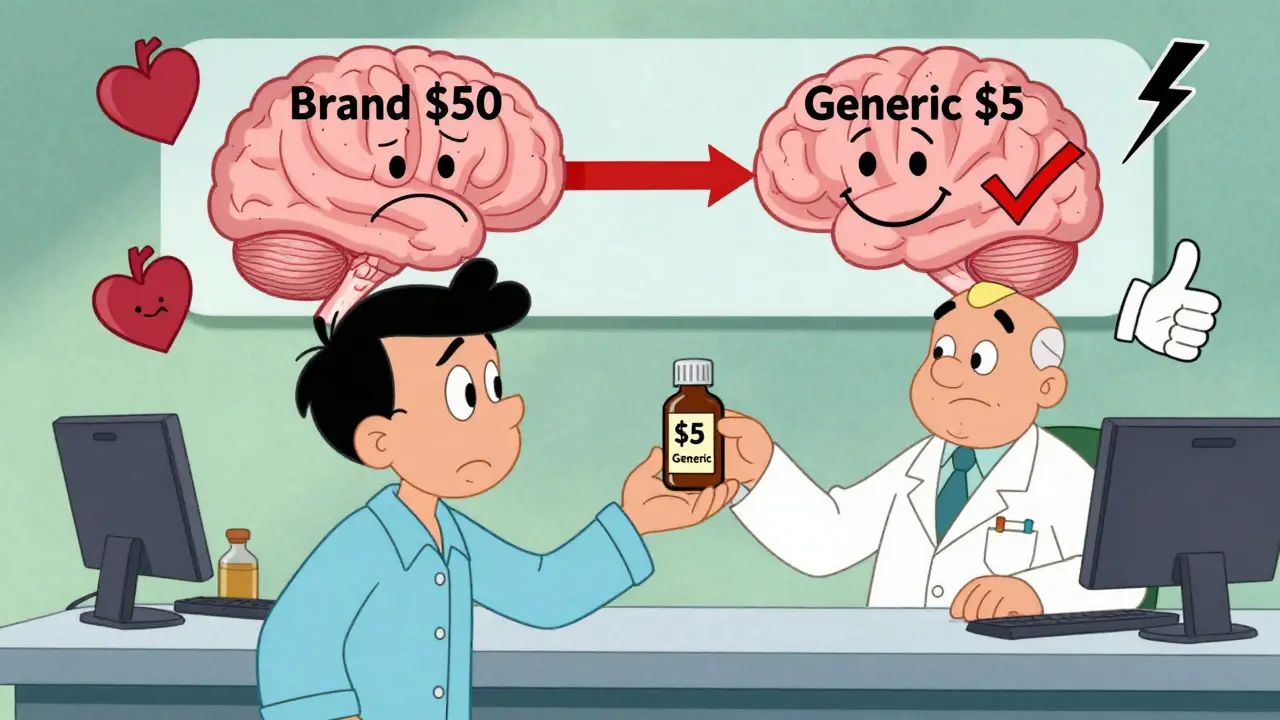
Cost: The Real Advantage
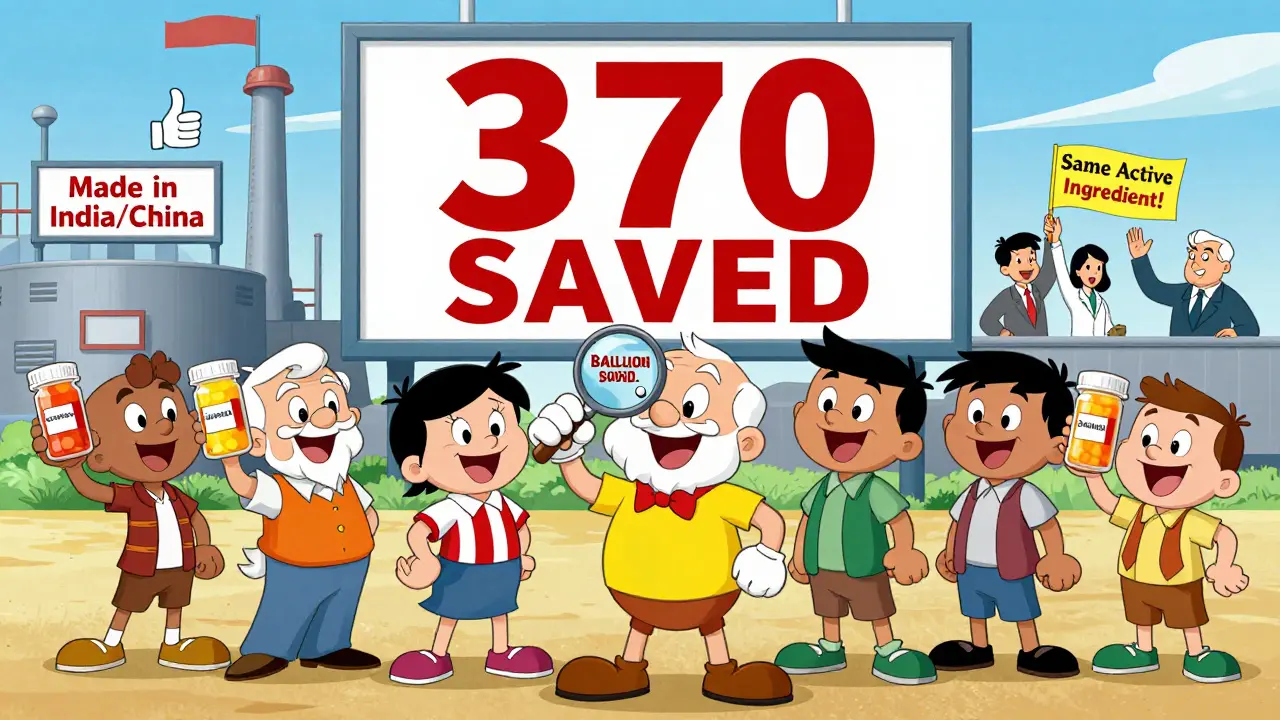
The biggest reason generics exist is cost. Brand-name drugs can cost hundreds or even thousands of dollars a month. Generics? Often under $10. In 2022, generics made up 90% of all prescriptions filled in the U.S.-but only 23% of total drug spending. That’s over $370 billion saved in one year. Medicare Part D plans require pharmacies to use generics whenever possible. If you’re on Medicare, you might pay $5 for a generic and $50 for the brand. That’s not a suggestion-it’s a rule. Insurance companies don’t care about your brand loyalty. They care about saving money. And you save too. GoodRx’s 2023 data shows 89% of people who use generics would recommend them to others. The main reason? “I can afford it.” For people living paycheck to paycheck, that’s not a luxury-it’s survival.When You Might Need to Stick With the Brand
There are a few cases where sticking with the brand makes sense:- Thyroid medication (levothyroxine): While most people do fine on generics, a small percentage report changes in energy, weight, or mood. If you’ve been stable on a brand and switch to generic, get your TSH levels checked in 6-8 weeks.
- Seizure medications: Some epilepsy patients report breakthrough seizures after switching. The Epilepsy Foundation says 18% of patients have experienced this, though clinical studies haven’t confirmed a direct link. If you’re on one of these drugs, talk to your neurologist before switching.
- Complex drugs: Inhalers, nasal sprays, and topical creams are harder to copy exactly. The FDA is still developing standards for these. If you’re using one of these, ask your pharmacist if a generic is truly equivalent.
What You Can Do to Stay Safe
If you’re switching to a generic, here’s how to do it right:- Ask your pharmacist: “Is this the same manufacturer I’ve been getting?” If you’ve had no issues before, try to stay with the same one.
- Use a pill identifier app like Medisafe. If your pill looks different, scan it. It’ll tell you the name, dose, and manufacturer.
- Don’t assume a different color means a different drug. That’s how mistakes happen.
- Monitor how you feel. If you notice new side effects-dizziness, fatigue, mood changes-check in with your doctor. It might be the generic, or it might be something else.
- Use the FDA’s Drugs@FDA database to look up your medication. You can see what the brand and generic look like side by side.
What’s Next for Generic Drugs?
The FDA is working to speed up approvals and improve quality control, especially for drugs made overseas. Over 78% of the active ingredients in U.S. generics come from China and India. That’s efficient, but it’s also a vulnerability. In 2022, nearly a third of drug shortages involved generics, mostly due to manufacturing issues. New rules are coming. The FDA’s 2024 pilot program will collect real-world data on how generics perform in diverse populations. And as more biologic drugs (like insulin and rheumatoid arthritis treatments) lose patent protection, we’ll see “biosimilars”-a more complex version of generics-enter the market. But the core truth won’t change: for the vast majority of patients, generic drugs are just as safe and effective as the brand names. They’re not a compromise. They’re a smarter choice.Are generic drugs less effective than brand-name drugs?
No, not for most people. The FDA requires generics to prove they deliver the same amount of active ingredient into your bloodstream at the same rate as the brand. Studies tracking millions of patients show no difference in how well they work for conditions like high blood pressure, diabetes, depression, and cholesterol. The only exceptions are a small number of patients on narrow therapeutic index drugs like levothyroxine or seizure medications, where even tiny changes can matter.
Why do generic pills look different from brand-name ones?
By law, generic drugs can’t look identical to the brand name to avoid trademark infringement. That’s why the color, shape, or size might be different. These changes are only in the inactive ingredients-like dyes or fillers-which don’t affect how the drug works. The active ingredient is the same.
Can I switch between different generic brands?
For most medications, yes. But if you’re on a drug with a narrow therapeutic index-like warfarin, levothyroxine, or certain seizure meds-it’s safer to stick with the same manufacturer. Switching between different generic makers can cause slight variations in how your body absorbs the drug. If you notice new side effects after switching, talk to your pharmacist or doctor.
Are generic drugs made in lower-quality facilities?
No. The FDA inspects all manufacturing facilities-whether they make brand-name or generic drugs-with the same standards. About 78% of active ingredients come from India and China, but those facilities are held to the same quality controls as U.S.-based ones. The FDA conducts thousands of inspections each year, and facilities that fail are shut down.
Why do some people feel worse after switching to a generic?
There are a few reasons. Some people are sensitive to the inactive ingredients, like lactose or dyes. Others feel worse because they believe generics are inferior-a psychological effect. In rare cases, switching between different generic manufacturers can cause minor absorption changes, especially with critical medications. If you notice new symptoms, don’t assume it’s the drug. Check with your doctor and pharmacist.
Should I always choose the generic version?
For most prescriptions, yes. Generics are just as effective and save you hundreds or thousands a year. But if you’re on a medication with a narrow therapeutic index, or if you’ve had a bad reaction after switching before, talk to your doctor. Never stop or switch meds without medical advice, even if it’s just a generic.