When a new brand-name drug hits the market, it often comes with a price tag that makes patients choose between paying for medicine or paying rent. The promise of cheaper generics is supposed to change that - but too often, it doesn’t happen for years. Why? Because patent litigation has become a legal shield used to block competition, not protect innovation.
How the system was meant to work
In 1984, Congress passed the Hatch-Waxman Act to fix a broken system. Before then, brand-name drug companies could hold monopolies forever. Generic makers couldn’t even start testing their versions until the patent expired - even if they had a better, cheaper formula ready. The law changed that. It let generic companies file an Abbreviated New Drug Application (ANDA) and challenge existing patents early. If they believed a patent was invalid or not being infringed, they could file a Paragraph IV certification - a legal notice saying, "We’re coming, and we think this patent doesn’t hold up." The law gave brand-name companies 45 days to sue. If they did, the FDA had to pause approval of the generic for 30 months. That was supposed to be a fair buffer - enough time to sort out real disputes without locking out competition forever.What actually happened
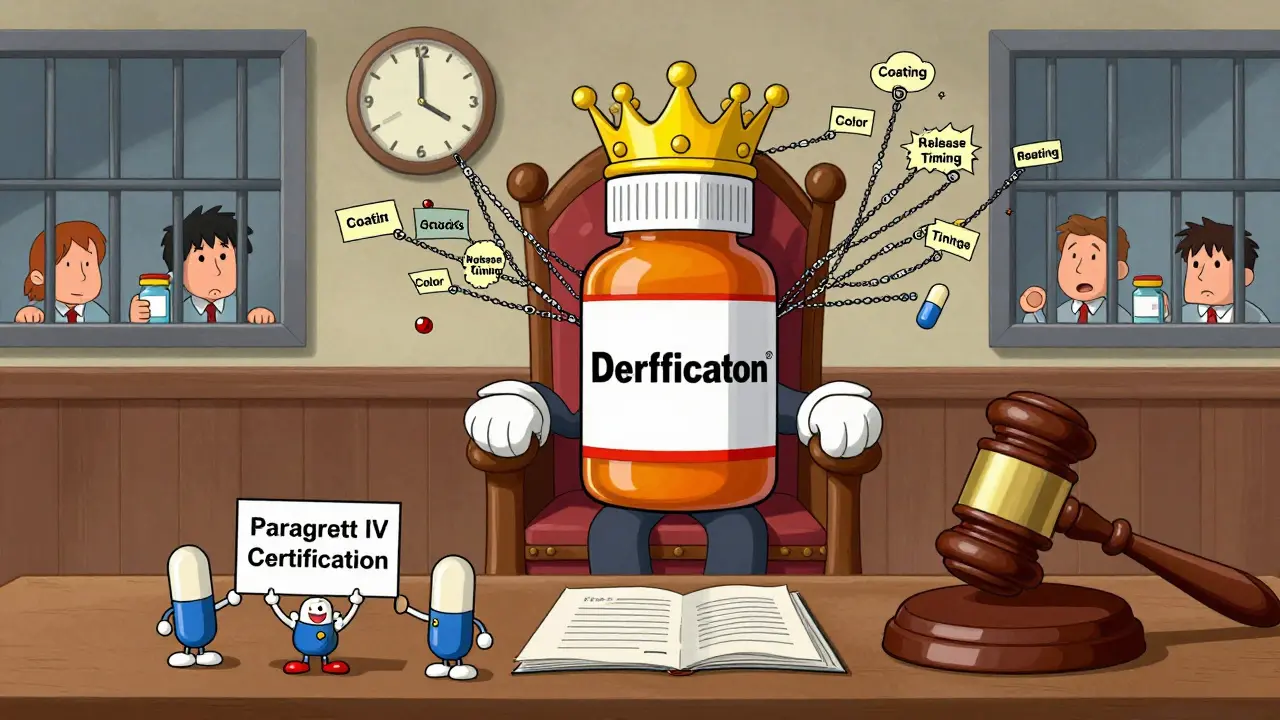
Instead of speeding up access to affordable drugs, the 30-month stay became a guaranteed extension of monopoly. The average brand-name drug gets approved by the FDA at year 7.7 after launch - but the generic doesn’t hit shelves until year 11.5. That’s nearly four extra years of high prices, even after the patent should have expired. And it’s not just one lawsuit. Companies pile on patents - not just for the active ingredient, but for the pill’s color, the way it’s coated, the timing it releases the drug, even the packaging. A 2023 study found that 72% of patents used in litigation were filed after the FDA approved the original drug. These aren’t innovations. They’re legal traps.The cost of delay
When a generic drug is approved but stuck in litigation, patients pay the price. One patient in Chicago couldn’t afford her $1,200-a-month insulin because the generic was approved but blocked by a patent suit. She rationed her doses. Her doctor says it’s not rare. Employers feel it too. In 2023, delayed generic entry for Humira cost large U.S. employers over $1.2 billion in extra health spending. Teva, one of the biggest generic makers, lost $850 million in projected revenue because of litigation delays on key drugs. The financial stakes are enormous. The top 10 brand-name drugs facing generic competition made $85 billion in annual sales in 2023. That’s billions of reasons to drag out court cases.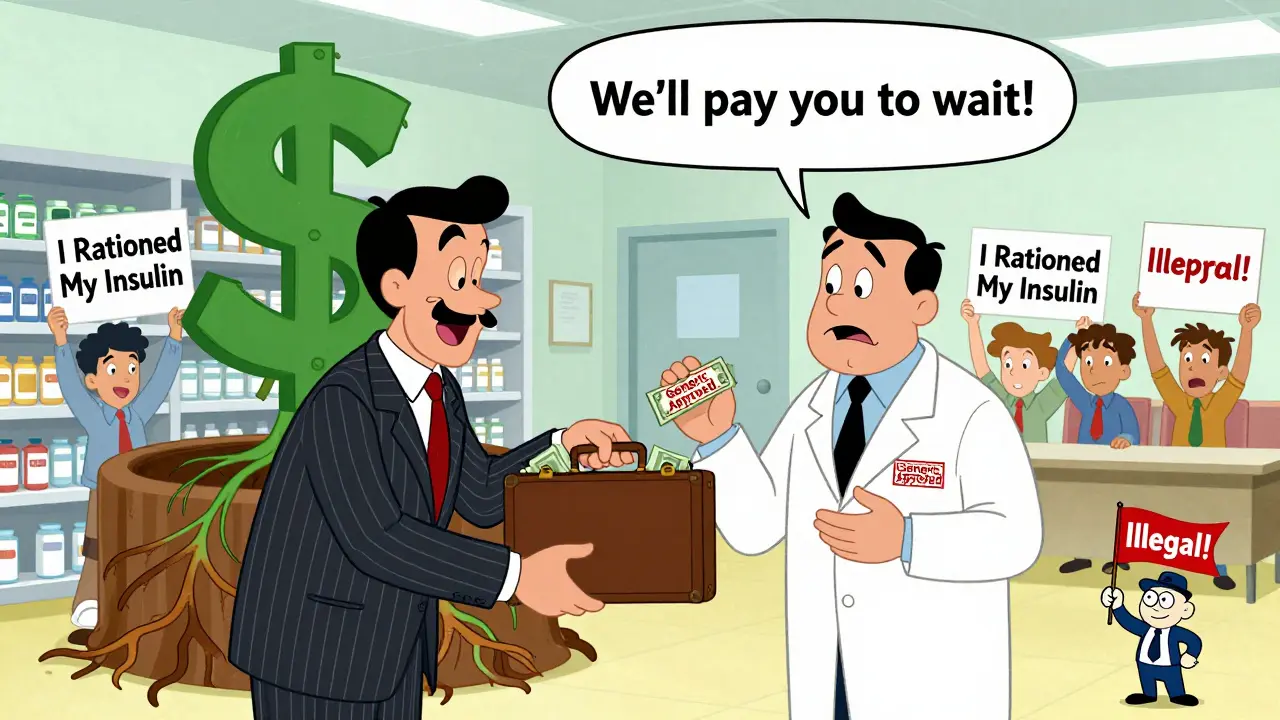
Pay-for-delay: The secret deals
Sometimes, the brand-name company doesn’t even fight in court. They pay the generic maker to stay away. This is called a "pay-for-delay" agreement. The FTC calls it anti-competitive. The courts have ruled it’s often illegal. But it still happens. In 2010, the FTC found that while only 24% of patent cases ended in these deals, they were responsible for most of the biggest delays. A generic company gets a big payment - millions or even hundreds of millions - and agrees not to launch. The brand keeps its monopoly. Patients pay more. Everyone loses except the two companies.Why generics win in court - but still lose
Here’s the irony: when these cases actually go to trial, generic companies win about 73% of the time. Courts often find the patents weak, vague, or outright fraudulent. But winning the case doesn’t mean you get to sell your drug right away. The damage is already done. By the time a court rules, the 30-month stay has long expired. But the brand company files another patent. Then another. Each one restarts the clock. One drug had 14 separate patent lawsuits over 10 years. The generic was approved in 2018. It didn’t reach shelves until 2023.The legal grind
Filing a Paragraph IV challenge isn’t cheap. Defending a patent case through trial costs $3 to $5 million. An appeal? Over $10 million. Most small generic companies can’t afford that. Only the biggest players - Teva, Mylan, Sandoz - have the legal teams to keep going. That’s why the top five generic manufacturers now control 45% of the market. It’s not because they’re better. It’s because they can survive the lawsuits. Even then, they’re gambling. Some launch "at risk" - meaning they start selling before the court decides. If they win, they make millions. If they lose, they owe the brand company damages that can wipe out years of profits.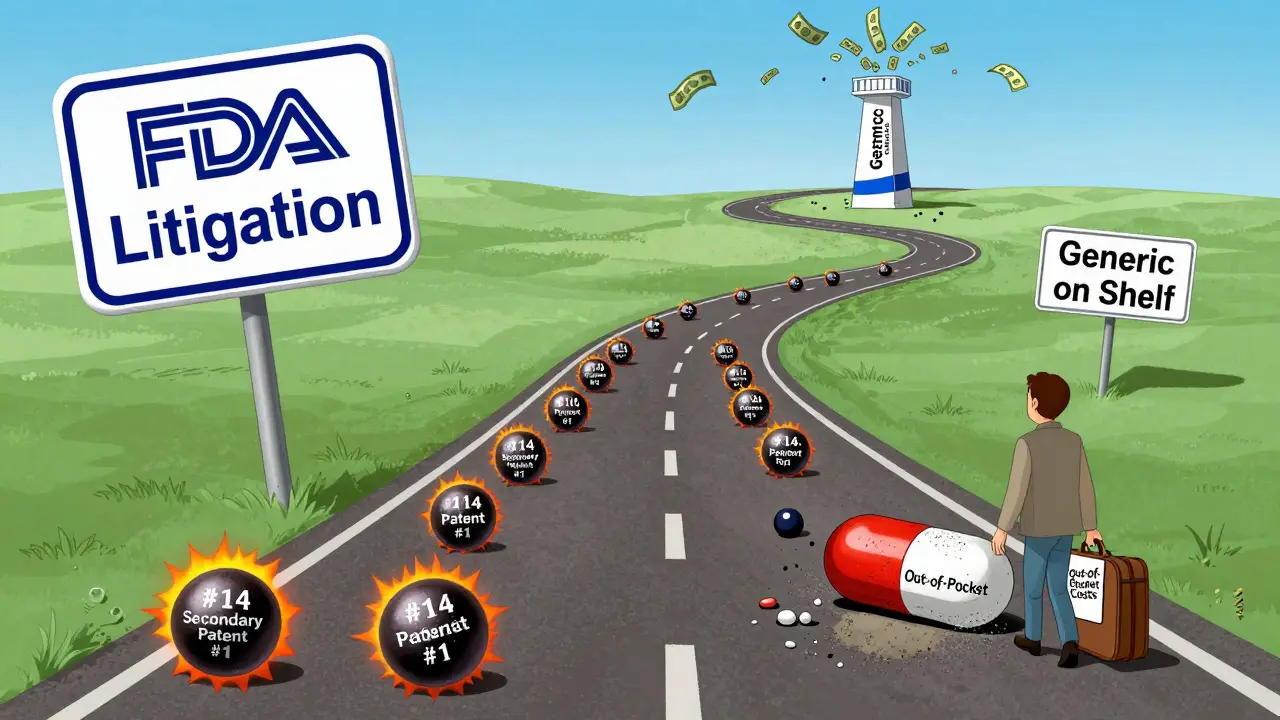
What’s being done?
The FTC is pushing back. In 2023, they challenged more than 100 patents tied to drugs from AbbVie, AstraZeneca, and GSK. The 2023 CREATES Act tried to stop brand companies from refusing to sell samples to generic makers - a tactic used to delay testing. But enforcement is slow. Congress is considering the Protecting Consumer Access to Generic Drugs Act. It would limit how many patents a company can list in the FDA’s Orange Book and ban serial lawsuits. But progress is stuck. Meanwhile, biosimilars - the next wave of cheaper biologic drugs - are facing even longer delays. Their patent fights take 25% longer than those for regular generics. The problem isn’t shrinking. It’s spreading.What patients and providers can do
If you’re prescribed a brand-name drug and hear the generic is "coming soon," ask your pharmacist: "Is there a patent lawsuit holding it up?" Many don’t know. But pharmacists often do. Ask your insurance plan if they’ve built in a delay window for new generics. Most big PBMs now forecast 24 to 36 months before a generic hits. That’s how broken the system has become. If you’re paying out of pocket, check if the brand offers a patient assistance program. It’s not a fix - but it might help until the generic arrives.The road ahead
Without major reform, generic drugs will continue to arrive years too late. Analysts estimate that, on average, each drug delays access by 3.2 years after its patent should have expired. That’s $15 to $20 billion a year in extra costs for patients, employers, and taxpayers. The Hatch-Waxman Act was meant to balance innovation and access. Today, it’s tilted hard toward the former. The patents aren’t protecting breakthroughs. They’re protecting profits. The next time you hear a drug company touting its "innovation," ask: Is this medicine saving lives - or just delaying cheaper alternatives?Why do generic drugs take so long to launch after FDA approval?
Even after the FDA approves a generic drug, patent lawsuits can block its launch. When a generic company challenges a patent with a Paragraph IV certification, the brand-name company can sue, triggering a 30-month automatic stay on approval. But even after that period ends, companies often file new patents or settle with "pay-for-delay" deals. On average, generics launch 3.2 years after the 30-month stay expires - and 11.5 years after the brand drug first came to market.
What is a Paragraph IV certification?
A Paragraph IV certification is a legal statement a generic drug maker files with the FDA when applying to sell a copy of a brand-name drug. It says the generic company believes the brand’s patent is invalid or won’t be infringed. This triggers a 45-day window for the brand company to sue. If they do, the FDA can’t approve the generic for 30 months - regardless of whether the patent is actually strong.
What are "pay-for-delay" agreements?
Pay-for-delay agreements happen when a brand-name drug company pays a generic manufacturer to delay launching its cheaper version. Instead of fighting in court, the brand offers money - sometimes hundreds of millions - in exchange for the generic staying off the market. These deals are illegal under antitrust law but still occur, and they’re a major reason why patients wait years for affordable options.
Why do drug companies file so many patents after FDA approval?
Filing patents after approval - on things like coating, dosage timing, or delivery methods - lets companies extend their monopoly beyond the original compound patent. These are called "secondary patents." A 2023 study found 72% of patents used in litigation were filed after the drug was already on the market. These aren’t new inventions. They’re legal tactics to block generics.
Do generic companies ever win their lawsuits?
Yes. Courts rule in favor of generic companies in about 73% of cases that go to trial. But winning doesn’t mean immediate access. By the time a court rules, the patent has often been refiled, a settlement has been made, or the generic company has already spent millions and lost time. The system is designed to make winning the legal battle too slow and costly to matter for patients.