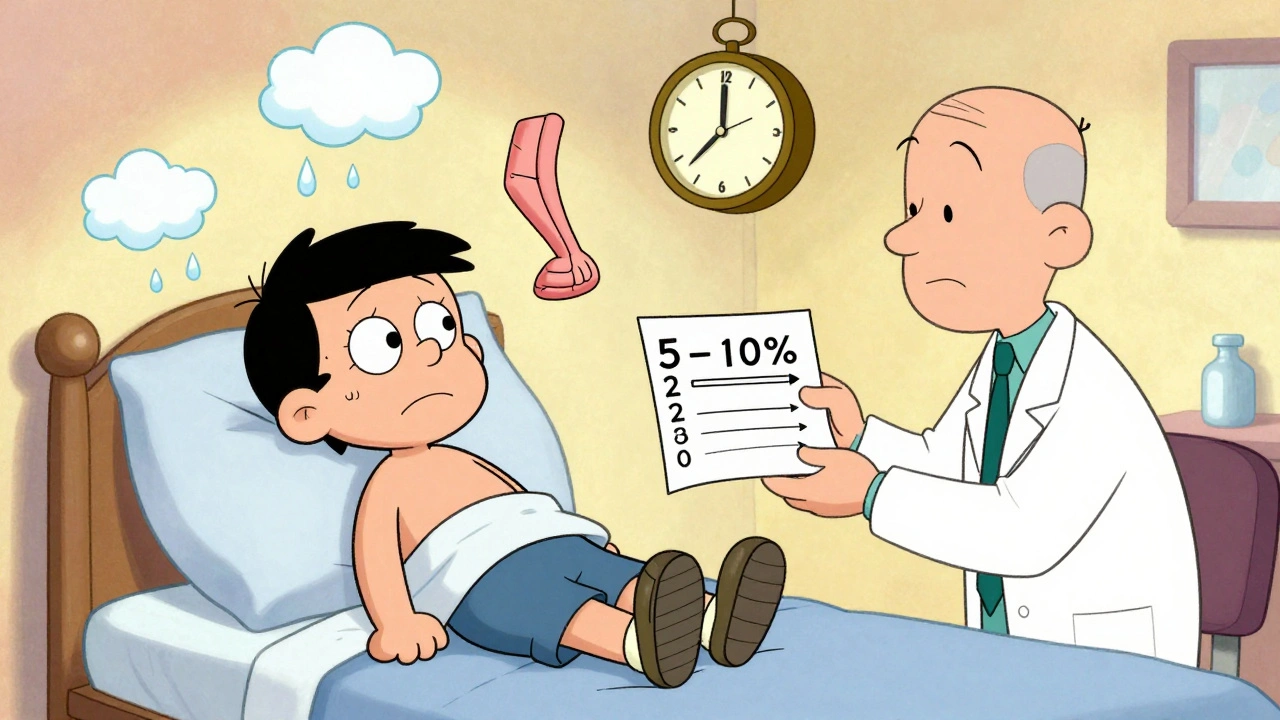
Opioid Withdrawal: Symptoms, Timeline, and What Helps
When someone stops taking opioids after regular use, their body goes through opioid withdrawal, a set of physical and mental symptoms that occur as the body adjusts to the absence of opioids. Also known as opioid detox, this isn’t just discomfort—it’s a biological reset that can feel overwhelming without support. It happens because opioids change how your brain and nervous system work. Over time, your body starts relying on them just to feel normal. When you stop, your system goes into overdrive trying to catch up—and that’s what causes the crash.
Common signs include muscle aches, nausea, vomiting, diarrhea, sweating, anxiety, and trouble sleeping. Some people also feel restless, have fast heart rate, or get intense cravings. These symptoms usually start 6 to 12 hours after the last dose, peak around day 2 or 3, and begin to fade after a week. For some, especially those who used high doses for a long time, milder symptoms like low energy or mood swings can hang on for weeks. That’s why opioid dependence, a condition where the body needs opioids to avoid withdrawal isn’t about willpower—it’s about chemistry. And detox, the process of safely removing opioids from the body under medical care isn’t the end of recovery—it’s the first step.
What helps? Cold turkey might sound strong, but it’s rarely the best path. Medications like methadone, buprenorphine, or naltrexone can ease symptoms and reduce cravings. Support from doctors, counselors, or peer groups makes a huge difference. Even simple things—staying hydrated, eating light meals, using heating pads for cramps—can make nights more bearable. You’re not alone in this. Many people get through it, and many more have walked this path before you.
The posts below cover real stories, medical facts, and practical tips from people who’ve dealt with opioid withdrawal firsthand. You’ll find advice on managing symptoms, understanding timelines, knowing when to seek help, and what treatments actually work. No fluff. No guesswork. Just clear, usable info to help you or someone you care about get through it.